- Bat Bug vs Bed Bug: How to Tell Them Apart (And Why It Matters)
- Bed Bug vs Mosquito Bites: How to Tell the Difference
- Bed Bug vs Spider: How to Tell the Difference by Bites and Bugs
- Bed Bugs vs Fleas: How to Tell the Difference (With Photos)
- Bed Bugs vs Lice: How to Tell the Difference and Get Rid of Them
- Carpet Beetle vs Bed Bug: 7 Key Differences That End the Confusion
- Cockroach vs Bed Bug: 6 Visual Cues That End the Confusion
- Swallow Bug vs Bed Bug: 5 Ways to Tell Them Apart
- Tick vs Bed Bug: 5 Quick Ways to Tell Them Apart
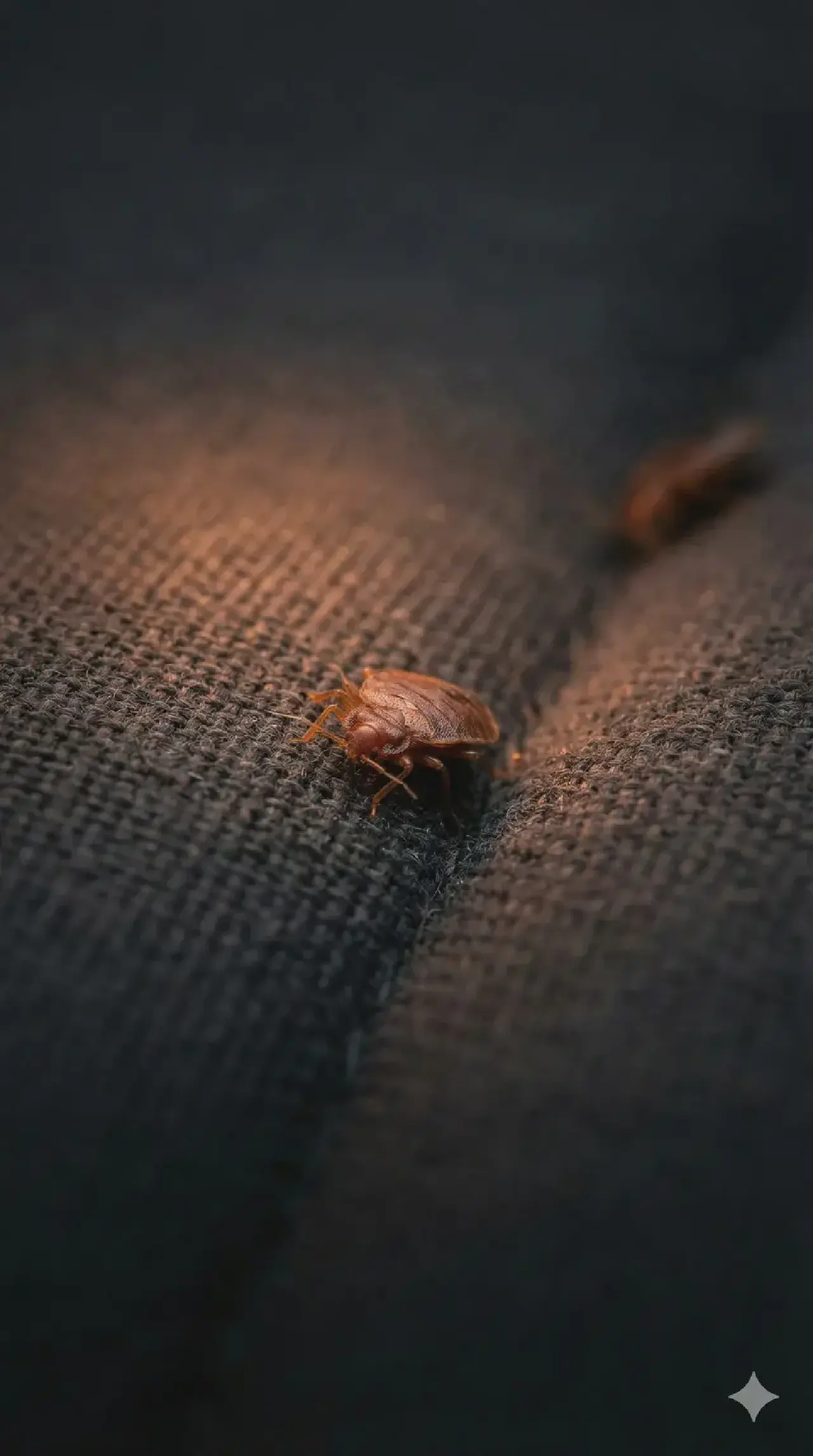
Bed bugs are frequently confused with other household insects, but you can tell them apart by their distinct oval-shaped bodies, six legs, and lack of wings. Adult bed bugs measure about 5-7mm (roughly the size of an apple seed); for more on exact measurements and visibility, see bed bug size and visibility. They have a flattened, reddish-brown body, and cannot fly or jump. When you’re dealing with mysterious bites or spotting small bugs in your home, knowing whether you’re facing bed bugs or a lookalike determines your entire treatment approach — and can save you hundreds of dollars on unnecessary pest control.
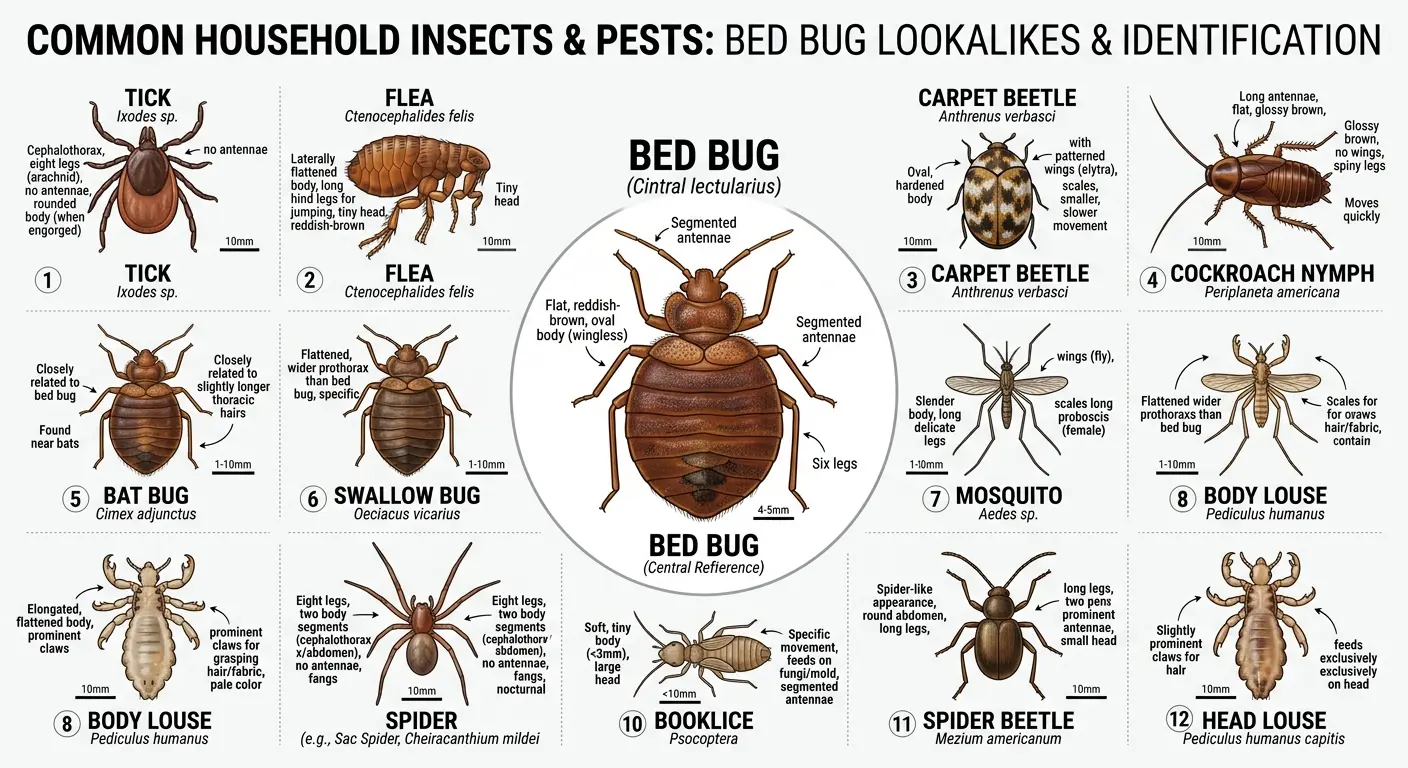
Most guides list a few common lookalikes, but the reality is that at least 12 different insects are routinely mistaken for bed bugs. For a broader list of similar species and common confusions, see bed bug lookalikes. The stakes are high: treat the wrong pest and you’ll waste money while the actual infestation continues. This guide breaks down each lookalike side-by-side, giving you the exact physical markers that separate bed bugs from their imposters.
Why Are Bed Bugs So Often Mistaken for Other Insects?
Bed bugs belong to the family Cimicidae, and their close relatives share similar body shapes, sizes, and coloring. The physical differences between these insects are often subtle and require magnification to spot reliably — for instance, the length of hairs on the thorax can be a distinguishing feature that’s invisible to the naked eye.
Beyond their relatives, bed bugs also resemble common household pests like carpet beetles, booklice, and small cockroaches. When bed bugs are warm and active, their movements appear more ant-like, which adds another layer of confusion. This visual similarity explains why so many people misidentify their pest problem — and why accurate identification matters more than you might think. For behavioral clues that help identify bed bugs, review bed bug behavior and identification.
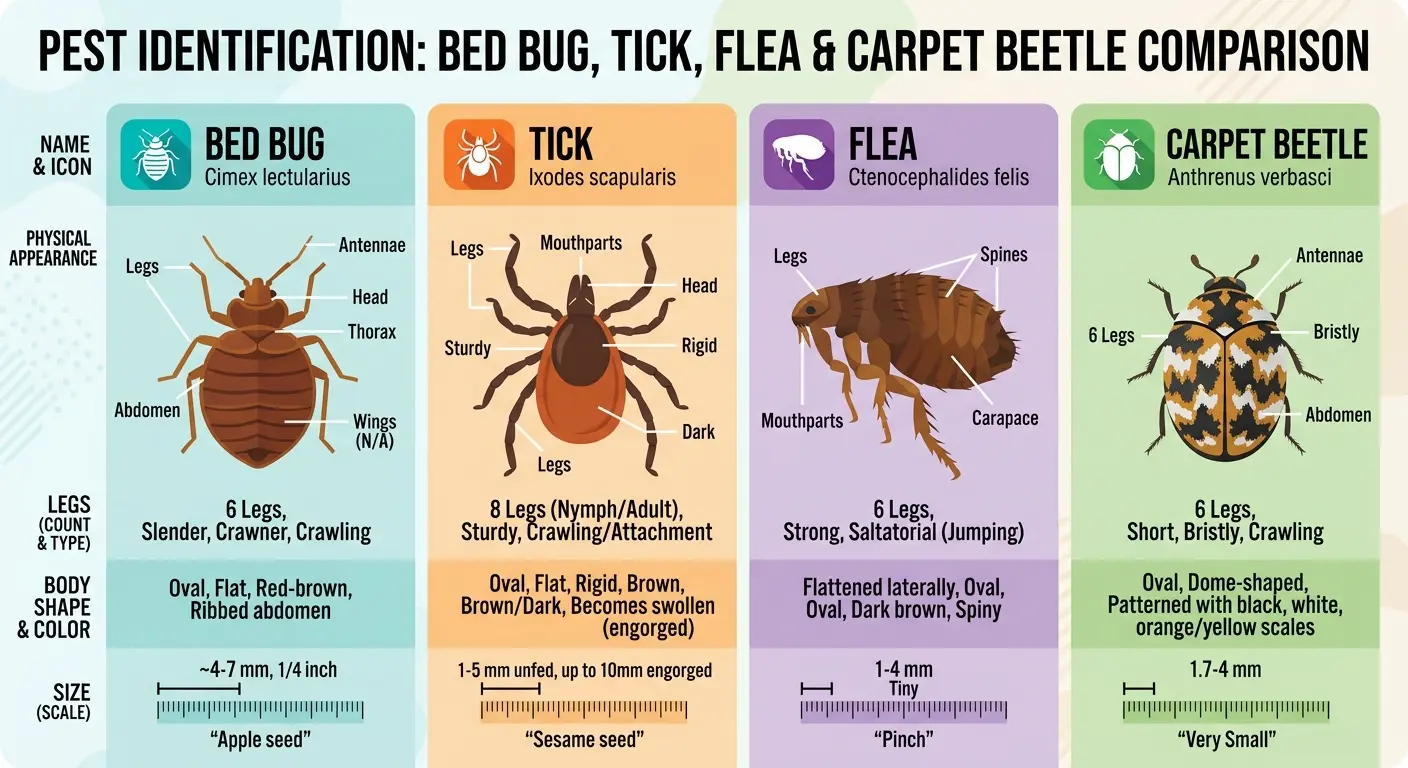
Bed Bug vs Other Insects: Quick Comparison Chart
| Feature | Bed Bug | Tick | Flea | Carpet Beetle |
|---|---|---|---|---|
| Legs | 6 (insect) | 8 (arachnid) | 6 (insect) | 6 (insect) |
| Wings | None | None | None | None |
| Jumping | Cannot jump | Cannot jump | Can jump 7+ inches | Cannot jump |
| Body Shape | Oval, flat | Oval, flat | Narrow, sideways | Oval, rounded |
| Size (adult) | 5-7mm | 3-5mm | 1.5-3mm | 2-5mm |
| Color | Reddish-brown | Brown to black | Dark brown | Brown, black, or patterned |
| Bite Pattern | Linear clusters | Single, embedded | Random, ankles/legs | Allergic rash, not bites |
What Do Bed Bugs Actually Look Like?
Adult bed bugs have flat, oval-shaped bodies that appear reddish-brown after feeding and lighter brown when unfed; for more on color variation see bed bug color guide. They have six legs, two antennae, and no wings — a combination that immediately rules out flying insects. For a closer look at their body parts and diagnostic features, consult bed bug body parts. Newly hatched nymphs are translucent and lighter in color, becoming browner as they molt and reach maturity — see baby bed bugs and nymphs for photos and size details.
After feeding, bed bugs become engorged and elongated, taking on a more cylindrical shape. Their bodies swell with blood, making them appear larger and darker. This post-feeding appearance can make them look different from the flat, unfed specimens you might find hiding in mattress seams. For the nymph-versus-ant comparison, see do bed bug nymphs look like ants.
Tick vs Bed Bug: The Leg Count Tells You Everything
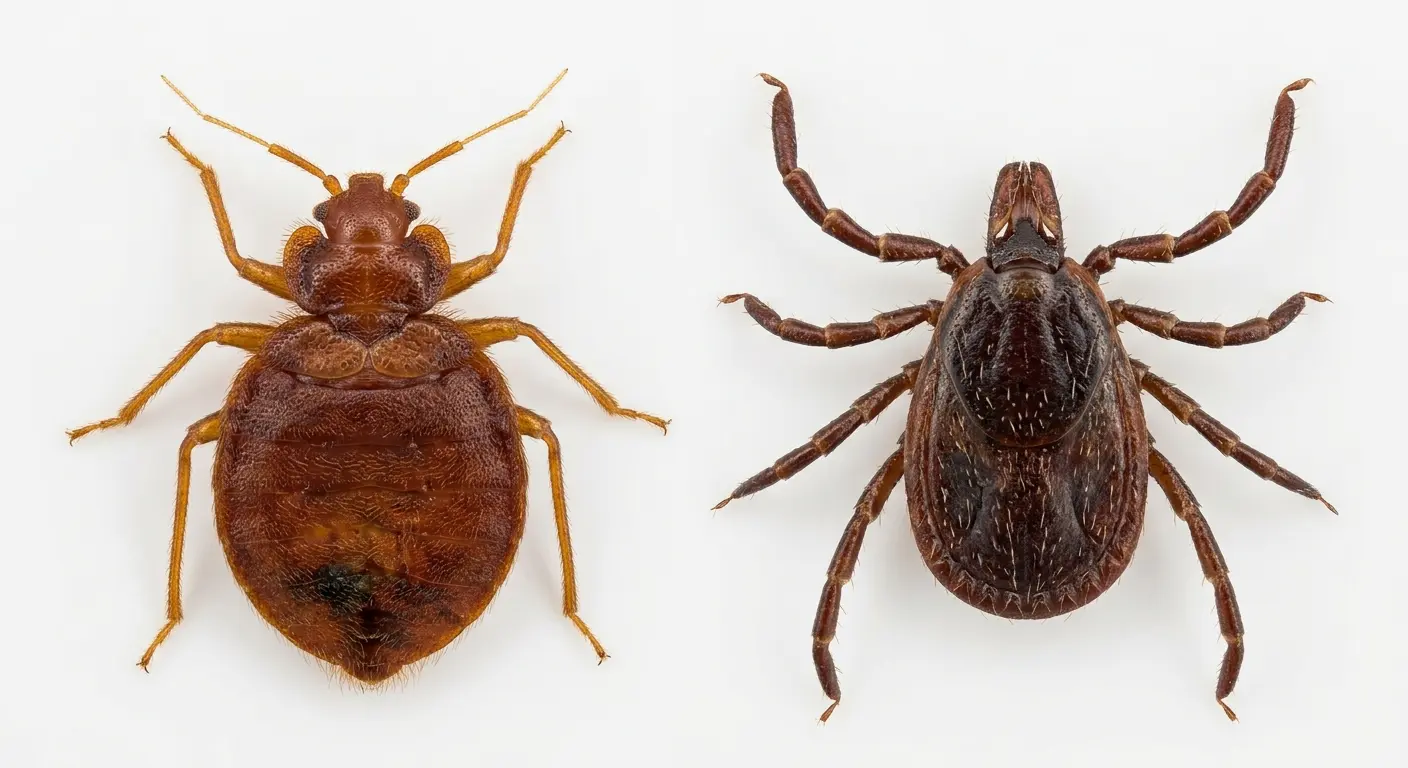
One big difference between ticks and bed bugs comes down to basic biology: bed bugs are insects with six legs, while ticks are arachnids with eight. If you spot a bug with eight legs, you’re not looking at a bed bug — period.
Ticks also have a distinct body structure with a fused cephalothorax and abdomen, while bed bugs have a clearly segmented body with a visible head. Ticks embed their mouthparts into the skin when feeding and stay attached for days, whereas bed bugs feed quickly and retreat to hiding spots. Check out our detailed bed bug vs tick for more specifics.
Flea vs Bed Bug: Jumping Behavior Is the Giveaway
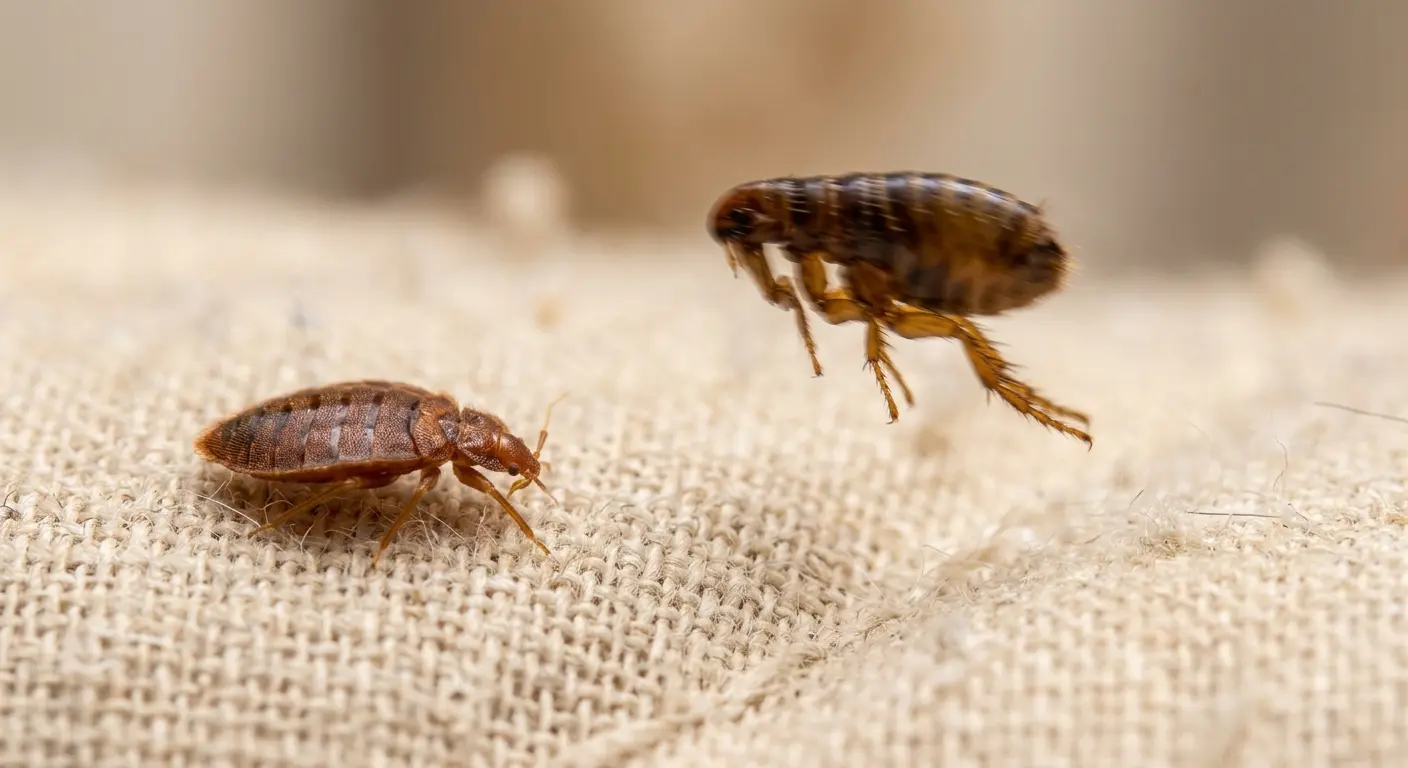
Fleas are narrow, sideways-compressed insects that excel at jumping — they can leap over 7 inches vertically. Bed bugs, in contrast, cannot jump at all. If the bugs you’re seeing jump when disturbed, they’re fleas, not bed bugs.
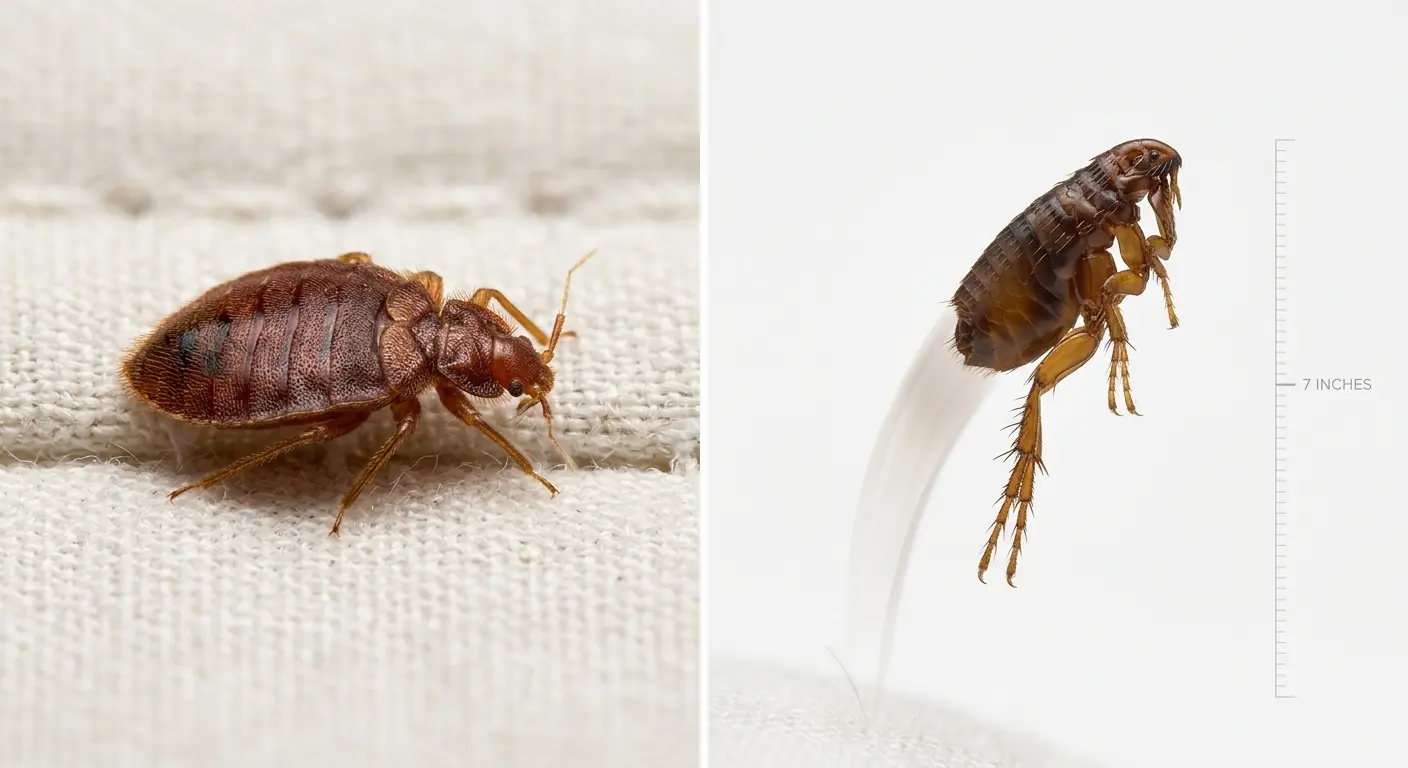
Flea bites typically appear as small red dots concentrated around ankles and lower legs, often in random patterns. Bed bug bites usually form linear clusters or zigzag patterns on exposed skin during sleep. Our bed bug vs fleas covers the bite pattern differences in depth.
Cockroach vs Bed Bug: Size and Antennae Differences
Baby cockroaches (nymphs) are frequently mistaken for bed bugs due to their similar size and brown coloring. However, cockroach nymphs have longer antennae that extend beyond their body length, while bed bug antennae are shorter and segmented.
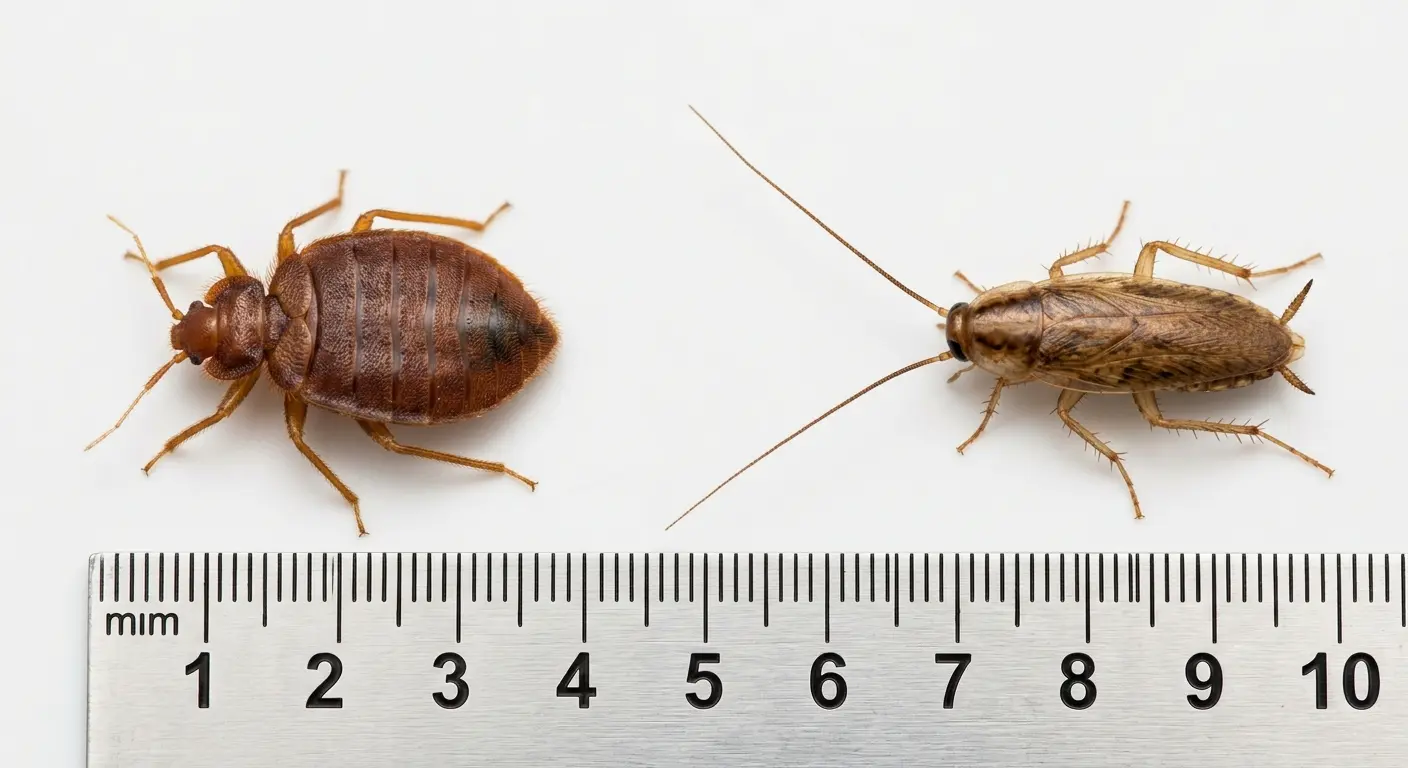
Cockroach nymphs also have a more elongated body shape and move quickly when exposed to light. Bed bugs are relatively slow movers that actively avoid light. The bed bug vs cockroach breaks down the visual differences in detail.
Carpet Beetle vs Bed Bug: Hairs and Shell Patterns
Carpet beetles are oval-shaped insects that measure 2-5mm — within the same size range as bed bugs. But carpet beetle larvae are covered in distinctive bristly hairs, and adults have patterned shells with scales in shades of brown, black, white, and orange.
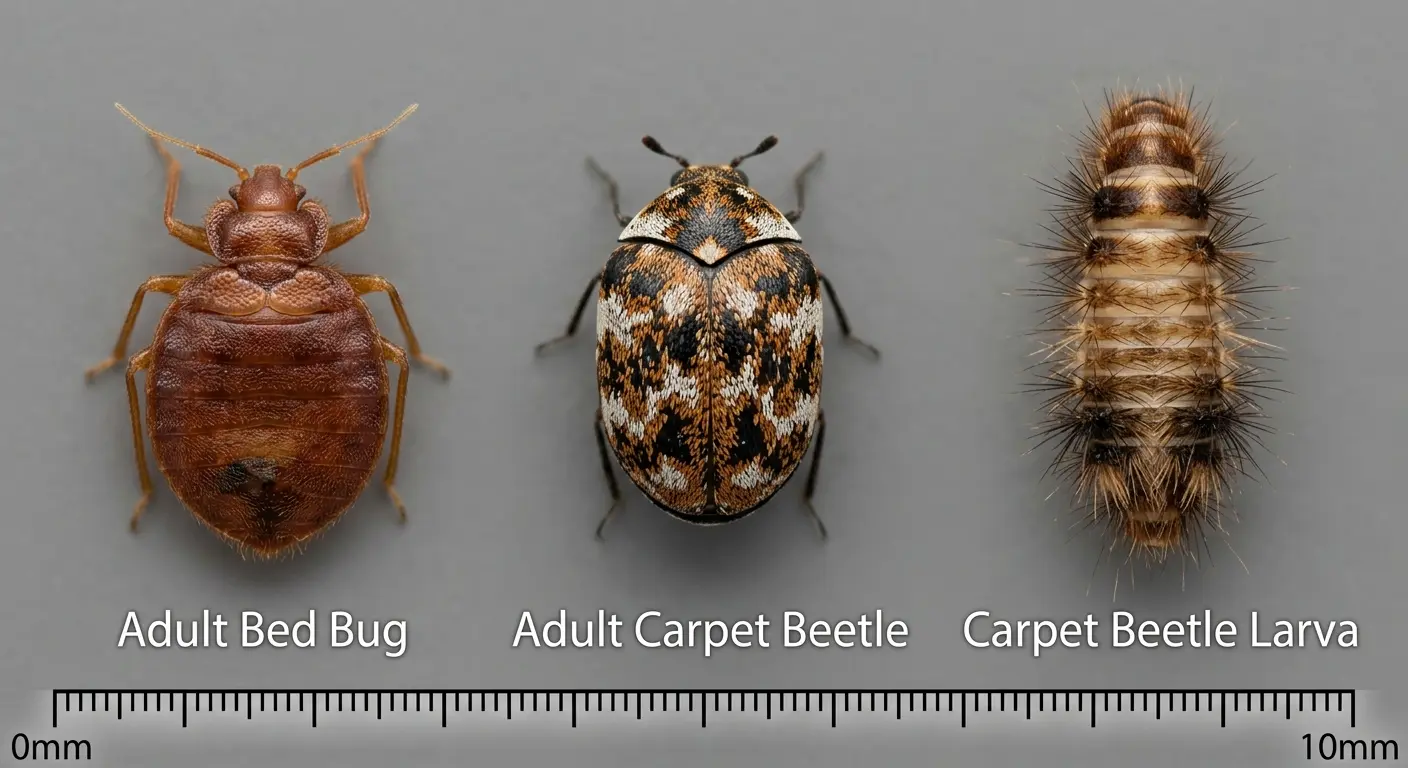
Carpet beetles do not bite humans. The skin irritation associated with carpet beetles comes from an allergic reaction to their hairs, not from feeding. If you’re seeing small bugs near carpets, wool clothing, or stored fabrics, carpet beetles are more likely than bed bugs. See bed bug vs carpet beetle for more.
Bat Bug vs Bed Bug: The Hair Test
Bat bugs are nearly identical to bed bugs in appearance, size, and behavior. Both belong to the family Cimicidae and share the same short, wide heads and oval bodies. The key difference lies in the hairs on their thorax: bat bugs have longer, more prominent hairs than bed bugs.
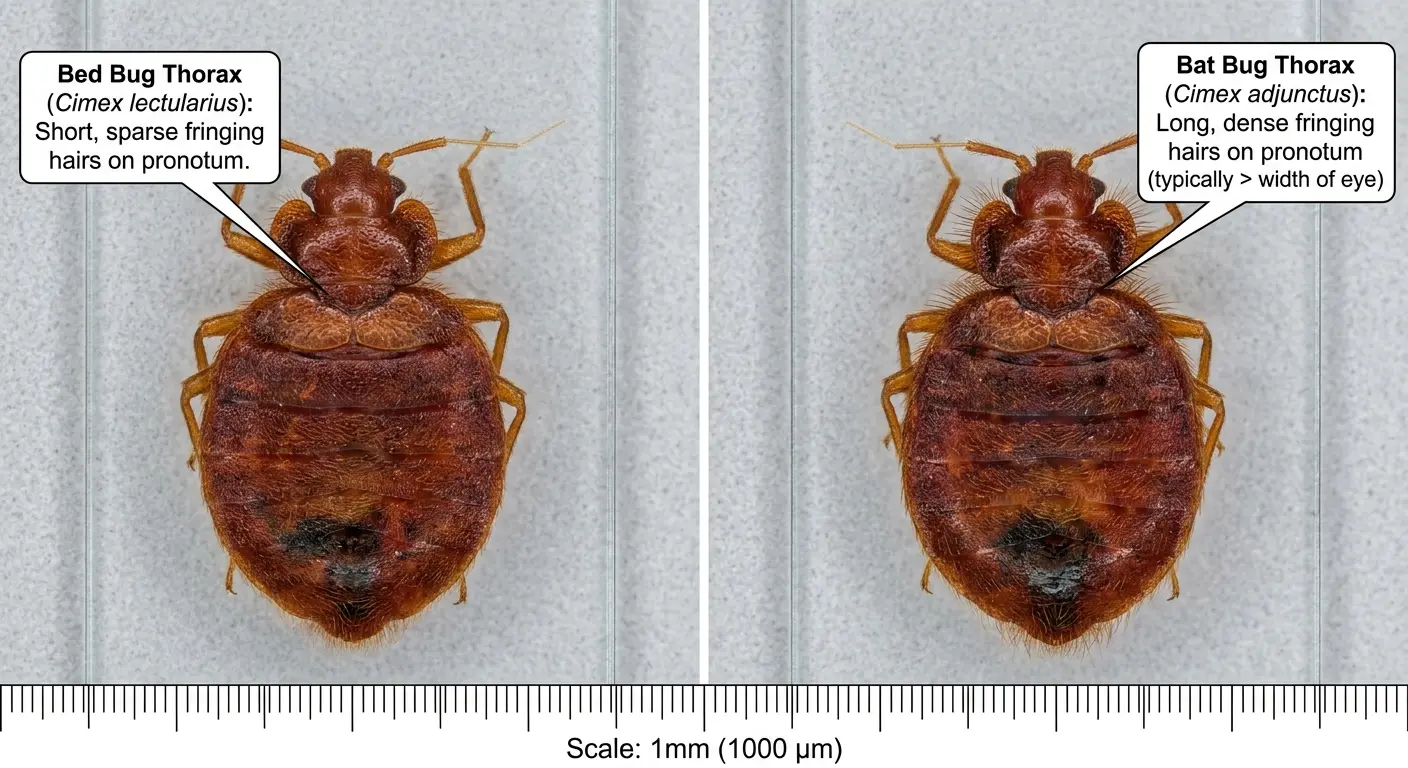
Bat bugs typically live in bat roosts in attics, chimneys, or wall voids. If bats are present in your home, bat bugs may wander into living spaces when their bat hosts leave. The bed bug vs bat bug explains how to spot the difference.
Swallow Bug vs Bed Bug: Fine Hairs and Antennae
Swallow bugs are another close relative in the Cimicidae family that’s commonly confused with bed bugs. These bugs boast long, fine hairs all over their bodies — a feature that distinguishes them from bed bugs when viewed under magnification.
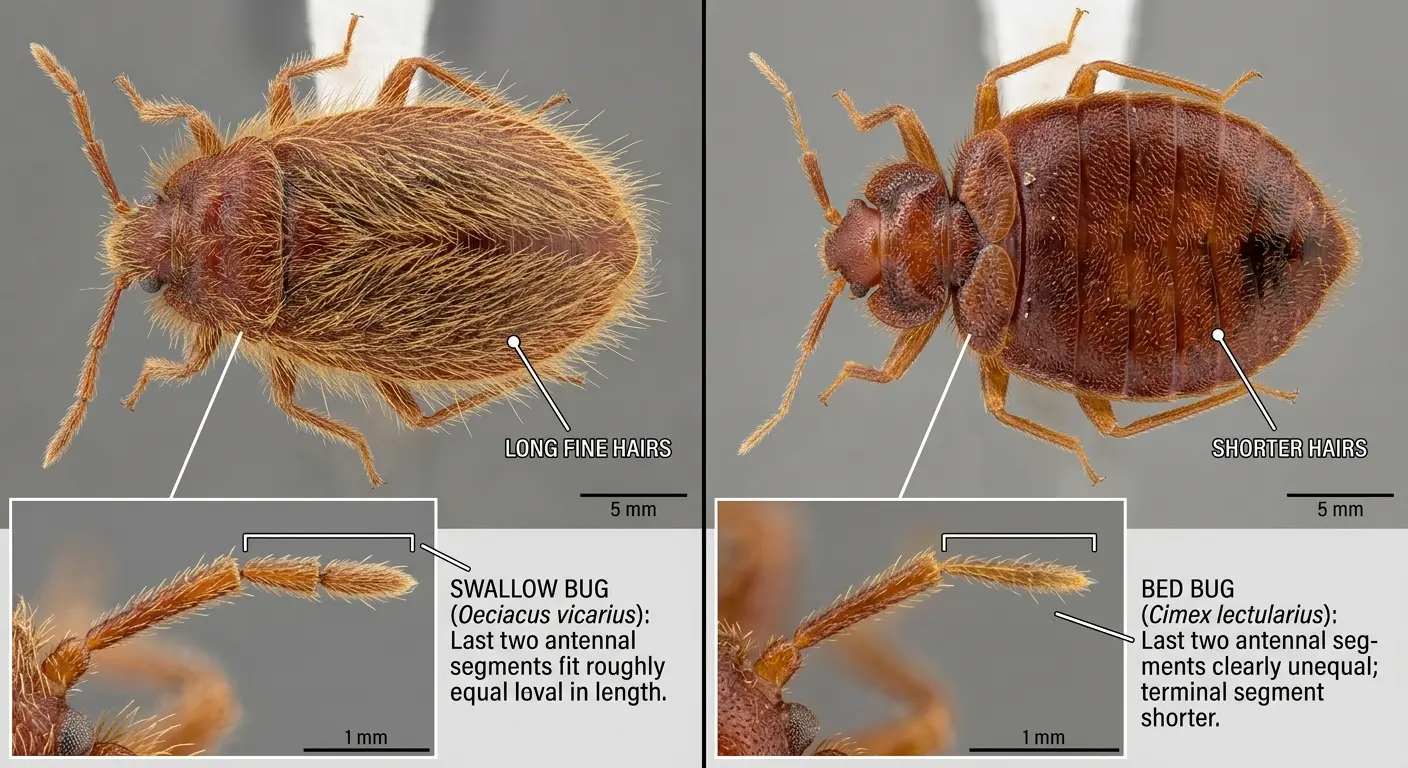
Swallow bugs also have distinct antennae: their last two antennal segments are the same length, whereas bed bugs have different segment lengths. Swallow bugs primarily feed on cliff swallows and other birds, so they’re typically found near nests rather than in sleeping areas. Our bed bug vs swallow bug provides a detailed breakdown.
Mosquito vs Bed Bug: Bite Timing and Appearance
Mosquito bites and bed bug bites can look similar — both cause red, itchy welts. But the insects themselves are completely different. Mosquitoes are flying insects with elongated bodies, long legs, and visible wings. Bed bugs are wingless, flightless, and flat.
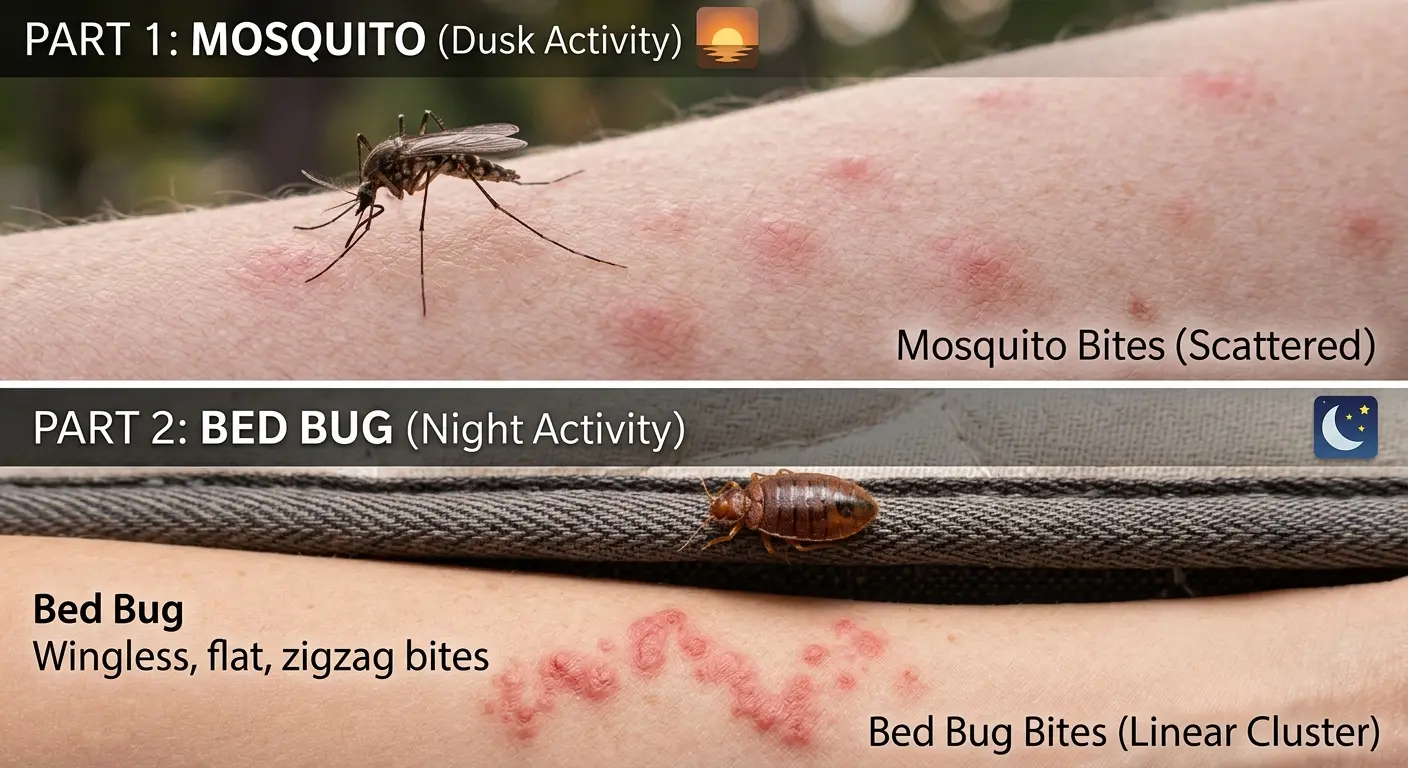
Mosquito bites often appear as isolated, randomly scattered welts, while bed bug bites tend to cluster in lines or zigzag patterns. Mosquitoes are most active at dawn and dusk, while bed bugs feed at night when you’re asleep. The bed bug vs mosquito covers these distinctions.
Lice vs Bed Bug: Size and Location of Infestation
Head lice are significantly smaller than bed bugs — about 2-3mm compared to 5-7mm. Lice also have a more elongated body shape and are typically found attached to hair shafts on the head, while bed bugs hide in furniture and bedding.
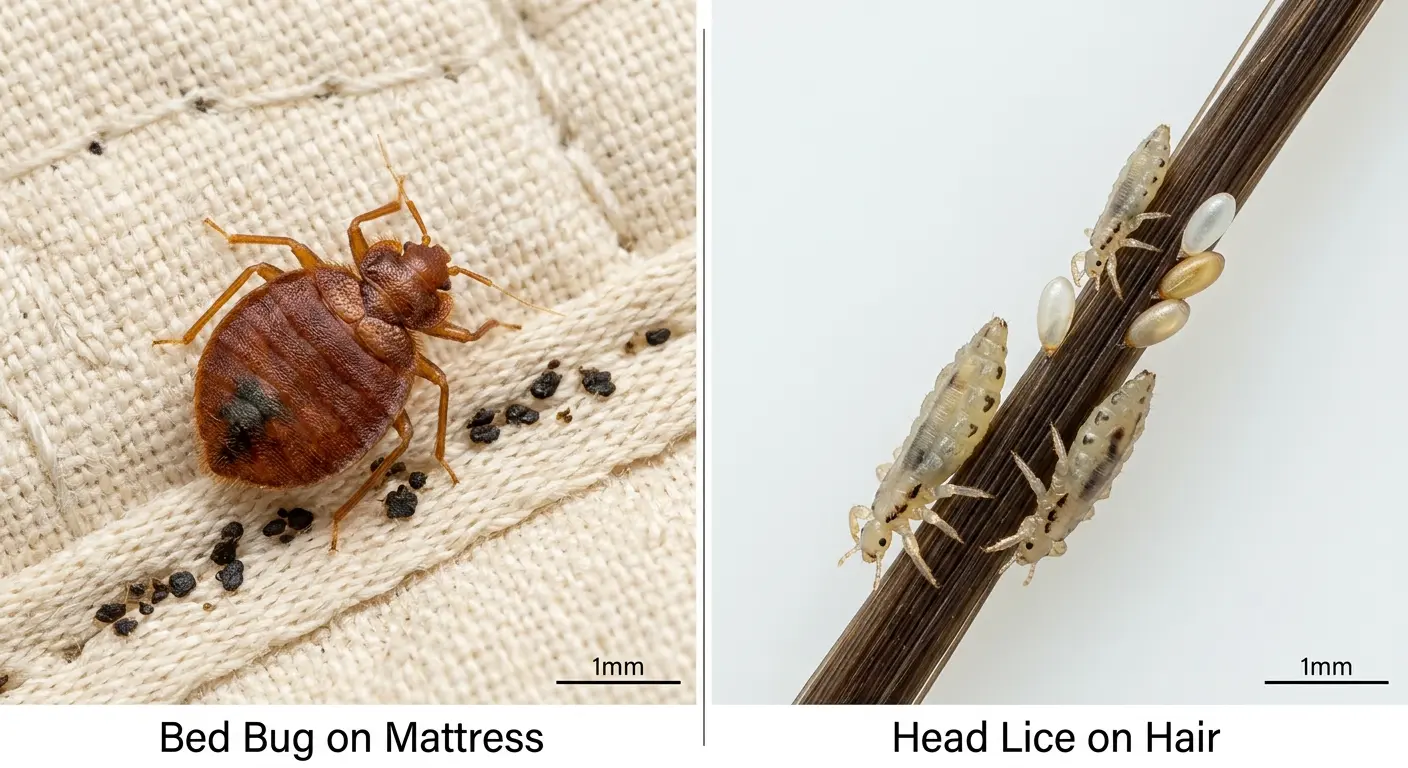
Lice bites are concentrated on the scalp, neck, and behind the ears. Bed bug bites can appear anywhere on exposed skin. Lice cannot survive away from the human body for more than 24-48 hours, whereas bed bugs can survive months without feeding. Our bed bug vs lice details the differences.
Spider vs Bed Bug: Eight Legs and Body Shape
Spiders are arachnids with eight legs, two body segments, and no antennae. Bed bugs are insects with six legs, three body segments, and visible antennae. The leg count alone eliminates any confusion.
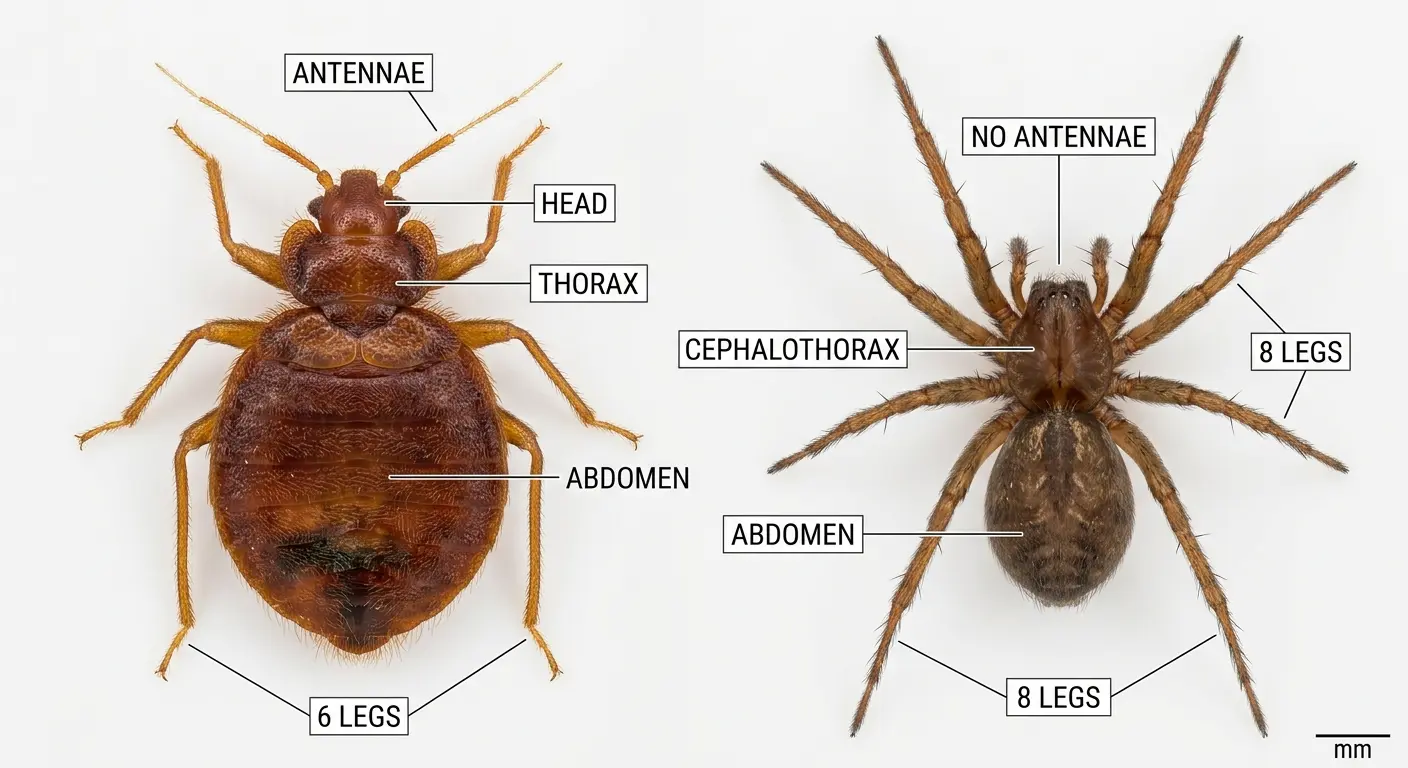
Spider bites typically appear as single, isolated wounds with surrounding redness and swelling. Bed bug bites form clusters or lines. If you’re seeing eight-legged creatures, you’re dealing with spiders, not bed bugs. The bed bug vs spider provides more detail.
Booklice: Tiny Lookalikes That Don’t Bite
Booklice are tiny insects measuring only 1-2mm — significantly smaller than bed bugs. They’re pale, almost translucent, and prefer humid environments where they feed on mold and fungi found in books, paper, and stored food.
Booklice do not bite humans and do not feed on blood. If you’re finding tiny, pale insects near books or in damp areas, they’re likely booklice, not bed bugs. Their small size and pale coloring distinguish them from the larger, reddish-brown bed bug. For more tiny lookalikes, see https://bedbugtreatmentkit.com/blog/tiny-bugs-that-are-not-bed-bugs/.
Spider Beetles: The Shape Mimic
Spider beetles have a rounded, oval body shape that resembles bed bugs at a glance. However, spider beetles are typically darker — almost black — and have long, slender legs and antennae that make them look like small spiders.
Spider beetles feed on stored food products like grains, flour, and dried fruits. They do not bite humans. Finding them in your pantry or kitchen indicates a stored product pest problem, not a bed bug infestation.
Head Lice vs Bed Bugs: Where They Hide
Head lice spend their entire life cycle on the human scalp, attaching eggs (nits) to hair shafts. Bed bugs hide in cracks, crevices, mattress seams, and furniture — they only come out to feed. This behavioral difference is the most reliable way to distinguish between the two.
If you’re finding bugs in your hair, it’s lice. If you’re finding bugs in your mattress seams or bed frame, it’s likely bed bugs. The treatment approaches are completely different, so accurate identification is critical. For common hiding spots and where bed bugs are found around the home, review where bed bugs are found.
Bite Patterns: Can You Identify the Pest by Bites Alone?
Bite patterns alone are not reliable for identifying the pest. Most guides suggest that bed bug bites form linear clusters, but research shows that individual reactions vary dramatically — some people develop no reaction at all, while others experience severe allergic responses.
The most reliable approach combines physical evidence (finding the bugs themselves) with bite patterns. Look for dark spots (fecal stains), shed skins, and live insects in mattress seams, box springs, and bed frames. For specifics on droppings and stains see bed bug droppings and stains, and for shed skins consult bed bug shells and shed skin. For a comprehensive visual reference, browse our bed bug photos and appearance. For bite-pattern differences specifically, see do bed bug bites look like ant bites.
How to Confirm It’s Actually Bed Bugs
If you’ve spotted a suspicious insect, capture it in a clear container or take a high-resolution photo. Look for the key features: six legs, oval flat body, reddish-brown color, no wings, and antennae with four segments. Measure it — bed bugs are 5-7mm as adults.
Compare your specimen against our bed bug identification for a comprehensive checklist. You can also check for additional signs like bed bug droppings and stains, shed skins, and the distinctive bed bug odor — a sweet, musty smell that some people describe as similar to coriander. If you find dead or crushed specimens, reference dead bed bugs for guidance on identification and evidence collection.
Not sure if those marks are bed bug bites or something else?
Upload a photo to our identifier tool — get a confirmed answer in under 60 seconds.
Next Steps for Bed Bug Confirmation
Once you’ve identified the insect as a bed bug, act quickly. Bed bugs reproduce rapidly — a single female can lay up to 500 eggs in her lifetime. Early intervention prevents the infestation from spreading throughout your home.
Start by washing all bedding and clothing in hot water and drying on high heat. Vacuum thoroughly, paying special attention to mattress seams and bed frames. Consider encasing your mattress and box spring in bed bug-proof covers to trap any remaining insects. For guidance on species differences that can affect treatment, see bed bug species and names.
For a complete treatment plan, review our bed bug identification which covers early detection, home treatment steps, and recommended tools.
Common Misidentification Scenarios
Scenario 1: You wake up with bites but find no bugs. This could be fleas, mosquitoes, or even a skin condition like hives. Check your pets for fleas and inspect your yard for standing water where mosquitoes breed. If the confusion happened in a hotel, see why bed bugs are mistaken for ants in hotels.
Scenario 2: You find small brown bugs near your bed. This could be bed bugs, bat bugs, or swallow bugs. Look for the hair differences on the thorax and check for bats in your attic. For a closer bed bug-versus-ant comparison, see do bed bugs look like ants.
Scenario 3: You find bugs in your pantry. This is almost certainly not bed bugs. Stored product pests like spider beetles, grain weevils, or flour beetles are the likely culprits.
Still not sure if it's bed bugs or a different insect?
Our AI tool compares your photo against thousands of confirmed cases instantly.
If You Can’t Confirm the Pest
If you’re unable to confirm the pest type using the checklist, use our identification tools and photo uploader to get step-by-step guidance. These resources walk you through diagnostic signs, evidence collection, and recommended in-home treatments without referring you to external services.
Treatment Differences: Why Accurate ID Matters
Treating for the wrong pest is costly and ineffective. Bed bug treatments require specific approaches — mattress encasements, targeted insecticides, heat treatments, and thorough vacuuming. Flea treatments focus on pets and yard areas. Cockroach treatments use bait stations and gel formulations.
Using the wrong treatment not only fails to solve your problem but can also make the actual infestation worse by driving pests deeper into hiding. Accurate identification is the foundation of effective pest control.
Confirmed bed bugs — what do you actually need to treat them?
Upload one photo and our tool builds your exact treatment kit in under two minutes.
FAQ: Bed Bug vs Other Insects
What is the most common insect mistaken for a bed bug?
Can bed bugs jump like fleas?
Do bed bugs have wings?
How can I tell if it's a tick or a bed bug?
Are carpet beetle bites dangerous?
How small are baby bed bugs compared to other insects?
If you still have questions after these FAQs, upload a photo to our identifier tool for a definitive identification.
- Are There Different Species of Bed Bugs? Complete Guide to Bed Bug Types and Names
- Baby Bed Bugs: What Nymphs Look Like and How to Identify Them
- Bed Bug Droppings: How to Identify Black Spots and Stains
- Bed Bug Photos: Close-Up Images to Identify Every Life Stage
- Bed Bug Shells: The Complete Guide to Casings and Shed Skin
- Bed Bug Smell: What Do Bed Bugs Smell Like and Why It Matters
- Bugs That Look Like Bed Bugs: 12 Lookalikes You Need to Know
- Dead Bed Bugs: How to Identify Carcasses, Husks & What They Really Mean
- Do Bed Bugs Have Wings? The Truth About Bed Bug Body Parts
- How Big Are Bed Bugs? Size, Visibility & What You Can See
- What Color Are Bed Bugs? The Complete Color Guide by Life Stage
- Where Do Bed Bugs Hide? The Complete Hiding Spot Guide