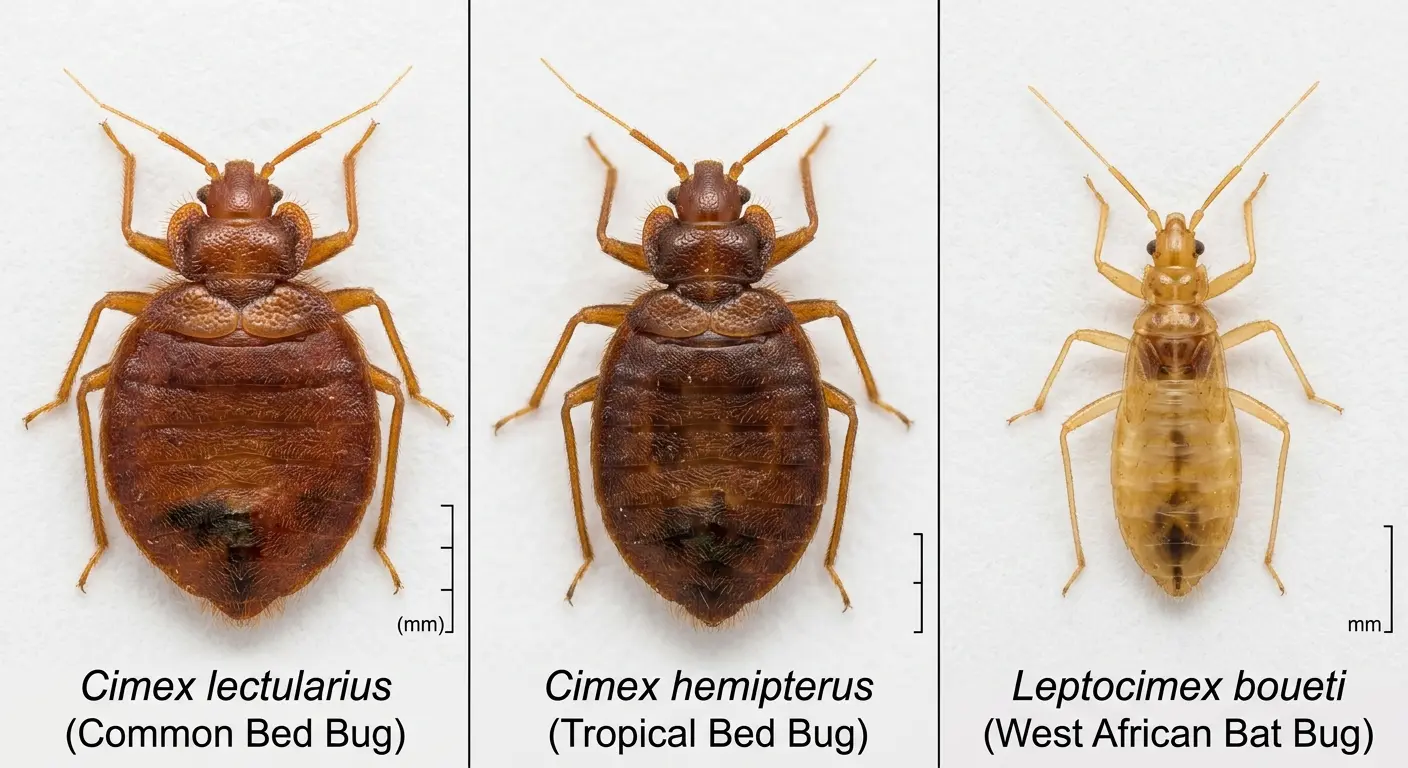
Yes, there are different species of bed bugs — at least 88 species exist within the Cimicidae family, but only three species regularly feed on humans. The most common is Cimex lectularius (the common bed bug), followed by Cimex hemipterus (the tropical bed bug) and Leptocimex boueti (the African bed bug). Understanding which species you’re dealing with matters because treatment approaches and prevention strategies can vary based on the type.
Most people assume “bed bugs” refers to a single insect, but the term actually covers a family of blood-feeding parasites. While the common bed bug causes most infestations worldwide, other species exist that can bite humans under specific circumstances. This guide breaks down every bed bug species, their scientific names, and how to tell them apart. If you’re just starting your investigation, our bed bug identification guide provides a comprehensive overview of all the signs to look for, and our bed-bug-behavior-and-identification page explains typical hiding places and activity patterns.
What Are the Main Bed Bug Species That Bite Humans?
Three species of bed bugs in the Cimicidae family are known to feed on human blood. According to UC Riverside’s Center for Invasive Species Research, these are Cimex lectularius, Cimex hemipterus, and Leptocimex boueti. Each has distinct geographic preferences and behavioral traits that affect how you handle an infestation.
The common bed bug (Cimex lectularius) dominates temperate regions worldwide, including North America, Europe, and parts of Asia. The tropical bed bug (Cimex hemipterus) prefers warmer climates like Florida, Southeast Asia, and tropical Africa. The African bed bug (Leptocimex boueti) remains extremely rare and primarily confined to West African countries.
Why Does the Bed Bug Species Matter for Treatment?
Different species respond differently to certain insecticides and heat treatments. The tropical bed bug, for instance, has shown resistance to pyrethroid insecticides in some regions, requiring alternative approaches. When you identify the specific species, pest control professionals can select the most effective treatment protocol rather than relying on generic methods.
Species identification also helps predict infestation patterns. Common bed bugs typically hide within 8 feet of sleeping areas, while tropical bed bugs may travel farther distances. This behavioral difference affects where you should focus inspection and treatment efforts; see our where-bed-bugs-are-found page for a list of common hideouts.
What Is Another Name for Bed Bugs?
Another name for bed bugs includes “chinches” in Spanish-speaking regions, “punaises de lit” in French, and “bettwanzen” in German. The scientific name for the common bed bug is Cimex lectularius, derived from Latin terms meaning “bug” and “bed” or “couch.”
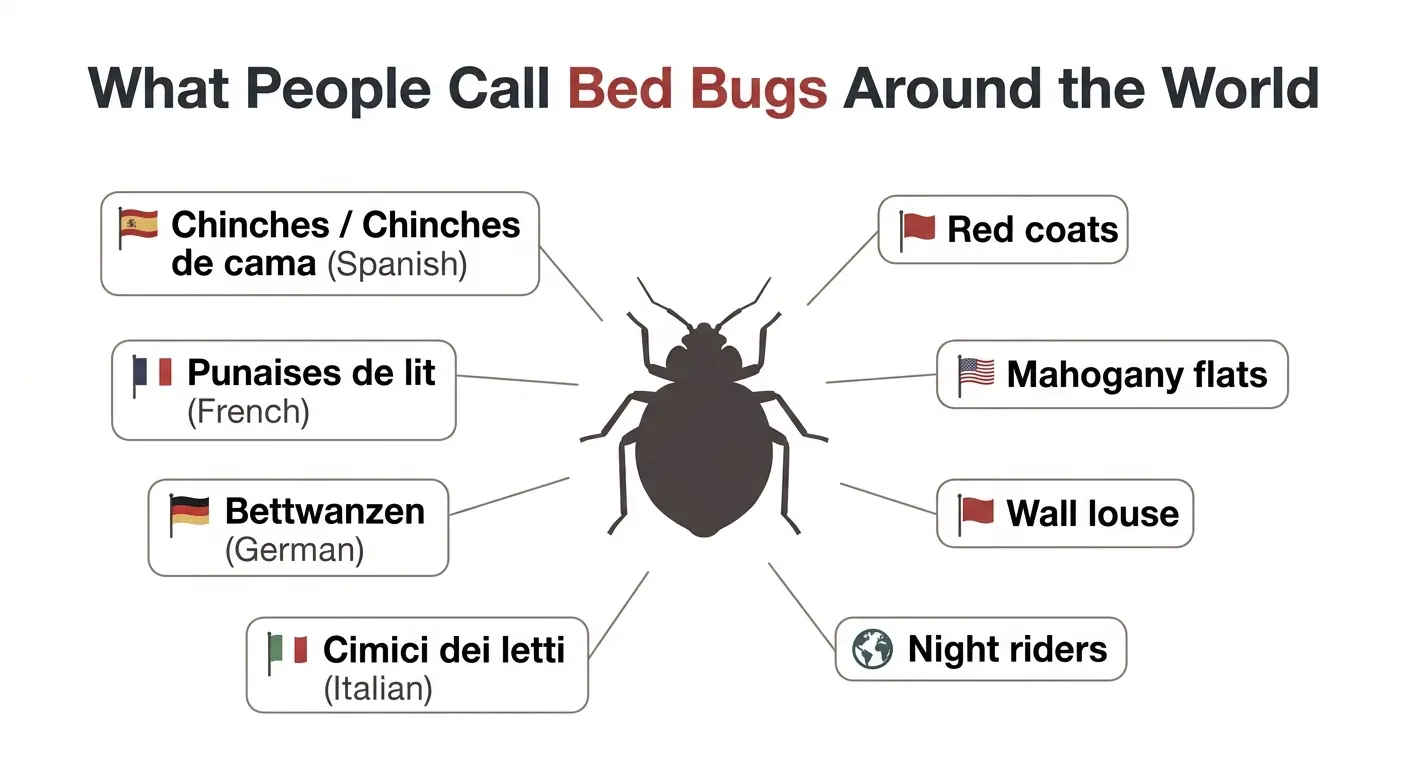
The term “chinches” specifically refers to bed bugs in many Latin American countries and is commonly used in the southwestern United States. You might also hear people call them “red coats” (referring to their color after feeding), “mahogany flats” (describing their flattened bodies), or “night riders” (because they feed while you sleep). These various bed bug names reflect centuries of human interaction with these pests across different cultures.
What Are the Scientific Names for Different Bed Bug Species?
The scientific classification follows a standard naming convention. All bed bugs belong to the family Cimicidae, which Purdue University’s entomology department confirms contains at least 88 species worldwide. The three human-feeding species are:
- Cimex lectularius — the common or temperate bed bug
- Cimex hemipterus — the tropical bed bug
- Leptocimex boueti — the African bed bug
Each species has distinct morphological features, though telling them apart often requires magnification and expertise. For a deeper dive into the full classification system, explore our detailed bed bug species breakdown and our bed-bug-body-parts reference for the key anatomy used in identification.
How Many Different Bed Bugs Species Exist in the World?
The Cimicidae family includes fewer than 90 known species, with most feeding on bats or birds rather than humans. According to Purdue University, at least 88 species of Cimicidae exist worldwide that live with and feed on bats or birds. Only the three species mentioned above have adapted to human hosts.
The remaining species are specialized parasites of wildlife. Bat bugs (Cimex adjunctus), swallow bugs (Oeciacus vicarius), and poultry bugs (Haematosiphon inodorus) are among the more common non-human-feeding species. These insects occasionally bite humans when their preferred hosts are unavailable, but they cannot sustain populations on human blood alone.
What Are the Different Forms of Bed Bugs Within a Species?
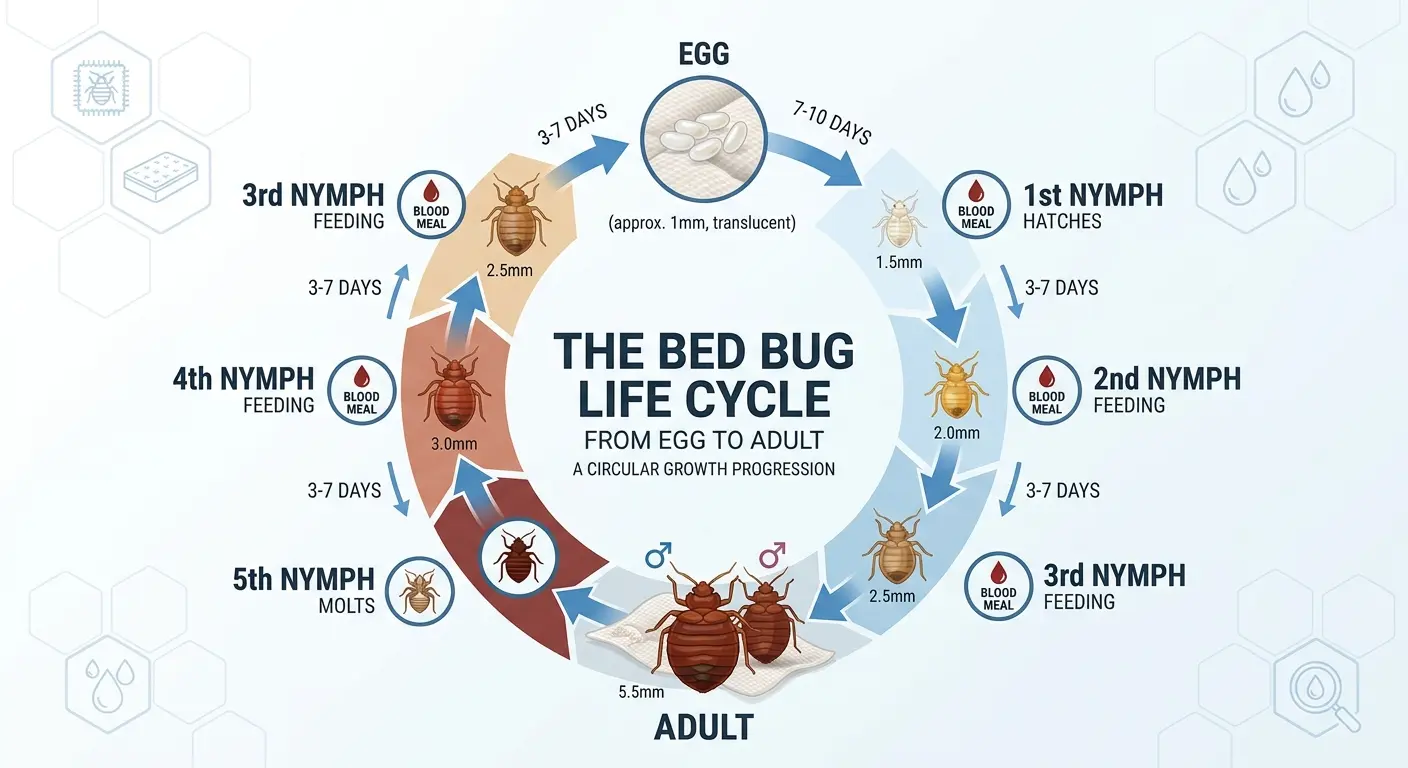
Each bed bug species goes through several life stages: egg, five nymphal instars, and adult. The nymphs resemble smaller versions of adults but are lighter in color and become progressively darker with each molt. This means you might encounter what appear to be different bed bugs, but they’re simply different developmental stages of the same species — learn more about baby bed bugs and nymphs.
What Is the Most Common Bed Bug Species in the United States?
Cimex lectularius is by far the most common bed bug species in the United States and other temperate regions. This species thrives in human dwellings because it has adapted to feed on human blood and hide in cracks, crevices, mattress seams, and furniture joints. Its flattened body allows it to squeeze into spaces as thin as a credit card.
The tropical bed bug (Cimex hemipterus) appears occasionally in Florida and other subtropical states, but it remains far less common than its temperate cousin. Bat bugs (Cimex adjunctus) also appear in the U.S., but they typically originate from bat roosts in attics or walls and don’t establish long-term infestations in living spaces.
How Can You Tell Common Bed Bugs Apart From Tropical Bed Bugs?
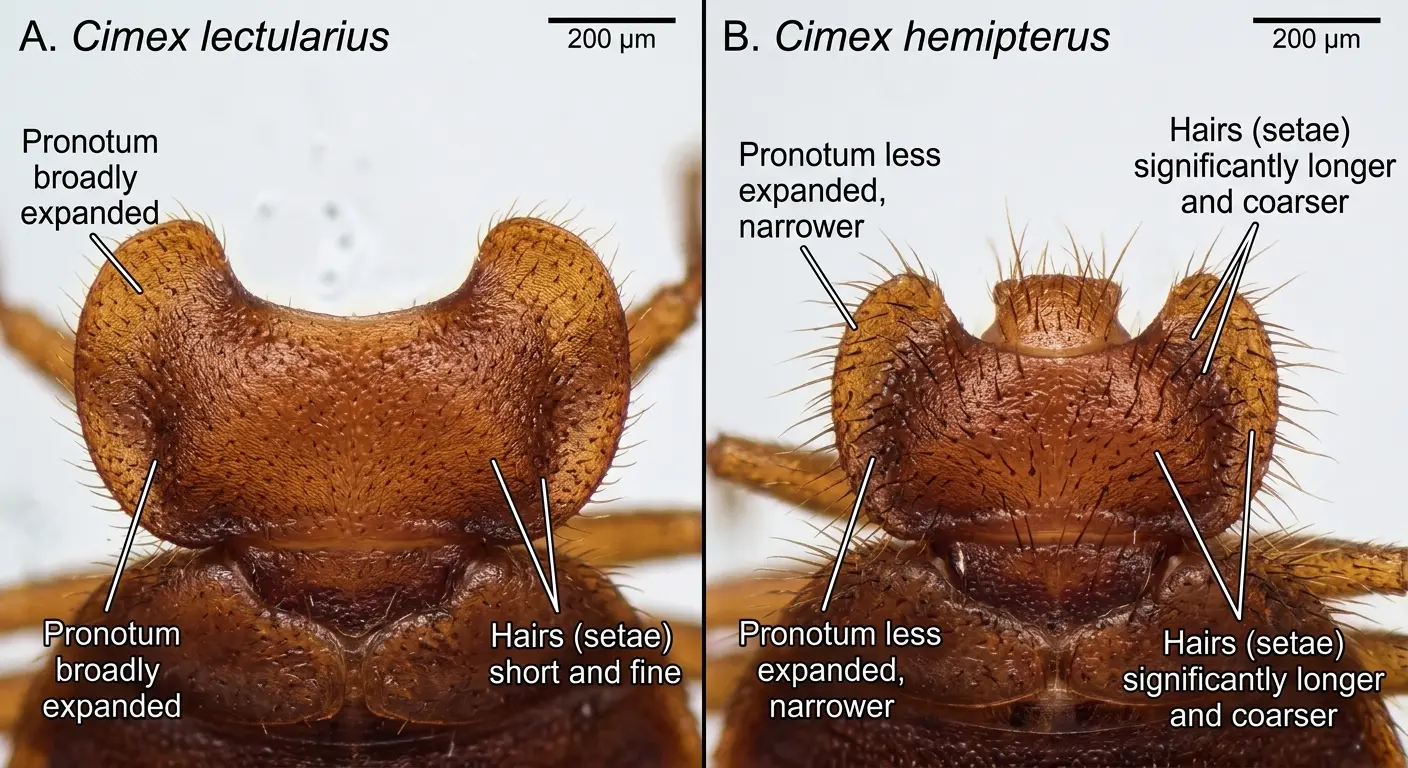
Distinguishing between Cimex lectularius and Cimex hemipterus requires examining the pronotum (the segment behind the head) under magnification. The common bed bug has a pronotum that is less than twice as wide as it is long, while the tropical bed bug’s pronotum is more than twice as wide. The tropical species also has slightly longer hairs on its body.
Most guides say you can identify bed bug species by their geographic location — but this isn’t always reliable. Global travel has introduced tropical bed bugs into temperate regions, and common bed bugs appear worldwide. If you’re unsure which species you have, professional identification through microscopy is the only definitive method.
What Is the African Bed Bug Species?
Leptocimex boueti is the third human-feeding bed bug species, primarily found in West Africa. This species is extremely rare and poorly studied compared to the other two. It feeds on both humans and bats, which means it can maintain populations in caves or buildings with bat roosts.
Most pest control professionals will never encounter this species in their careers. If you live outside West Africa, you almost certainly have either the common or tropical bed bug. The African bed bug’s rarity means most research and treatment protocols focus on the other two species.
Why Is the African Bed Bug Species Rarely Discussed?
The African bed bug receives minimal attention because its geographic range is limited and it rarely causes widespread infestations. Most bed bug guides focus on the common and tropical species because they account for the overwhelming majority of human infestations worldwide. If you’re dealing with bed bugs in North America, Europe, or most of Asia, you’re dealing with Cimex lectularius.
Are Bat Bugs the Same as Bed Bugs?
Bat bugs are not the same species as bed bugs, though they belong to the same family (Cimicidae). Bat bugs (Cimex adjunctus and related species) primarily feed on bats but will bite humans if bats leave the roost or if they wander into living spaces. They cannot reproduce on human blood alone, so infestations typically resolve once bat populations are excluded.
The key difference between bat bugs and bed bugs lies in hair length on the thorax. Bat bugs have longer hairs on their pronotum — longer than the width of their eye — while bed bugs have shorter hairs. This distinction requires microscopic examination to confirm. For more on distinguishing similar pests, see our bed-bug-lookalikes and bed-bug-vs-other-insects pages.
Can Bat Bugs Infest Your Home Like Bed Bugs?
Bat bugs can appear in homes where bats roost in attics, walls, or chimneys. When bats leave or die, the bat bugs may migrate into living areas searching for new hosts. However, they cannot sustain a breeding population on human blood, so they eventually die out if bats are excluded and the roost is treated.
If you find bat bugs, you need to address the bat problem first. Sealing entry points, installing bat exclusion devices, and removing guano will eliminate the bat bug source. Treating the living space with residual insecticides helps kill any wandering bat bugs.
What Are the Different Bed Bugs Species Names in Other Languages?
Different cultures have developed their own names for bed bugs based on local languages and observations. In Spanish, bed bugs are called “chinches” or “chinches de cama.” In French, they’re “punaises de lit.” German speakers call them “Bettwanzen,” while Italian uses “cimici dei letti.”
These regional names sometimes cause confusion when researching bed bugs online. If you’re looking for information in another language, knowing the local term helps you find accurate resources. The scientific names remain consistent across all languages, which is why scientists rely on Latin binomial nomenclature.
Why Do People Ask About “Chinches” Bed Bugs?
The term “chinches” appears frequently in bed bug searches because Spanish-speaking populations across the Americas use this word. In Mexico, Central America, and many parts of the United States, “chinches” specifically refers to bed bugs. Understanding this terminology helps you provide accurate information to Spanish-speaking individuals dealing with infestations.
How Do Bed Bug Species Differ in Appearance?
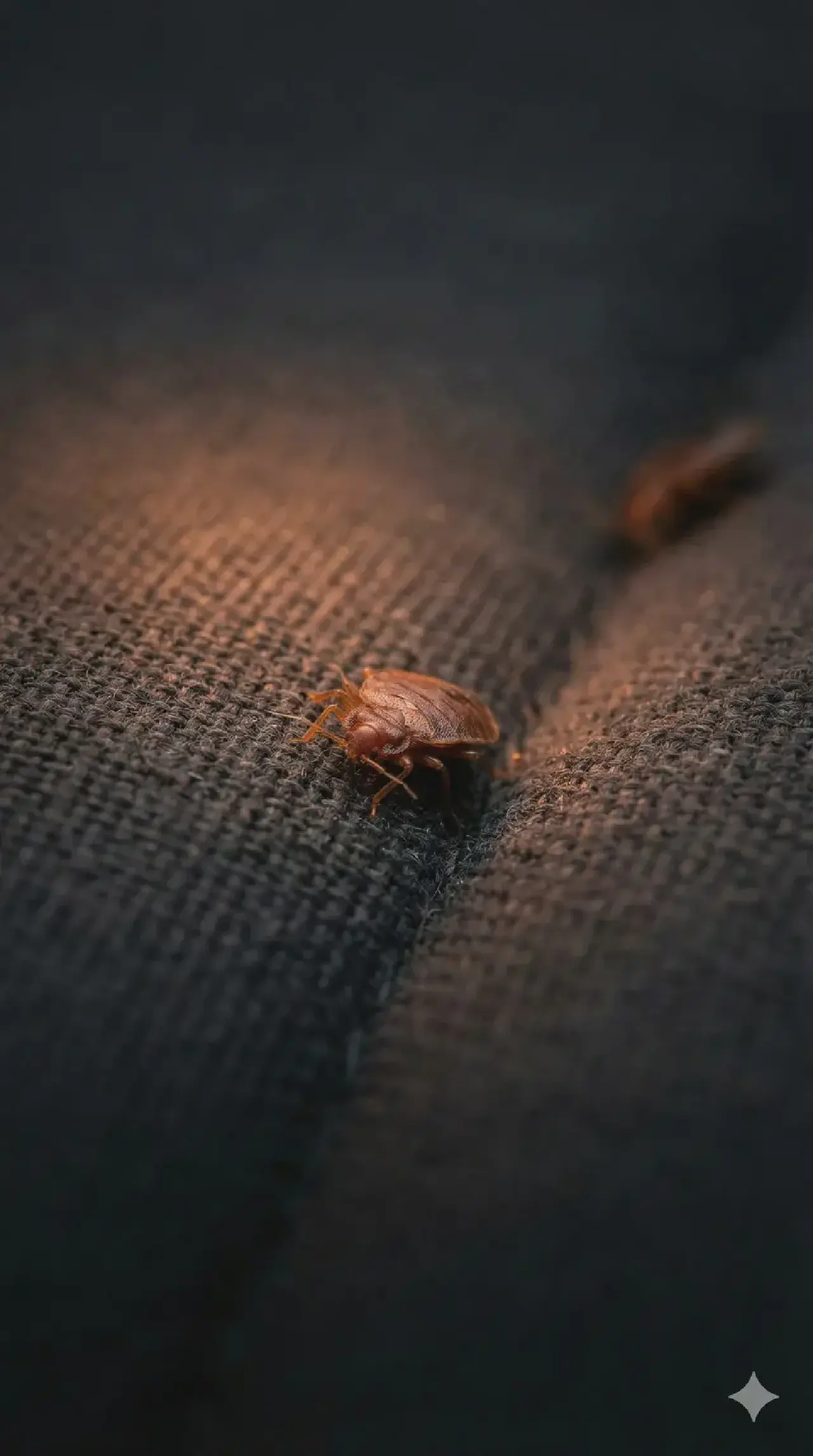
While all bed bug species share similar body shapes — oval, flattened, and wingless — subtle differences exist between species. Adult bed bugs measure about 5-7 millimeters in length, roughly the size of an apple seed. Their color ranges from translucent white (unfed nymphs) to reddish-brown (fed adults). For more on color changes and visibility, see our bed-bug-color-guide and bed-bug-size-and-visibility pages.
The tropical bed bug tends to be slightly smaller than the common bed bug, though the difference is barely visible without magnification. The African bed bug has a narrower body shape compared to the other two species. These morphological differences help entomologists classify specimens but aren’t useful for casual identification.
What Physical Features Help Identify Different Bed Bug Species?
Species identification relies on microscopic features including:
- Pronotum shape and width relative to length
- Hair length on the thorax
- Eye morphology
- Genitalia structure (for males)
These features require professional training and equipment to evaluate. If you need to know which species you’re dealing with, collect a specimen in a sealed container and upload a clear photo to our identifier tool via the “Upload Your Photo Now” CTA, or submit the specimen through our site identification process for confirmation. After identification, follow our site treatment guidance and recommended products.
What Are the Different Forms of Bed Bugs During Their Life Cycle?
Each bed bug species undergoes simple metamorphosis with three main stages: egg, nymph, and adult. The eggs are tiny (about 1 millimeter), pearl-white, and often deposited in clusters in cracks and crevices. Nymphs hatch from eggs and go through five molts before reaching adulthood, requiring a blood meal between each molt. Learn how to spot shed casings and shells in our bed-bug-shells-and-shed-skin guide.
The nymphs look like smaller versions of adults but are lighter in color — nearly translucent when unfed. After feeding, they appear bright red due to the blood visible through their exoskeleton. As they mature, their exoskeleton darkens to the characteristic brown color of adults.
How Long Does It Take for Different Bed Bug Species to Develop?
Development time varies by species and environmental conditions. Under optimal conditions (70-80°F with access to blood meals), the common bed bug completes its life cycle in about 5-8 weeks. The tropical bed bug develops slightly faster in warm climates, while the African bed bug’s development remains poorly documented.
Temperature plays a critical role in development speed. Cooler temperatures slow development, while warmer temperatures accelerate it. This explains why bed bug infestations often spread rapidly in summer months or in heated buildings.
What Are the Different Bed Bugs Found in Homes?
When people find bed bugs in their homes, they’re almost certainly dealing with the common bed bug (Cimex lectularius). This species has adapted so thoroughly to human dwellings that it’s rarely found in nature outside of human structures. Its entire life cycle revolves around feeding on human blood and hiding in furniture, bedding, and structural cracks.
Occasionally, people mistake other insects for bed bugs. Bat bugs, swallow bugs, and poultry bugs can appear in homes but originate from wildlife hosts. Booklice, carpet beetles, and spider beetles are often confused with bed bugs but don’t bite humans. Proper identification prevents unnecessary treatment and helps you address the actual pest problem; see our bed-bug-photos-and-appearance and dead-bed-bugs pages to compare images and signs.
How Do You Know Which Bed Bug Species You Have?
Unless you have access to a microscope and entomological training, you can’t definitively identify the species yourself. However, your geographic location provides a strong clue. In North America, Europe, and most of Asia, you have Cimex lectularius. In tropical regions like Florida, Southeast Asia, or equatorial Africa, you might have Cimex hemipterus.
If you need confirmation, capture a specimen in a sealed plastic bag or container and take it to a pest control professional or university extension office. They can examine it under magnification and confirm the species. This identification helps determine the most effective treatment approach.
Not sure if those marks are bed bug bites or something else?
Upload a photo to our identifier tool — get a confirmed answer in under 60 seconds.
What Are the Different Names for Bed Bug Species?
Beyond the scientific names, bed bugs have accumulated numerous common names over centuries of human interaction. “Chinch” comes from the Spanish word for bed bug, while “bed bug” itself derives from the insect’s habit of hiding in beds. Other names include “wall louse,” “house bug,” “red coat,” and “mahogany flat.”
The scientific community uses Latin binomial names to avoid confusion between languages. Cimex lectularius is universally recognized, regardless of local language. This standardized naming system ensures accurate communication between researchers, pest control professionals, and public health officials worldwide.
What Is the Name of Bed Bugs in Scientific Classification?
The full taxonomic classification of the common bed bug is:
- Kingdom: Animalia
- Phylum: Arthropoda
- Class: Insecta
- Order: Hemiptera
- Family: Cimicidae
- Genus: Cimex
- Species: lectularius
This classification places bed bugs in the order Hemiptera, the “true bugs,” which includes cicadas, aphids, and shield bugs. All members of this order share piercing-sucking mouthparts adapted for feeding on plant or animal fluids.
How Do Different Bed Bug Species Behave Differently?
Each species exhibits slightly different behaviors that affect how you detect and treat infestations. The common bed bug typically feeds every 5-10 days and hides within 8 feet of the host’s sleeping area. The tropical bed bug tends to feed more frequently and may travel farther from hiding spots.
The African bed bug shows a preference for bat hosts and may be found in caves or buildings with bat populations. This species rarely establishes the dense infestations seen with common bed bugs because its reproduction rate appears lower.
Why Do Different Bed Bug Species Have Different Behaviors?
Behavioral differences stem from evolutionary adaptations to different environments and hosts. The common bed bug evolved alongside humans in temperate regions, developing behaviors suited to human dwellings. The tropical bed bug adapted to warmer climates and different host availability. The African bed bug retained a closer association with bat populations.
These behavioral differences influence treatment strategies. For example, tropical bed bugs may require more thorough inspections of areas further from sleeping spaces. Understanding which species you have helps pest control professionals target their efforts effectively.
What Is the Difference Between Bed Bugs and Other Cimicidae Species?
The Cimicidae family includes species that feed on birds and bats in addition to the three human-feeding species. Swallow bugs (Oeciacus vicarius) infest cliff swallow nests and may bite humans when birds abandon nests. Poultry bugs (Haematosiphon inodorus) feed on domestic birds and occasionally bite humans working in poultry facilities.
These species share the characteristic flattened body and blood-feeding behavior of bed bugs but differ in host preference and habitat. They cannot establish long-term infestations on human blood alone, so they typically disappear once the wildlife host is removed.
How Can You Tell Bed Bugs Apart From Bat Bugs?
The most reliable way to distinguish bed bugs from bat bugs involves examining the hairs on the thorax under magnification. Bat bugs have hairs longer than the width of their eye, while bed bugs have shorter hairs. The pronotum shape also differs slightly between species.
Without magnification, you can look for clues about the source. If you have bats roosting in your attic or walls, look for guano, droppings, or other signs of bat activity and inspect those areas closely. See our where-bed-bugs-are-found page for common hiding spots, our bed-bug-droppings-and-stains page to identify fecal markings, and our bed-bug-lookalikes and bed-bug-vs-other-insects pages to avoid misidentifying harmless insects. If you still need a definitive answer, capture a specimen in a sealed container and upload a clear photo to our identifier tool via the “Upload Your Photo Now” CTA; once we confirm the species, follow our site treatment guidance and recommended products to address the problem.
- Baby Bed Bugs: What Nymphs Look Like and How to Identify Them
- Bed Bug Droppings: How to Identify Black Spots and Stains
- Bed Bug Photos: Close-Up Images to Identify Every Life Stage
- Bed Bug Shells: The Complete Guide to Casings and Shed Skin
- Bed Bug Smell: What Do Bed Bugs Smell Like and Why It Matters
- Bed Bug vs Other Insects: 12 Lookalikes You Need to Identify
- Bugs That Look Like Bed Bugs: 12 Lookalikes You Need to Know
- Dead Bed Bugs: How to Identify Carcasses, Husks & What They Really Mean
- Do Bed Bugs Have Wings? The Truth About Bed Bug Body Parts
- How Big Are Bed Bugs? Size, Visibility & What You Can See
- What Color Are Bed Bugs? The Complete Color Guide by Life Stage
- Where Do Bed Bugs Hide? The Complete Hiding Spot Guide