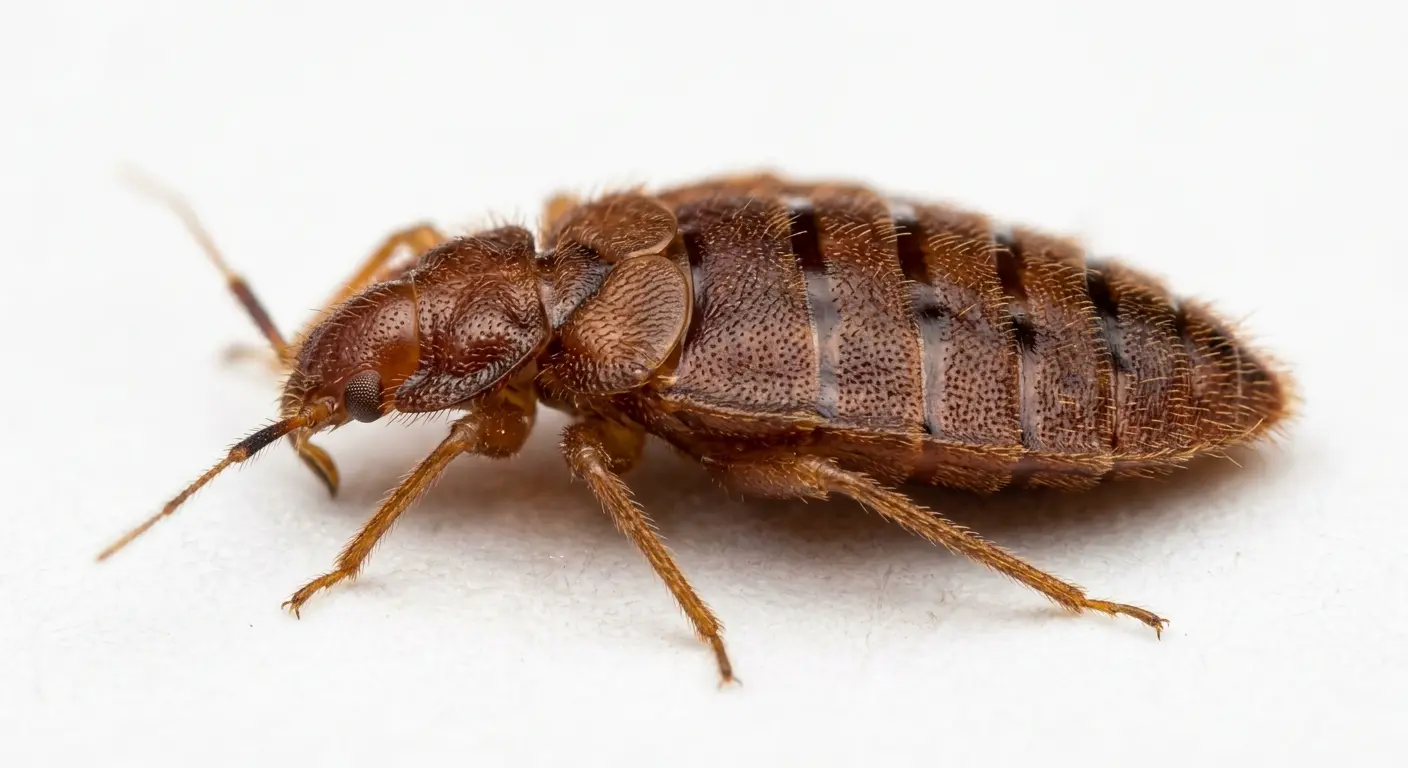
No, bed bugs do not have functional wings — they cannot fly, glide, or even hop. Adult bed bugs possess tiny, non-functional wing pads called hemelytral pads, which are evolutionary leftovers from a winged ancestor millions of years ago.
This misunderstanding causes countless misidentifications every year. People spot a winged insect near their mattress, assume it’s a bed bug, and begin treatment for the wrong pest entirely. Understanding what bed bugs actually look like — their true body parts, leg structure, and antennae — is the difference between solving your pest problem and wasting money on ineffective treatments.
In this guide, you’ll learn exactly what body parts bed bugs have, why those wing pads confuse so many people, and how to tell a bed bug from a flying insect at a glance. You’ll also discover what those antennae are really doing and why bed bug legs are built for crawling, not jumping.
What Are the Wing Pads on a Bed Bug?
Adult bed bugs have small, flattened extensions on their thorax called hemelytral pads. These are vestigial front wings — remnants from an evolutionary ancestor that could fly. The University of Kentucky’s Department of Entomology confirms that while these pads are visible under magnification, they serve no flight function whatsoever.
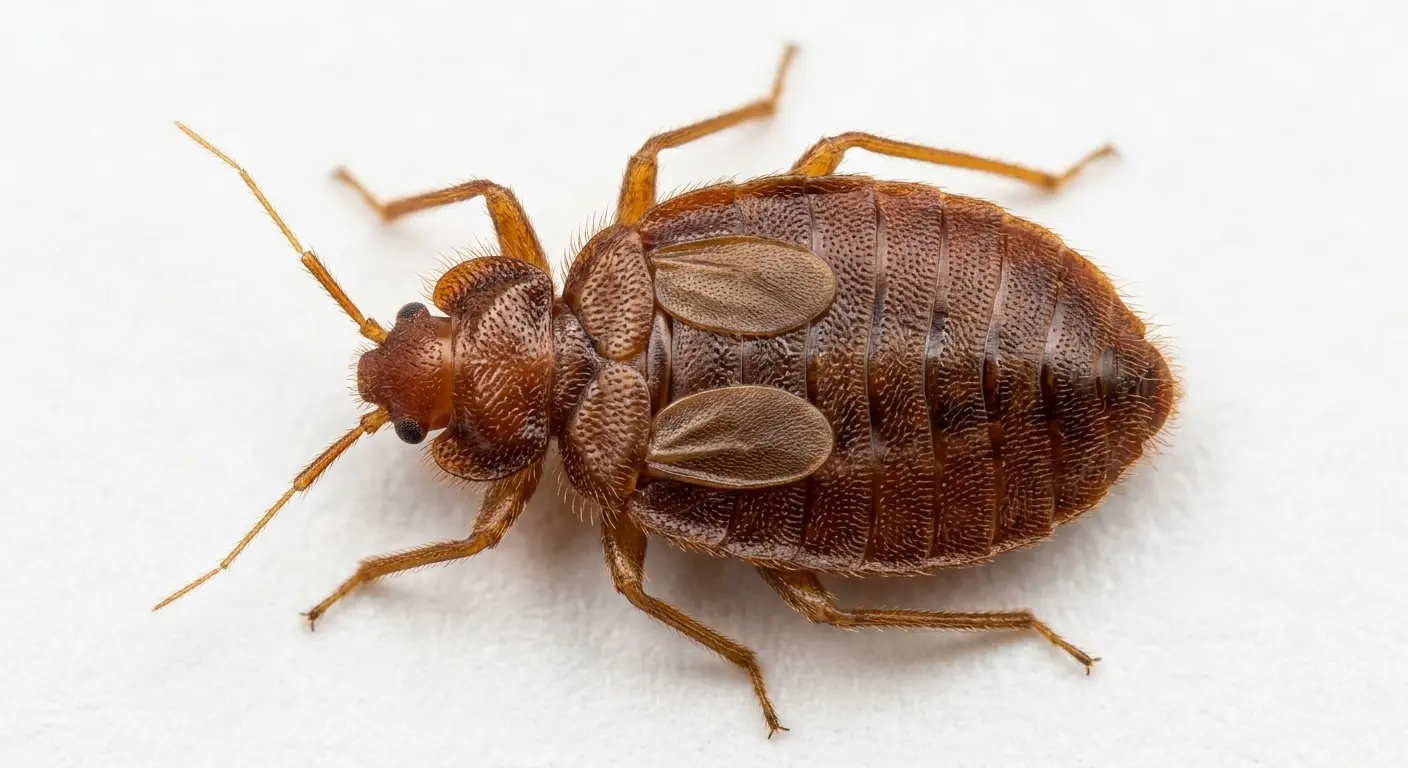
Most guides simply say “bed bugs don’t have wings” and move on. But here’s what they miss: those wing pads are actually articulated, meaning they can move slightly. This movement is why some people mistake them for real wings — especially when viewing a bed bug under poor lighting or through a phone camera.
The wing pads are more visible on adults than nymphs. If you’re looking at a bed bug and see what appears to be tiny wing-like structures near the head, you’re looking at hemelytral pads, not functional wings. The National Pest Management Association notes that these pads are so reduced they cannot even lift away from the body.
Not sure if those marks are bed bug bites or something else?
Upload a photo to our identifier tool — get a confirmed answer in under 60 seconds.
Can Bed Bugs Fly at Any Stage of Life?
Bed bugs cannot fly at any point in their life cycle — not as eggs, nymphs, or adults. This is a firm biological fact confirmed by entomologists at the University of California’s Integrated Pest Management program.
The confusion often arises because newly hatched nymphs are extremely small and pale, making them difficult to see clearly. When people spot movement on their mattress, they may assume the insect flew or jumped when it actually crawled. Bed bugs are exclusively crawlers.
Here’s a comparison of bed bug movement capabilities:
| Movement Type | Can Bed Bugs Do It? | How They Actually Move |
|---|---|---|
| Flying | No | No functional wings exist |
| Gliding | No | Wing pads cannot spread |
| Jumping | No | Legs lack jumping muscles |
| Crawling | Yes | Six legs, rapid movement |
| Climbing | Yes | Claws grip fabric and wood |
If you see an insect fly near your bed, it is definitively not a bed bug. Flying insects near beds are typically flies, moths, or winged ants — all of which require different treatment approaches.
Bed Bug Body Parts: A Complete Breakdown
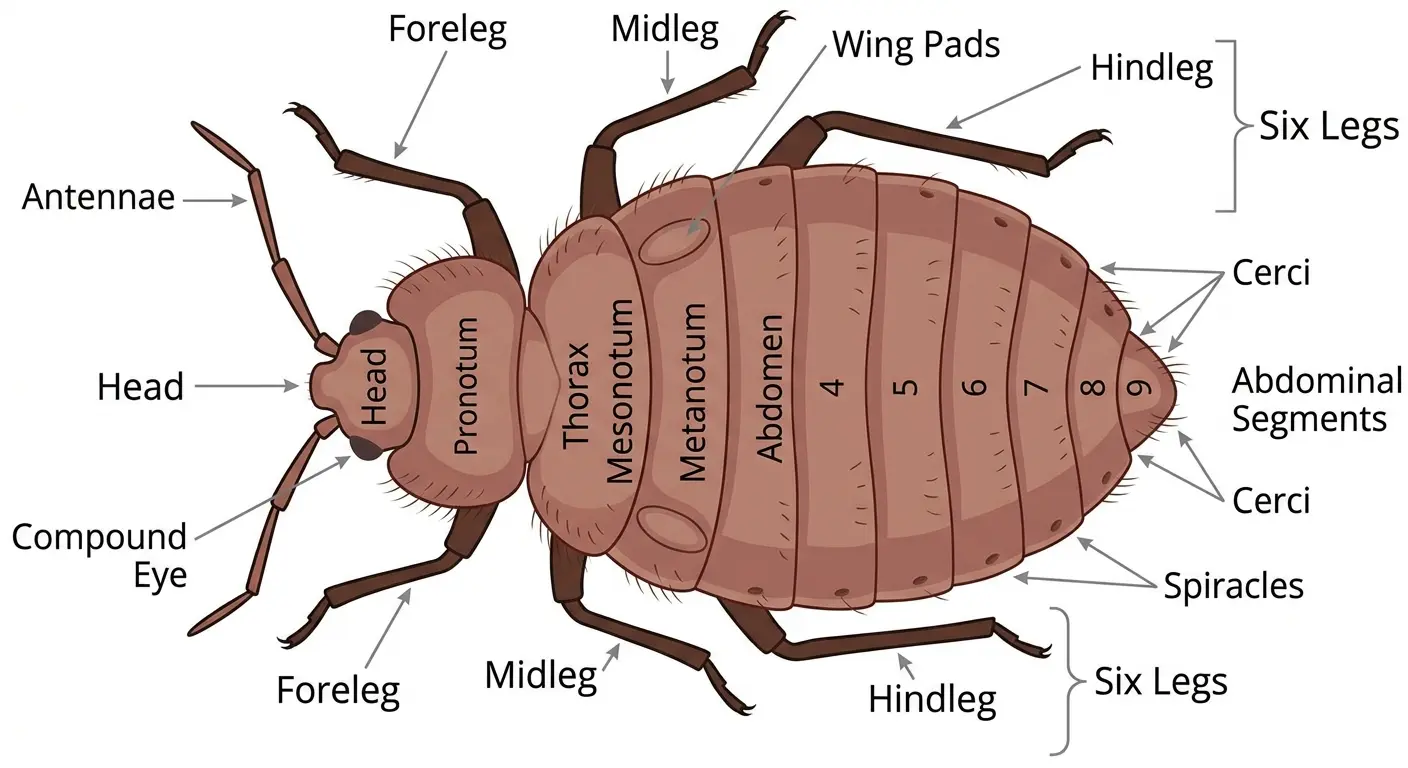
Understanding bed bug anatomy is your best defense against misidentification. The bed bug body consists of three main segments: head, thorax, and abdomen. Each segment carries specific features that distinguish bed bugs from lookalikes.
The head contains the eyes, antennae, and piercing-sucking mouthparts. The thorax holds the legs and those confusing wing pads. The abdomen expands significantly after feeding — a well-fed bed bug can double in length.
Adult bed bugs measure about 5-7 mm, roughly the size of an apple seed. Their bodies are oval and flattened, which allows them to squeeze into cracks as thin as a credit card. This flat profile is one of their most distinctive features and a key difference from many winged insects that have bulkier thoraxes.
How Many Legs Does a Bed Bug Have?
Bed bugs have exactly six legs, like all true insects. Each leg attaches to the thorax and ends in a tiny claw that helps them grip fabric, wood, and even drywall. These legs are designed for rapid crawling — bed bugs can cover up to 4 feet per minute when searching for a host.
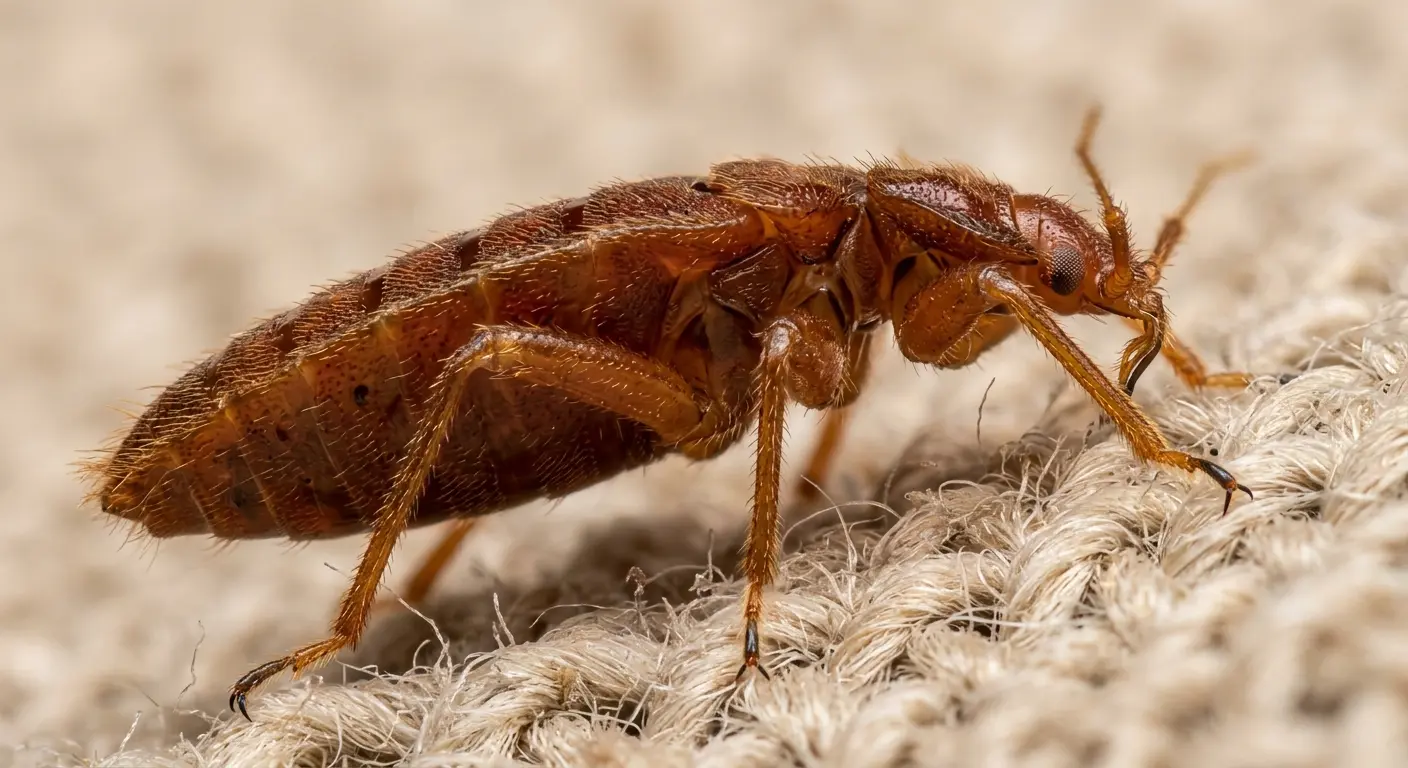
The legs are segmented into three main parts: femur, tibia, and tarsus. The tarsus contains the claw and small pads that allow bed bugs to walk on vertical surfaces. This is why you’ll find them on walls, ceilings, and even metal bed frames.
Most people assume bed bugs jump like fleas because both pests bite. But fleas have enlarged hind legs built for leaping — bed bugs have uniform legs built for speed and climbing. If the insect you found jumped, it’s a flea, not a bed bug. For a deeper dive into leg structure, check our detailed guide on how many legs does a bed bug have.
Do Bed Bugs Have Antennae?
Yes, bed bugs have four-segmented antennae that protrude forward from their heads. These antennae are critical sensory organs — they detect carbon dioxide, body heat, and chemical signals from sleeping humans.
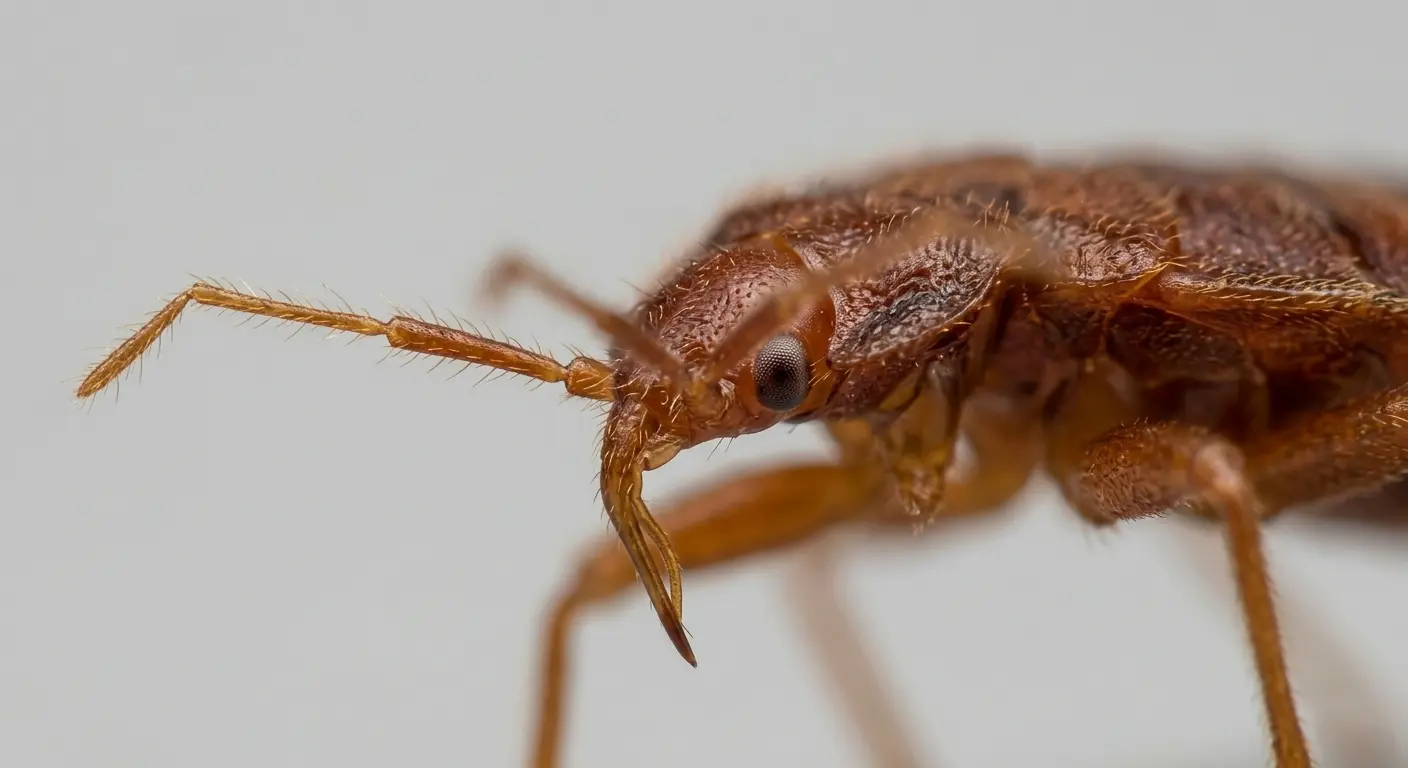
The antennae are not just decorative. They contain specialized receptors that allow bed bugs to locate hosts from several feet away. When you’re sleeping, your exhaled carbon dioxide creates a plume that bed bugs detect with these antennae, guiding them directly to you.
Bed bug antennae are thin and slightly curved, with the segments becoming progressively smaller toward the tip. Under magnification, you can see fine hairs on each segment. These hairs pick up vibrations and chemical cues in the environment. Learn more about how these sensory organs work in our article on do bed bugs have antennae.
Still not sure if it's bed bugs or a different insect?
Our AI tool compares your photo against thousands of confirmed cases instantly.
What Do Bed Bug Wings Look Like Up Close?
When you examine a bed bug under magnification, the wing pads appear as two small, flattened lobes on the upper thorax. They are darker than the surrounding body and have a slightly leathery texture. In some lighting, they can look like tiny scales or even dirt specks.
The wing pads are symmetrical and lie flat against the body. Unlike functional wings, they have no veins, no membrane structure, and no ability to unfold. They are purely vestigial structures — biological remnants with no current purpose.
This is a classic case where most guides oversimplify. They say “bed bugs have no wings” without explaining the wing pads exist. But understanding these pads matters because they’re a key identification feature. If you see an insect with visible, structured wings, it’s not a bed bug. If you see small, flat pads that don’t move, you’re likely looking at a bed bug.
Why Do Bed Bugs Have Wing Pads If They Can’t Fly?
The wing pads are an evolutionary leftover. Millions of years ago, bed bug ancestors could fly — this allowed them to spread between bird nests and bat roosts. As bed bugs adapted to living in human dwellings, flight became unnecessary. Food was always nearby, and crawling was more energy-efficient.
Over evolutionary time, the wings reduced to non-functional pads. This is called vestigial evolution — the same process that left whales with pelvic bones and humans with tailbones. The wing pads persist because they don’t harm the bed bug, so there’s no evolutionary pressure to eliminate them.
This evolutionary history explains why bed bugs are such effective hitchhikers. They don’t need to fly because they’ve evolved to travel in your luggage, clothing, and furniture. Flight would actually be a disadvantage — flying insects are more exposed to predators and environmental hazards.
How to Tell a Bed Bug from a Winged Insect
If you found an insect with visible wings near your bed, you need to rule out bed bugs immediately. Here’s a quick comparison:
| Feature | Bed Bug | Winged Insect |
|---|---|---|
| Wings | Wing pads only, non-functional | Fully developed wings |
| Body Shape | Oval, flattened | Varied, often bulkier |
| Color | Brown to reddish-brown | Highly variable |
| Movement | Crawls only | Flies or jumps |
| Antennae | Four-segmented, thin | Variable length |
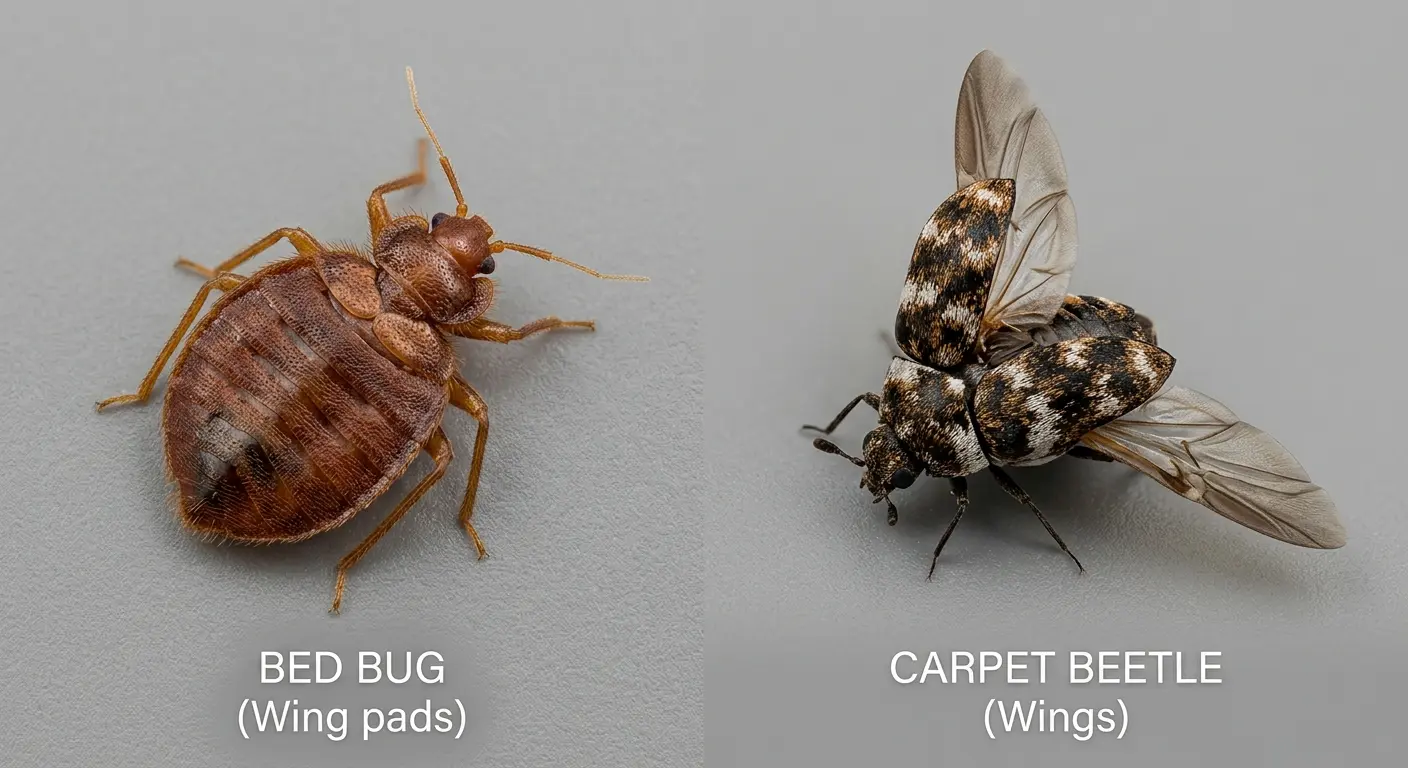
Winged insects commonly mistaken for bed bugs include carpet beetles, booklice, and even small cockroach nymphs. Each requires a different treatment strategy. Misidentifying a carpet beetle as a bed bug leads to unnecessary mattress disposal and expensive pest control — when a simple vacuuming and fabric cleaning would have solved the problem.
For a comprehensive visual comparison, our bed bug identification guide covers all the lookalikes and their distinguishing features.
Do Bed Bug Nymphs Have Wings?
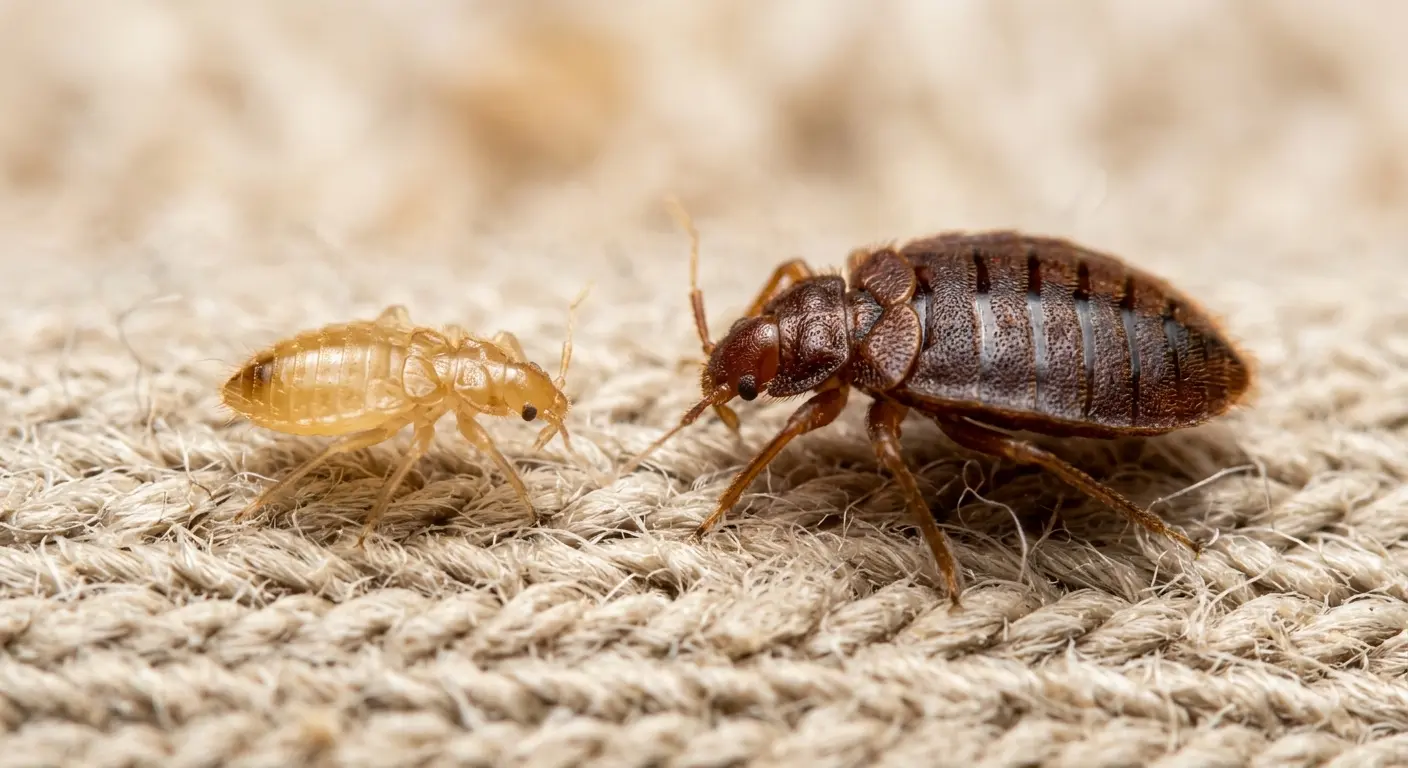
Bed bug nymphs do not have wing pads at all. The wing pads only appear in the final molt to adulthood. This means if you find a small, pale insect with wing structures, it’s either an adult bed bug or a different species entirely — not a nymph.
Nymphs go through five instar stages before reaching adulthood. At each stage, they shed their exoskeleton. The wing pads first become visible in the fifth instar, just before the final molt. Even then, they’re barely noticeable without magnification.
This distinction matters for identification. If you’re looking at a tiny insect with visible wings, it’s not a bed bug nymph. It’s likely a winged insect in its juvenile form, such as a winged aphid or a small moth.
Bed Bug Body Parts vs. Lookalike Insects
Several insects are commonly confused with bed bugs because of similar size or color. Knowing the body part differences is your best defense:
Bat bugs are the closest lookalike. They have the same body shape, legs, and antennae as bed bugs. The key difference is the fringe of hairs on the pronotum (the plate behind the head) — bat bugs have longer hairs than bed bugs. Bat bugs also have the same non-functional wing pads.
Swallow bugs are another close relative with nearly identical body parts. They’re distinguished by their host preference — they feed on cliff swallows rather than humans. Under a microscope, the hair patterns on their bodies differ from bed bugs.
Carpet beetles are often mistaken for bed bugs because they’re small and oval. But carpet beetles have functional wings and can fly. They also have a distinct shell pattern and clubbed antennae, unlike the thin, segmented antennae of bed bugs.
Confirmed bed bugs — what do you actually need to treat them?
Upload one photo and our tool builds your exact treatment kit in under two minutes.
Why Wing Pads Matter for Identification
The presence or absence of functional wings is one of the fastest ways to rule out bed bugs. If the insect you found can fly, it is not a bed bug — period. This single fact eliminates dozens of potential misidentifications.
But the wing pads themselves are also a positive identification feature. When you see a small, brown, oval insect with flat wing pads that don’t move, you’re likely looking at a bed bug. Combined with the other body parts — six legs, four-segmented antennae, and a flattened body — you can make a confident identification.
The wing pads also help distinguish bed bugs from their close relatives. Bat bugs and swallow bugs have the same wing pads, but the hair patterns on their bodies differ. These subtle differences require magnification to see clearly.
Common Myths About Bed Bug Wings
Myth: Bed bugs can fly short distances. This is completely false. Bed bugs have no flight muscles, no wing membranes, and no ability to generate lift. They are obligate crawlers.
Myth: Bed bugs jump from person to person. Bed bugs don’t jump either. They crawl from hiding spots to their host, feed, and crawl back. Their legs lack the specialized jumping structures found in fleas and grasshoppers.
Myth: Winged bed bugs exist in some regions. No geographic variation of bed bugs has functional wings. All bed bug species worldwide share the same vestigial wing pads. If someone claims to have found a winged bed bug, they’ve misidentified the insect.
Myth: Bed bugs spread by flying between apartments. Bed bugs spread by crawling through wall voids, electrical outlets, and plumbing chases. They also hitchhike on luggage, clothing, and used furniture. Flight plays no role in their dispersal.
What to Do If You Find a Winged Insect on Your Bed
If you find a winged insect on your bed, don’t panic — it’s not a bed bug. But you should still identify it, as some winged insects indicate other pest problems.
First, capture the insect in a clear container or take a high-resolution photo. Note its size, color, and behavior. Did it fly when disturbed? Did it jump? These observations help narrow down the species.
Second, check for other signs. If the insect is a carpet beetle, you might find shed skins or fabric damage. If it’s a winged ant, you might have an ant nest nearby. Each pest requires a different treatment approach.
Finally, if you’re still uncertain, use our AI identification tool. Upload your photo and get a confirmed answer in under a minute. The tool compares your image against thousands of verified pest photos to give you an accurate identification.
Need to know exactly what you're dealing with?
Get a definitive identification and personalized treatment plan in one step.
The Bottom Line on Bed Bug Wings
Bed bugs do not have wings and cannot fly — this is a biological certainty. The wing pads they possess are vestigial remnants from a flying ancestor, and they serve no function today. Understanding this fact, along with the other bed bug body parts, is your first line of defense against misidentification.
Remember the key identification features: six legs, four-segmented antennae, a flattened oval body, and non-functional wing pads. If the insect you found has functional wings, it’s not a bed bug. If it jumps, it’s not a bed bug. If it crawls and matches the body structure described here, you may have a genuine bed bug problem.
Accurate identification is the foundation of effective treatment. Treating for the wrong pest wastes time, money, and effort — and allows the real problem to continue unchecked. Take the time to identify correctly before taking action.
Frequently Asked Questions
Do bed bugs have wings at any stage of life?
Can bed bugs fly or jump?
What are the small wing-like things on a bed bug?
How can I tell if an insect with wings is a bed bug?
Do bed bug nymphs have wings?
Are there any bed bug species that can fly?
What insects with wings are commonly mistaken for bed bugs?
How do bed bugs spread if they can't fly?
Additional Resources
For more detailed information on bed bug identification and treatment, explore these related guides:
- Do bed bugs have wings? — Deep dive into wing pad anatomy
- How many legs does a bed bug have? — Leg structure and movement
- Do bed bugs have antennae? — Sensory organs and how they work
- Bed bug color guide — Understand color variations and what they mean
- Bed bug size and visibility — How size affects detection
- Bed bug photos and appearance — Photo gallery for quick ID
- Baby bed bugs and nymphs — What juvenile bed bugs look like
- Bed bug droppings and stains — Identifying fecal signs
- Bed bug shells and shed skin — Recognizing casings and molts
- Dead bed bugs — What they look like and how to collect them
- Bed bug lookalikes — Common species people mistake for bed bugs
- Bed bug vs other insects — Side-by-side comparisons
- Where bed bugs are found — Typical hiding places and habitats
- Bed bug behavior and identification — Behavior clues for ID
- Bed bug species and names — Overview of species and common names
These guides expand on the identification points covered here and will help you confirm whether you’re dealing with bed bugs or a different pest.
- Are There Different Species of Bed Bugs? Complete Guide to Bed Bug Types and Names
- Baby Bed Bugs: What Nymphs Look Like and How to Identify Them
- Bed Bug Droppings: How to Identify Black Spots and Stains
- Bed Bug Photos: Close-Up Images to Identify Every Life Stage
- Bed Bug Shells: The Complete Guide to Casings and Shed Skin
- Bed Bug Smell: What Do Bed Bugs Smell Like and Why It Matters
- Bed Bug vs Other Insects: 12 Lookalikes You Need to Identify
- Bugs That Look Like Bed Bugs: 12 Lookalikes You Need to Know
- Dead Bed Bugs: How to Identify Carcasses, Husks & What They Really Mean
- How Big Are Bed Bugs? Size, Visibility & What You Can See
- What Color Are Bed Bugs? The Complete Color Guide by Life Stage
- Where Do Bed Bugs Hide? The Complete Hiding Spot Guide