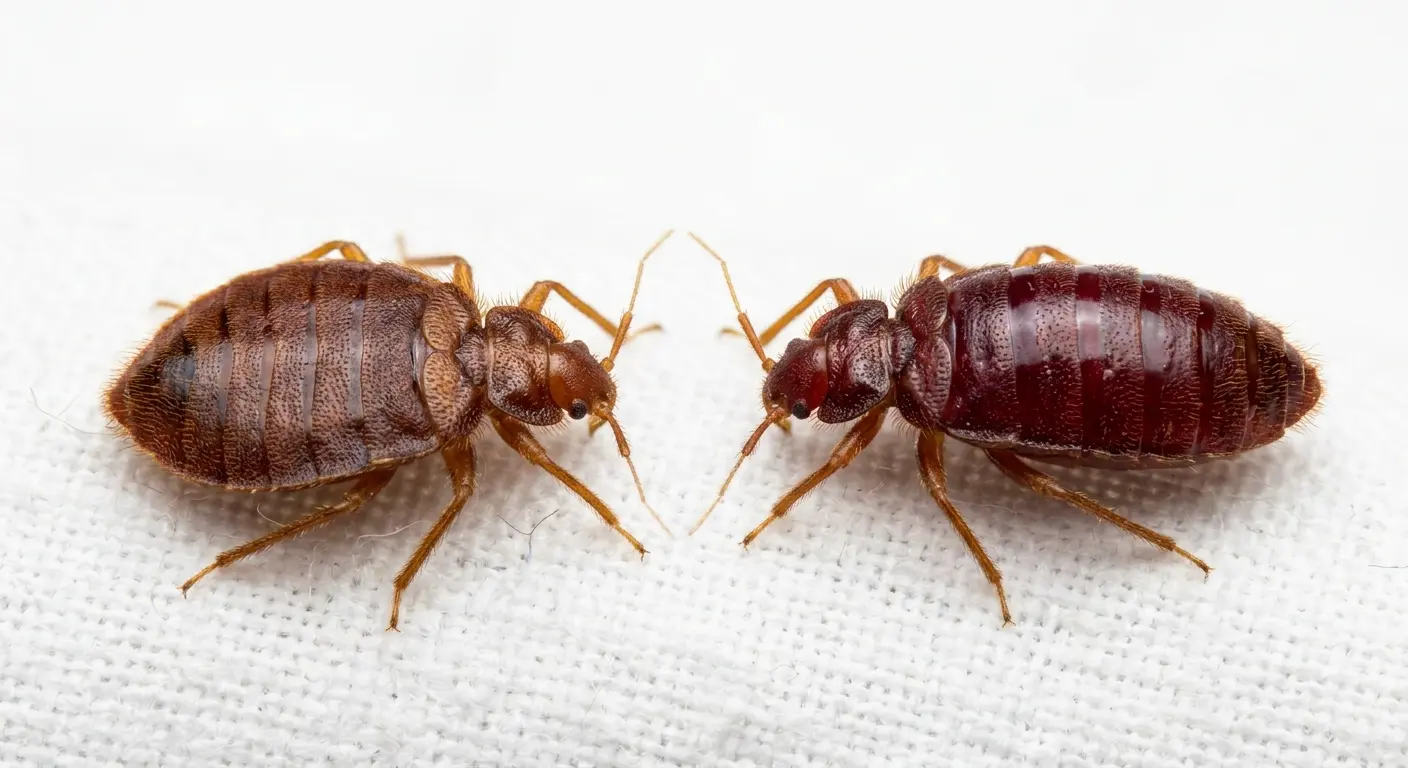
Real bed bug photos show a flat, oval, reddish-brown insect about the size of an apple seed — and seeing one clearly is the fastest way to confirm you’re dealing with an infestation rather than a lookalike. Whether you’re searching for “bed bugs pictures” or need a close-up to compare against what you found on your mattress, this visual guide walks you through every life stage, from translucent eggs to engorged adults, using verified images and expert descriptions.
Most people misidentify bed bugs because they only see them after feeding, when their appearance changes dramatically. The Rutgers Cooperative Extension photo library documents these variations across all life stages, giving you a reliable reference for what you’re actually seeing in your home.
What Does a Bed Bug Look Like in a Photograph?
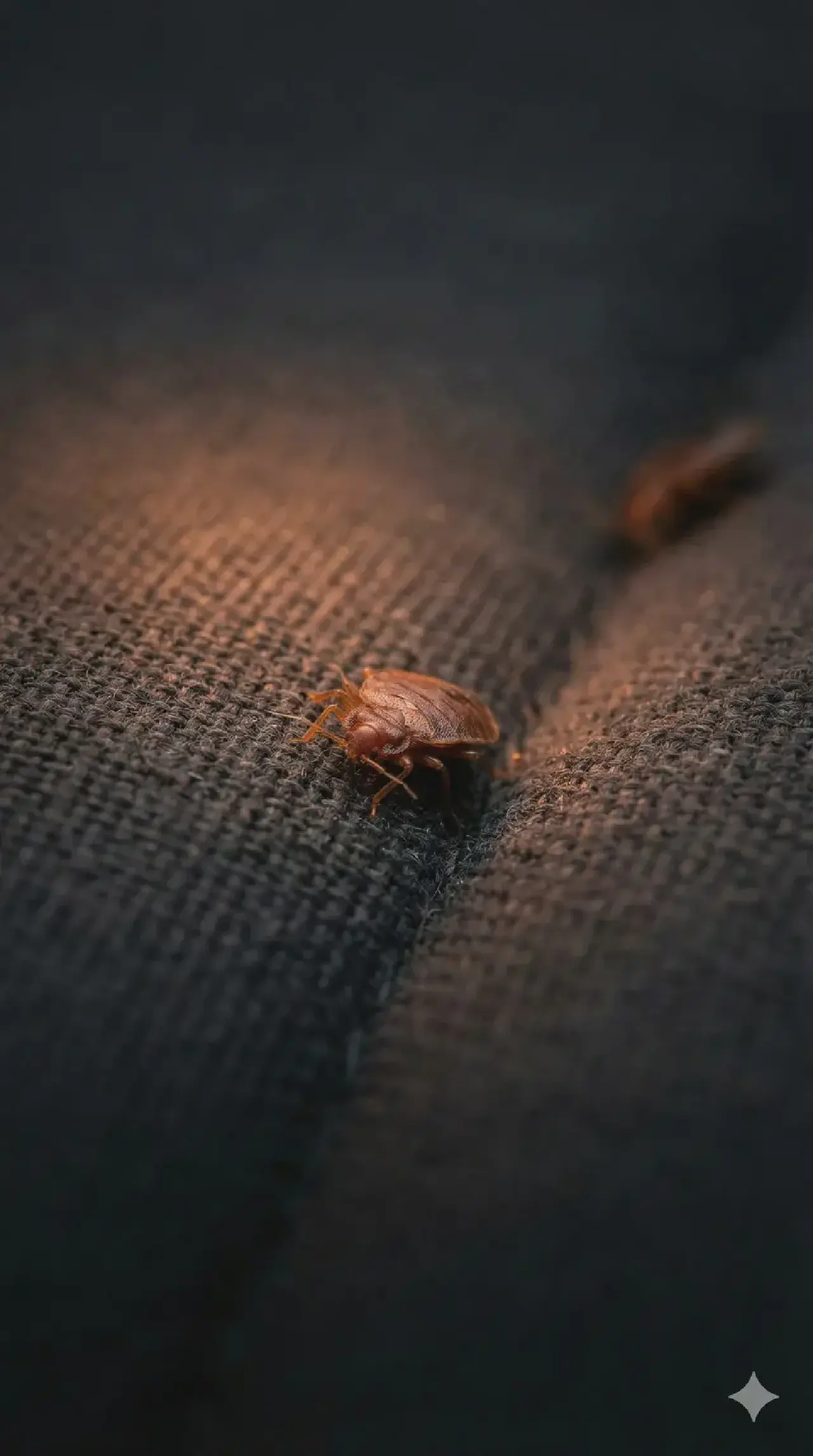
A photograph of a bed bug shows a wingless insect with a flattened, oval body, six legs, and two prominent antennae. Adult bed bugs measure roughly 5-7 millimeters long — about the size of an apple seed — and range in color from pale brown to deep reddish-brown depending on whether they’ve recently fed. For more on how size and visibility affect how they appear in photos, see our detailed guide on bed bug size and visibility and the bed bug color guide.
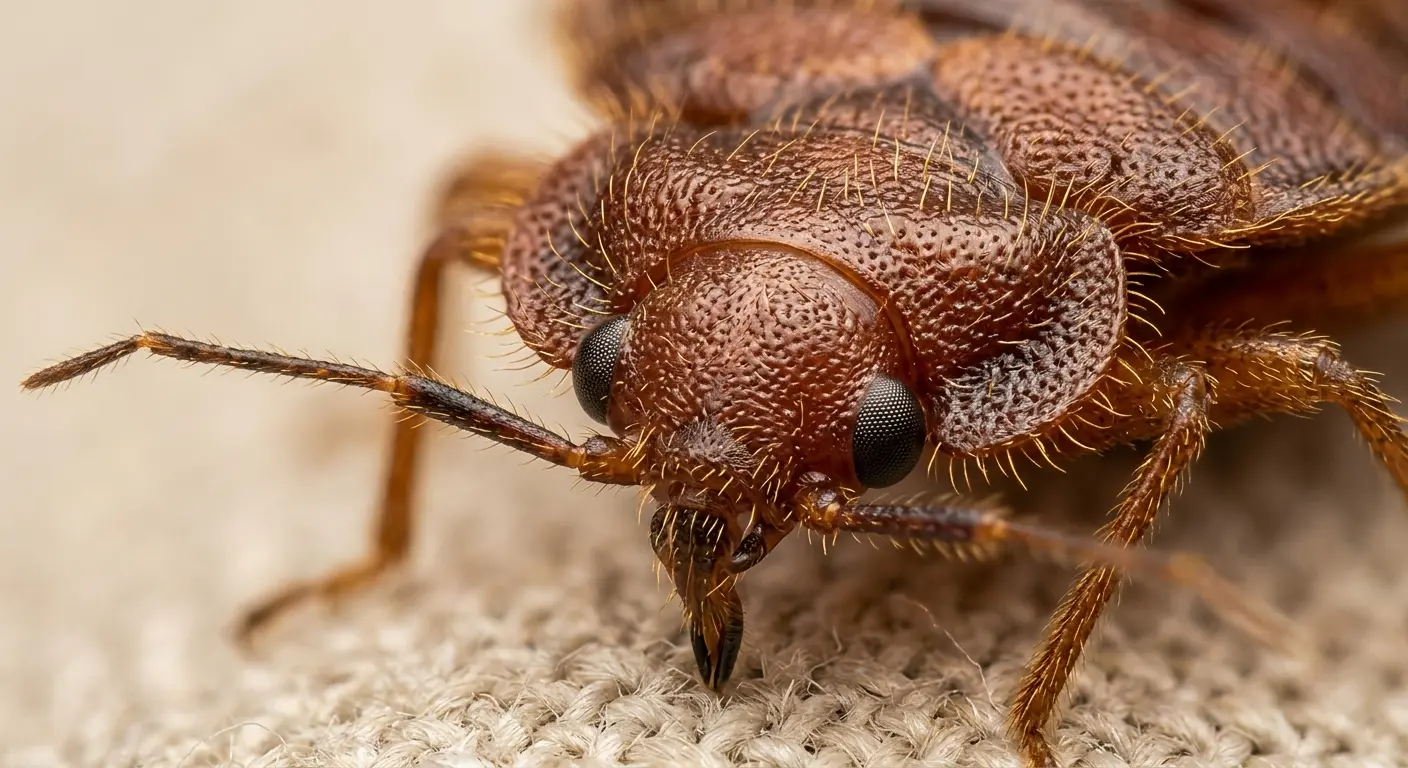
When you look at bed bug photos close up, you’ll notice three distinct body segments: the head, thorax, and abdomen. The head features two compound eyes and piercing-sucking mouthparts that fold underneath when not feeding. The abdomen expands significantly after a blood meal, changing the insect’s overall shape from flat to elongated and bloated. For a breakdown of the specific anatomical parts visible in close-up images, also see bed bug body parts.
Adult Bed Bug Photos: Fed vs. Unfed
The single biggest difference in bed bug pictures comes down to feeding status. An unfed adult appears flat, oval, and mahogany-brown — almost paper-thin when viewed from the side. After feeding, the same insect becomes elongated, swollen, and takes on a brighter red or dark burgundy color as the blood shows through its translucent exoskeleton.
| Feature | Unfed Adult | Fed Adult |
|---|---|---|
| Body shape | Flat, oval, apple-seed shaped | Elongated, bloated, cigar-shaped |
| Color | Mahogany brown to tan | Bright red to dark burgundy |
| Size | 4-5 mm long | 6-9 mm long |
| Mobility | Fast, agile | Sluggish, heavy |
| Best time to spot | Daytime hiding | Nighttime after feeding |
This visual difference explains why many people search for “bed bugs images” multiple times — the insect you find in the morning after waking up with bites looks completely different from the one hiding in your mattress seam during the day.
Bed Bug Photos Close Up: Key Identifying Features
When you examine bed bug photos close up, several features distinguish them from all other household insects. The most reliable identifiers include:
- Pronotum: The segment behind the head has expanded, wing-like projections that curve forward around the eyes
- Antennae: Four-segmented, thinner than a human hair
- Eyes: Two large, dark, compound eyes on either side of the head
- Legs: Six legs with tiny claws at the tips for gripping fabric
- Body texture: Fine, short golden hairs covering the entire body
These features appear in every bed bug picture regardless of life stage, making them your best reference points for identification.
Nymph and Baby Bed Bug Pictures
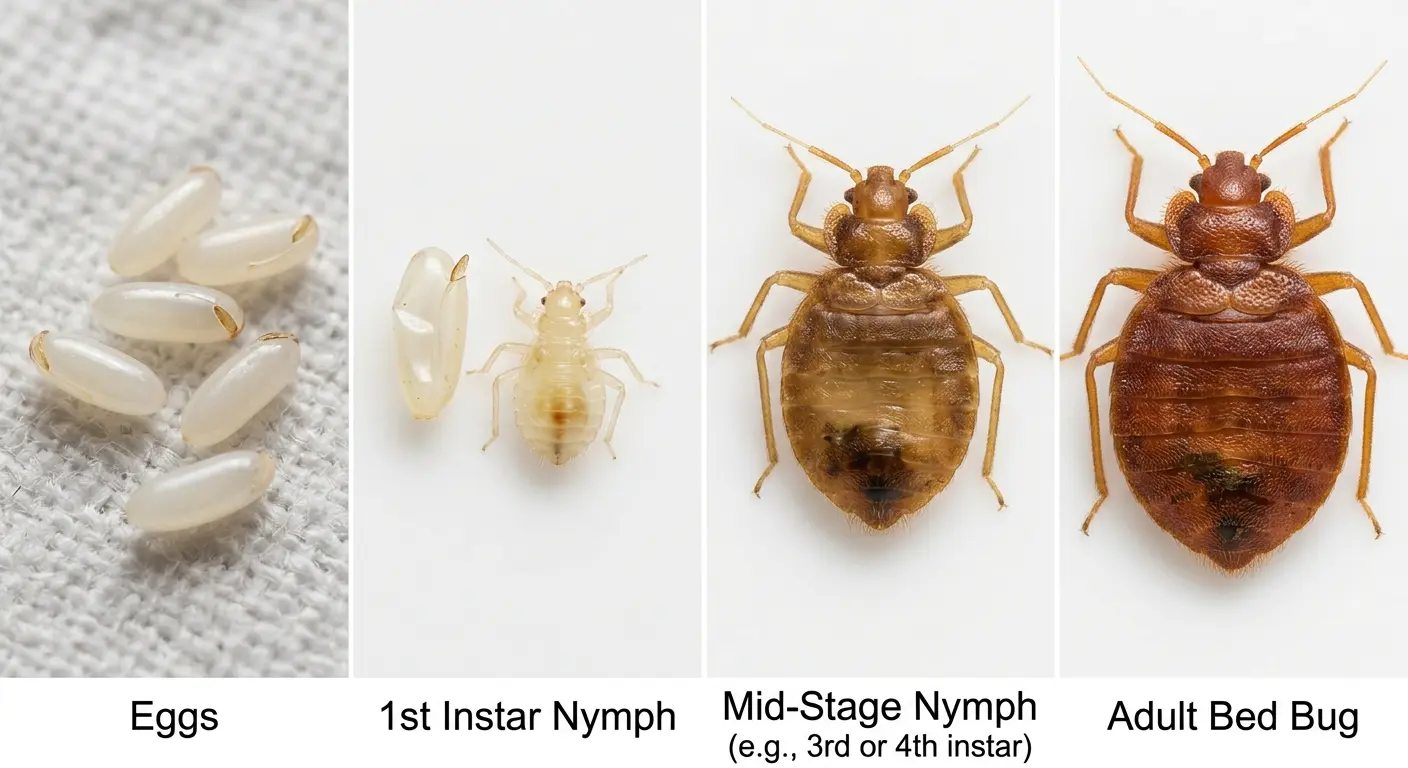
Baby bed bugs, called nymphs, look like miniature versions of adults but with critical color differences. Freshly hatched nymphs are nearly transparent with a pale yellow or straw-colored appearance — so light they’re almost invisible against white sheets. As they feed and molt through five instar stages, they gradually darken. For a deeper dive into nymph development and identification, see baby bed bugs and nymphs.
A bed bug photo of a nymph shows the same body structure as an adult but at 1-4 millimeters long. After feeding, even tiny nymphs become bright red, making them easier to spot against light-colored bedding.
Bed Bug Egg Photos: What to Look For
Bed bug eggs appear in photographs as tiny, pearl-white ovals roughly 1 millimeter long — about the size of a pinhead. They have a distinctive hinged cap at one end, which the nymph pushes open when hatching. Fresh eggs have a shiny, sticky surface that causes them to adhere to fabric, wood, and other surfaces.
In bed bugs pictures showing eggs, you’ll typically see them clustered in crevices, along mattress seams, behind headboards, and in other protected locations. Each female lays 1-5 eggs per day and up to 500 in her lifetime, so finding even one egg signals an established infestation.
Where to Find Real Bed Bug Photos You Can Trust
The internet is full of mislabeled and AI-generated “bed bug pictures” that can lead you astray. For reliable reference images, start with university extension services. The Rutgers Cooperative Extension bed bug photo gallery provides professionally documented images of infestations in real-world settings.
For additional visual references, you can explore:
- University extension services: Most land-grant universities maintain pest identification galleries
- Public health departments: Many publish bed bug identification resources with photos
- Peer-reviewed journals: Scientific papers include high-magnification images of all life stages
- Training images from recognized industry training programs and our verified photo pages: these collections can be useful when cited directly and used alongside university and public health resources
How Bed Bug Photos Differ from Live Insects
Photographs can only capture so much. In person, bed bugs emit a distinctive, sweet, musty odor from their scent glands — something no image can convey. They’re also surprisingly fast, covering up to three feet per minute when disturbed. This speed, combined with their flat bodies, allows them to disappear into cracks as narrow as a credit card’s edge. For more about typical behavior and identification cues beyond photos, see bed bug behavior and identification.

When you’re comparing what you found to bed bugs images, remember that live insects move, change color after feeding, and hide during the day. If you’re seeing insects only at night or finding bites without seeing the culprit, you may need to inspect your sleeping area more thoroughly.
Photographing Bed Bugs: Tips for Clear Identification Shots
If you’ve found an insect and need to capture your own bed bug photos for identification, follow these guidelines:

- Use macro mode: Smartphone macro settings capture the detail needed for identification
- Add a scale reference: Place a coin or ruler next to the insect to show actual size
- Photograph multiple angles: Top view, side view, and close-ups of the head region
- Use natural light: Flash creates glare on the insect’s shiny exoskeleton
- Store the specimen: Keep the insect in a sealed container in case you need professional identification
For size comparison, our actual size bed bug photos page shows these insects next to common household objects.
Common Misidentifications in Bed Bug Pictures
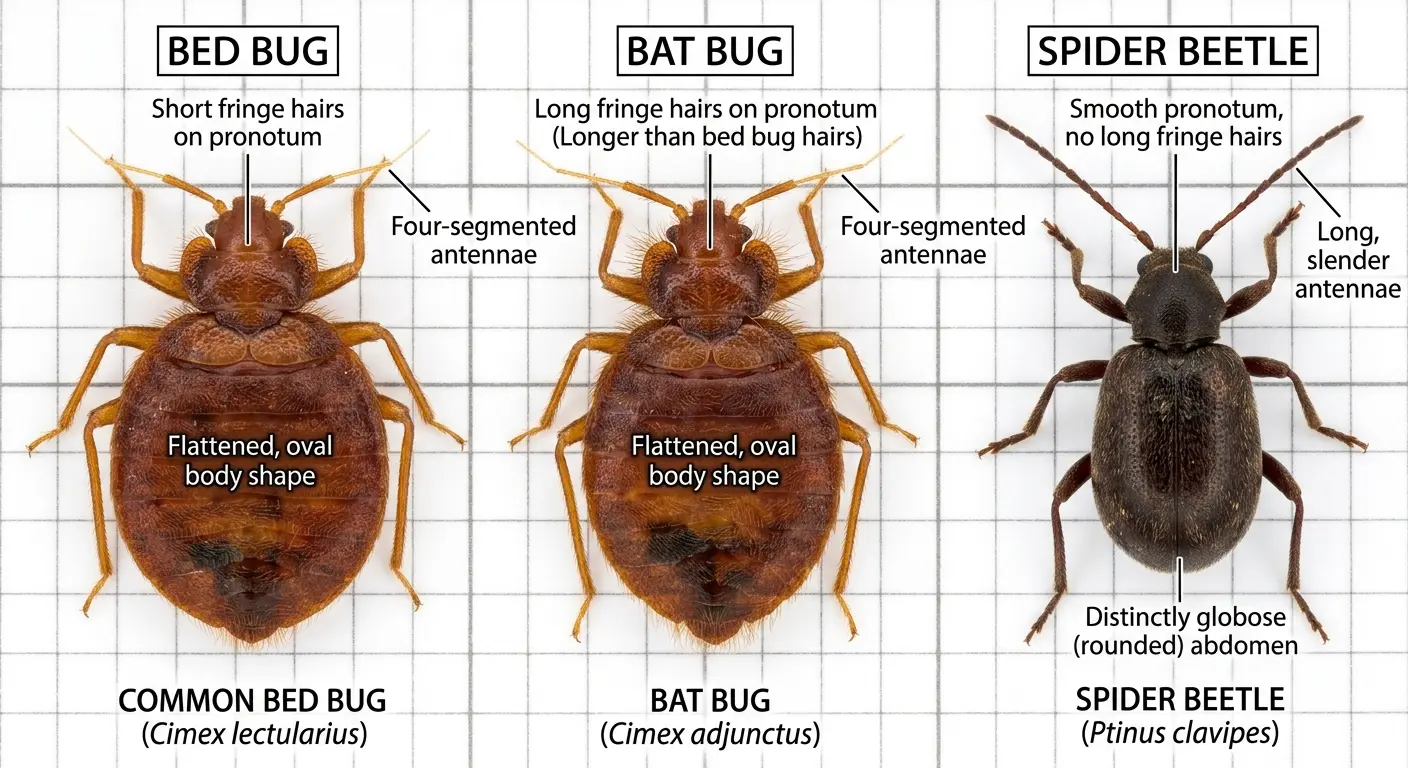
Many insects appear in “bed bugs images” searches that aren’t bed bugs at all. The most common lookalikes include bat bugs, swallow bugs, spider beetles, and booklice. Bat bugs look nearly identical to bed bugs but have longer hairs on their pronotum — a difference visible only under magnification. For a focused comparison of lookalikes and how to tell them apart, see bed bug lookalikes and bed bug vs other insects.
Other frequently confused insects include carpet beetle larvae, which have bristly bodies and cause similar skin reactions, and fleas, which are smaller and jump.
Not sure if those marks are bed bug bites or something else?
Upload a photo to our identifier tool — get a confirmed answer in under 60 seconds.
Using Photos to Confirm an Infestation
A single bed bug photo rarely confirms an infestation — you need multiple pieces of evidence. Beyond the insects themselves, look for:
- Fecal spots: Dark, rust-colored stains on mattresses and bedding (read more at bed bug droppings and stains)
- Shed skins: Translucent exoskeletons from molting nymphs (see bed bug shells and shed skin)
- Blood spots: Tiny red smears on sheets from crushed, engorged bugs
- Bite patterns: Linear clusters of itchy red welts on exposed skin
You may also find dead or crushed specimens; guidance on identifying and handling these is available at dead bed bugs.
What Bed Bug Photos Don’t Show You
Photographs capture appearance but not behavior. Bed bugs are nocturnal, hiding within 8 feet of where you sleep during the day. They’re attracted to body heat and carbon dioxide, which is why bites concentrate on exposed skin. They can survive 2-12 months without feeding, depending on temperature and humidity.
A photograph also can’t show you where they’re hiding. Bed bugs typically cluster within a few feet of the bed — in mattress seams, box spring crevices, headboard cracks, and baseboard gaps. For a room-by-room look at common hiding spots, see where bed bugs are found and our photo guide on bed bugs on beds and sheets.
How to Use Photos for Professional Identification
If you need professional confirmation, high-quality photographs can help pest control operators and extension agents identify your specimen remotely. Include:
- A clear image of the insect’s dorsal (top) surface
- A side view showing body thickness
- A scale reference for size
- The location where you found the insect
- Any other signs like fecal spots or shed skins
Many university extension services offer free identification services where you can submit photos online. The Rutgers Cooperative Extension also provides resources for finding local identification support.
Bed Bug Photos by Habitat: Where to Look
Different environments produce different photographic evidence. In hotel rooms, bed bugs concentrate around the bed and luggage rack. In homes, they spread to sofas, chairs, and even electrical outlets. In each setting, the photographic evidence looks slightly different:
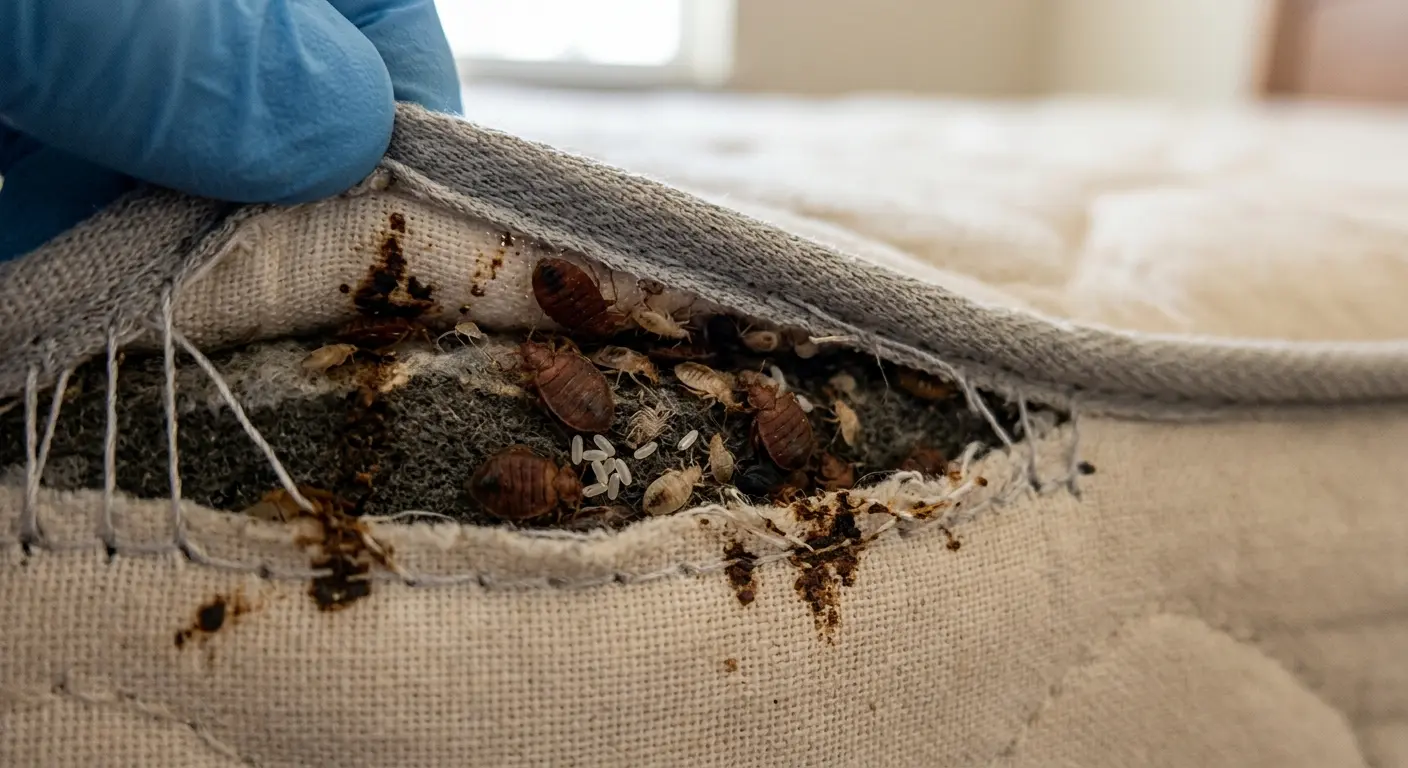
- Mattress seams: Adults, nymphs, eggs, and fecal spots clustered together
- Headboard cracks: Adults hiding in dark crevices, often with shed skins
- Baseboards: Scattered adults and nymphs along the junction with the wall
- Luggage: Insects clustered in zipper tracks and fabric folds
Many of these patterns relate to species-specific behavior and distribution; for background on species and names, see bed bug species and names.
Still not sure if it's bed bugs or a different insect?
Our AI tool compares your photo against thousands of confirmed cases instantly.
Frequently Asked Questions About Bed Bug Photos
What do bed bugs look like in pictures?
Can I identify bed bugs from a photo?
How do bed bug pictures differ from flea photos?
What do bed bug eggs look like in images?
Are the bed bug photos online reliable?
Why do bed bugs look different in different pictures?
What to Do After Confirming Bed Bugs from Photos
Once you’ve matched what you found to bed bug photos and confirmed the identification, immediate action is critical. Bed bug populations double every 16 days under optimal conditions, so a small infestation can become severe within two months.
Start by washing all bedding and clothing in hot water (120°F minimum) and drying on high heat for at least 30 minutes. Vacuum thoroughly, especially along mattress seams and baseboards. Encase your mattress and box spring in bed bug-proof covers to trap any insects inside.
For comprehensive treatment guidance, return to our bed bug identification hub or watch our bed bug video showing live behavior and treatment demonstrations.
Confirmed bed bugs — what do you actually need to treat them?
Upload one photo and our tool builds your exact treatment kit in under two minutes.
Need to see bed bugs in action before you treat?
Watch our video guide showing live bed bug behavior, hiding spots, and treatment demonstrations.
Want a second opinion on your bed bug photos?
Submit your images to our expert review team and get personalized identification feedback.
- Are There Different Species of Bed Bugs? Complete Guide to Bed Bug Types and Names
- Baby Bed Bugs: What Nymphs Look Like and How to Identify Them
- Bed Bug Droppings: How to Identify Black Spots and Stains
- Bed Bug Shells: The Complete Guide to Casings and Shed Skin
- Bed Bug Smell: What Do Bed Bugs Smell Like and Why It Matters
- Bed Bug vs Other Insects: 12 Lookalikes You Need to Identify
- Bugs That Look Like Bed Bugs: 12 Lookalikes You Need to Know
- Dead Bed Bugs: How to Identify Carcasses, Husks & What They Really Mean
- Do Bed Bugs Have Wings? The Truth About Bed Bug Body Parts
- How Big Are Bed Bugs? Size, Visibility & What You Can See
- What Color Are Bed Bugs? The Complete Color Guide by Life Stage
- Where Do Bed Bugs Hide? The Complete Hiding Spot Guide