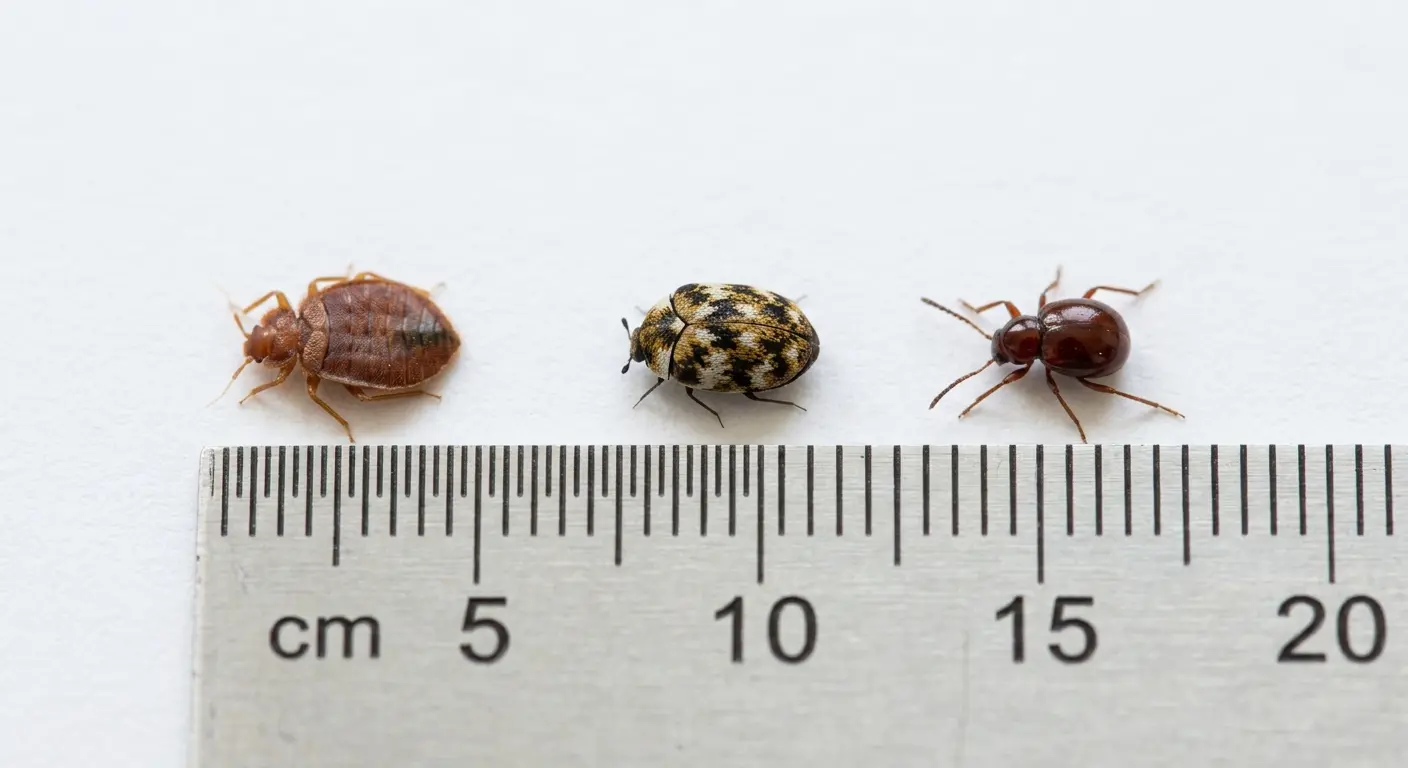
At least 12 different insects are commonly mistaken for bed bugs, including bat bugs, carpet beetles, booklice, and spider beetles — and telling them apart is the difference between a $500 pest control bill and a $20 DIY fix.
Bed bugs (Cimex lectularius) are small, oval, wingless insects that feed on human blood. But dozens of other insects share their size, shape, and color, leading to widespread misidentification. This guide breaks down the most common bed bug lookalikes, their key differences, and how to confirm what you’re actually dealing with — because treating for the wrong pest wastes time, money, and sleep. For pictures and detailed visual examples see our bed bug photos and appearance guide and our bed bug color guide.
Why So Many Bugs Get Mistaken for Bed Bugs
Bed bugs occupy a very specific visual niche: they’re small (4–5 mm), brownish-red, oval, and flat. That combination describes dozens of insects, especially in their nymph stages — see our baby bed bugs and nymphs resource for comparisons. When you spot a tiny bug on your mattress, your brain jumps to the worst-case scenario — and understandably so. For a focused comparison of baby bed bug lookalikes, see what baby bed bugs get mistaken for.
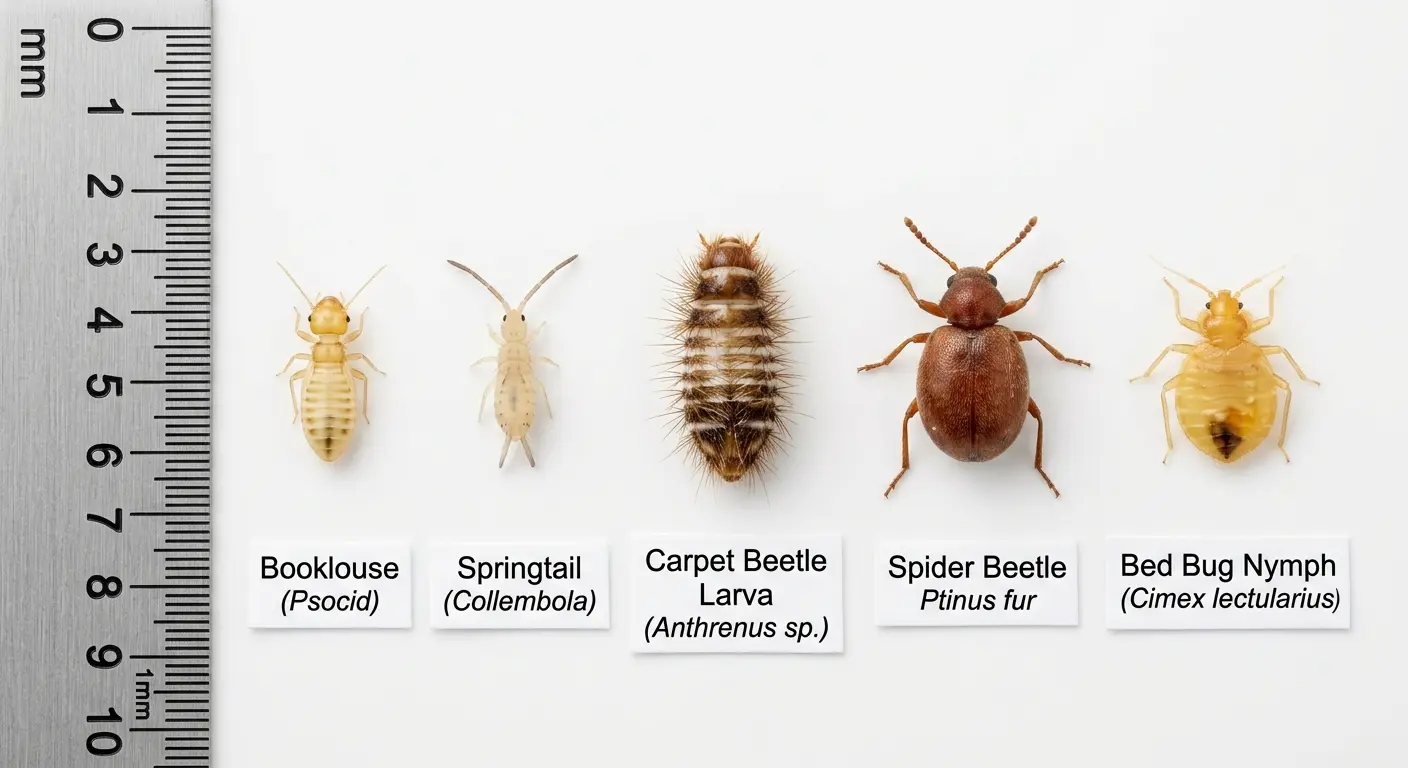
The confusion is compounded by the fact that many lookalikes share similar habitats. Carpet beetles, booklice, and spider beetles all thrive indoors, often in bedrooms. Swallow bugs and bat bugs are so closely related to bed bugs that even entomologists need a microscope to tell them apart. For more about where bed bugs tend to hide and why location matters, see where bed bugs are found and our bed bug behavior and identification overview.
The stakes are high. Bed bugs require aggressive, often expensive treatment. Misidentifying a harmless carpet beetle as a bed bug could lead to unnecessary chemical treatments. Conversely, mistaking bat bugs for bed bugs means you’ll treat your mattress while the real infestation thrives in your attic.
Found a bug but not sure what it is?
Upload a photo to our identifier tool — get a confirmed answer in under 60 seconds.
Carpet Beetles: The Most Common Misidentification
Carpet beetles are the #1 insect mistaken for bed bugs — and they’re completely harmless to humans.
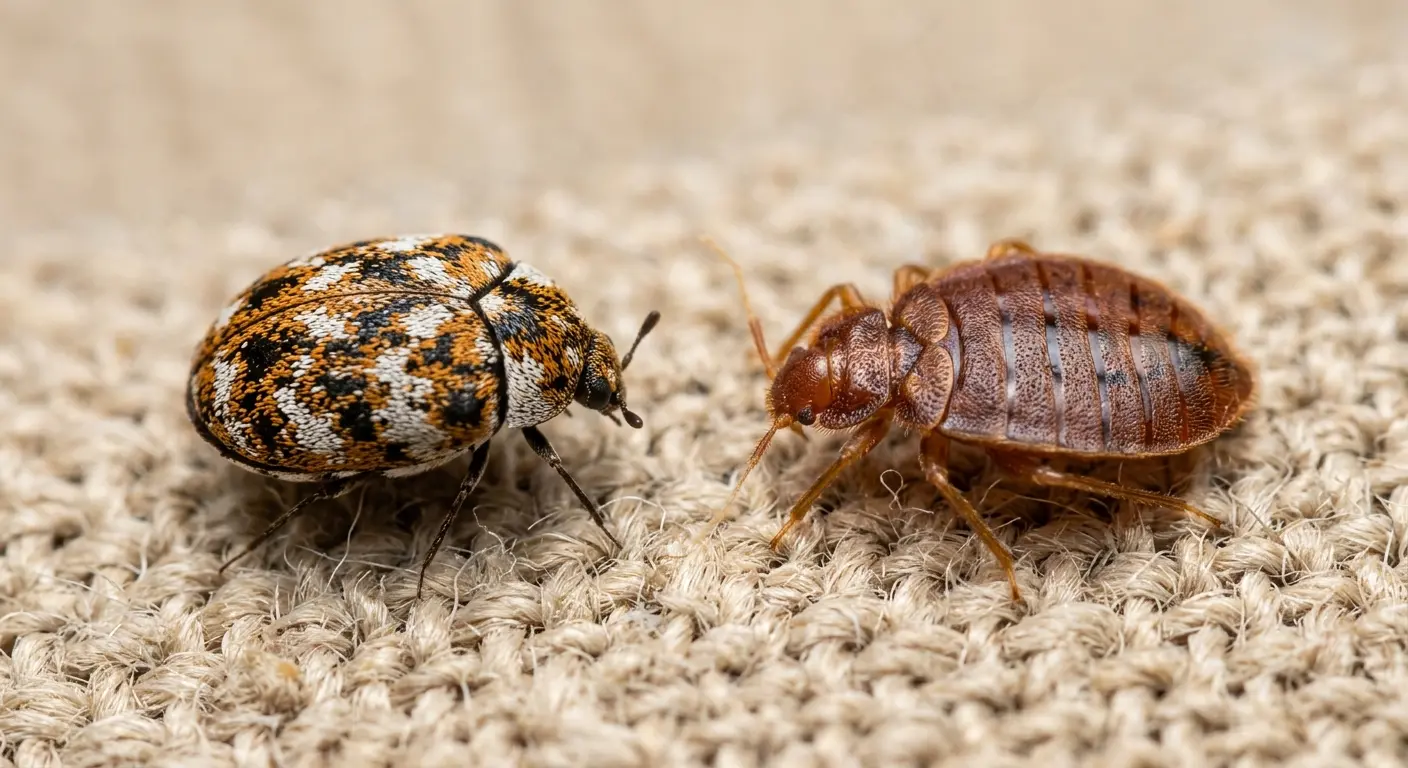
Adult carpet beetles are oval, 2–4 mm long, and feature distinctive speckled patterns of white, yellow, brown, and orange on their wing covers. Some species are entirely black. Unlike bed bugs, carpet beetles have wings and are active during the day, often found near windowsills or light sources.
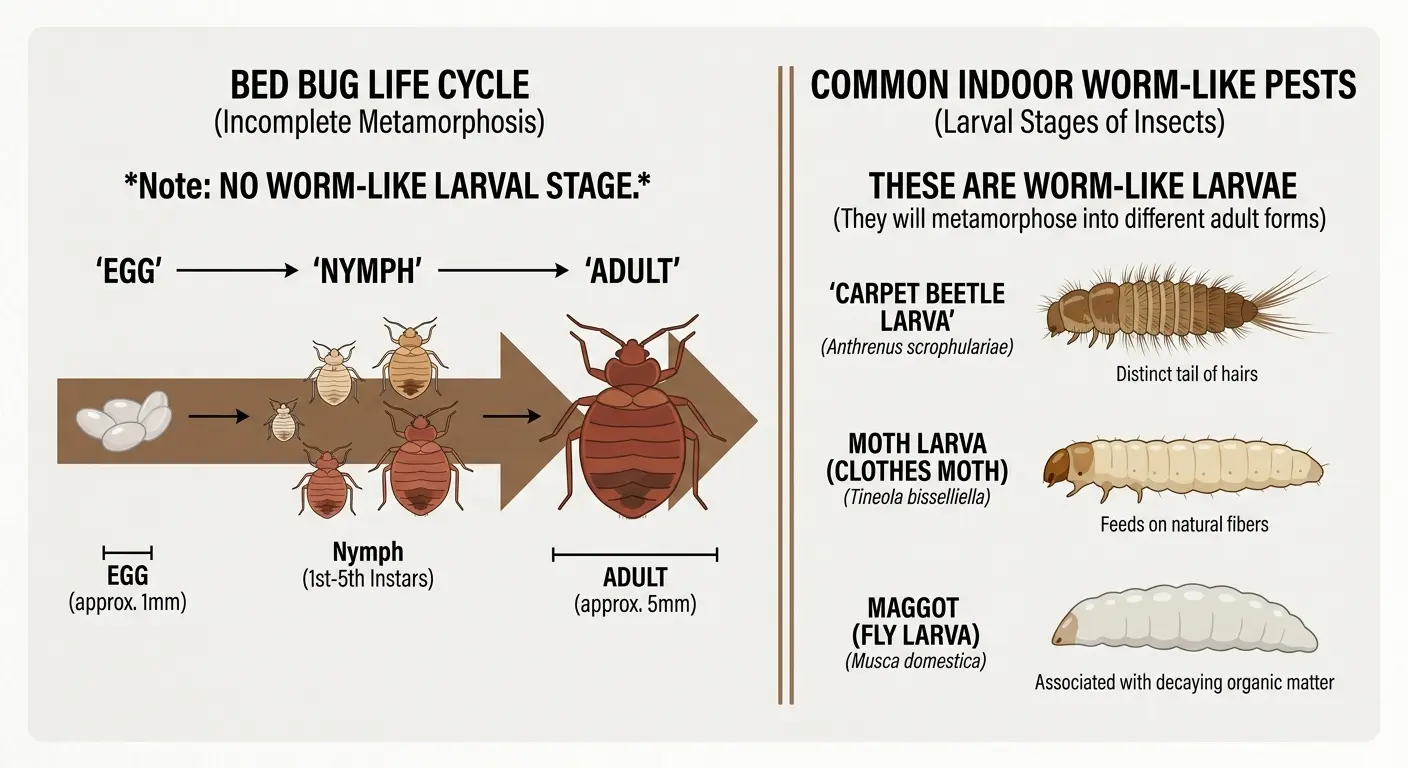
The confusion typically happens with carpet beetle larvae, which are elongated, fuzzy, and brown — superficially resembling bed bug nymphs. But here’s the critical difference: carpet beetle larvae feed on natural fibers like wool, silk, and leather. They don’t bite, and they don’t feed on blood.
If you’re finding small, speckled beetles near windows or in closets, you’re almost certainly dealing with carpet beetles, not bed bugs. Their presence can cause skin irritation in some people (from larval hairs), which adds to the confusion — but the “bites” aren’t actual bites at all.
Most guides say carpet beetles are easy to distinguish because they have wings — but many people never see the wings because the beetles keep them folded. The real giveaway is location: carpet beetles gravitate toward natural fibers and light, while bed bugs stay hidden in dark crevices near sleeping areas.
If you’re finding these insects, reducing humidity and following our identification and treatment guidance will usually resolve the problem without other escalations.
Bat Bugs: The Nearly Identical Cousin
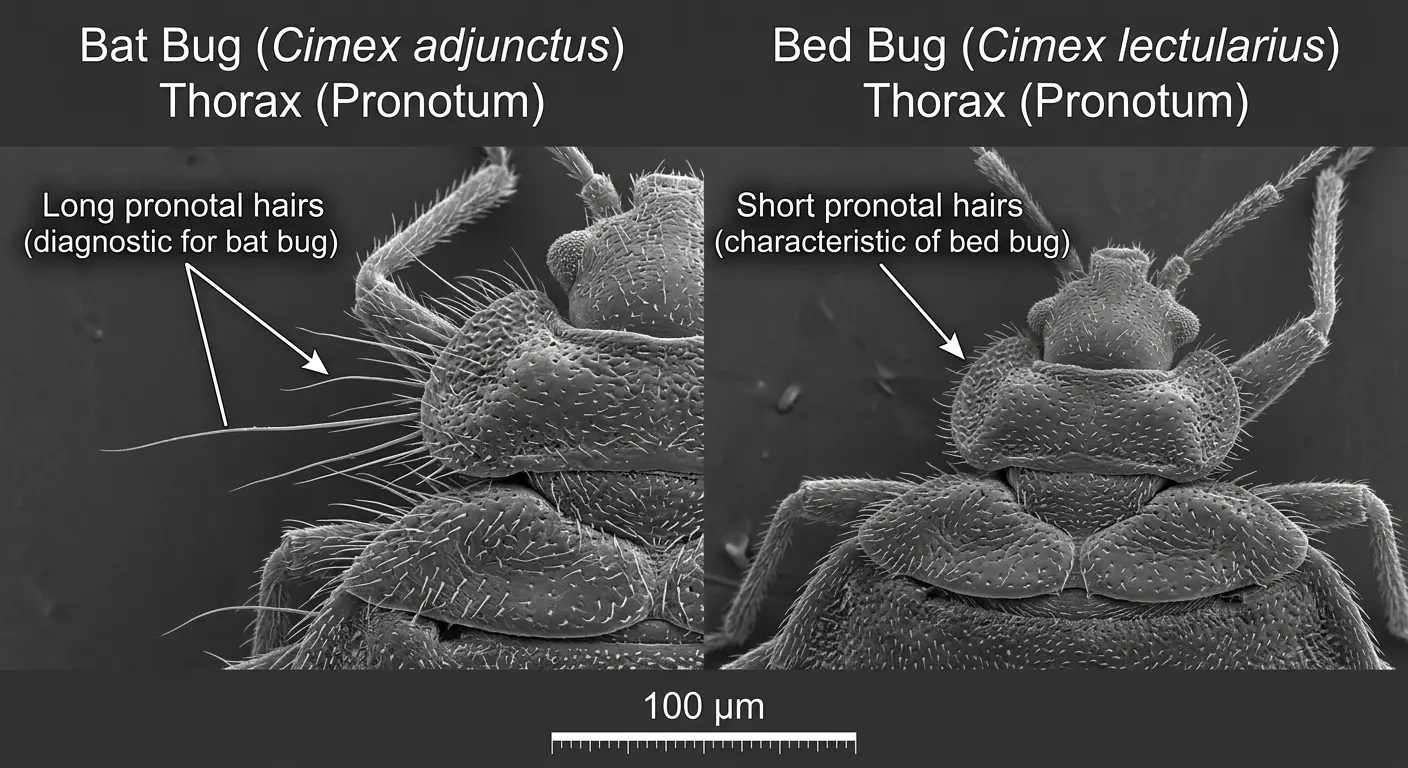
Bat bugs are so similar to bed bugs that even pest control professionals need magnification to tell them apart.
Bat bugs (Cimex adjunctus) share the same oval body shape, brownish color, and size as bed bugs. They also feed on blood. The primary difference? Bat bugs have longer hairs on their thorax — a detail visible only under a microscope.
The practical distinction comes down to location and host. Bat bugs typically live in attics, chimneys, or wall voids where bats roost. If you have a bat colony in your home, bat bugs may wander into living spaces looking for a new host — and they will bite humans.
Here’s the key insight: if you’re finding “bed bugs” but also have bats in your attic, you’re likely dealing with bat bugs. Treating for bed bugs won’t solve the problem — you need to exclude the bats and treat the roosting areas. For more on related species and names see our bed bug species and names page.
Swallow Bugs: The Hairy Lookalike
Swallow bugs are the less famous, hairier cousins of bed bugs — and they’re frequently misidentified because they’re nearly identical in size and color.
Swallow bugs (Oeciacus vicarius) primarily feed on cliff swallows and barn swallows. They share the classic oval, flattened body shape of bed bugs but have noticeably longer hairs on their bodies. Like bat bugs, they’ll bite humans if their bird hosts disappear.
The critical clue: swallow bugs are almost always found near swallow nests, typically on the exterior of buildings or in eaves. Indoor infestations are rare unless birds have nested inside the structure. If you’re finding bed bug-like insects near windows or exterior walls, consider whether swallows have been nesting nearby.
Booklice: Tiny But Easily Confused
Booklice are much smaller than bed bugs but are frequently mistaken for bed bug nymphs.
Booklice (Liposcelis species) measure only 1–2 mm — about half the size of a bed bug nymph. They’re pale brown or gray, soft-bodied, and have a distinctive “humped” appearance. Unlike bed bugs, booklice feed on mold and fungi, not blood.
You’ll typically find booklice in humid areas: bathrooms, kitchens, or anywhere moisture accumulates. They’re also common in old books, stored paper, and cardboard boxes — hence the name. They don’t bite, don’t transmit disease, and are more of a nuisance than a threat.
The most common confusion happens when someone finds a booklouse on a mattress and assumes it’s a bed bug nymph. But booklice are significantly smaller, move faster, and prefer damp environments. If you’re finding these insects, the recommended response is reducing humidity and following our bed bug behavior and identification and treatment resources rather than assuming a bed bug infestation.
Spider Beetles: The Round Impersonator
Spider beetles look like tiny brown spiders — which is why many people mistake them for bed bugs at a glance.
Spider beetles (Ptinidae family) are 2–5 mm, reddish-brown, and have a distinctive round, bulbous abdomen. Their long legs and antennae give them a spider-like appearance. They’re nocturnal, which adds to the confusion — you might spot one on your mattress at night and immediately think bed bug.
But spider beetles don’t bite. They feed on a wide variety of organic materials, including dried plant products, grains, and even animal droppings. They’re pantry pests more than bedroom pests, though they can wander into bedrooms from adjacent storage areas.
The key difference: spider beetles have a distinct “waist” between their thorax and abdomen, while bed bugs have a more uniform oval shape. Spider beetles also have clubbed antennae, whereas bed bugs have thin, segmented antennae.
Fleas: The Jumping Confusion
Fleas are often mistaken for bed bugs because both leave itchy bite marks — but they look very different.
Fleas are 1.5–3.3 mm, laterally compressed (narrow from side to side), and dark reddish-brown. They’re famous for their jumping ability — a trait bed bugs completely lack. Bed bugs crawl; fleas jump. That’s the single easiest way to tell them apart.
Flea bites also have a different pattern. Flea bites typically cluster around the ankles and lower legs, while bed bug bites often appear in a line or zigzag pattern on exposed skin. Fleas require a host animal (usually a pet) to complete their lifecycle, so flea infestations almost always involve a dog or cat.
If you’re finding small, jumping insects on your pets or around your ankles, you’re dealing with fleas — not bed bugs. The treatment approach is completely different.
Ticks: The Blood-Feeding Lookalike
Ticks share bed bugs’ blood-feeding habit and can be mistaken for them, especially in nymph stages.
Ticks are arachnids (not insects), with eight legs in their adult stage. They’re oval, flat, and range from 1–5 mm depending on their life stage and feeding status. An engorged tick can look remarkably similar to a well-fed bed bug.
The critical difference: ticks have no antennae and their mouthparts project forward, visible from above. Bed bugs have distinct antennae and a shorter, broader head. Ticks also attach to their host for extended periods — hours to days — while bed bugs feed and retreat quickly.
Ticks are typically found in grassy or wooded areas, not in beds. If you find a tick on your mattress, it likely hitched a ride on you or a pet — it’s not an infestation.
Cockroach Nymphs: The Shape-Shifters
Baby cockroaches are frequently mistaken for bed bugs — and the confusion is understandable.
Cockroach nymphs are small, oval, and brown, just like bed bugs. But they have two key differences: they’re usually lighter in color (often tan or light brown) and they have two distinct “cerci” (appendages) at the rear of their abdomen. Bed bugs have a rounded rear with no appendages.
Cockroach nymphs are also much faster than bed bugs and tend to scatter when disturbed. They’re typically found in kitchens and bathrooms, though German cockroach nymphs can wander throughout a home. They don’t bite humans, though they can contaminate food and trigger allergies.
Most guides say cockroach nymphs are easy to distinguish because they’re lighter in color — but this isn’t always reliable. German cockroach nymphs can be dark enough to confuse. The cerci are the definitive clue: look for the two tiny “tails” at the rear.
Minute Pirate Bugs: The Tiny Predator
Minute pirate bugs are beneficial predators that look remarkably similar to bed bug nymphs.
Minute pirate bugs (Orius species) are only 2–3 mm long, dark brown or black, with a distinctive white or yellow marking on their back. They’re agricultural beneficials that feed on thrips, mites, and other small pests.
The confusion arises because they’re the right size and color, and they can wander indoors from nearby vegetation. Some people have even found them on mattresses, triggering a bed bug panic. But minute pirate bugs don’t feed on humans — they’re looking for plant pests.
The key difference: minute pirate bugs have a distinctive white patch on their wing covers, which bed bugs lack. They’re also more active during the day and tend to be found near windows or light sources.
Mites: The Microscopic Misidentification
Various mite species are often blamed for “bed bug bites” when no bed bugs are present.
Bird mites, rodent mites, and chigger mites are all tiny (0.5–1 mm) and can bite humans, causing itchy red welts that look identical to bed bug bites. But mites are nearly microscopic — you’d need magnification to see them clearly.
If you’re experiencing bites but can’t find any insects, mites might be the culprit. Bird mites are common after birds nest in eaves or attics and then abandon the nest. Rodent mites similarly appear after mice or rats are removed.
The critical difference: mites are far smaller than bed bugs, and they’re typically found near their host’s nesting areas. If you have birds nesting on your property and you’re getting bites, mites are a far more likely culprit than bed bugs.
Head Lice: The Close-Range Lookalike
Head lice are sometimes confused with bed bugs, though they’re much smaller and stay on the scalp.
Head lice are 2–3 mm, grayish-white to tan, and live exclusively on human hair and scalp. They feed on blood multiple times daily, causing intense itching. While they’re similar in color to bed bugs, they’re significantly smaller and have a different body shape — elongated rather than oval.
The key difference: head lice are found on the scalp and hair, while bed bugs are found in the environment (mattresses, furniture, baseboards). Head lice also lay eggs (nits) that attach to hair shafts — something bed bugs never do.
If you’re finding insects in your hair but not in your bed, you’re dealing with head lice, not bed bugs. The treatment is completely different and doesn’t involve any mattress work.
How to Tell If It’s Actually a Bed Bug
The definitive way to identify a bed bug is to examine its body shape, antennae, and behavior.
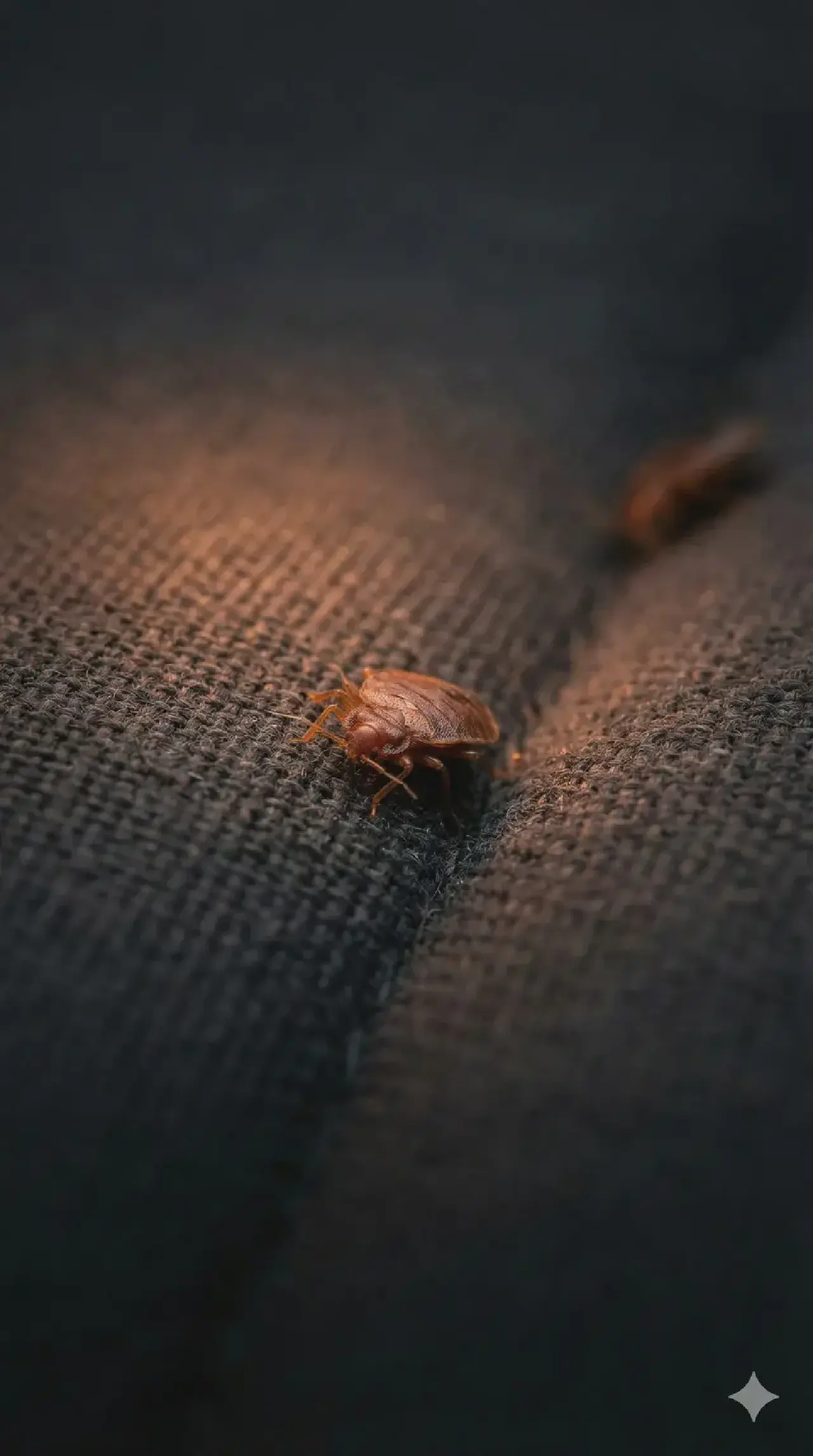
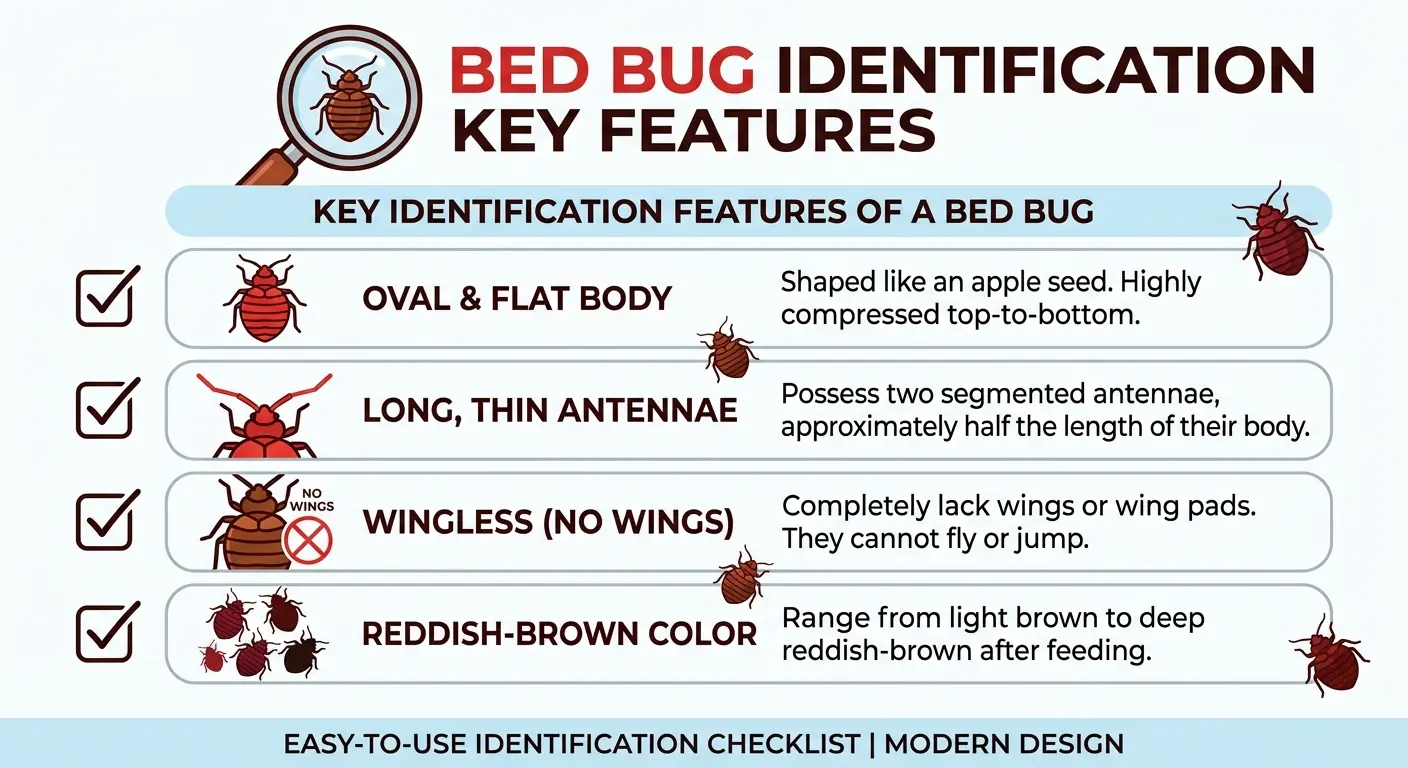
Bed bugs have a distinctive oval, flattened body that’s about 4–5 mm long (roughly the size of an apple seed). They’re wingless, with a reddish-brown color that darkens after feeding. Their antennae are thin and segmented, and their eyes are prominent on the sides of their head.
Behaviorally, bed bugs are nocturnal and hide in dark, tight spaces during the day — mattress seams, box spring cracks, baseboards, and furniture joints. They emerge at night to feed, then retreat to their hiding spots. If you’re finding insects during the day in open areas, they’re probably not bed bugs. For more on size, visibility, and hiding behavior see our bed bug size and visibility and where bed bugs are found pages.
For a definitive identification, examine the insect under bright light with a magnifying glass. Look for the oval body, thin antennae, and absence of wings. Compare against reference photos for side-by-side identification in our bed bug photos and appearance resource. For detailed body-part comparisons, see bed bug body parts.
Not sure if those marks are bed bug bites or something else?
Upload a photo to our identifier tool — get a confirmed answer in under 60 seconds.
Common Misidentification Scenarios
Certain situations reliably produce bed bug false alarms — and knowing them can save you panic.
Scenario 1: You found a bug on your mattress. This is the most common trigger. If the bug is crawling on the surface during the day, it’s likely a carpet beetle, spider beetle, or booklouse — bed bugs avoid light and open areas.
Scenario 2: You have bites but no visible bugs. Mites, fleas, or even mosquito bites could be the culprit. Bed bugs typically leave behind fecal spots or shed skins — if you see neither, reconsider your diagnosis and review our bed bug droppings and stains and bed bug shells and shed skin guides.
Scenario 3: You found bugs near your bed but not on it. Check the location. Bugs near windows or light sources are almost certainly not bed bugs. Bugs in baseboards or mattress seams are more likely to be actual bed bugs.
Scenario 4: You have pets and are finding bugs. Fleas are far more likely than bed bugs if you have dogs or cats. Look for flea dirt (black specks) in your pet’s fur and bedding.
The Cost of Misidentification
Treating for the wrong pest isn’t just frustrating — it’s expensive.
A professional bed bug treatment typically costs $300–$1,500 per room. If you’re treating for bed bugs but actually have carpet beetles or booklice, you’ve wasted that money — and the real problem continues. Conversely, if you have bed bugs but treat for fleas, the infestation will spread while you wait for a solution that never comes.
The most cost-effective approach is accurate identification first. This is why our AI photo identification tool exists — it compares your photo against thousands of confirmed cases to give you a reliable answer in under a minute. No more guessing, no more expensive mistakes.
Still unsure what pest you're dealing with?
Our AI tool compares your photo against thousands of confirmed cases instantly.
When to Seek Further Help
If you’ve confirmed bed bugs or can’t identify the insect after a thorough inspection, follow our identification and treatment resources to determine next steps.
If you’ve found multiple insects, fecal spots, or shed skins in your mattress seams or baseboards, you’re likely dealing with a real bed bug infestation. Check for dead or crushed remains and see our dead bed bugs resource to learn how to interpret carcasses and what they indicate. For direct species comparisons and quick side-by-side differences, consult our bed bug vs other insects page. Consult our bed bug identification guide and the linked resources above for recommended treatment plans and monitoring tools — bed bugs are notoriously difficult to eliminate with DIY methods alone, and our site outlines both preventative and more aggressive treatment options.
However, if you’ve found a single insect and can’t identify it, don’t panic. Capture it in a sealed bag or container and compare it against the descriptions in this guide. Our bed bug identification resource provides detailed comparison charts and photos to help you make the call.
For other pests like tiny bugs in bed that aren’t bed bugs, the treatment is often simple — vacuuming, humidity control, or removing the food source. And if you’re wondering whether bed bug larvae look like worms, the answer is no — bed bugs don’t have a larval stage, and what you’re seeing is likely a different pest entirely.
Prevention Tips That Work for All Lookalikes
The same prevention measures that deter bed bugs also deter most lookalikes.
- Reduce clutter — fewer hiding spots for all pests
- Vacuum regularly — especially around baseboards, mattress seams, and furniture
- Encase your mattress and box spring — use quality zippered encasements and inspect them monthly for damage
- Wash bedding and linens in hot water and dry on high heat to kill any hitchhiking insects
- Inspect secondhand furniture and vacuum or treat before bringing items indoors
- Use bed bug interceptors and active monitoring under bed legs and around sleeping areas to catch early activity
If you’ve reached this point and still aren’t sure what you’re dealing with, confirm identification with our AI photo tool and follow the site’s treatment guidance and linked internal resources above. A correct ID is the fastest way to the right, cost-effective solution.
- Are There Different Species of Bed Bugs? Complete Guide to Bed Bug Types and Names
- Baby Bed Bugs: What Nymphs Look Like and How to Identify Them
- Bed Bug Droppings: How to Identify Black Spots and Stains
- Bed Bug Photos: Close-Up Images to Identify Every Life Stage
- Bed Bug Shells: The Complete Guide to Casings and Shed Skin
- Bed Bug Smell: What Do Bed Bugs Smell Like and Why It Matters
- Bed Bug vs Other Insects: 12 Lookalikes You Need to Identify
- Dead Bed Bugs: How to Identify Carcasses, Husks & What They Really Mean
- Do Bed Bugs Have Wings? The Truth About Bed Bug Body Parts
- How Big Are Bed Bugs? Size, Visibility & What You Can See
- What Color Are Bed Bugs? The Complete Color Guide by Life Stage
- Where Do Bed Bugs Hide? The Complete Hiding Spot Guide