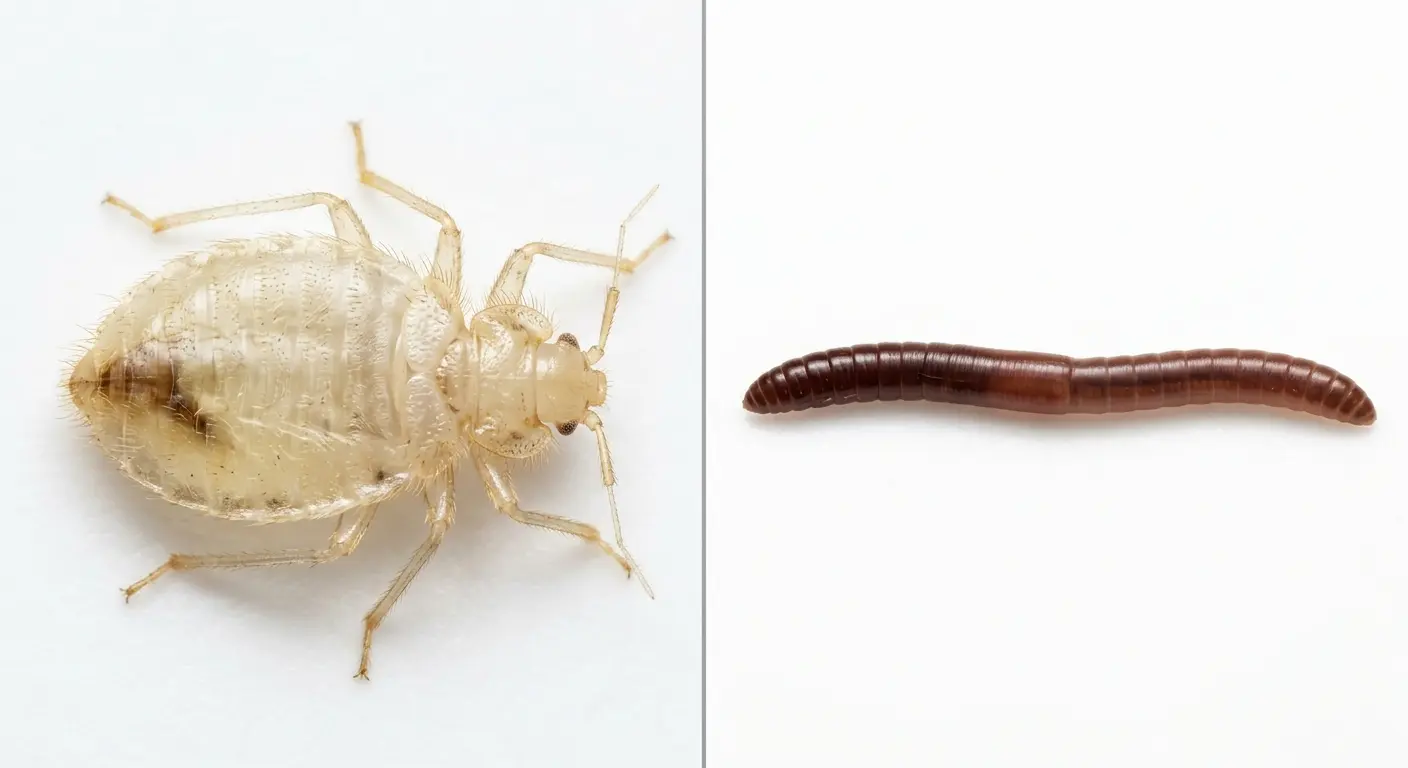
No — bed bugs don’t have a larval stage, and their nymphs don’t look like worms. Bed bugs undergo incomplete metamorphosis (egg → nymph → adult), meaning the young look like miniature versions of adults — not caterpillars, maggots, or worm-like creatures.
If you’re finding tiny worm-like pests in your bed or carpet, you’re almost certainly dealing with a different insect entirely. Let’s break down what you’re actually seeing.
What Do Bed Bug Nymphs Actually Look Like?
According to the US EPA’s bed bug life cycle guide, bed bug nymphs are “a bit smaller and translucent or whitish yellow” compared to adults. They have:
- Six legs (worms have none)
- Three body segments (head, thorax, abdomen)
- Oval, flattened bodies — not elongated or cylindrical
- No visible segmentation like earthworms have
A newly hatched nymph is roughly the size of a poppy seed (about 1mm). After feeding, they become reddish and more elongated — but still clearly insect-shaped, never worm-like.
So What Are Those Tiny Worms in Your Bed?
If you’re seeing small, worm-like creatures in your mattress, carpet, or bedding, here are the most likely culprits:
| Pest | Appearance | Where You’ll Find Them |
|---|---|---|
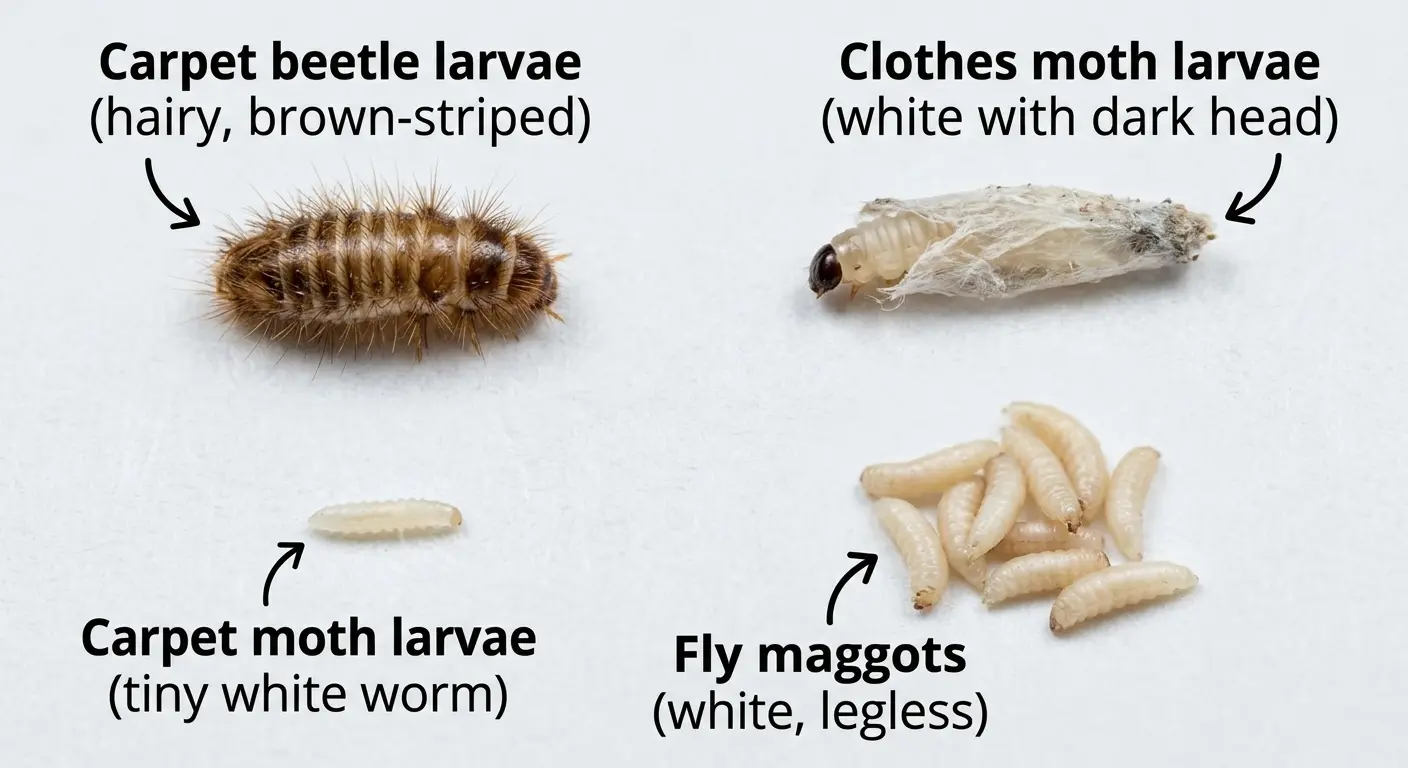
| Carpet beetle larvae | Tiny, hairy, brown-striped “caterpillar” look | Edges of carpets, under furniture, on bedding |
| Clothes moth larvae | Small white/cream caterpillars with dark heads | In wool, silk, or stored fabrics |
| Carpet moth larvae | Tiny white worms with brown heads | Along baseboards, in carpet fibers |
| Fly maggots | White, legless, tapered bodies | Near garbage, pet waste, or dead animals |
Most guides say any worm in your bed is a bed bug — but that’s incorrect. Bed bugs are obligate blood feeders that hide in cracks and crevices. They don’t crawl around openly like worms. If you see worm-like pests moving in daylight, they’re almost certainly carpet beetle larvae or moth larvae, which feed on organic fibers.
How to Tell the Difference Fast
Here’s a quick 3-point check to identify what you’re dealing with:
- Count the legs — Bed bugs have 6 legs. Worms and maggots have zero. Larvae (like carpet beetles) have 6 tiny legs near the front.
- Look at the body shape — Bed bugs are oval and flat. Worms are long, round, and segmented.
- Check the movement — Bed bugs crawl slowly and hide quickly. Worm-like larvae move with a rippling or inching motion.
Still unsure? You’re not alone — this is one of the most common misidentifications in pest control.
Not sure if those marks are bed bug bites or something else?
Upload a photo to our identifier tool — get a confirmed answer in under 60 seconds.
Why “Bed Bug Larvae” Is a Misleading Search Term
When people search “bed bug larvae,” they’re usually picturing a worm-like stage — similar to how butterflies have caterpillars. But bed bugs skip that entirely. Their nymphs hatch from eggs looking like tiny adults and simply grow larger through five molts.
The confusion often comes from finding carpet beetle larvae in bedrooms. These pests are common in homes, feed on natural fibers, and their bristly, worm-like appearance triggers alarm. But they don’t bite — they cause damage to fabrics instead.
Another possibility: drain flies or fungus gnats that lay eggs in damp areas near beds. Their larvae are tiny, white, and worm-like.
Still not sure if it's bed bugs or a different insect?
Our AI tool compares your photo against thousands of confirmed cases instantly.
What to Do If You Find Worm-Like Pests
First, don’t panic. Capture one in a clear container or take a close-up photo. Then:
- If it has 6 legs and is oval → likely a bed bug nymph. Check mattress seams, headboard cracks, and baseboards for more.
- If it’s hairy, segmented, or legless → likely carpet beetle or moth larvae. Vacuum thoroughly and wash bedding in hot water.
- If you’re seeing adult insects too → identify those — they’re easier to recognize than larvae.
For more lookalikes that could be causing confusion, check our guide on bugs that look like bed bugs — including tiny bugs in bed that aren’t bed bugs.