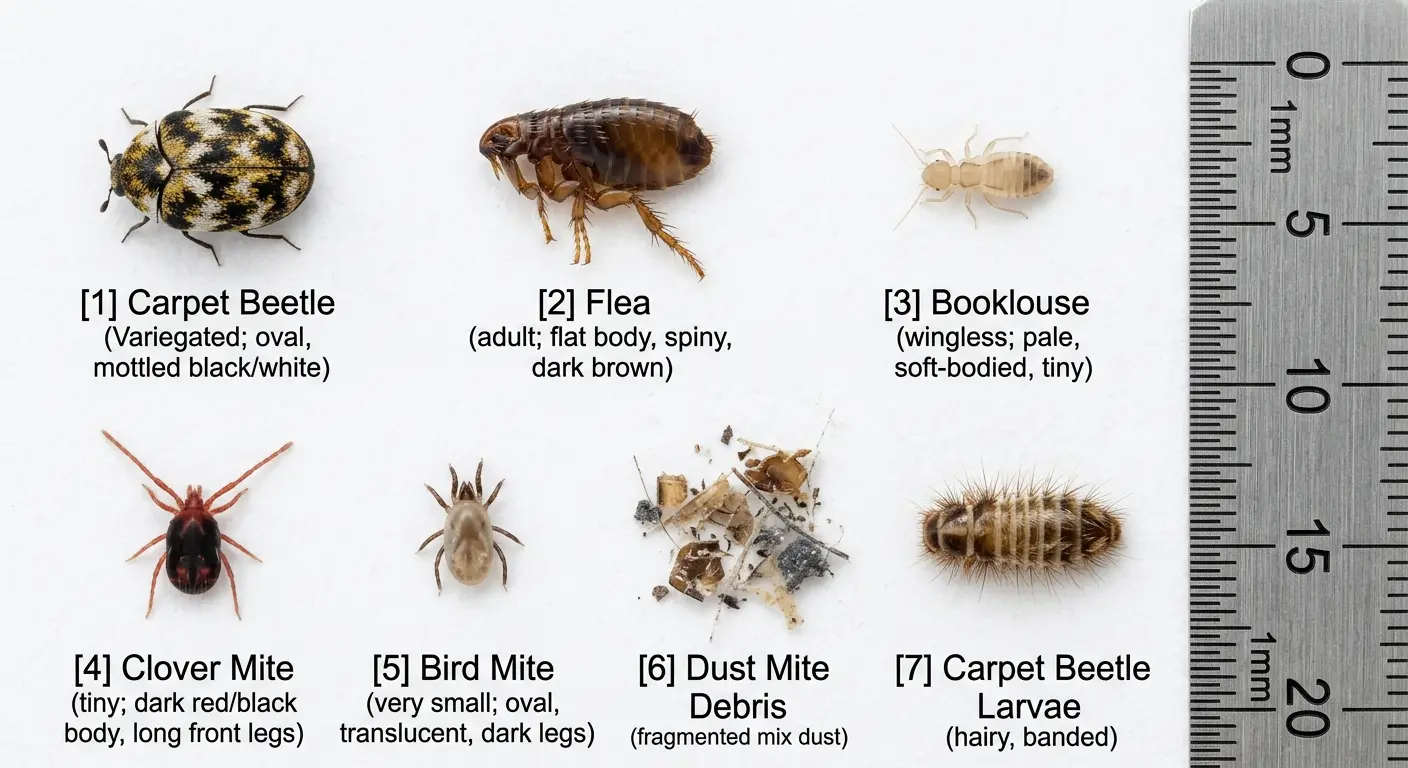
Most tiny bugs found in beds are not bed bugs — they’re carpet beetles, fleas, booklice, or dust mites. You can tell them apart by color, movement, and whether they actually bite. This guide covers the seven most common bed bug lookalikes so you can stop guessing and start treating the right pest.
What Are the Most Common Tiny Bugs in Bed That Aren’t Bed Bugs?
Carpet beetles are the #1 false alarm. They’re small, oval, and often black or brown with a mottled pattern. Unlike bed bugs, they don’t bite — they feed on organic fibers like wool, cotton, and pet hair. If you see tiny black bugs in bed not bed bugs, carpet beetles are the likely culprit, especially near baseboards or under furniture.
Fleas are another frequent find. They’re reddish-brown, about 1/8 inch long, and jump when disturbed. Flea bites often appear around ankles, not in a straight line like bed bug bites. If you have pets, fleas are far more likely than bed bugs.
Tiny Black Bugs in Bed Not Bed Bugs: What Are They?
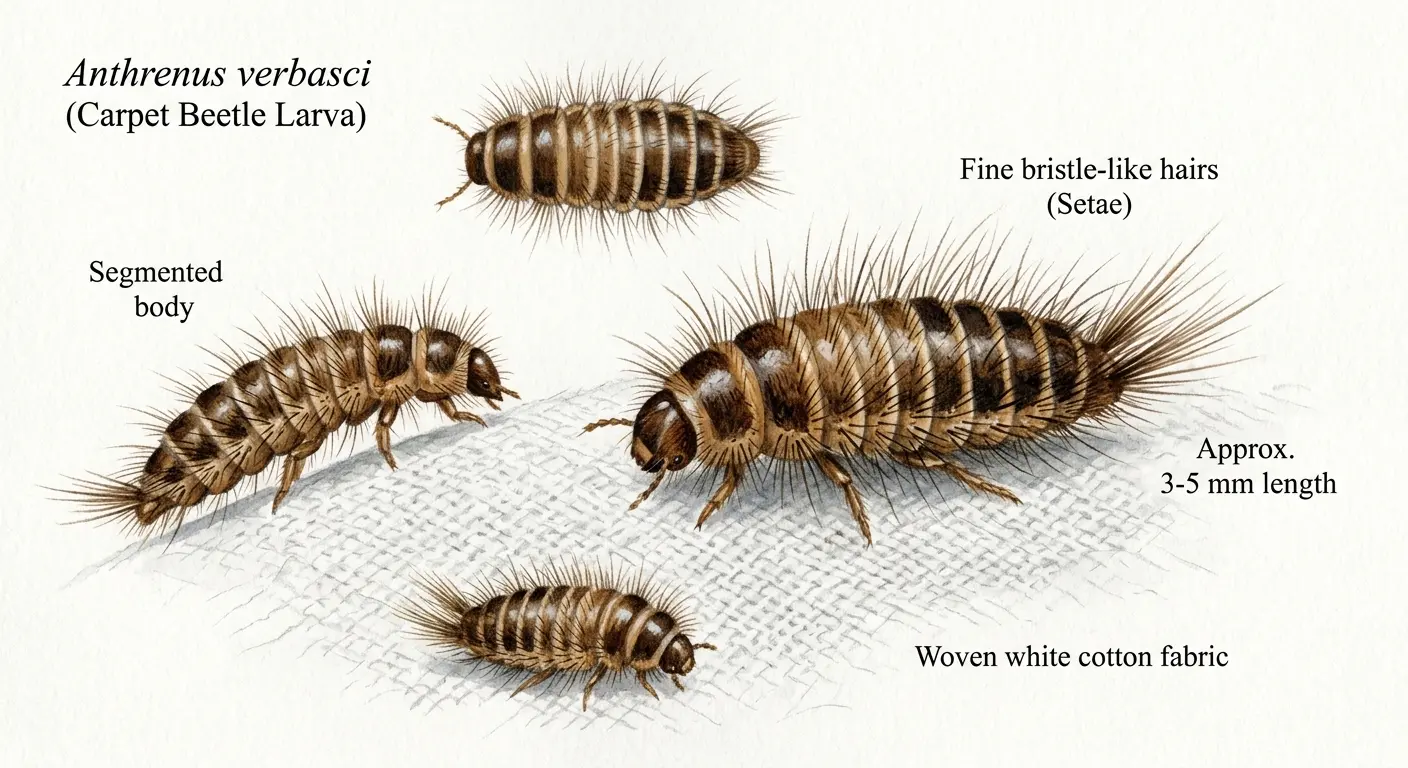
Carpet beetle larvae are the most common tiny black bugs in bed. They’re hairy, slow-moving, and look like tiny caterpillars. Adult carpet beetles are oval and can fly to windowsills. The key difference: carpet beetles don’t bite, and they leave behind shed skins and fecal pellets that look like fine black sand.
Booklice are another option — they’re pale brown or gray, extremely small (1-2mm), and thrive in humid environments. They feed on mold and mildew, not blood. If you find them in your bed, the real problem is moisture, not pests.
Tiny Red Bugs in Bed Not Bed Bugs: Could It Be Mites?
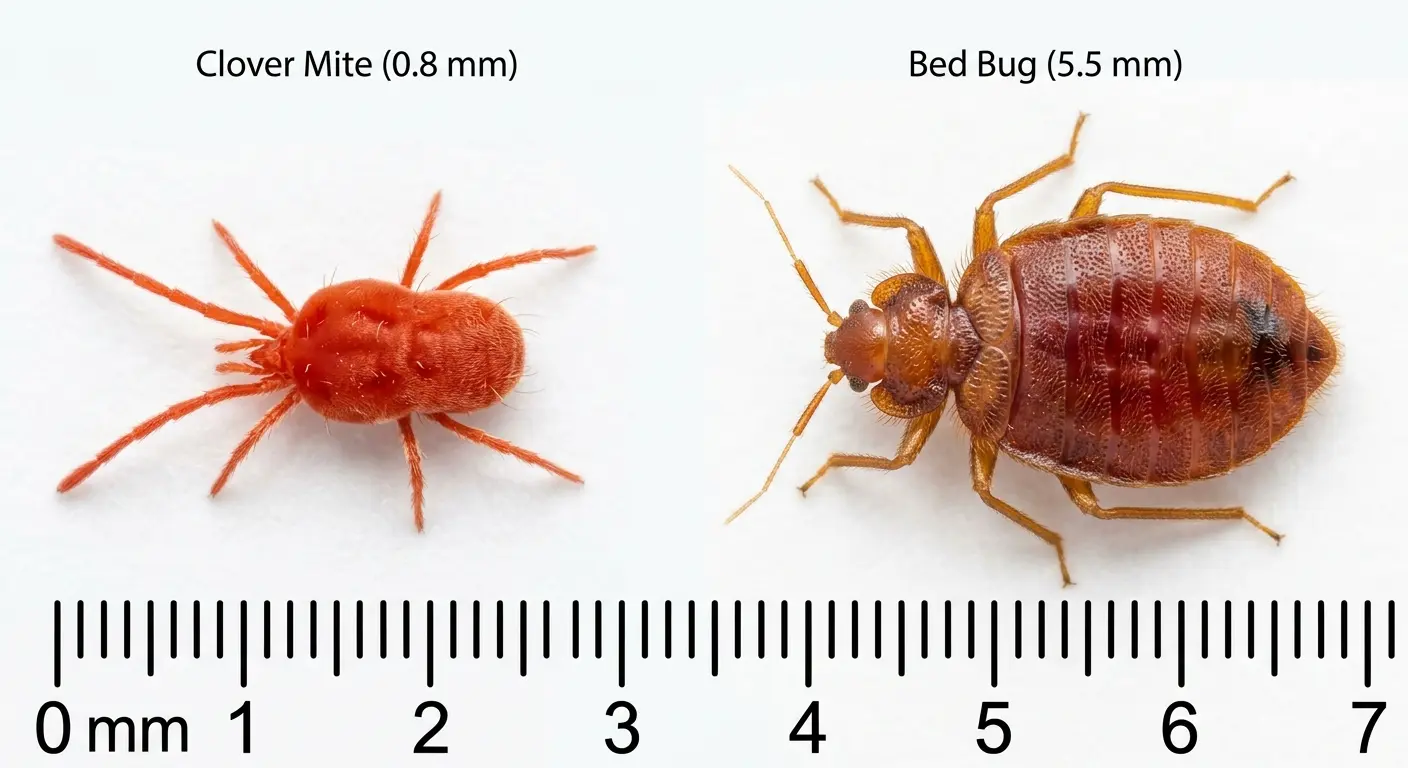
Clover mites are tiny red bugs that sometimes wander into beds. They’re about 1/30 inch long, bright red, and don’t bite. They’re more common near windows and walls, especially in spring. Bird mites are another red-brown possibility — they bite and can infest beds if birds nest near your home.
Most guides say any red bug in bed is a bed bug — but clover mites and bird mites are far more common in many regions. The difference: bed bugs are flat and oval with a distinct apple-seed shape; clover mites are rounder and have long front legs.
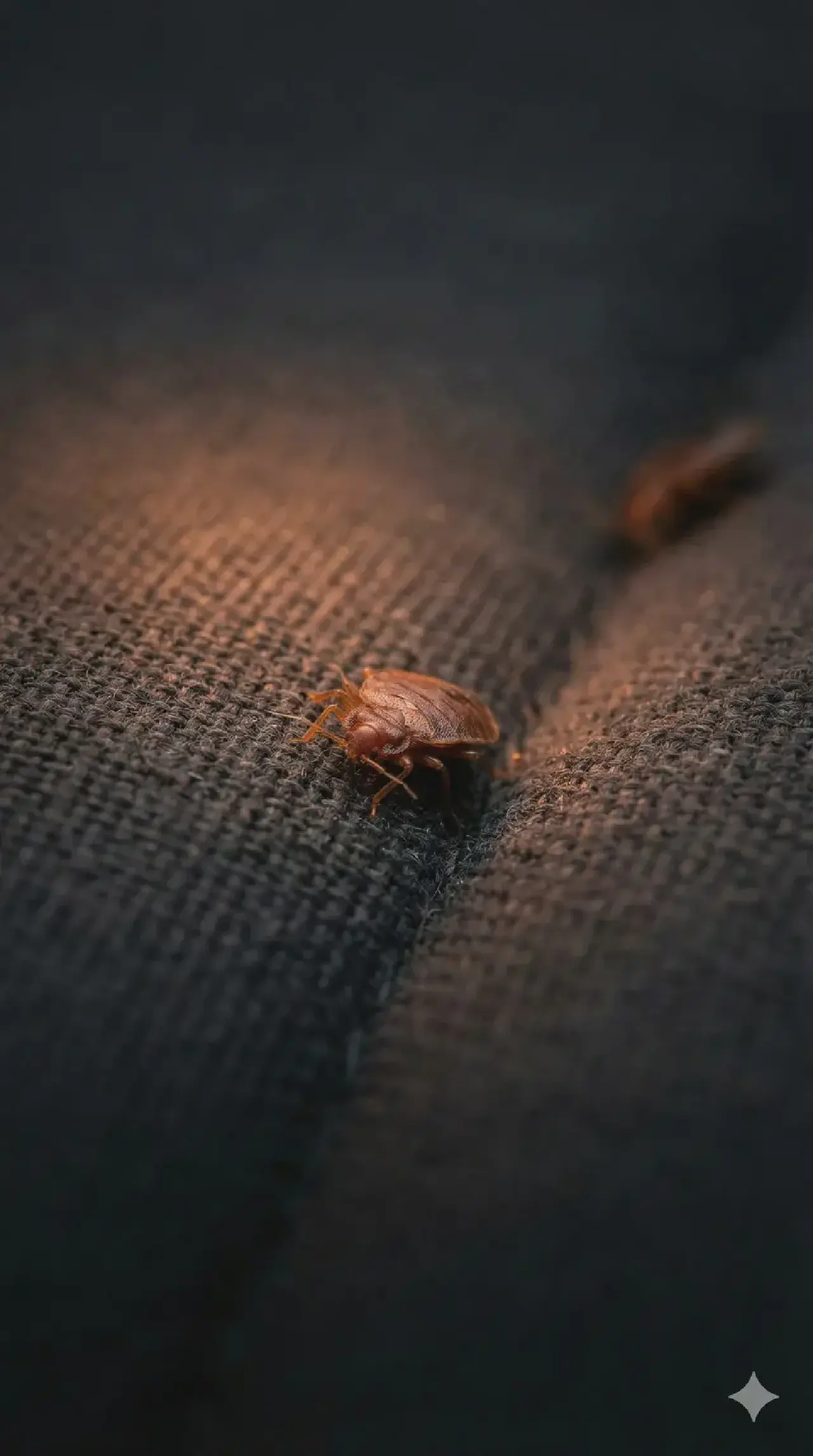
Not sure if those marks are bed bug bites or something else?
Upload a photo to our identifier tool — get a confirmed answer in under 60 seconds.
Little White Crumbs in Bed Not Bed Bugs: What’s That?
Little white crumbs in bed are usually carpet beetle larvae skins, booklice, or dust mite debris — not bed bug eggs. Bed bug eggs are pearly white and about 1mm, but they’re glued to surfaces, not scattered like crumbs.
Carpet beetle larvae shed their skins as they grow, leaving behind tiny white-to-tan casings that look like crumbs. Dust mites produce digestive enzymes and fecal matter that can appear as fine white powder. Neither bites, but both can trigger allergies.
How to Identify Bed Bug Lookalikes With Certainty
The fastest way to confirm what you’re dealing with is to capture one on clear tape and examine it against known reference photos. Look for these key differences:
| Feature | Bed Bugs | Carpet Beetles | Fleas | Booklice |
|---|---|---|---|---|
| Size | 4-5mm | 2-3mm | 1.5-3mm | 1-2mm |
| Color | Reddish-brown | Black/brown mottled | Reddish-brown | Pale brown/gray |
| Movement | Crawls fast | Crawls slow | Jumps | Crawls slow |
| Bites | Yes, straight line | No | Yes, random clusters | No |
| Wings | No | Yes (adults) | No | Yes (some) |
| Habitat | Mattress seams | Carpets, fabrics | Pet bedding, rugs | Damp areas |
When to Treat vs. When to Relax
After confirming the pest with our identifier tool, follow our treatment guidance for carpet beetles, booklice, or clover mites — vacuum thoroughly, launder bedding at 130°F+, and reduce indoor humidity below 50%. For fleas, treat your pets and wash all pet bedding immediately.
If you find bed bugs or bird mites, use a more aggressive site-recommended treatment plan. For bed bugs, confirm identification (capture on clear tape or use the identifier tool), then follow our multi-step protocol: mattress encasements, high-heat laundering, targeted steam where applicable, and the site’s recommended products and procedures. For bird mites, remove nearby bird nests and seal entry points to prevent re-infestation.
Still not sure if it's bed bugs or a different insect?
Our AI tool compares your photo against thousands of confirmed cases instantly.
Frequently Asked Questions
Can tiny bugs in bed be harmless?
Do bed bug lookalikes cause the same bites?
How do I tell carpet beetles from bed bugs?
What are the little white things in my bed?
Should I treat for bed bugs if I find tiny black bugs?
The Bottom Line
Tiny bugs in bed not bed bugs are almost always carpet beetles, fleas, booklice, or mites. The key is identifying the pest before treating — because bed bug treatment won’t solve a carpet beetle problem. For a definitive answer, compare your findings against our bugs that look like bed bugs guide or upload a photo to our identifier tool.