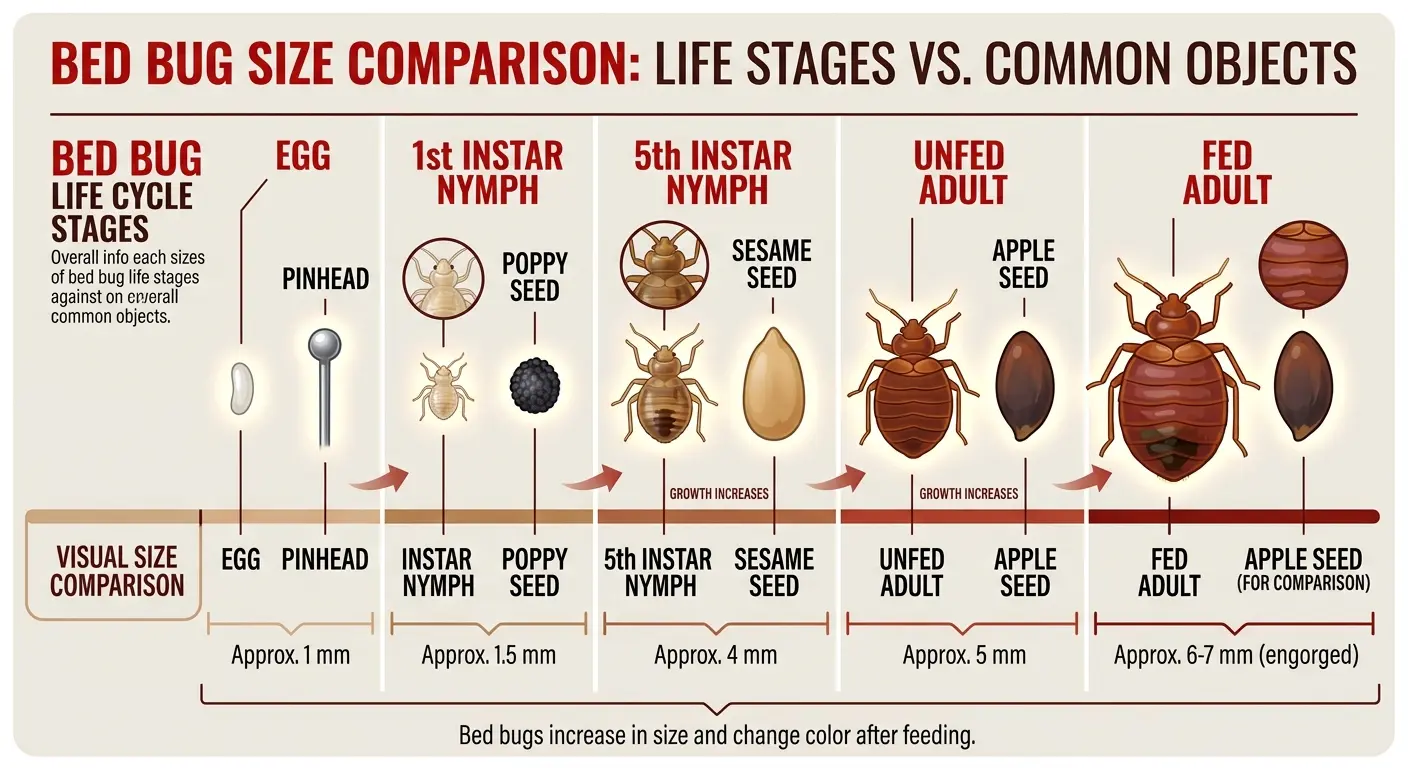
Adult bed bugs are roughly ¼ inch (6 mm) long — about the size of an apple seed — and they are completely visible to the naked eye. That’s the direct answer to “how big are bed bugs”: large enough to spot without magnification, but small enough to hide in seams, cracks, and folds that you’d never think to check.
Most people assume bed bugs are microscopic. They’re not. The confusion comes from their flat bodies and nocturnal habits — they’re easy to miss, not invisible. If you’re wondering whether you can see bed bugs crawling on you, the answer is yes, especially once you know what to look for.
This guide covers exact bed bug size measurements across every life stage, explains why these pests are so hard to spot despite their size, and gives you practical methods for confirming what you’re seeing. For a complete breakdown of all bed bug appearances, start with our bed bug identification guide and our bed bug photos and appearance gallery.
How Big Are Bed Bugs in Millimeters and Inches?
Adult bed bugs measure between 4.5 mm and 7 mm (about 3/16 to ¼ inch) in length. Their size varies depending on whether they’ve recently fed — an unfed bed bug is flat and smaller, while a fully fed one can swell to nearly twice its body length.
Here’s a quick reference table for bed bug size across life stages:
| Life Stage | Length (mm) | Length (inches) | Visual Comparison |
|---|---|---|---|
| Adult (unfed) | 4.5–6 mm | 3/16–¼ inch | Apple seed |
| Adult (fed) | 6–7 mm | ¼–5/16 inch | Small watermelon seed |
| Nymph (5th instar) | 4–4.5 mm | ~3/16 inch | Sesame seed |
| Nymph (1st instar) | 1.5 mm | ~1/16 inch | Poppy seed |
| Egg | 1 mm | ~1/32 inch | Pinhead / grain of salt |
The size range matters because most people only notice bed bugs after they’ve fed — those swollen, reddish-brown insects are significantly easier to spot than flat, unfed ones hiding in mattress seams.
Are Bed Bugs Visible to the Naked Eye?
Yes, bed bugs are visible to the naked eye at every stage after hatching. Even first-instar nymphs — at just 1.5 mm — can be seen without magnification, though they’re easy to mistake for dust or lint.
The real challenge isn’t visibility; it’s behavior. Bed bugs are nocturnal, flatten their bodies to nearly paper-thin when hiding, and prefer dark crevices where your eyes don’t naturally focus. Cornell’s IPM program notes that adult bed bugs are flat enough to slip into a crack the thickness of a credit card — which means they can disappear into spaces you’d never think to inspect.
Most guides say you need a magnifying glass to identify bed bugs — but that’s only true for eggs and freshly hatched nymphs. Adults and older nymphs are clearly visible; you just need good lighting and a systematic search pattern.
How Big Are Bed Bugs Compared to Common Objects?
Visual comparisons make bed bug size easier to grasp. Here’s how they stack up against everyday items:
- Apple seed — adult unfed bed bug
- Sesame seed — older nymph (4th–5th instar)
- Poppy seed — young nymph (1st–2nd instar)
- Pinhead — bed bug egg
- Credit card edge — the width of a flattened bed bug hiding in a crack
These comparisons are useful, but they don’t tell the whole story. A fed bed bug changes shape dramatically — from flat and oval to elongated and balloon-like. That’s why people sometimes report seeing “different” bugs in the same infestation; they’re seeing the same insects at different feeding stages.
Can You See Bed Bugs Crawling on You?
Yes, you can see bed bugs crawling on you — but you probably won’t feel them first. Bed bug bites are typically painless because their saliva contains an anesthetic. You might wake up with bites and never catch the culprit in the act.
If you’re awake and a bed bug crawls across exposed skin, you’ll likely notice it — especially against light-colored sheets. Their dark reddish-brown bodies contrast sharply with white bedding. The challenge is that bed bugs are fast when they need to be, and they retreat quickly toward dark hiding spots when disturbed.
For more on when and where you might spot them, check our guide on bed bug visibility — including why daytime sightings are rare but possible.
How Large Are Bed Bugs After Feeding?
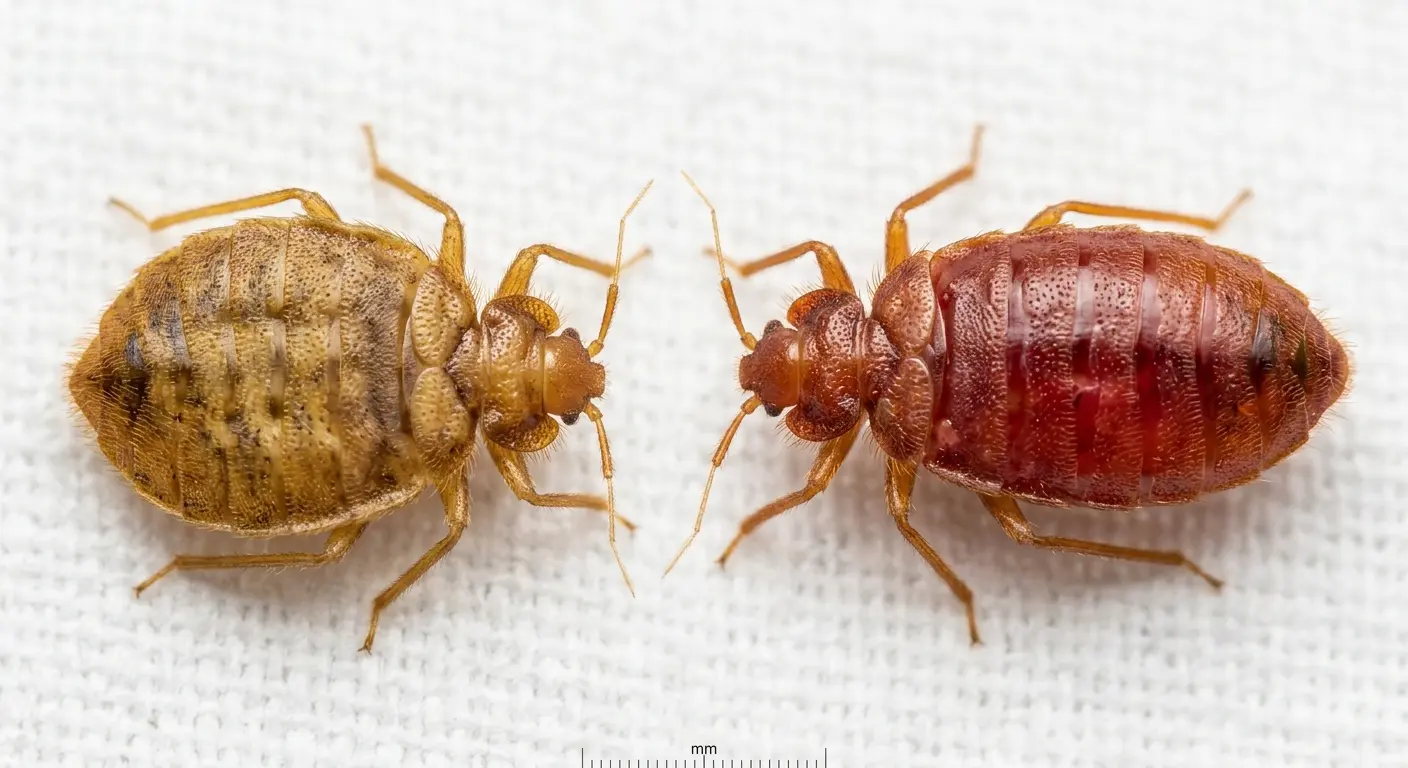
A bed bug’s size increases dramatically after a blood meal. An unfed adult that’s 5 mm long can swell to 7 mm or more after feeding — roughly a 40% increase in length and a much larger increase in volume.
The visual difference is striking:
- Unfed: Flat, oval, brownish — looks like a small apple seed
- Fed: Elongated, balloon-like, reddish — looks like a tiny watermelon seed
This size change is why people sometimes think they have two different pests. If you’re finding bugs of different sizes and shapes, it’s likely the same species at different feeding stages — not multiple infestations.
Bed Bug Size by Life Stage: From Egg to Adult
Understanding the full size range helps you identify what stage of infestation you’re dealing with. Here’s what to expect:
Eggs (1 mm): About the size of a pinhead. White to pearl-colored, laid in clusters of 10–50 in hidden locations. Nearly impossible to see without magnification.
First-instar nymphs (1.5 mm): Hatched bed bugs are translucent, pale, and roughly the size of a poppy seed. They must feed before molting to the next stage — see more on baby nymphs in our baby bed bugs and nymphs guide.
Second to fourth instars (2–3.5 mm): Gradually darkening from pale yellow to brown. Still small but visible against light surfaces.
Fifth instar (4–4.5 mm): Nearly adult-sized, darker brown, and easier to spot. These are the nymphs most people notice during an infestation.
Adult (4.5–7 mm): Fully grown, reddish-brown, and clearly visible. Adults are the stage most commonly identified.
The practical takeaway: if you’re seeing bugs that look like apple seeds or sesame seeds, you’re looking at adult bed bugs or late-stage nymphs — not some mysterious microscopic pest.
Why Are Bed Bugs So Hard to See Despite Their Size?
Bed bugs are visible, so why do infestations go unnoticed for months? Several factors combine to make them masters of concealment:
Flat body shape. An unfed bed bug can compress to nearly 1 mm thick — thin enough to slide into seams, zippers, and cracks. They don’t need much space to hide.
Nocturnal behavior. Bed bugs are most active between 2 AM and 5 AM, when you’re asleep. They feed for 5–10 minutes and return to hiding.
Rapid retreat. When disturbed, bed bugs move quickly toward dark crevices. By the time you turn on a light, they’re gone.
Camouflage. Their brownish color blends with wood, fabric, and shadows; for details about color and how it helps concealment see our bed bug color guide.
Small population early on. A new infestation starts with just a few bugs. You might see one or two and dismiss them as random insects — not realizing they’ve already begun reproducing.
Most guides emphasize searching your mattress — but that’s only where bed bugs feed, not where they live. Cornell’s research confirms bed bugs spread throughout the room, hiding in baseboards, furniture joints, and even electrical outlets; our article on where bed bugs are found goes deeper into common harborage sites. If you’re only checking your mattress, you’re missing most of the infestation. For more on how bed bugs act when they’re not feeding, see our bed bug behavior and identification guide.
Can You See Bed Bugs with Your Eyes? Yes — Here’s How
You don’t need special equipment to spot bed bugs. Here’s a practical method for finding them:
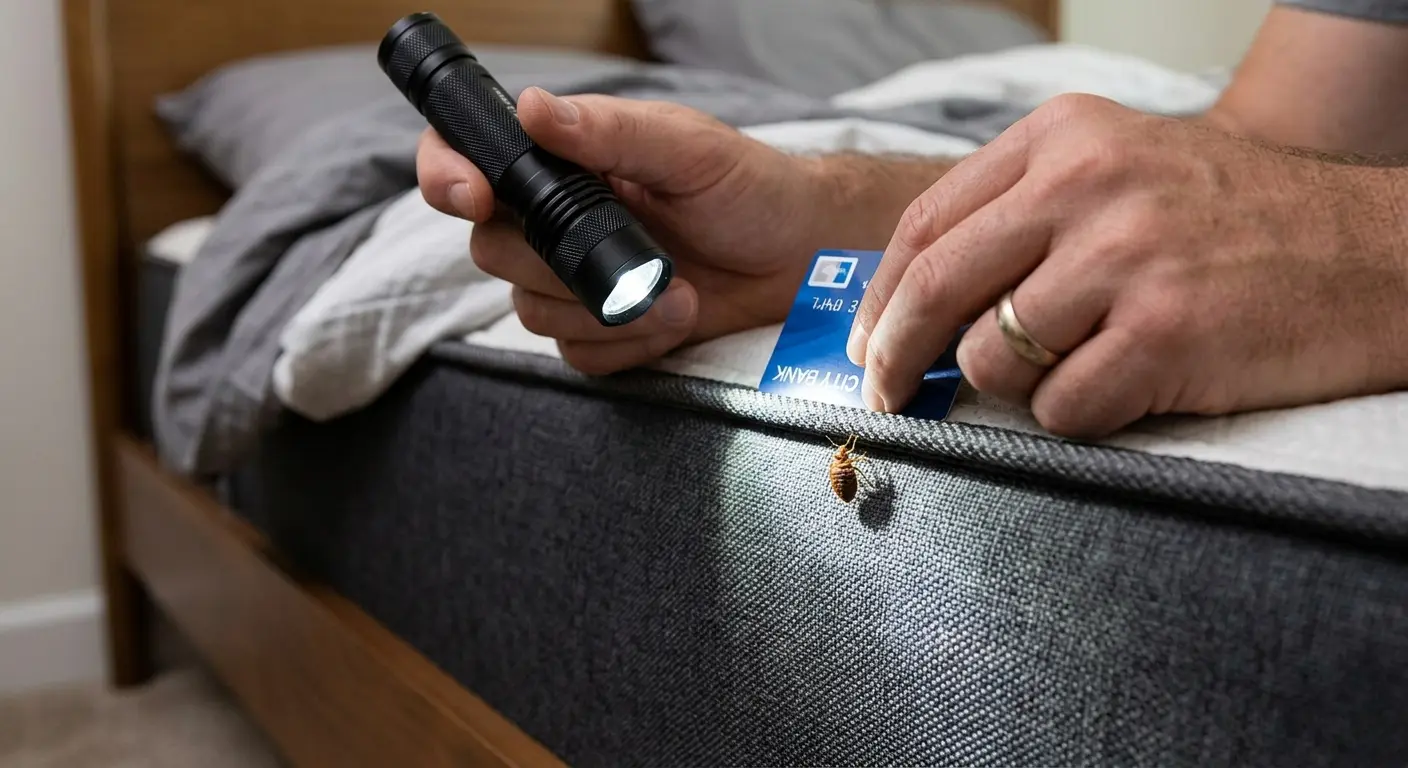
- Use bright light. A flashlight or phone light directed at an angle helps reveal shadows and movement.
- Check seams first. Run a credit card along mattress seams to flush out hiding bugs.
- Look for clusters. Bed bugs congregate in groups — finding one usually means finding more nearby.
- Check the box spring and bed frame. These are primary hiding spots, not just the mattress.
- Inspect nearby furniture. Nightstands, headboards, and chairs within 5–10 feet of the bed are common harborage sites.
- Look under cushions, behind baseboards, and inside drawers. Bed bugs tuck into thin gaps and cloth folds; a careful angled light inspection will reveal them.
- Use a stiff brush or credit card to dislodge bugs from seams and folds. Brushing along a seam while watching with a flashlight often forces them into view.
- Collect a specimen if you can. Place any suspected bug in a sealed container or on tape for comparison or professional ID — see our notes on identifying dead or crushed specimens in the dead bed bugs article.
- Compare what you find to photos and lookalikes. If the bug doesn’t match typical photos, check our bed bug photos and appearance gallery and our bed bug lookalikes and bed bug vs other insects guides to rule out similar pests.
If you find a bug but aren’t sure what it is, don’t guess. Our bed bug identification guide compares your photo against confirmed cases to give you a definitive answer.
How Big Is a Giant Bed Bug?
The term “giant bed bug” usually refers to either a fully fed adult or a bat bug — a close relative that looks nearly identical. Fed bed bugs can reach 7–8 mm, which is noticeably larger than the typical apple seed comparison.
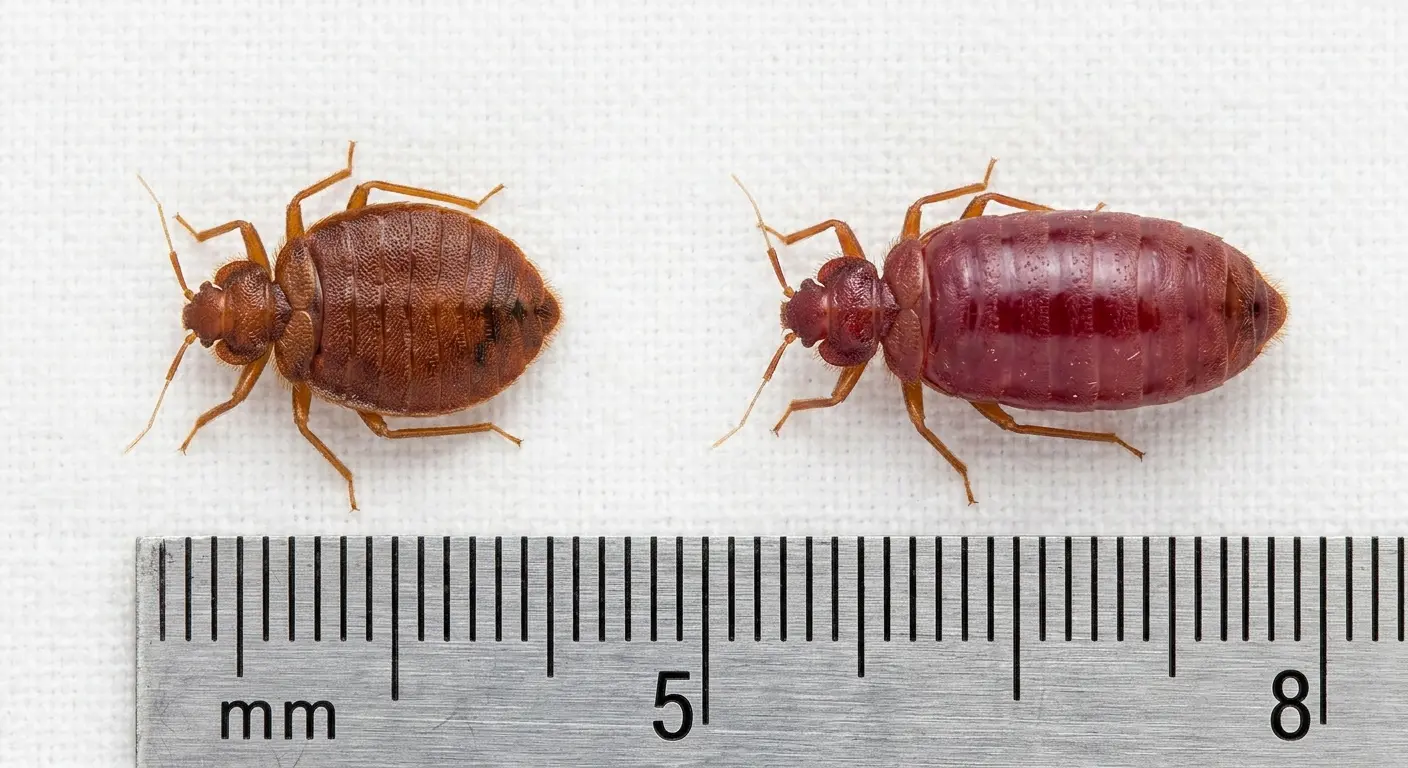
If you’ve found a bed bug that seems unusually large, it’s likely one of these situations:
- Recently fed adult — swollen with blood, appearing much larger than unfed specimens
- Bat bug — slightly larger and with longer body hairs, but nearly identical to bed bugs
- Swollen female — females are typically larger than males even before feeding
For more detail on unusually large specimens and species differences, see our bed bug species and names guide or the page on giant bed bugs.
What About Bed Bug Size at Night?
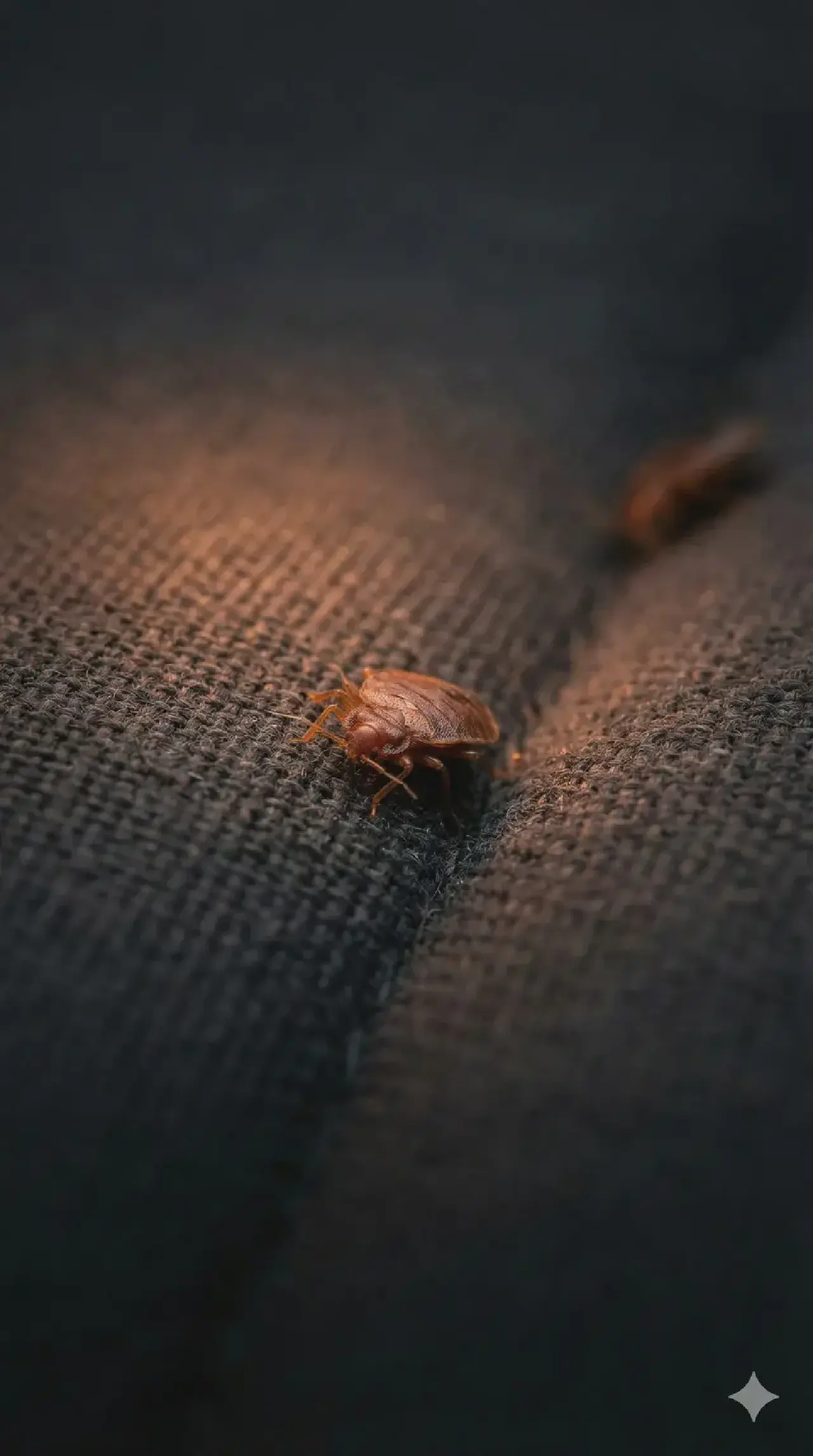
Bed bugs don’t change size at night — but your perception of them might. In dim light, with sleep-heavy eyes, a 5 mm bug can easily be dismissed as a speck of lint or a crumb.
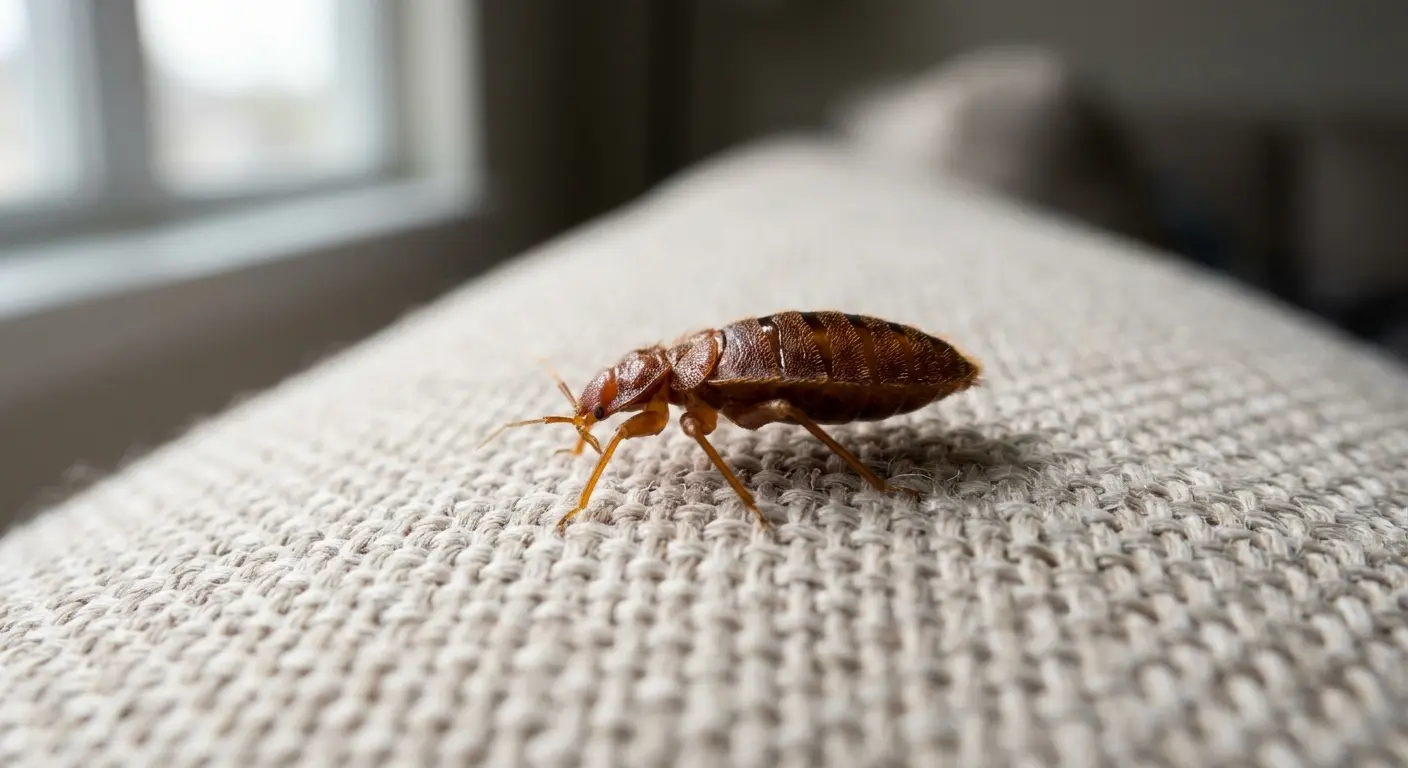
The most common reason people miss bed bugs at night is that they’re not looking. Bed bugs bite while you sleep, and the bites themselves are painless. By morning, the bugs are back in hiding, and you’re left with itchy welts and no explanation.
If you suspect bed bugs but haven’t seen one, check our guide on bed bugs during the day — daytime sightings are rare but possible, especially in heavy infestations.
How to Confirm What You’re Seeing
Finding a bug is only half the battle — you need to confirm it’s actually a bed bug. Here’s what to check:
Size and shape: Adult bed bugs are oval, flat, and about ¼ inch long. They don’t have wings and can’t jump. For details on identifying body parts to confirm a match, see bed bug body parts.
Color: Unfed bed bugs are brownish; fed ones are reddish-brown. Nymphs are pale or translucent.
Movement: Bed bugs crawl — they don’t fly or jump. Their movement is relatively slow compared to ants.
Location: Bed bugs cluster in seams, crevices, and dark spaces near sleeping areas.
Signs of infestation: Look for dark fecal spots, smears, and staining on sheets and mattresses; our bed bug droppings and stains guide shows what to look for.
Shed skins and casings: Nymphal shed skins are common evidence of reproduction — see bed bug shells and shed skin.
Dead specimens: Finding dead or crushed bugs is also evidence; photos and guidance are in our dead bed bugs article.
If you’re still unsure, use our AI identification tool for instant confirmation — upload a photo and get a definitive answer in under a minute.
Not sure if those marks are bed bug bites or something else?
Upload a photo to our identifier tool — get a confirmed answer in under 60 seconds.
Bed Bug Size vs. Other Common Insects
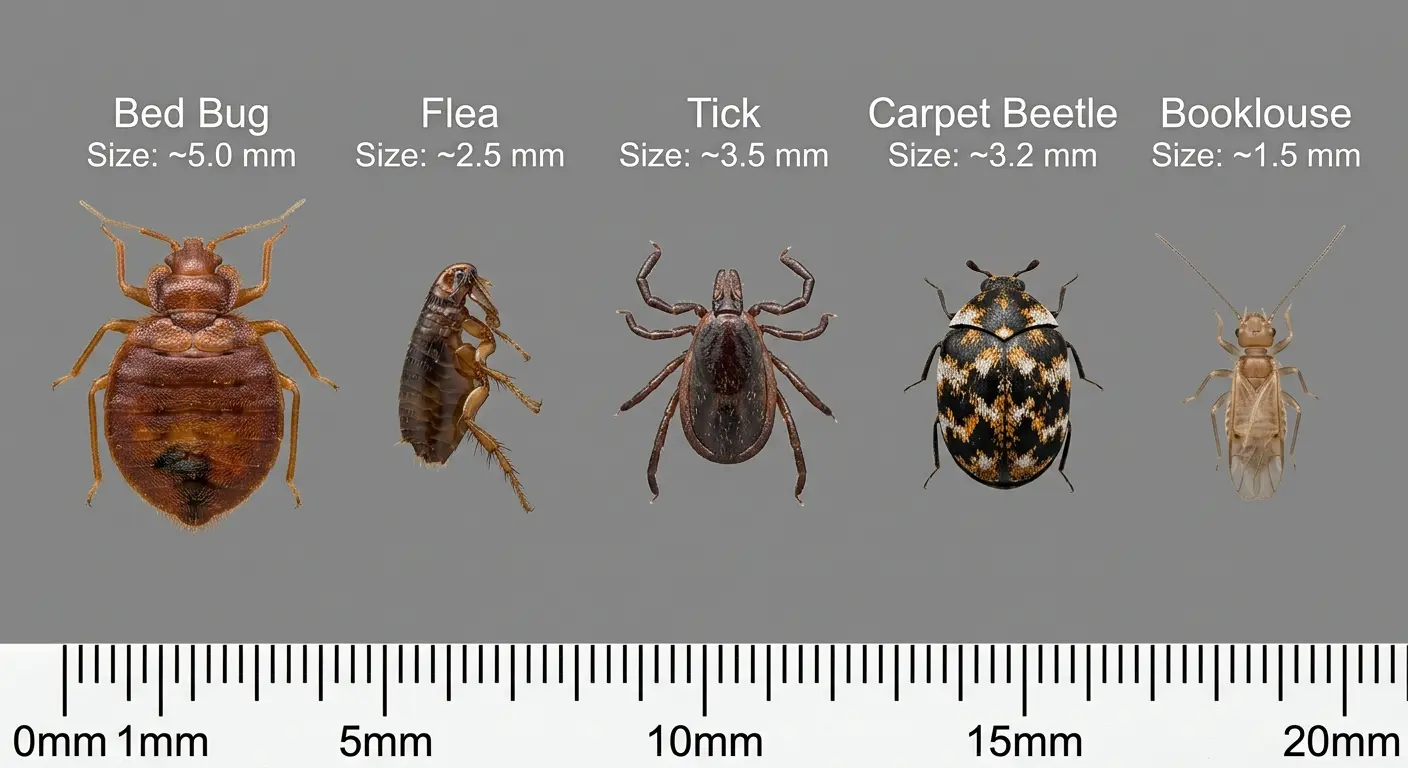
Bed bugs are often confused with other household pests. Here’s how their size compares:
| Insect | Size | Key Difference |
|---|---|---|
| Bed bug | 4.5–7 mm | Oval, flat, no wings |
| Flea | 1.5–3 mm | Jumping, darker, narrower |
| Tick | 3–5 mm (unfed) | 8 legs, attaches to skin |
| Carpet beetle | 2–4 mm | Round, patterned wings |
| Booklouse | 1–2 mm | Pale, soft-bodied |
The size overlap with ticks and carpet beetles causes the most confusion. Knowing these differences helps you avoid misidentifying a harmless insect as a bed bug — or worse, dismissing an actual infestation. For common misidentifications and side-by-side comparisons, see our bed bug lookalikes and bed bug vs other insects pages.
Does Bed Bug Size Affect Treatment?
Yes — and this is where most guides miss the point. The size of the bed bugs you’re seeing tells you how long the infestation has been established:
- Only adults: Recent introduction (1–2 months)
- Adults + nymphs: Established infestation (2+ months)
- Eggs + all stages: Mature infestation (3+ months)
Treatment approach doesn’t change based on size — you need to eliminate all stages regardless. But knowing the infestation’s age helps you understand how thorough your treatment must be. A mature infestation requires more aggressive intervention than a fresh one.
For treatment guidance based on your specific situation, our tool builds a custom kit based on your photos — no guesswork required.
Confirmed bed bugs — what do you actually need to treat them?
Upload one photo and our tool builds your exact treatment kit in under two minutes.
Frequently Asked Questions About Bed Bug Size
How big are bed bugs in inches?
Can you see bed bugs with the naked eye?
How big are bed bugs compared to apple seeds?
Are bed bugs visible when crawling on you?
How big are baby bed bugs?
Why do bed bugs look different sizes?
Can bed bugs be too small to see?
How big is a fully grown bed bug?
When to Take Action Based on What You See
If you’ve confirmed bed bugs — even just one — you have an infestation. Bed bugs reproduce quickly: a single female can lay 200–500 eggs in her lifetime, and nymphs reach adulthood in as little as 5 weeks.
Don’t wait for the problem to become visible across multiple life stages. One confirmed sighting warrants immediate treatment. The longer you wait, the more established the infestation becomes — and the harder it is to eliminate.
Still not sure if it's bed bugs or a different insect?
Our AI tool compares your photo against thousands of confirmed cases instantly.
Practical Tips for Spotting Bed Bugs at Any Size
Whether you’re dealing with 1.5 mm nymphs or 7 mm fed adults, these strategies improve your chances of finding them:
Use a flashlight at an angle. Direct overhead light creates shadows that hide bed bugs. Angled light reveals their silhouettes against surfaces.
Check dark seams with a credit card. Run a card along mattress seams, upholstery folds, and furniture joints. This flushes out hiding bed bugs.
Look for live bugs and signs of activity. Bed bugs congregate in groups — finding one usually means finding more nearby. Also check for eggs, shed skins, and dark fecal spots.
Inspect the box spring, bed frame, and headboard thoroughly. These are common harborage sites and often contain the highest concentration of bugs.
Examine nearby furniture and baseboards. Bed bugs spread from the bed to chairs, nightstands, and skirting boards; see our where bed bugs are found page for typical spread patterns.
Use a credit card or stiff brush to pry along seams and folds. Brushing while shining a light often dislodges hiding nymphs and adults.
Collect specimens carefully. If you find a bug, place it on tape or in a sealed container for identification — this helps professionals and our tool give an accurate answer.
Compare with photos and common lookalikes before acting. Use our bed bug photos and appearance gallery, bed bug lookalikes, and bed bug vs other insects pages to rule out similar species.
If you find multiple life stages (eggs, nymphs, adults), act immediately. A mixed-stage infestation indicates reproduction and requires a comprehensive treatment plan.
Following these steps — good lighting, systematic inspection, specimen collection, and cross-checking with photos — will give you the best chance of detecting bed bugs at any size. For additional identification help, our bed bug identification guide and bed bug body parts reference can clarify anatomical features to look for.
- Are There Different Species of Bed Bugs? Complete Guide to Bed Bug Types and Names
- Baby Bed Bugs: What Nymphs Look Like and How to Identify Them
- Bed Bug Droppings: How to Identify Black Spots and Stains
- Bed Bug Photos: Close-Up Images to Identify Every Life Stage
- Bed Bug Shells: The Complete Guide to Casings and Shed Skin
- Bed Bug Smell: What Do Bed Bugs Smell Like and Why It Matters
- Bed Bug vs Other Insects: 12 Lookalikes You Need to Identify
- Bugs That Look Like Bed Bugs: 12 Lookalikes You Need to Know
- Dead Bed Bugs: How to Identify Carcasses, Husks & What They Really Mean
- Do Bed Bugs Have Wings? The Truth About Bed Bug Body Parts
- What Color Are Bed Bugs? The Complete Color Guide by Life Stage
- Where Do Bed Bugs Hide? The Complete Hiding Spot Guide