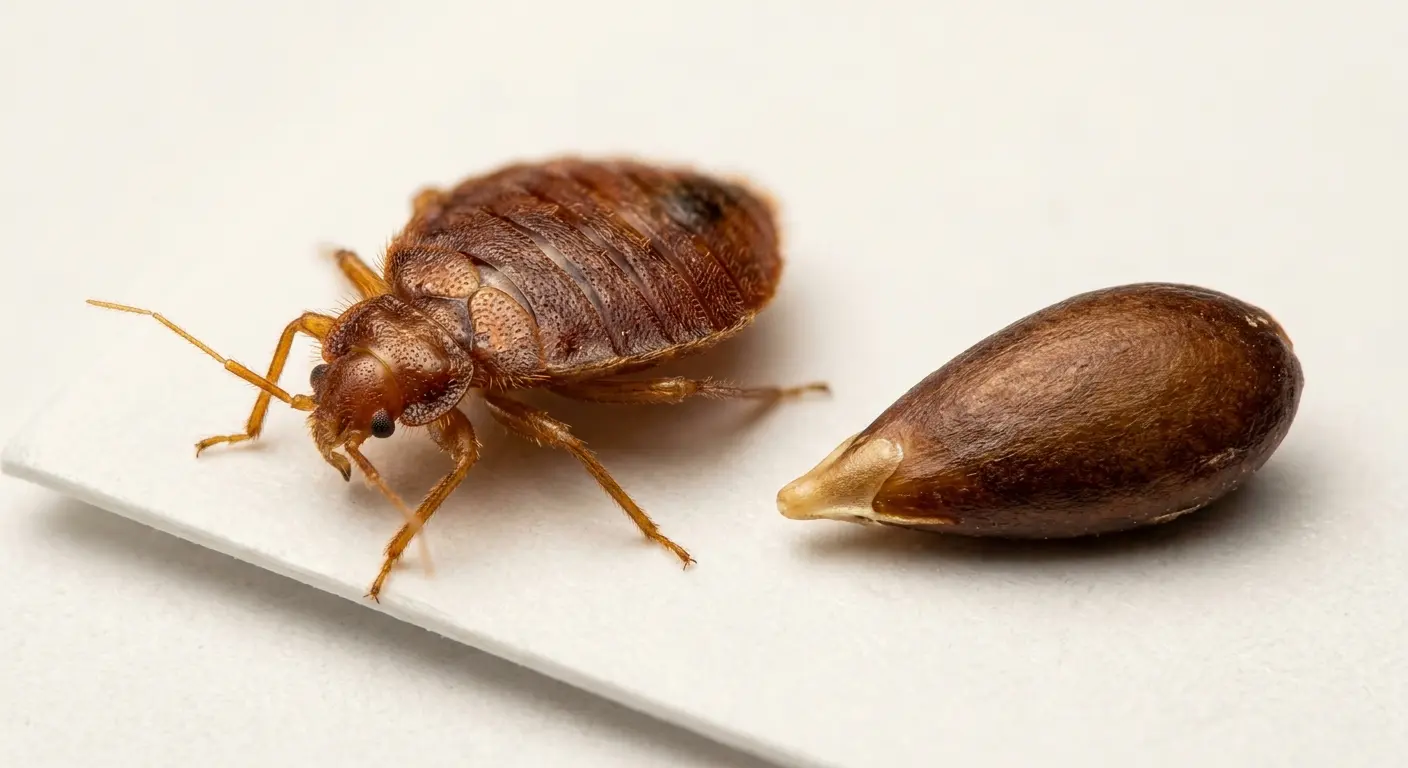
Yes, you can see bed bugs with the naked eye. Adult bed bugs measure 4–5 mm (about the size of an apple seed), making them clearly visible without magnification. However, their flat bodies, nocturnal habits, and preference for tight hiding spots make them easy to miss even when they’re right in front of you.
What Do Bed Bugs Look Like at Each Life Stage?
Adult bed bugs are reddish-brown, oval-shaped, and about the size of an apple seed. Nymphs (immature bed bugs) are smaller and lighter in color, ranging from translucent white to pale yellow. According to the Virginia Department of Agriculture and Consumer Services, freshly molted nymphs appear translucent — they look like empty bed bug shells and can be nearly invisible against light-colored bedding.

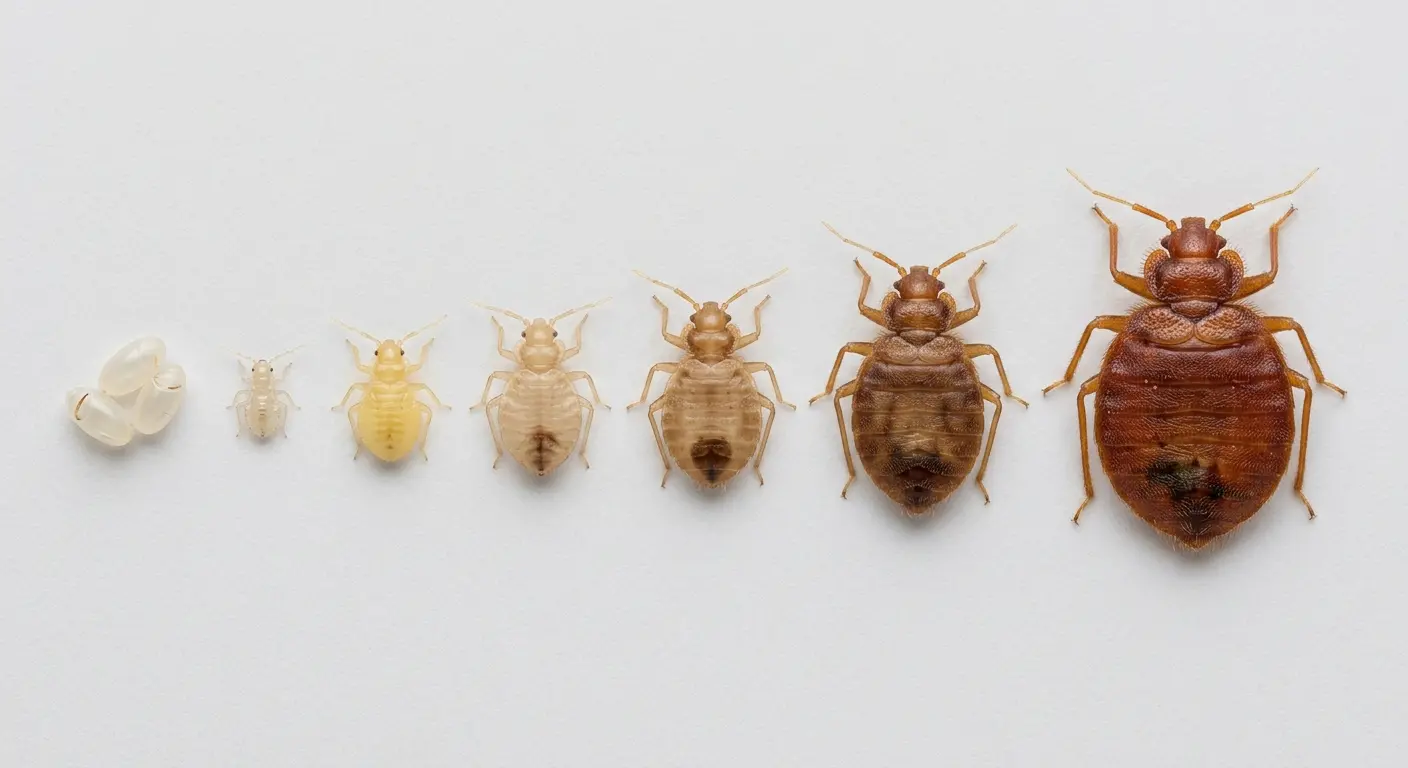
Most guides say all bed bugs are visible to the naked eye — but UC IPM research shows that while you can see adults and nymph clusters without assistance, eggs require a hand-magnifying lens. Bed bug eggs are only about 1 mm long — roughly the size of a pinhead — making them nearly impossible to spot without magnification.

Are Bed Bugs Easy to See in Your Home?
Bed bugs are visible but not necessarily easy to spot. Their flat bodies allow them to hide in cracks as thin as a credit card’s edge. The EPA recommends checking the piping, seams, and tags of your mattress and box spring, plus cracks on your bed frame and headboard.
If the infestation is heavy, you may find bed bugs in other locations too. But in low-level infestations, you might search for hours without finding a single bug — not because they’re invisible, but because they’re experts at hiding.
Where Should You Look for Visible Bed Bugs?
Start your search in the areas where bed bugs congregate:

| Location | What to Look For |
|---|---|
| Mattress seams & piping | Live bugs, dark fecal spots, shed skins |
| Box spring edges | Bugs hiding in fabric folds and corners |
| Bed frame cracks | Nymphs and adults in crevices |
| Headboard gaps | Eggs (need magnification) and molted shells |
A useful trick from pest control professionals: wrap packaging tape around your fingers, sticky side out, and run it along mattress seams. If bed bugs are present, they’ll get trapped on the tape — then hold it up to a light and use a magnifying glass to confirm what you’ve caught.
How to Confirm What You’ve Found
If you spot a bug, capture it for identification. Place it in a sealed plastic bag or container, then compare it against confirmed bed bug photos. If you’re unsure whether what you found is a bed bug or another insect, our AI photo identification tool can give you a definitive answer in under a minute.
Not sure if those marks are bed bug bites or something else?
Upload a photo to our identifier tool — get a confirmed answer in under 60 seconds.
Frequently Asked Questions About Bed Bug Visibility
Can you see bed bugs with the naked eye?
Are bed bugs invisible to the human eye?
Are bed bugs visible during the day?
What do bed bugs look like to the naked eye?
Still not sure if it's bed bugs or a different insect?
Our AI tool compares your photo against thousands of confirmed cases instantly.
What If You Can’t Find Any Bed Bugs?
You can still have bed bugs even if you can’t see them. Low-level infestations are notoriously difficult to detect — it takes time, patience, and persistence to find a few bugs hiding in a large room. For a better understanding of what you’re looking for, check our guide on how big are bed bugs to learn more about their size at each life stage.
If you’re experiencing bites but finding nothing, try these approaches:
- Set up interceptors under bed legs to catch bugs as they travel
- Check the room at 2-3 AM with a flashlight
- Look for other signs like dark fecal spots or shed skins
- If you’re unsure, capture a specimen or use our photo ID tool and then follow our treatment guidance and recommended products and treatment plan for confirmed bed bugs.
Confirmed bed bugs — what do you actually need to treat them?
Upload one photo and our tool builds your exact treatment kit in under two minutes.