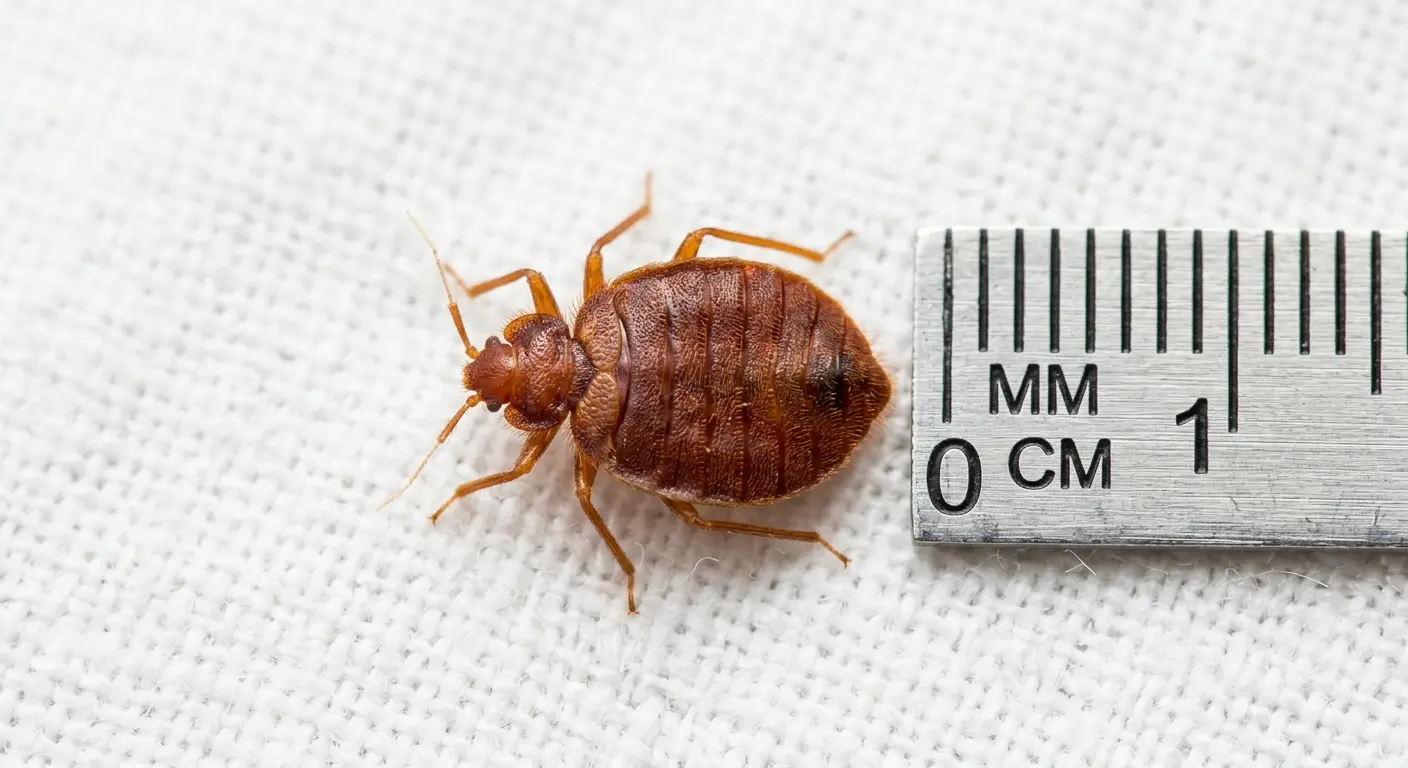
Bed bugs on a bed are most visible as small, reddish-brown insects about the size of an apple seed, along with rusty stains, dark specks, and pale shed skins on your sheets and mattress seams. These pests hide in the tightest crevices of your sleeping area, so knowing exactly where to look is the difference between catching an infestation early and letting it spread. The EPA’s guide on finding bed bugs confirms that rusty or reddish stains on bedding are often the first clue — those marks are crushed bed bugs that were feeding during the night.
What Do Bed Bugs on a Bed Look Like?
Adult bed bugs are oval, flat, and wingless, measuring roughly 4–5 mm long. On a white sheet, they appear as dark brown or mahogany-colored specks that move slowly. According to the Virginia Department of Agriculture’s identification guide, you’ll also find translucent, pale-yellow “skins” — these are the molted exoskeletons bed bugs shed as they grow. Most guides tell you to look for live bugs, but the shed skins are actually easier to spot because they remain in place long after the bug has moved.
Where to Check on Your Mattress and Box Spring
The UC IPM program states that bed bugs hide along mattress seams, within box springs, and in cracks of the bed frame. Start your inspection with a bright flashlight and check these specific areas:
- Mattress seams and tufts — run your fingers along the piping; bed bugs nest in the stitching.
- Box spring corners — lift the fabric covering and inspect the wooden frame underneath.
- Headboard and bed frame joints — especially where wood meets wood or metal brackets.
- Under mattress labels — the paper tag is a common hiding spot.
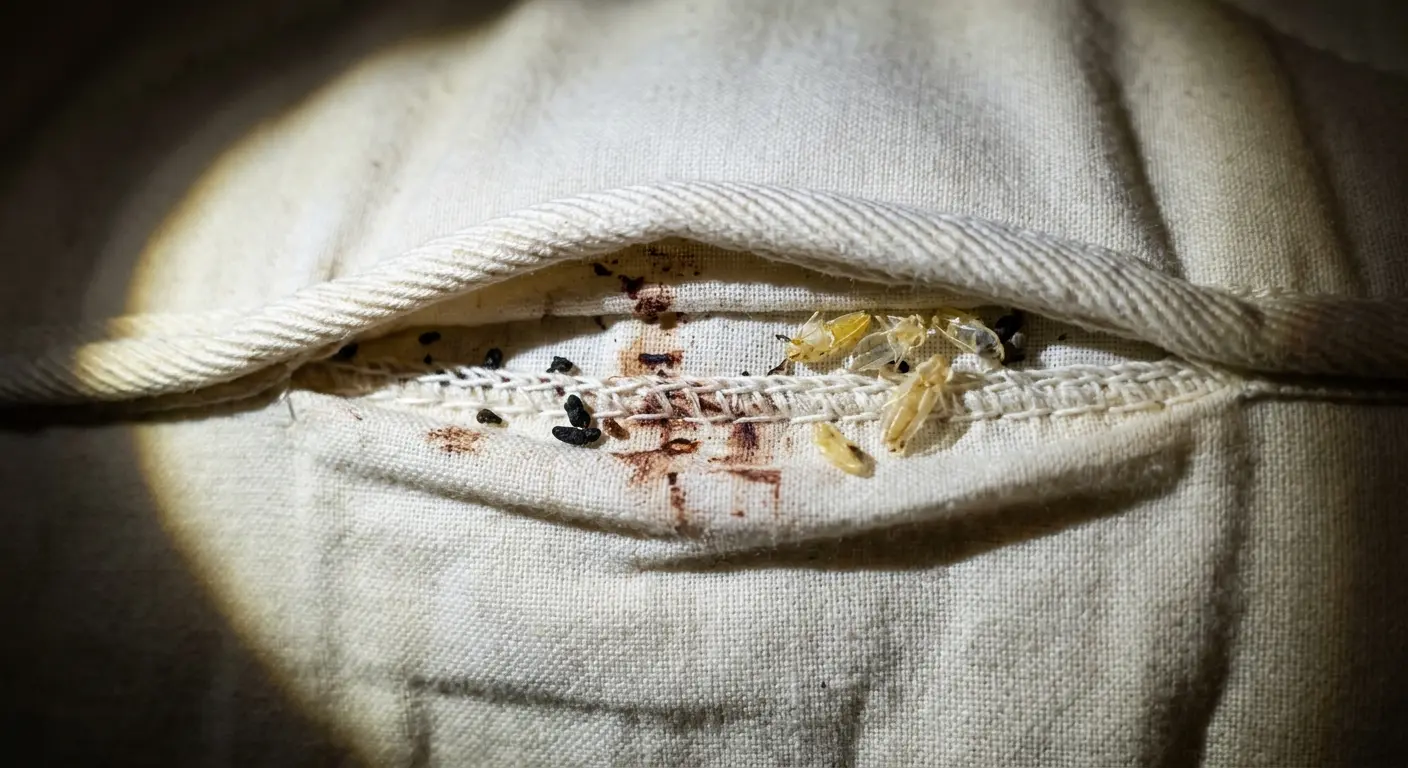
Bed Bug Pictures on Sheets: What the Stains Tell You
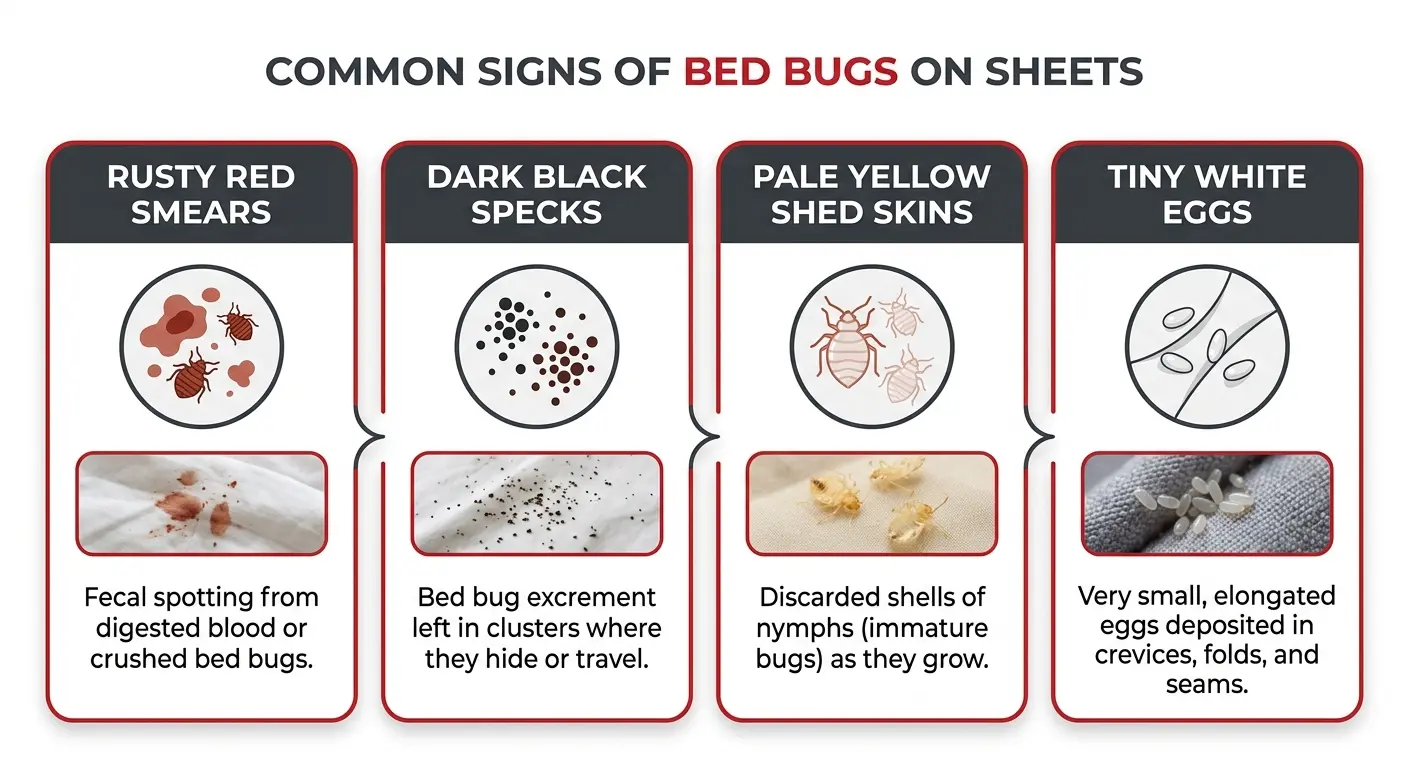
The photos you see online of bed bugs on sheets rarely show live insects — they show the aftermath. Here’s what to look for when you strip your bed:
| Stain Type | What It Looks Like | What It Means |
|---|---|---|
| Rusty/reddish smears | Small, irregular streaks | Crushed bed bugs after feeding |
| Dark black specks | Tiny dots clustered together | Bed bug feces (digested blood) |
| Pale yellow casings | Translucent, empty shells | Molted skins from nymph growth |
| Tiny white eggs | 1mm, pearl-colored clusters | Active reproduction in the nest |
How to Confirm Bed Bugs vs. Other Insects
Many people mistake carpet beetles, fleas, or even lint for bed bugs. One reliable differentiator: bed bugs leave a distinct, sweet, musty odor, and their bites appear in a straight line or zigzag pattern. If you’re inspecting your bed bug photos and still aren’t sure, compare the bug’s shape — bed bugs are flat and oval, not round like ticks or elongated like fleas. For a closer look at scale, check out our actual size bed bug photos to see exactly how these pests measure up against a coin. Check for the presence of all four signs from the table above; a single stain could be a one-off, but multiple signs mean an established colony.
Not sure if those marks are bed bug bites or something else?
Upload a photo to our identifier tool — get a confirmed answer in under 60 seconds.
What to Do If You Find Bed Bugs on Your Bed
Do not sleep in another room — this spreads the infestation. Strip all bedding and place it directly into plastic bags, then wash on the hottest cycle possible. Vacuum the mattress seams thoroughly, then use a stiff brush to dislodge eggs from fabric folds. The South Carolina Public Health relief guide recommends inspecting with a flashlight along every seam and inside the box spring before applying any treatment. Most guides suggest immediate chemical spraying, but research shows that thorough mechanical removal (vacuuming and brushing) removes up to 80% of eggs that pesticides can’t penetrate.
Can you see bed bugs on a white sheet?
How long can bed bugs live on a mattress?
Do bed bugs stay on the top of the bed or underneath?
Are bed bug eggs visible on sheets?
Can you wash bed bugs out of sheets?
Still not sure if it's bed bugs or a different insect?
Our AI tool compares your photo against thousands of confirmed cases instantly.