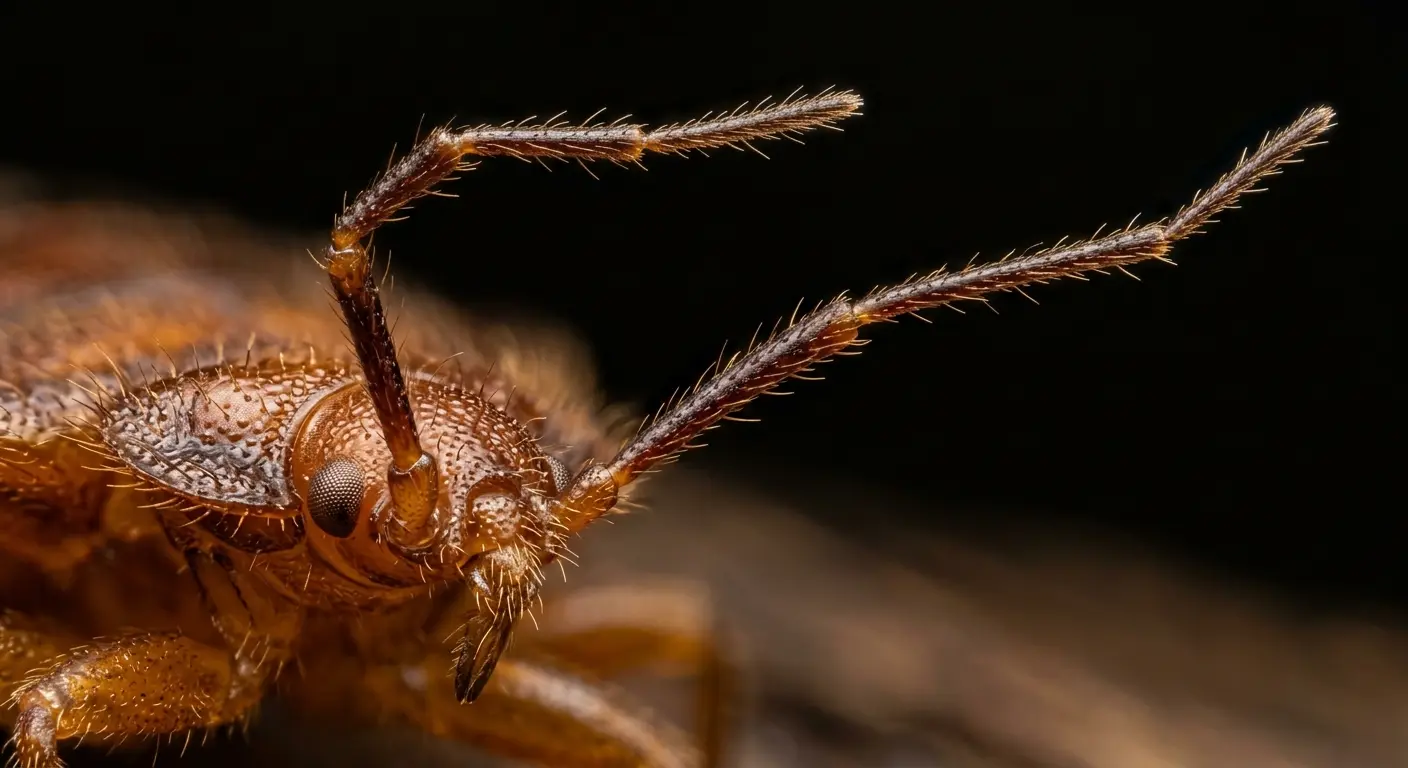
Yes, bed bugs have two antennae, each made up of four distinct segments. These antennae are about half the length of the bed bug’s body and serve as critical sensory organs that help them locate hosts, navigate their environment, and communicate with other bed bugs. Understanding what bed bug antennae look like is one of the fastest ways to confirm whether you’re dealing with these pests.
What Do Bed Bug Antennae Look Like?
Bed bug antennae are segmented into four distinct parts and curve outward from the head at a slight angle. They’re noticeably thicker at the base and taper toward the tip — a key feature that distinguishes them from many look-alike insects. When examining a suspected bed bug, check whether the antennae are thicker where they attach to the head; if they’re a consistent width or thicker at the tip, you’re likely looking at a different insect entirely.
The antennae are typically light amber to brown, matching the rest of the bed bug’s body color. On unfed nymphs, they may appear nearly translucent. Because bed bugs are small (adults reach only 4–5 mm), you’ll likely need a magnifying glass or a good camera zoom to examine the antennae clearly.
How Do Bed Bugs Use Their Antennae?
Bed bug antennae are packed with sensory receptors that serve three primary functions:
- Host detection — Bed bugs use their antennae to sense body heat, carbon dioxide, and skin chemicals that signal a nearby human host. This is how they find you while you sleep.
- Navigation — The antennae help bed bugs follow pheromone trails left by other bed bugs, allowing them to locate harborage sites and return to their hiding spots after feeding.
- Communication — Male bed bugs detect female pheromones through their antennae during mating. This chemical communication is essential for reproduction.
Most guides simply say bed bugs use antennae to “sense” things — but the pheromone-detection function is particularly important because it means bed bugs are actively communicating through their antennae, not just passively detecting heat. This is why pheromone-based monitoring traps work: they exploit the bed bug’s reliance on antennae for chemical communication.
Do Bed Bugs Have Long Antennae?
No — bed bug antennae are relatively short, measuring about half the length of their body. This is a crucial identification point. If you find an insect with antennae longer than its body, it’s not a bed bug.
Here’s how bed bug antennae compare to similar household pests:
| Insect | Antennae Length | Antennae Shape |
|---|---|---|
| Bed bug | About half body length | 4 segments, thicker at base |
| Bat bug | Similar to bed bug | Nearly identical — requires microscopic examination |
| Carpet beetle | Shorter than head | Club-shaped, 3 segments |
| Booklouse | Longer than body | Thin, hair-like, many segments |
| Flea | Very short | 3 segments, thick and clubbed |
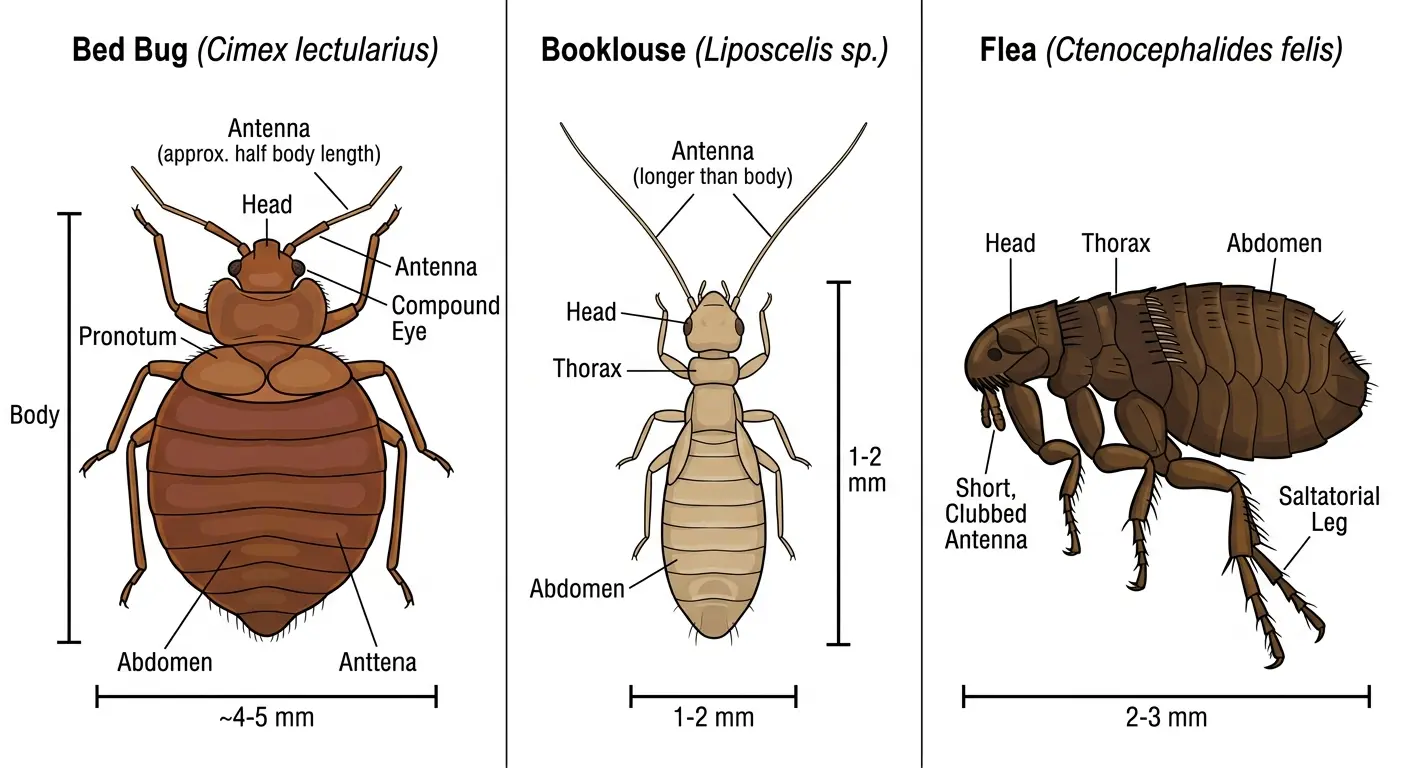
One non-obvious insight: bat bugs have antennae that look nearly identical to bed bugs. The only reliable way to tell them apart is by examining the fringe hairs on the pronotum under a microscope. If you’ve found a bug with bed-bug-style antennae, it’s worth checking whether bats are nesting in your attic or chimney.
How to Identify Bed Bugs Using Antennae
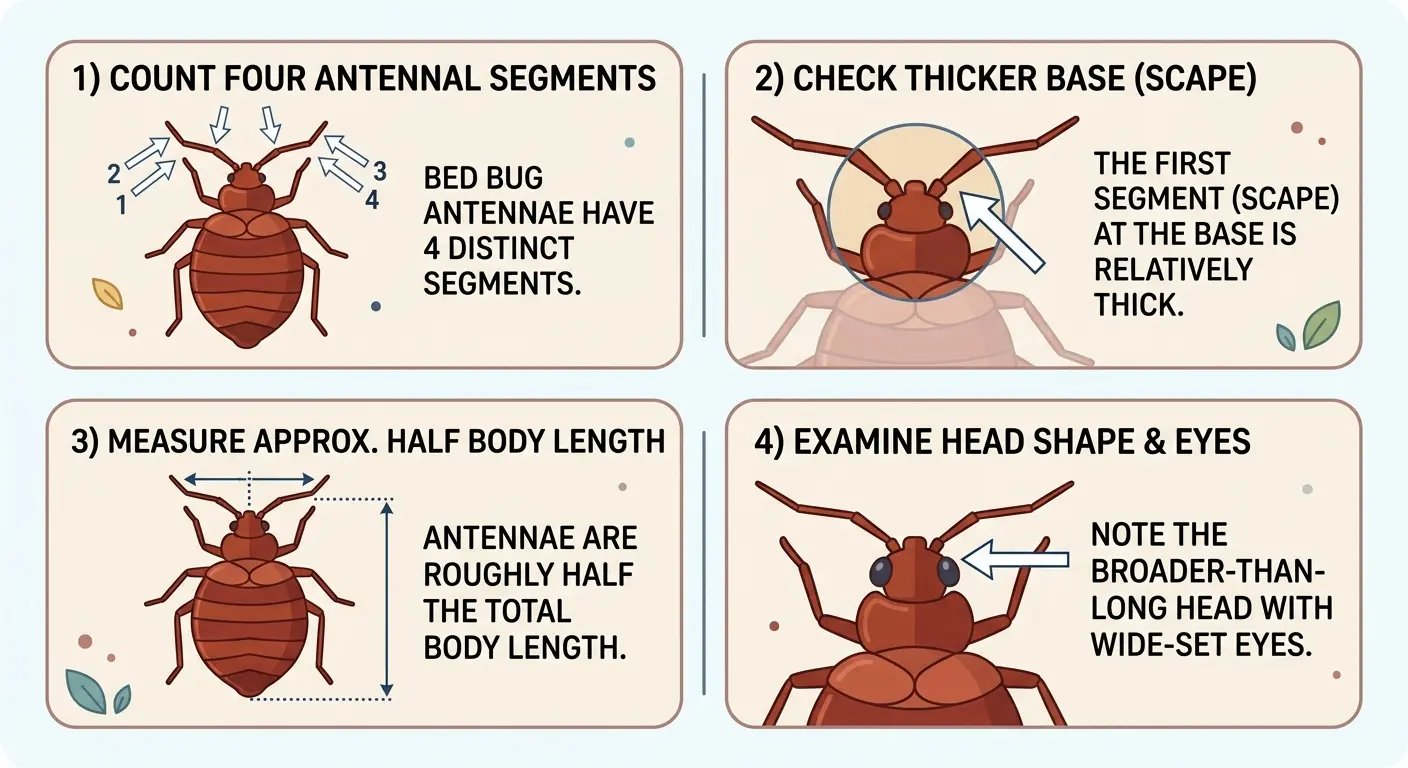
When examining a suspected bed bug, follow these steps:
- Look for four segments — Count the segments on the antennae. Bed bugs have exactly four.
- Check the base thickness — The antennae should be visibly thicker where they attach to the head.
- Measure relative length — Antennae should be roughly half the body length, never longer than the body.
- Examine the head shape — Bed bugs have a broad, flat head with eyes positioned on either side of the antennae bases.
If you’re still unsure whether the insect you found is a bed bug, check our guide on bed bug body parts for a complete breakdown of physical features.
Not sure if those marks are bed bug bites or something else?
Upload a photo to our identifier tool — get a confirmed answer in under 60 seconds.
Frequently Asked Questions About Bed Bug Antennae
Do bed bugs have two antennae?
Can you see bed bug antennae with the naked eye?
Do bed bug nymphs have antennae?
Bed Bug Antennae vs. Other Insects
The antennae are often the fastest way to rule out bed bugs. If the insect you found has long, thin, or hair-like antennae, it’s not a bed bug. Common bed bug impostors include:
- Booklice — have long, thread-like antennae that exceed body length
- Carpet beetles — have short, club-shaped antennae with a distinct ball at the tip
- Fleas — have thick, clubbed antennae tucked into grooves on their heads
- Ticks — have no visible antennae at all; their mouthparts extend directly from the head
Most guides focus on body shape and color, but antennae are actually a more reliable field marker because they’re less variable than body size or color across different life stages and feeding states. A fed bed bug can look dramatically different from an unfed one, but the antennae structure stays consistent.
Still not sure if it's bed bugs or a different insect?
Our AI tool compares your photo against thousands of confirmed cases instantly.
What to Do If You’ve Confirmed Bed Bugs
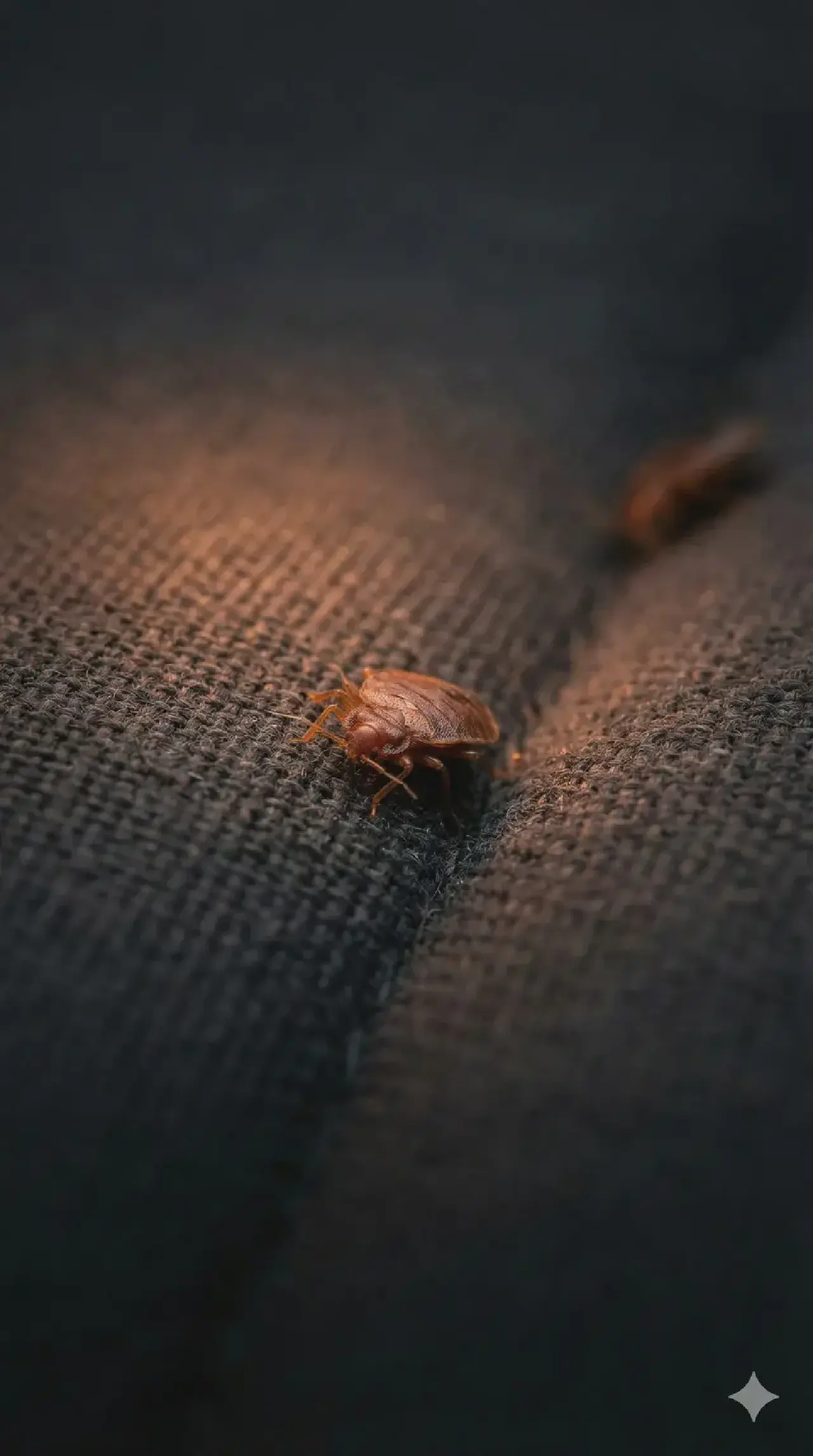
If you’ve identified bed bugs in your home, acting quickly is essential. Bed bugs reproduce rapidly — a single female can lay up to 500 eggs in her lifetime. Start by thoroughly inspecting mattress seams, box springs, and baseboards for additional signs of infestation, including shed skins, rust-colored stains, and dark fecal spots.
The antennae you’ve just learned to identify are also your key to monitoring. After treatment, use interception devices and inspect regularly for any surviving bed bugs. Their antennae will help you spot them early, before a small infestation becomes a large one.
Confirmed bed bugs — what do you actually need to treat them?
Upload one photo and our tool builds your exact treatment kit in under two minutes.