Yes, there are different species of bed bugs — at least 88 exist worldwide, but only three actually feed on humans. The vast majority of the Cimicidae family lives with bats or birds, not people. Understanding which species you’re dealing with matters because treatment and prevention strategies differ significantly.
What Are the Three Human-Feeding Bed Bug Species?
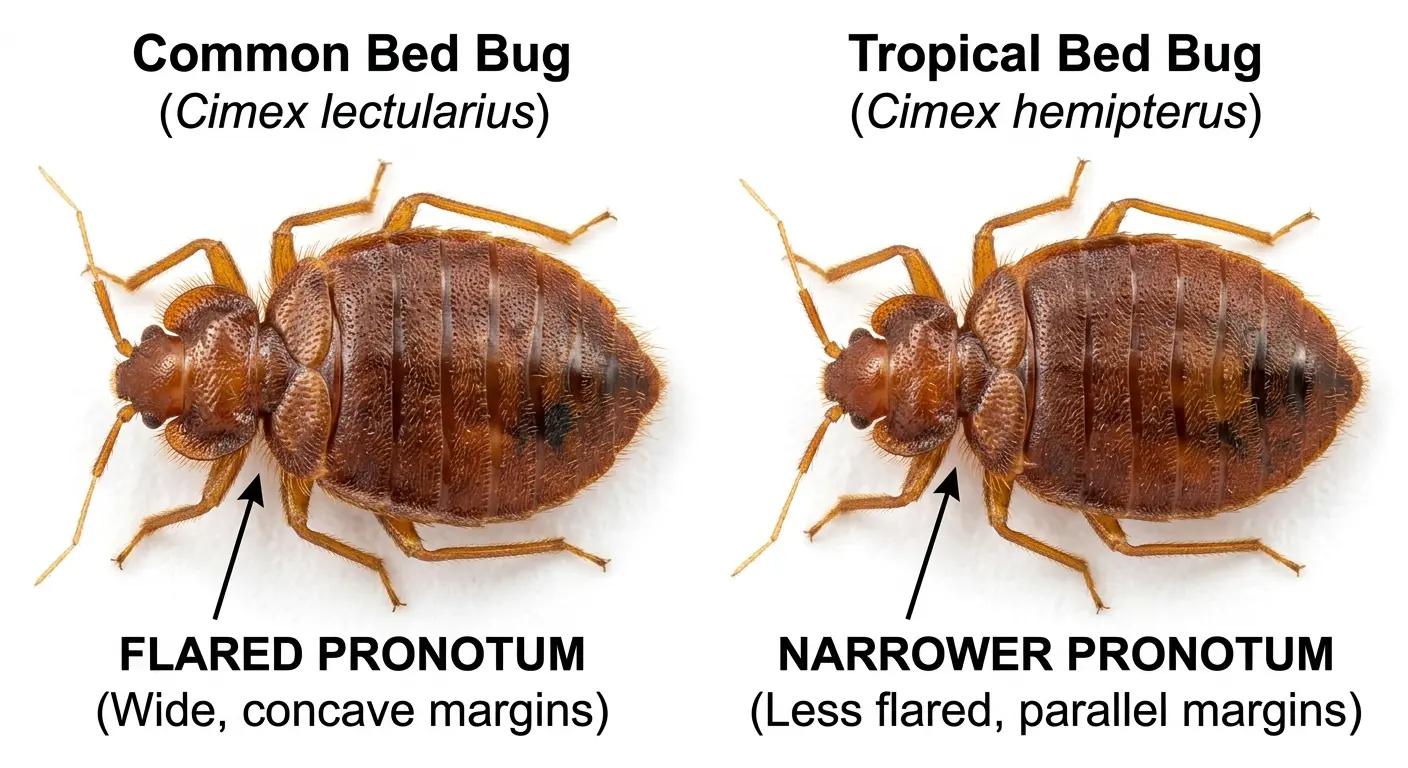
Only three species in the Cimicidae family regularly bite humans. The common bed bug (Cimex lectularius) is the most widespread, found across temperate regions globally. The tropical bed bug (Cimex hemipterus) prefers warmer climates like Florida and Southeast Asia, while Leptocimex boueti is restricted to West Africa.
Most guides lump all bed bugs together — but Purdue’s entomology research shows that bat bugs (Cimex adjunctus) and bird bugs are frequently misidentified as common bed bugs in homes. These species can bite humans but cannot reproduce on human blood, so they die out naturally if you remove the bat or bird roost.
How Do You Tell Different Bed Bug Species Apart?
Visual identification requires magnification and experience. The common bed bug has a pronotum (the segment behind the head) with distinctly flared sides, while the tropical bed bug has a narrower, more parallel-sided pronotum. Bat bugs have longer hairs on their pronotum compared to bed bugs — a detail you’ll need a hand lens to see.
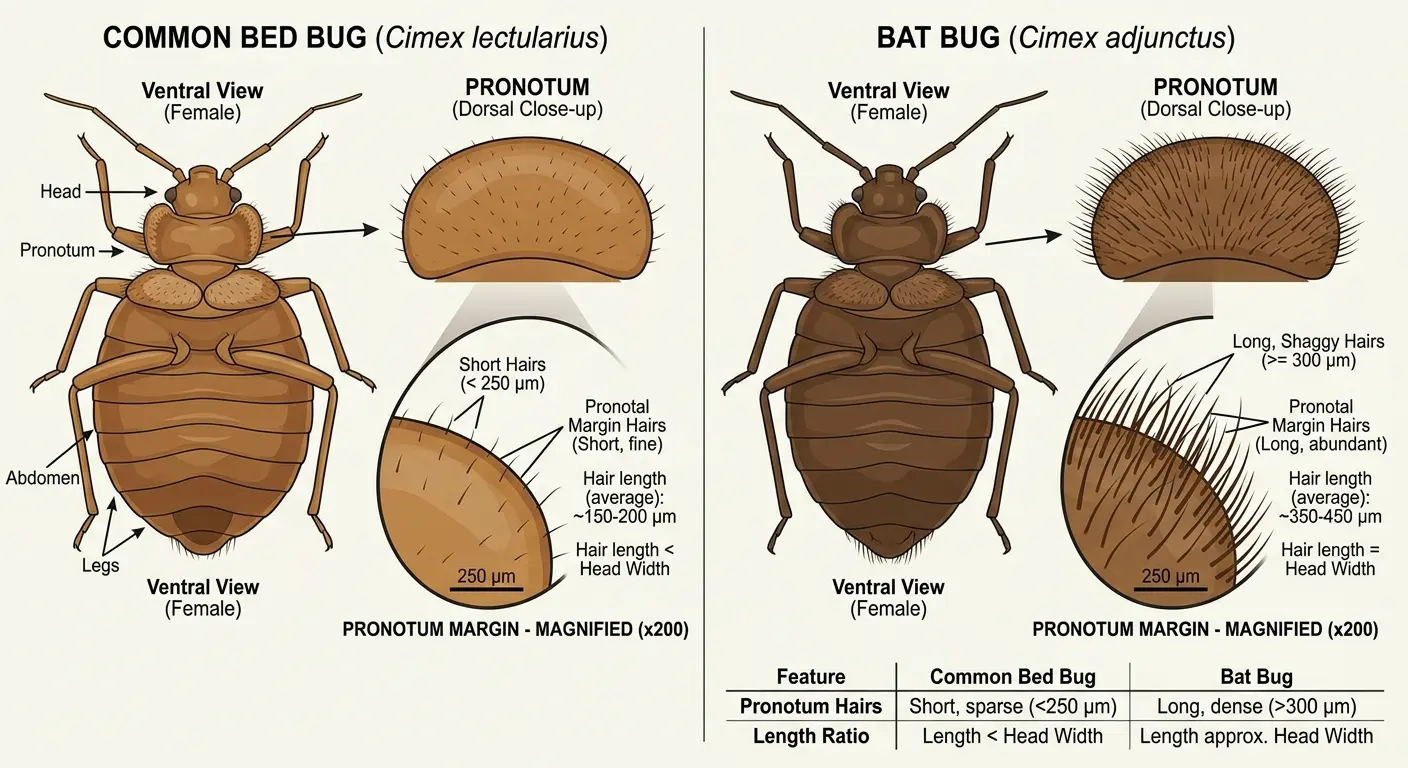
Most people can’t distinguish these species with the naked eye. If you’re finding bites but no obvious bugs, you may be dealing with bat bugs from an attic roost rather than true bed bugs. Check for bat droppings near your sleeping area — their presence suggests bat bugs, not bed bugs.
Why Does the Species Matter for Treatment?
The species determines your treatment approach. Common bed bugs require comprehensive mattress, frame, and baseboard treatment. Tropical bed bugs respond differently to some pesticides due to regional resistance patterns. Bat bugs require removing the bat roost first — otherwise, they’ll keep re-infesting your living spaces.
Can Different Bed Bug Species Infest the Same Home?
Yes, mixed infestations are possible, though rare. In tropical regions, common and tropical bed bugs can coexist in the same building. This complicates treatment because you need to address both species’ resistance profiles. Accurate identification usually requires magnification and careful comparison; use a hand lens, take clear close-up photos, and follow our inspection checklist and identification guidance to distinguish species and guide treatment.
Frequently Asked Questions
Are bat bugs the same as bed bugs?
Can tropical bed bugs survive in cold climates?
How many bed bug species are there in total?
Do different bed bug species bite differently?
Final Thoughts on Bed Bug Species
While 88 species exist, you’ll almost certainly encounter the common bed bug if you have an infestation. The tropical bed bug is expanding its range due to climate change, and bat bugs are commonly misidentified as bed bugs. Accurate identification requires professional expertise — but knowing which species you face guides your treatment strategy.
Not sure if those marks are bed bug bites or something else?
Upload a photo to our identifier tool — get a confirmed answer in under 60 seconds.
If you’re dealing with bites, start by confirming the source. Bat bug infestations require a completely different approach than bed bugs — and misidentification wastes time and money.
Still not sure if it's bed bugs or a different insect?
Our AI tool compares your photo against thousands of confirmed cases instantly.
For a deeper look at how bed bugs are named and classified, check our guide to bed bug species and names. You can also learn about the different names people use for bed bugs to avoid confusion when researching your infestation.