Carpet Beetle vs Bed Bug: 7 Key Differences That End the Confusion
Carpet beetles and bed bugs are not the same insect — they differ in diet, appearance, and the damage they cause. Bed bugs are blood-feeding parasites that bite at night, while carpet beetles are fabric-eating scavengers that damage wool, silk, and stored clothing. Most guides focus on bite marks alone, but the real distinction comes down to what you find in your home: live insects, shed skins, or damaged fabrics. This guide walks you through the seven differences that settle the carpet beetle vs bed bug debate for good.
What Do Carpet Beetles and Bed Bugs Look Like?
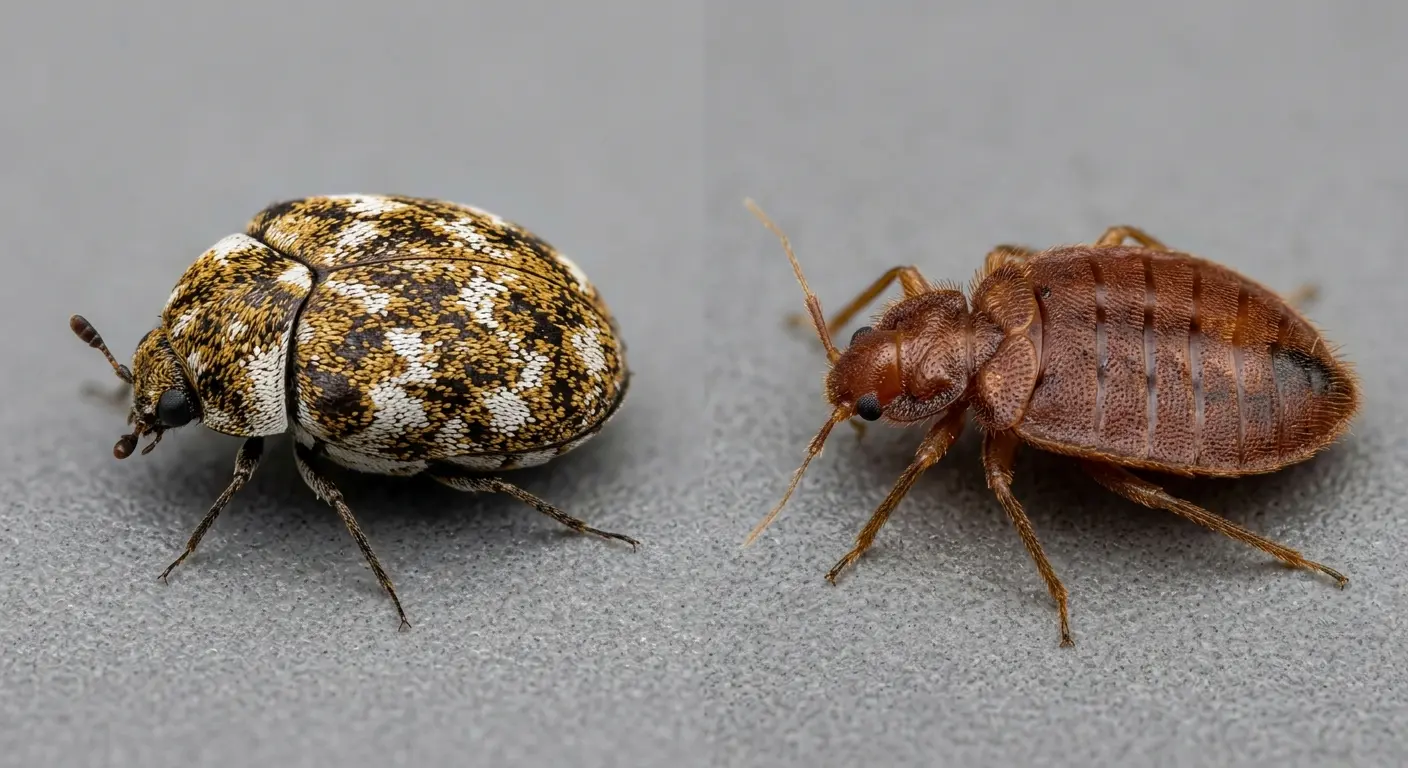
Carpet beetles are small, round, and speckled, while bed bugs are flat, oval, and uniformly reddish-brown. Adult carpet beetles measure 1/16 to 1/8 inch — noticeably smaller than bed bugs, which reach 3/16 to 1/4 inch. Carpet beetles display irregular patterns of white, brown, yellow, or black scales, whereas bed bugs have a smooth, consistent tan-to-rust color that darkens after feeding.
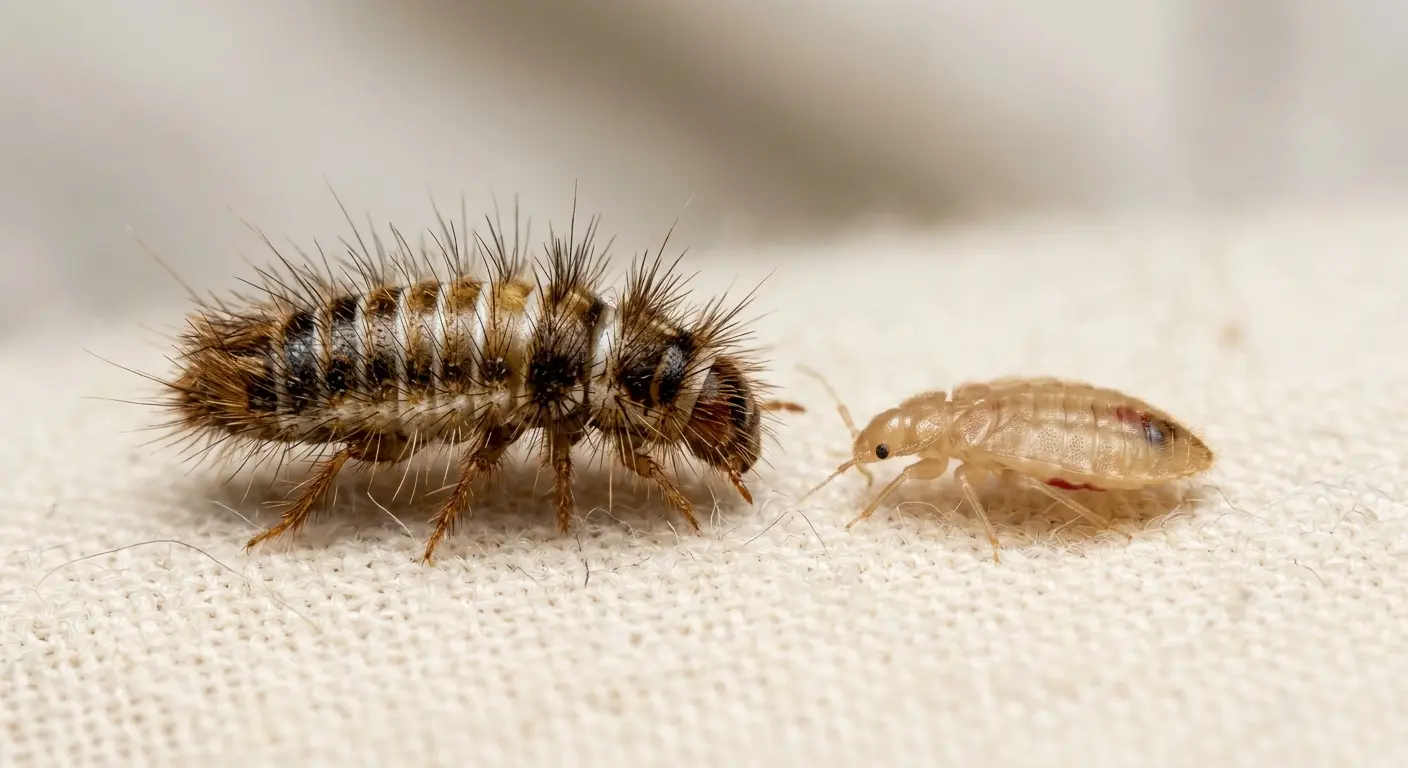
The larvae differ even more dramatically. Carpet beetle larvae are elongated, fuzzy, and covered in bristly hairs — often called “woolly bears.” Bed bug nymphs look like miniature versions of adults, with no fuzz or hair. If you find a fuzzy, striped caterpillar-like creature, it’s a carpet beetle larva, not a bed bug.
Where Do They Hide and What Do They Eat?
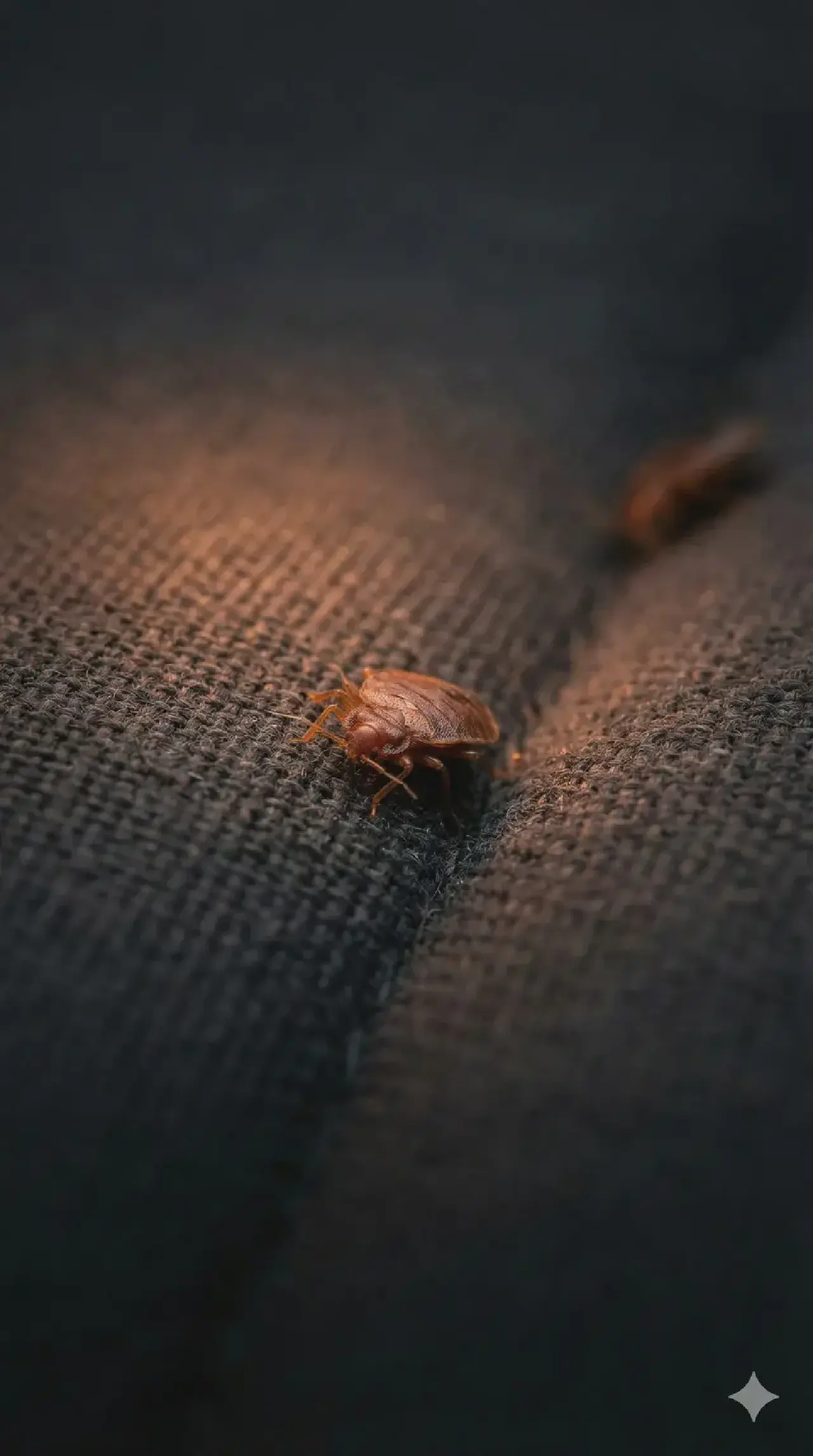
Bed bugs stay within 8 feet of where you sleep; carpet beetles roam across your entire home. Bed bugs are nocturnal parasites that hide in mattress seams, box springs, and bed frame cracks, emerging only to feed on human blood. Carpet beetles are scavengers that feed on keratin-based materials — wool, fur, feathers, leather, and even pet hair — which is why they appear in closets, under furniture, and inside air ducts.
Not sure if those marks are bed bug bites or something else?
Upload a photo to our identifier tool — get a confirmed answer in under 60 seconds.
Most guides say carpet beetles don’t bite — and that’s true. But here’s what they miss: carpet beetle larvae can cause a red, itchy rash that mimics bed bug bites. The reaction comes from tiny hairs that irritate skin, not from feeding. If you have bites but no live insects near your bed, carpet beetle larvae may be the hidden cause.
How Do the Bites and Skin Reactions Compare?
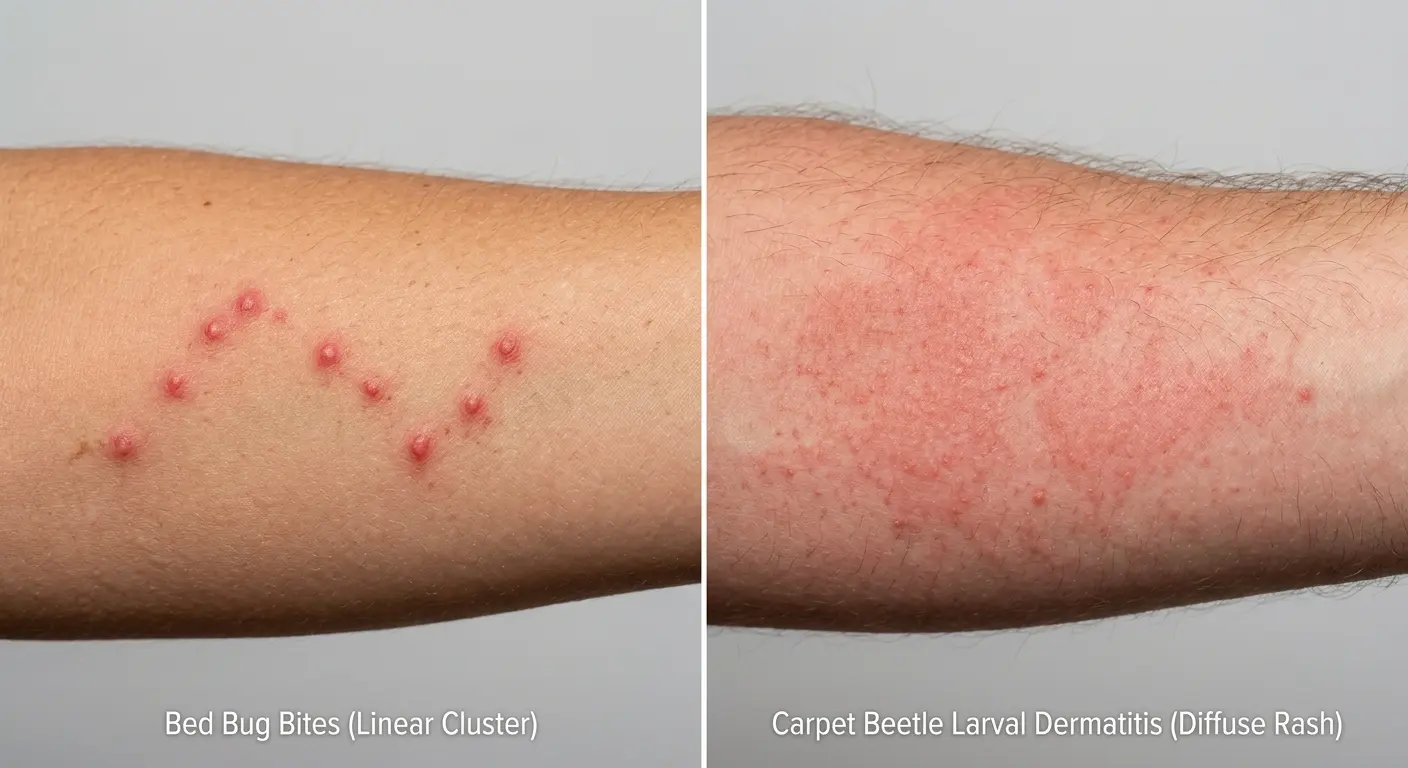
Bed bugs produce clustered bite lines on exposed skin; carpet beetles cause scattered, itchy rashes from larval hairs. Bed bug bites typically appear in a zigzag or line pattern on arms, neck, and legs — areas exposed while sleeping. The bites are small, red, and intensely itchy, often taking days to appear.
Carpet beetle rashes look different: they’re patchy, red, and sometimes blister-like, appearing on areas that contacted infested fabrics. The reaction is allergic, not a bite. If you wake up with linear bites on your arms, bed bugs are the likely culprit. If you have a diffuse rash after handling wool blankets or stored clothing, suspect carpet beetles.
What Damage Do They Cause?
Bed bugs leave blood spots and dark fecal stains; carpet beetles leave irregular holes in fabric. Check your bedding for rust-colored blood smears or tiny black specks — these are bed bug droppings. Carpet beetles leave a different signature: clean-edged holes in wool sweaters, silk scarves, or upholstery, plus shed larval skins near damaged areas.
Another non-obvious insight: carpet beetle damage is often mistaken for clothes moths. Both target natural fibers, but carpet beetles leave irregular holes while moths create scattered, random damage. If you see shed bristly skins alongside the holes, carpet beetles are your answer.
| Feature | Carpet Beetle | Bed Bug |
|---|---|---|
| Adult size | 1/16–1/8 inch | 3/16–1/4 inch |
| Body shape | Round, dome-like | Flat, oval |
| Color | Speckled brown/white/yellow | Uniform reddish-brown |
| Diet | Natural fibers, pet hair | Human blood |
| Bites | None (rash from hairs) | Clustered bites |
| Activity | Day and night | Nocturnal |
| Lifespan | 2–6 months | 4–6 months |
How Do You Treat Each Infestation?
Carpet beetles are far easier to eliminate than bed bugs — but both require different strategies. For carpet beetles, vacuum thoroughly, wash all fabrics in hot water, and store wool items in sealed containers. Insecticides like CimeXa or Alpine spray work well. Bed bugs demand a stricter protocol: wash and heat-dry bedding, vacuum seams and crevices, and consider professional heat treatment or EPA-approved sprays.
Most guides recommend diatomaceous earth for both pests — but caution is warranted. Fine DE powder can irritate lungs if inhaled, and it works slowly. For bed bugs, a targeted spray plus mattress encasements delivers faster results. For carpet beetles, steam cleaning and regular vacuuming often resolve the issue without chemicals.
When to escalate treatment
If bed bugs spread beyond your bedroom or carpet beetles keep returning after initial steps, follow our advanced identification and treatment guidance. Use our photo identifier, build a tailored treatment kit, and follow the recommended steps — heat-washing, mattress encasements, targeted sprays, thorough vacuuming, and monitoring — to address persistent infestations. Bed bugs multiply quickly — a few can become hundreds within months — and DIY methods often miss hidden harborages.
Still not sure if it's bed bugs or a different insect?
Our AI tool compares your photo against thousands of confirmed cases instantly.
If you’re uncertain whether you’re dealing with bed bugs or another insect, start with the evidence: live insects, bite patterns, and fabric damage. Compare your findings against our bed bug vs flea guide or bed bug vs spider guide to narrow the field.
Can carpet beetles live in your bed?
Do carpet beetle larvae bite humans?
How do I know if I have bed bugs or carpet beetles?
Are carpet beetles as hard to get rid of as bed bugs?
Can carpet beetles cause a bed bug-like rash?
Confirmed bed bugs — what do you actually need to treat them?
Upload one photo and our tool builds your exact treatment kit in under two minutes.