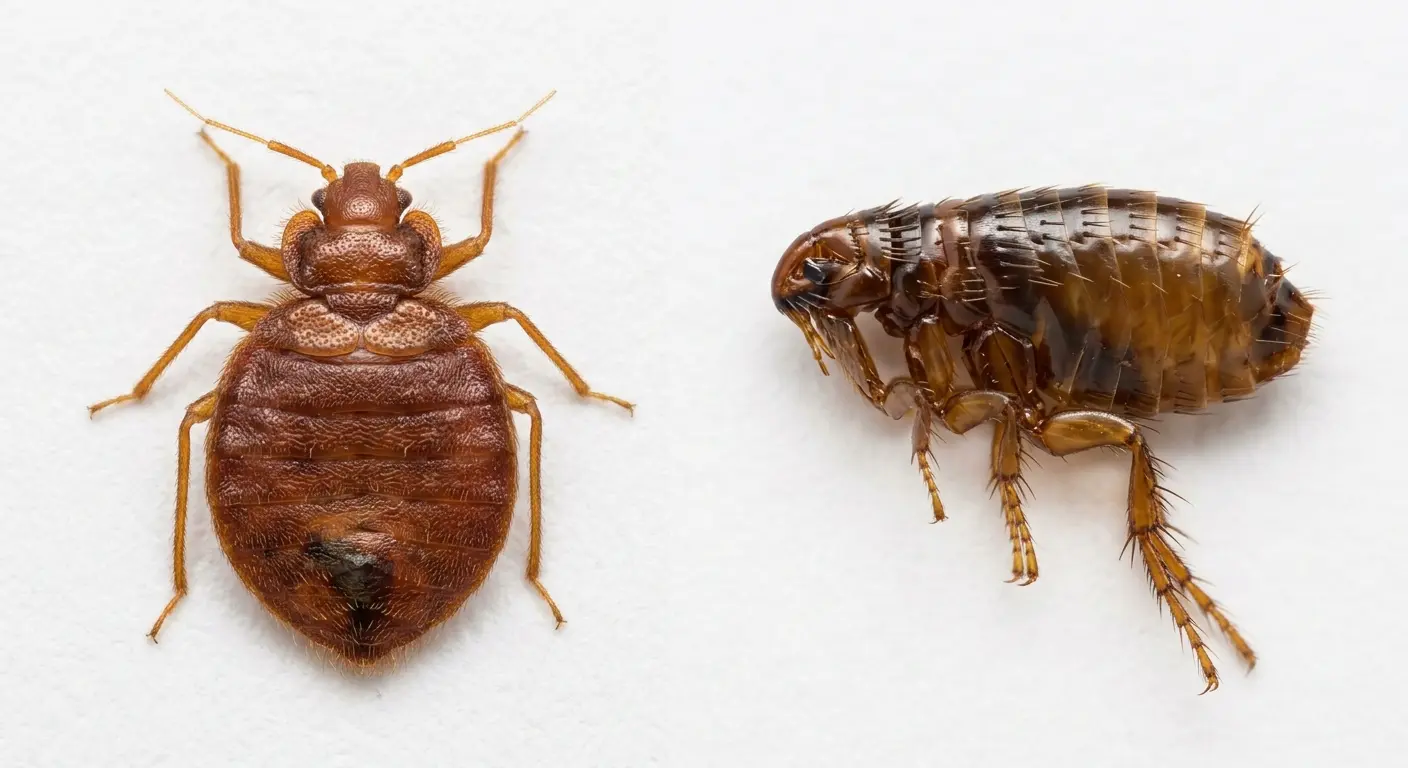
Bed Bugs vs Fleas: How to Tell the Difference (With Photos)
Bed bugs vs fleas: the fastest way to tell them apart is by bite location and pest appearance. Flea bites typically cluster on your lower legs and ankles, while bed bug bites usually appear on your upper body — face, neck, and arms — often in a straight line. If you’re waking up with unexplained bites, check both the pest itself and where you’re getting bitten to narrow it down quickly.
What Do Bed Bugs and Fleas Look Like?
Getting a close look at the pest is often the fastest way to figure out what you’re dealing with. Bed bugs are flat and oval-shaped with a smooth, shiny exoskeleton — they’re often compared to apple seeds in appearance. Fleas are also reddish-brown but have a more oval shape that appears skinnier and longer rather than flatter, and they’re much smaller at about 1/8 inch.
The most obvious behavioral difference: fleas jump. Bed bugs cannot jump or fly — they crawl. If the insect you’re looking at leaps when disturbed, it’s almost certainly a flea.
| Feature | Bed Bugs | Fleas |
|---|---|---|
| Body shape | Flat, oval (apple seed) | Narrow, elongated |
| Size | 4-5 mm (adult) | 1.5-3.3 mm |
| Movement | Crawls only | Jumps up to 7 inches |
| Color | Reddish-brown | Reddish-brown to dark brown |
| Active time | Night | Any time, especially dawn/dusk |
Where Do You Find Them?
Bed bugs are homebodies that stay within 8 feet of where you sleep. Check your mattress seams, box spring, and headboard — you’ll often find shed skins (exoskeletons) or the bugs themselves in these areas. They hide in cracks and crevices during the day and come out at night to feed.
Fleas, on the other hand, prefer pets. Fleas can bite humans, but they prefer dogs and cats — so if your pet has been scratching excessively, fleas are the likely culprit. You’ll typically find flea dirt (flea feces that looks like black pepper) in your pet’s bedding or on their skin.
How Do the Bites Compare?
Flea bites are usually found on the lower half of your body or in warm, moist areas like the bends of elbows and knees. They appear as small, red bumps often surrounded by a red halo, and they itch intensely — usually within minutes of the bite.
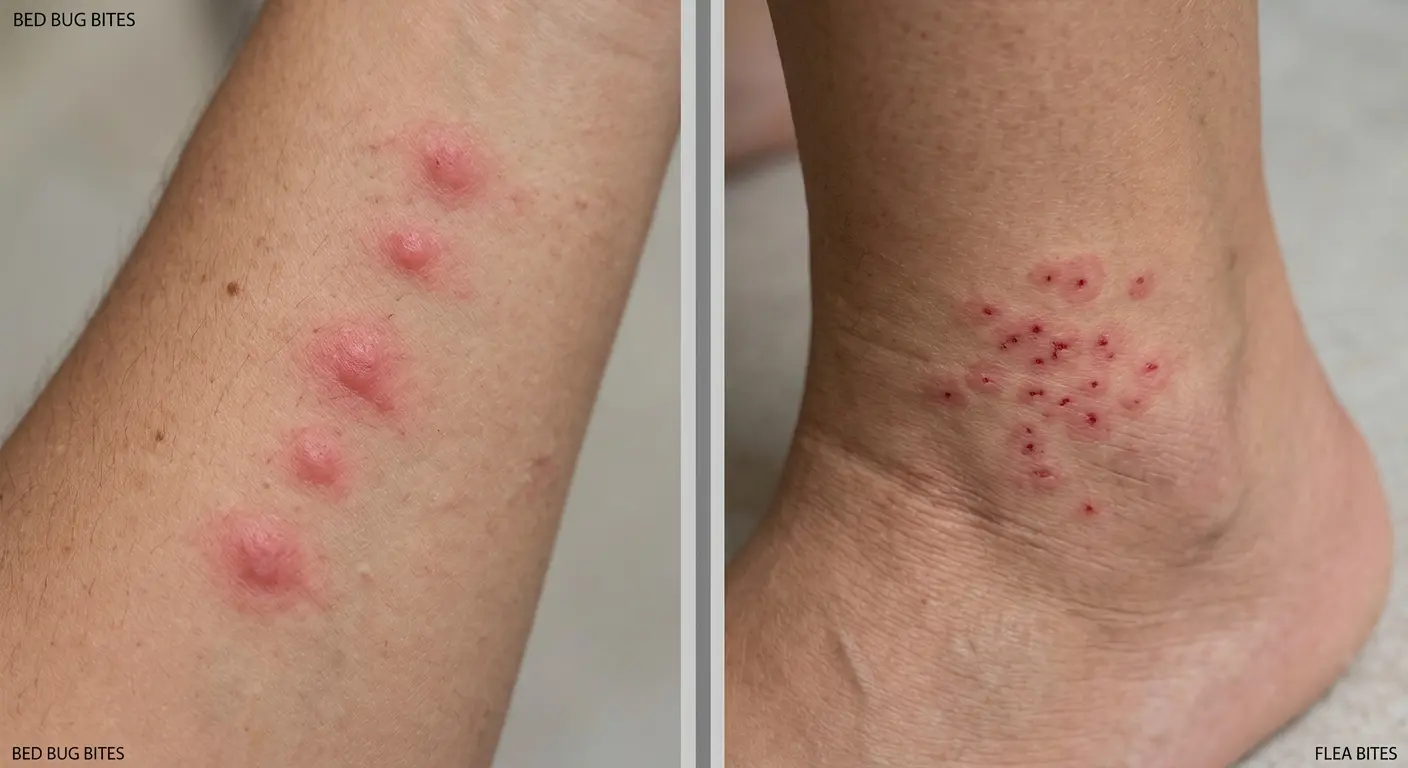
Bed bug bites are often on the upper half of your body, around the face, neck, and arms. They typically appear in a line or zigzag pattern (sometimes called “breakfast, lunch, and dinner”) and may take days to show up. Most guides say bed bug bites itch immediately, but research from the Cleveland Clinic shows reactions can take up to 14 days to appear — and some people never react at all, making it even harder to identify the source.
How to Confirm What You Have
If you’re still unsure whether you have fleas or bed bugs, try these steps:
- Check your pet — fleas prefer animals; bed bugs don’t typically infest pets
- Inspect your mattress — bed bugs leave dark spots, shed skins, and live bugs
- Watch for jumping — fleas jump; bed bugs crawl
- Consider your bite pattern — upper body lines suggest bed bugs; lower leg clusters suggest fleas
Not sure if those marks are bed bug bites or something else?
Upload a photo to our identifier tool — get a confirmed answer in under 60 seconds.
Treatment Differences
Treating bed bugs and fleas requires completely different approaches. Fleas can often be handled with thorough vacuuming, washing pet bedding, and treating your pets with veterinarian-approved flea prevention. Bed bugs are far more difficult — they require mattress encasements, careful laundering, and the targeted tools and step-by-step treatment plans we provide in our guides and treatment kit.
If you’ve confirmed bed bugs, you’ll need to treat your entire sleeping area, not just the visible bugs. Check our guide on bed bug vs other insects to rule out other pests, or compare with bed bugs vs lice and tick vs bed bug to make sure you’re targeting the right pest.
Still not sure if it's bed bugs or a different insect?
Our AI tool compares your photo against thousands of confirmed cases instantly.
Do bed bugs jump like fleas?
Can you have both bed bugs and fleas at the same time?
How long do bed bug bites take to appear?
Do fleas live in your bed?
Which is harder to get rid of: bed bugs or fleas?
Confirmed bed bugs — what do you actually need to treat them?
Upload one photo and our tool builds your exact treatment kit in under two minutes.