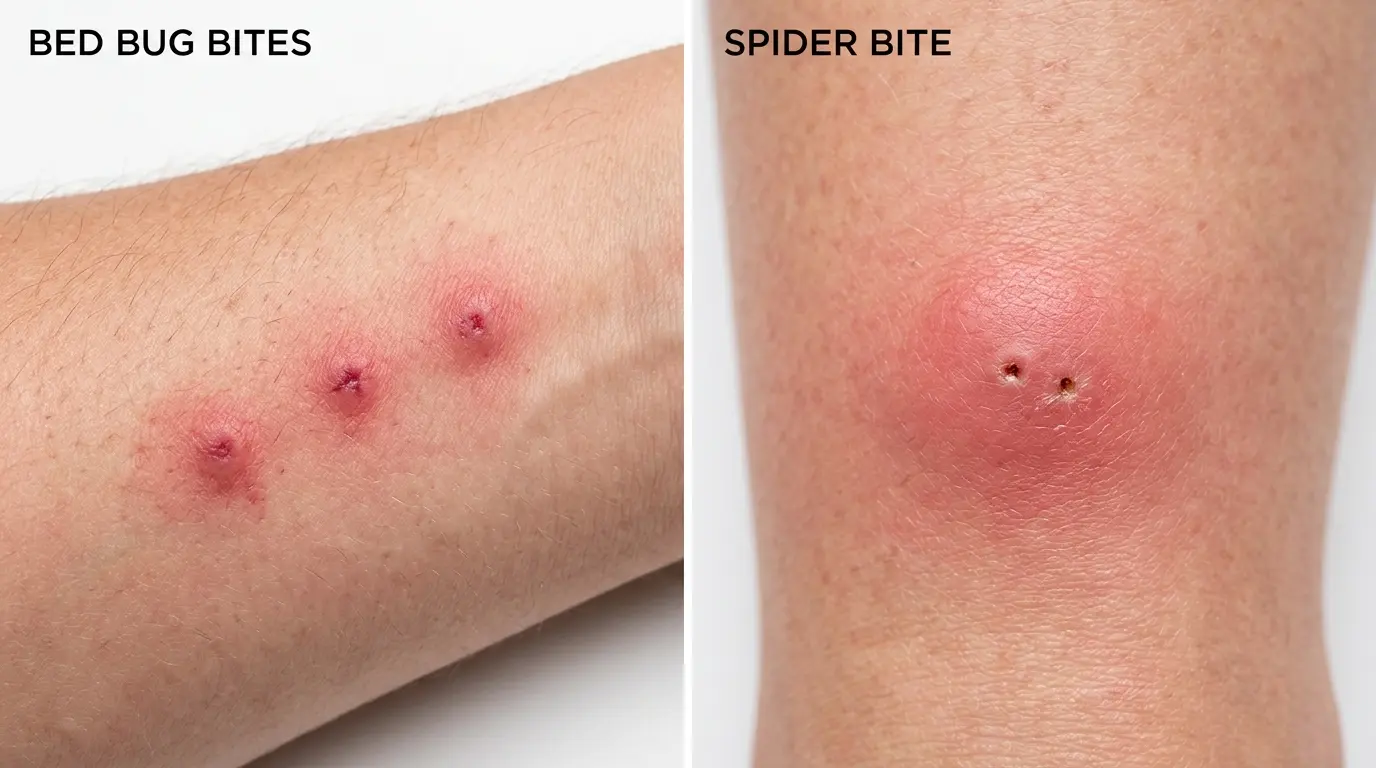
The fastest way to tell bed bugs vs spiders apart is by the bite pattern: bed bugs leave a line or zigzag of small, itchy welts, while spider bites are usually a single, isolated puncture wound. Bed bugs bite multiple times as they feed, creating clusters of 3–5 marks in a row along exposed skin. Spider bites, by contrast, appear as one distinct mark — often with two tiny puncture holes visible at the center.
What Do Bed Bug Bites vs Spider Bites Look Like?
Bed bug bites typically appear as small red dots with darker centers that swell and itch intensely. They show up in linear or zigzag patterns because bed bugs feed, move a few millimeters, then feed again. Most people react within 24 hours, though symptoms can take up to 10 days to appear on first exposure.
Spider bites vary significantly by species. Most cause a single red, swollen bump that may develop a central blister or ulceration. Some spider bites produce localized pain or a stinging sensation, and in rare cases, systemic symptoms like fever or nausea can occur. According to the NHS, spider bites often leave tiny side-by-side puncture marks visible to the naked eye — a feature bed bug bites never have.
How to Identify the Bugs Themselves
If you find the actual pest, identification becomes much easier:
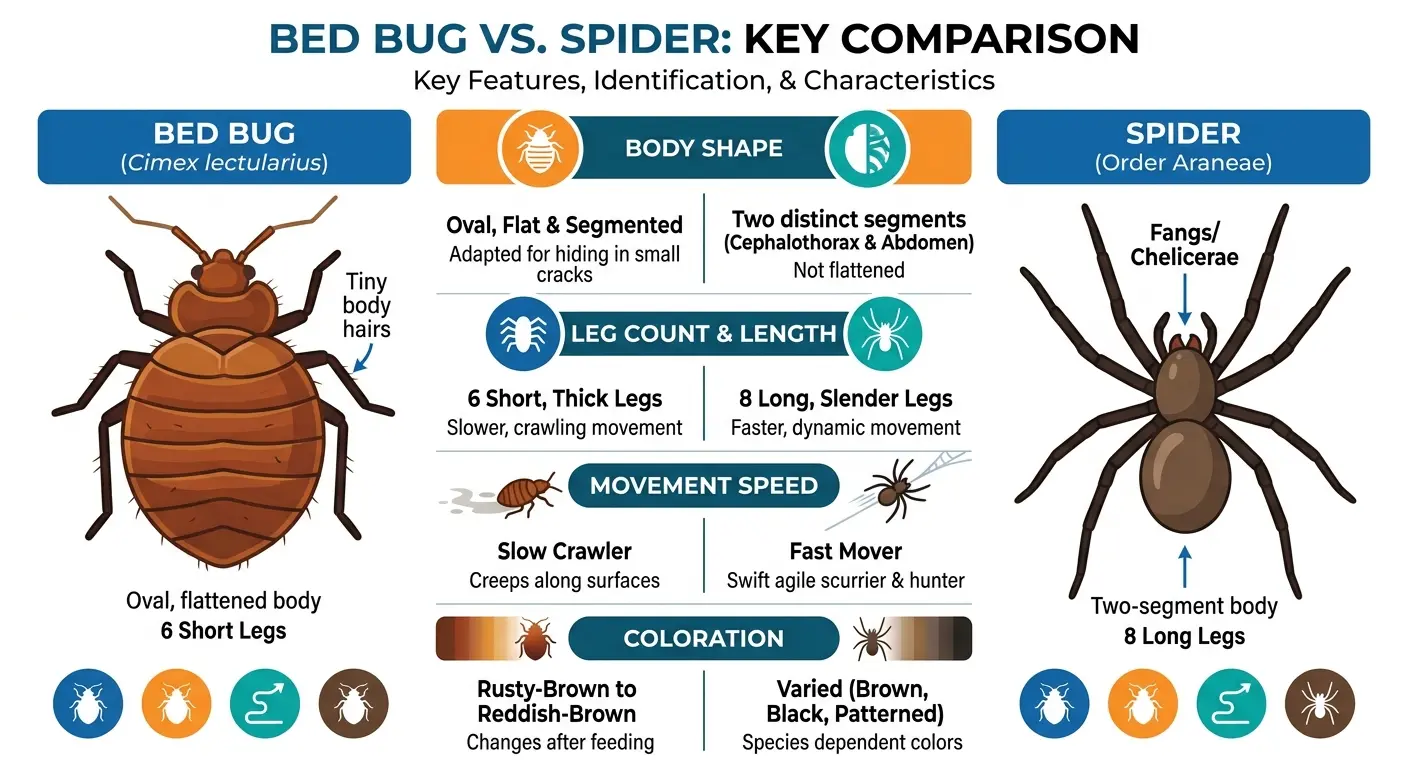
| Feature | Bed Bug | Spider |
|---|---|---|
| Body shape | Oval, flat, apple-seed sized | Two segments: cephalothorax + abdomen |
| Legs | 6 legs, short | 8 legs, long |
| Wings | None | None |
| Movement | Crawls slowly | Fast, agile |
| Color | Rusty brown to red | Varies: brown, black, gray, or colorful |
Bed bugs hide in mattress seams, box springs, and headboard cracks. Spiders prefer corners, windowsills, and undisturbed areas — and they don’t congregate in your bed.
Where Do Each Bite and Why It Matters
Bed bugs bite exposed skin while you sleep — typically your arms, neck, face, and hands. They’re attracted to body heat and carbon dioxide, targeting areas where blood vessels sit close to the skin’s surface.
Spiders bite anywhere but most commonly on hands, feet, and ankles — areas where they become trapped against clothing or bedding. Most spider bites are defensive reactions, not feeding behavior. This distinction matters: if you wake up with bites on your torso, bed bugs are far more likely than spiders.
Most guides say spider bites are rare and bed bugs are the likely culprit — but the CDC notes that many suspected spider bites are actually misdiagnosed skin infections or other insect bites. That’s why identifying the actual pest matters more than treating the bite.
Signs of Infestation: Bed Bugs vs Spiders
Look for these environmental clues to confirm which pest you’re dealing with:
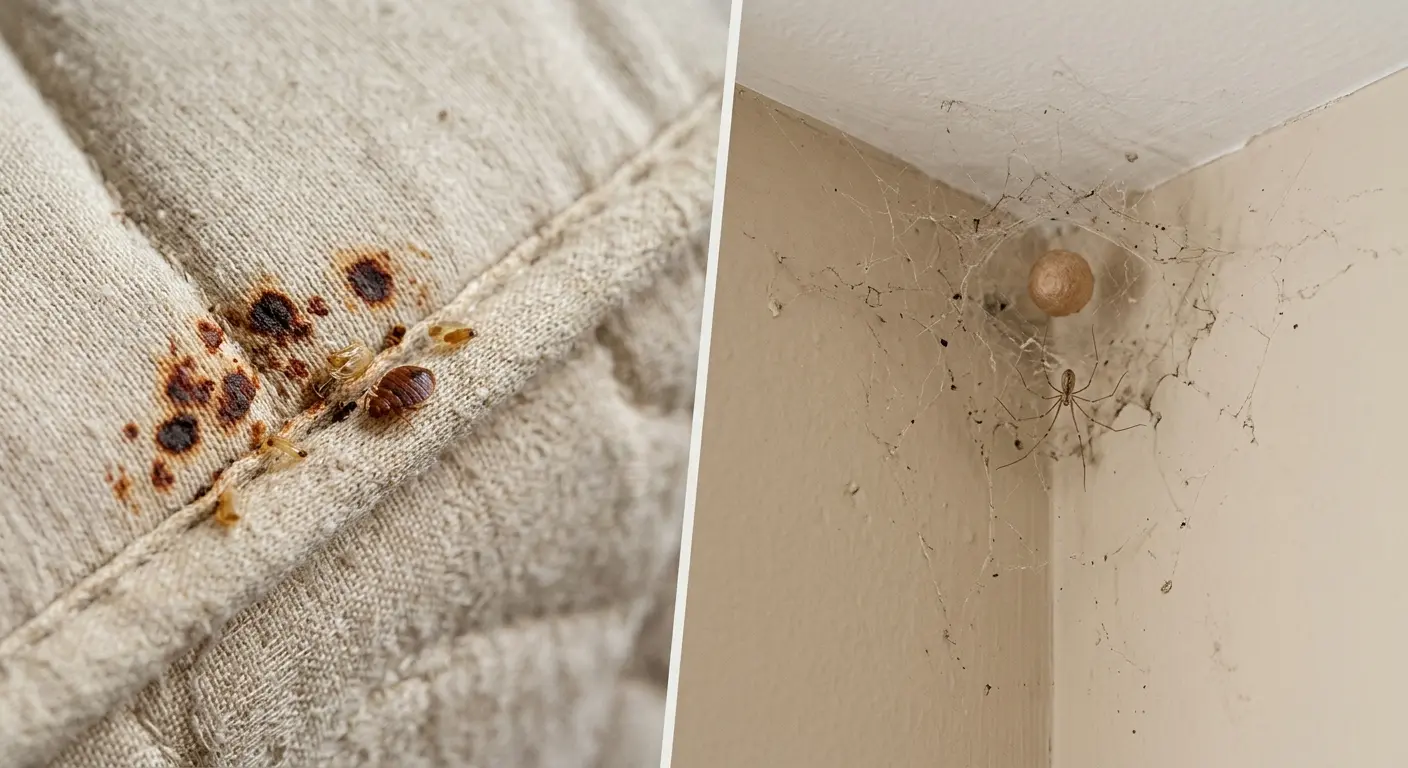
- Bed bug evidence: Rusty-red fecal spots on sheets, shed skins, a sweet musty odor, and live bugs in mattress seams
- Spider evidence: Webs, egg sacs, and individual spiders in corners or window frames
Spiders are solitary — you won’t find dozens in one room. Bed bugs, however, reproduce quickly and can number in the hundreds within weeks.
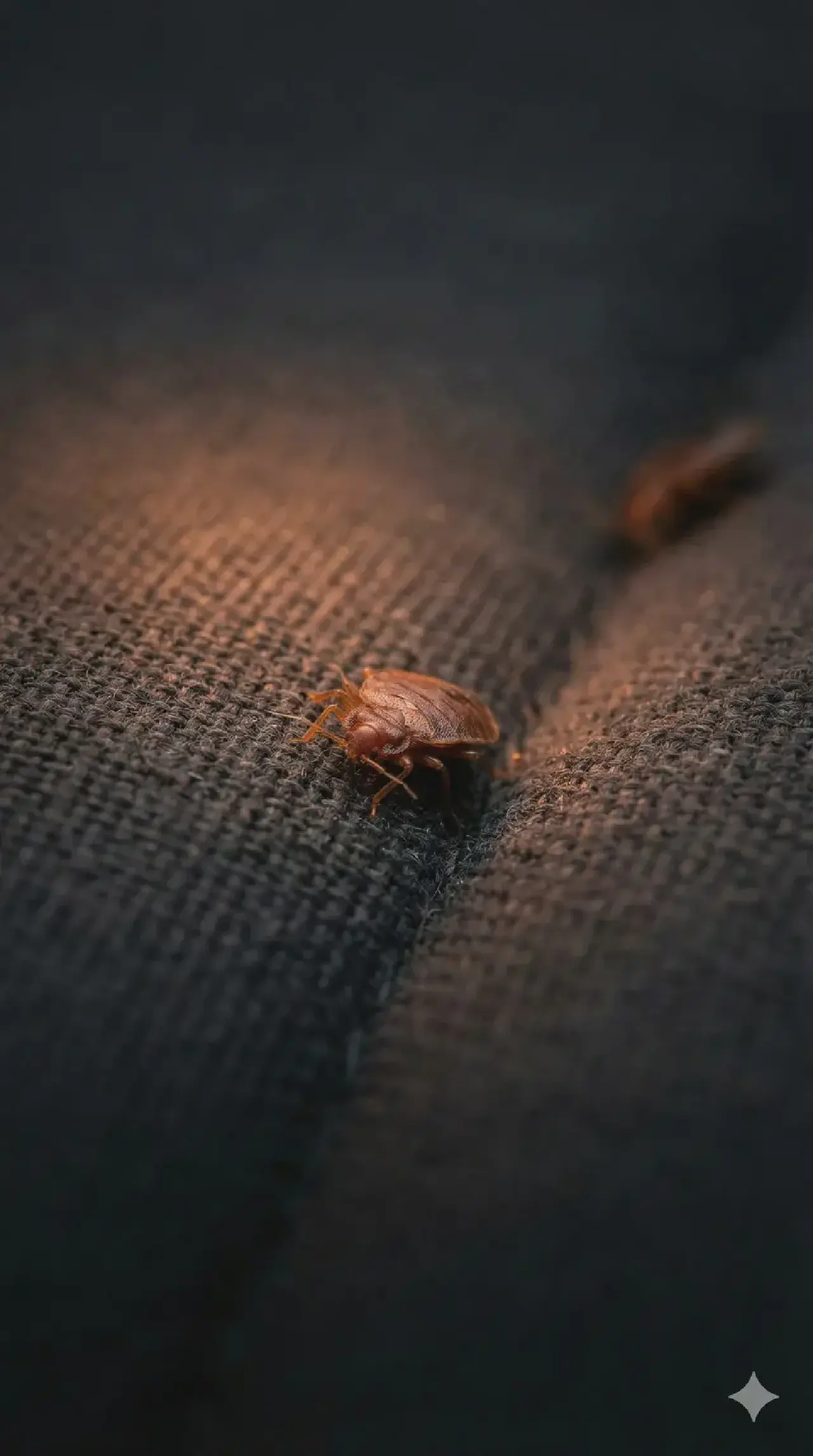
Not sure if those marks are bed bug bites or something else?
Upload a photo to our identifier tool — get a confirmed answer in under 60 seconds.
Can You Have Both Bed Bugs and Spiders?
Yes — and this complicates diagnosis. Spiders feed on insects, including bed bugs, so a spider presence doesn’t rule out a bed bug infestation. If you find bed bug evidence like fecal spots or shed skins, treat for bed bugs regardless of whether spiders are also present. If you see only isolated bites with no bed bug signs, spider bites become more plausible — especially if you’ve spotted spiders in your living space.
One overlooked possibility: spider beetles. These insects closely resemble bed bugs but don’t bite and cause no itching. If you’ve found “bugs” but have no bites, you may be looking at spider beetles rather than bed bugs. Check for the telltale signs — spider beetles have longer legs and antennae than bed bugs.
For more comparisons, see our guide on bed bugs vs fleas or explore the full bed bug vs other insects comparison hub.
Still not sure if it's bed bugs or a different insect?
Our AI tool compares your photo against thousands of confirmed cases instantly.