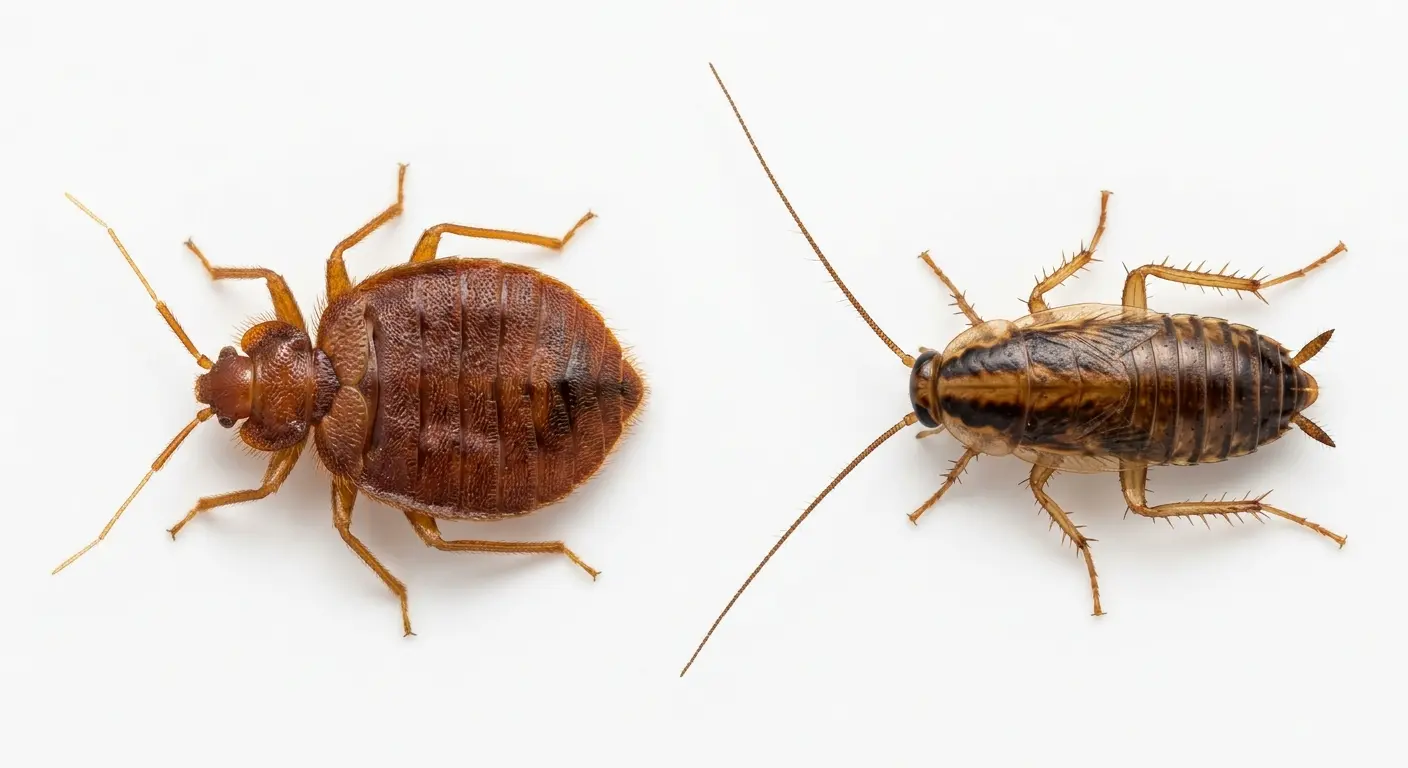
A cockroach vs bed bug mix-up comes down to three visual cues: antennae length, body shape, and size. Bed bugs are flat, oval, reddish-brown insects with stubby antennae, while cockroaches — even nymphs — have elongated bodies, long thread-like antennae, and a distinct shield behind the head. Getting this identification right matters because treatment strategies for these pests are completely different.
What Are the Key Visual Differences Between Bed Bugs and Cockroaches?
The fastest way to tell a cockroach nymph vs bed bug apart is to look at the antennae. Bed bugs have short, four-segmented antennae that barely extend past their heads. Cockroaches, including baby roaches, have long, whip-like antennae that can be as long as their entire body.
Body shape offers the second clue. Bed bugs are flat and oval — often compared to an apple seed. Cockroach nymphs have a more cylindrical, elongated shape with a visible pronotum (the shield-like plate behind the head). Adult cockroaches are also significantly larger, ranging from 1/2 to 2 inches, while bed bugs max out at about 3/16 inch.
| Feature | Bed Bug | Cockroach Nymph |
|---|---|---|
| Antennae | Short, stubby, 4 segments | Long, thread-like, often body-length |
| Body shape | Flat, oval (apple seed) | Cylindrical, elongated |
| Size | 1/16–3/16 inch | 1/8–1/2 inch (species-dependent) |
| Color | Reddish-brown | Light brown to dark brown, sometimes with bands |
| Wings | Wingless (all stages) | Nymphs wingless; adults may have wings |
| Movement | Slow, crawling | Fast, skittish, runs when disturbed |
Do Bed Bugs and Cockroaches Behave Differently?
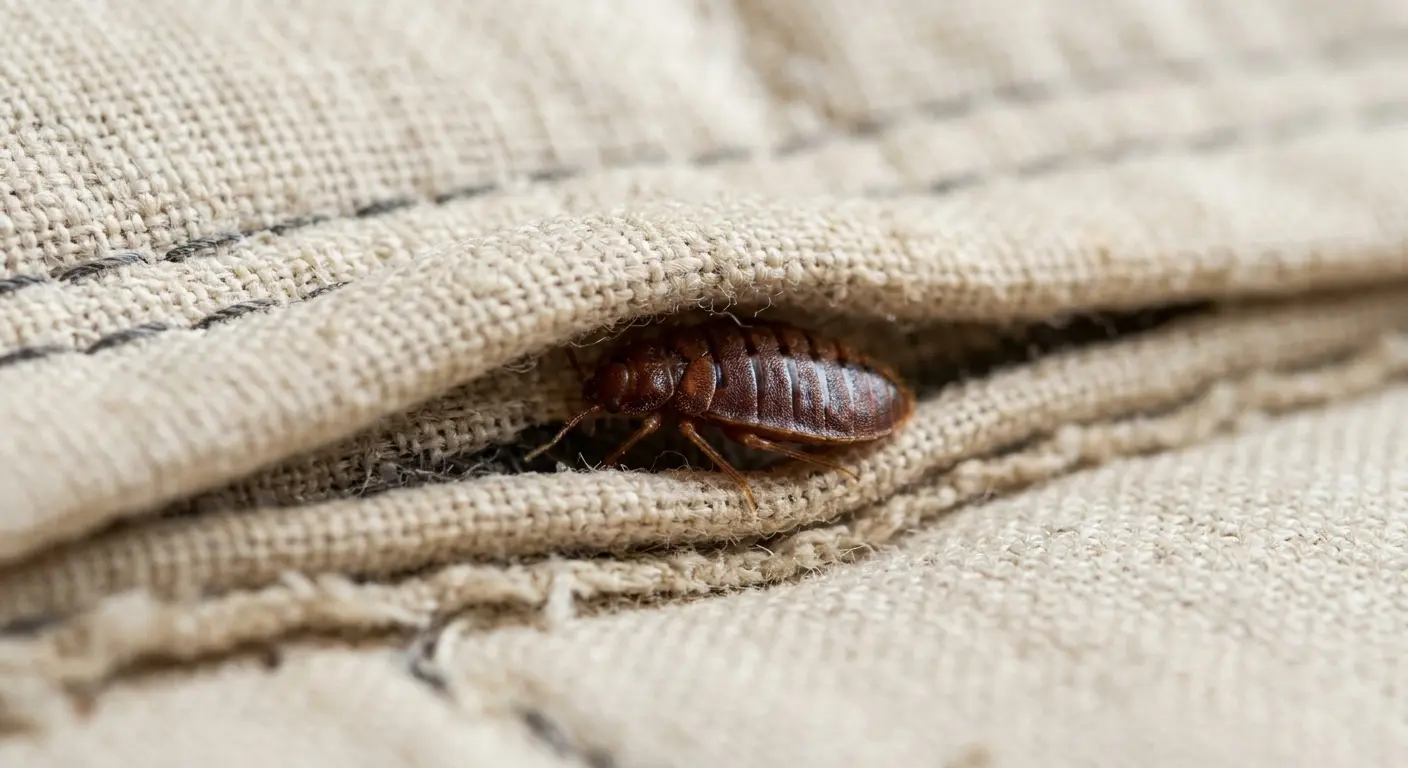
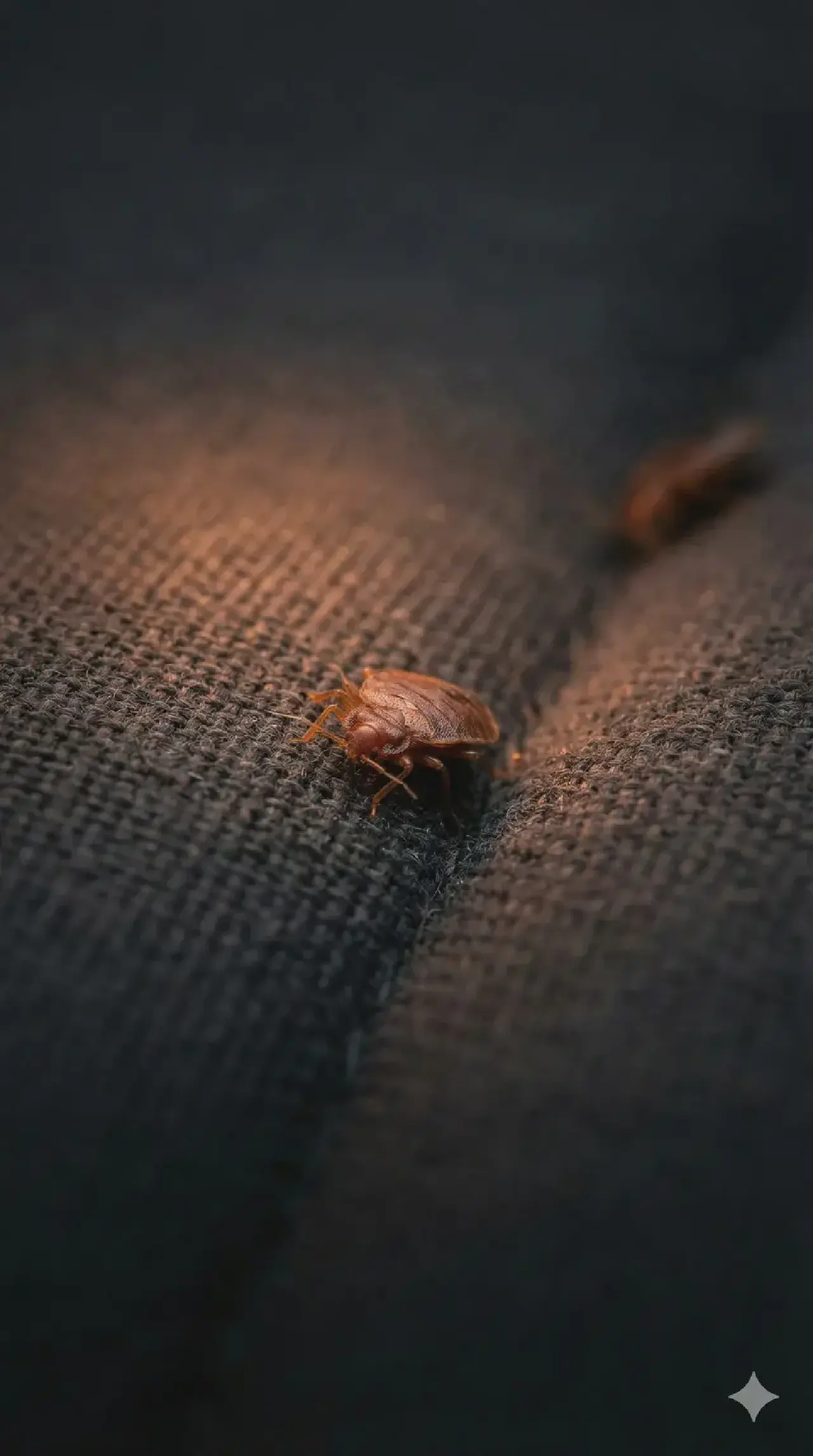
Yes — and behavior is often the deciding factor when you’re unsure what you’ve found. Bed bugs are nocturnal parasites that feed exclusively on blood. You’ll typically find them in mattress seams, box springs, and bed frame crevices — not in kitchens or bathrooms. Their bites appear in clusters or straight lines, often on areas exposed while sleeping.
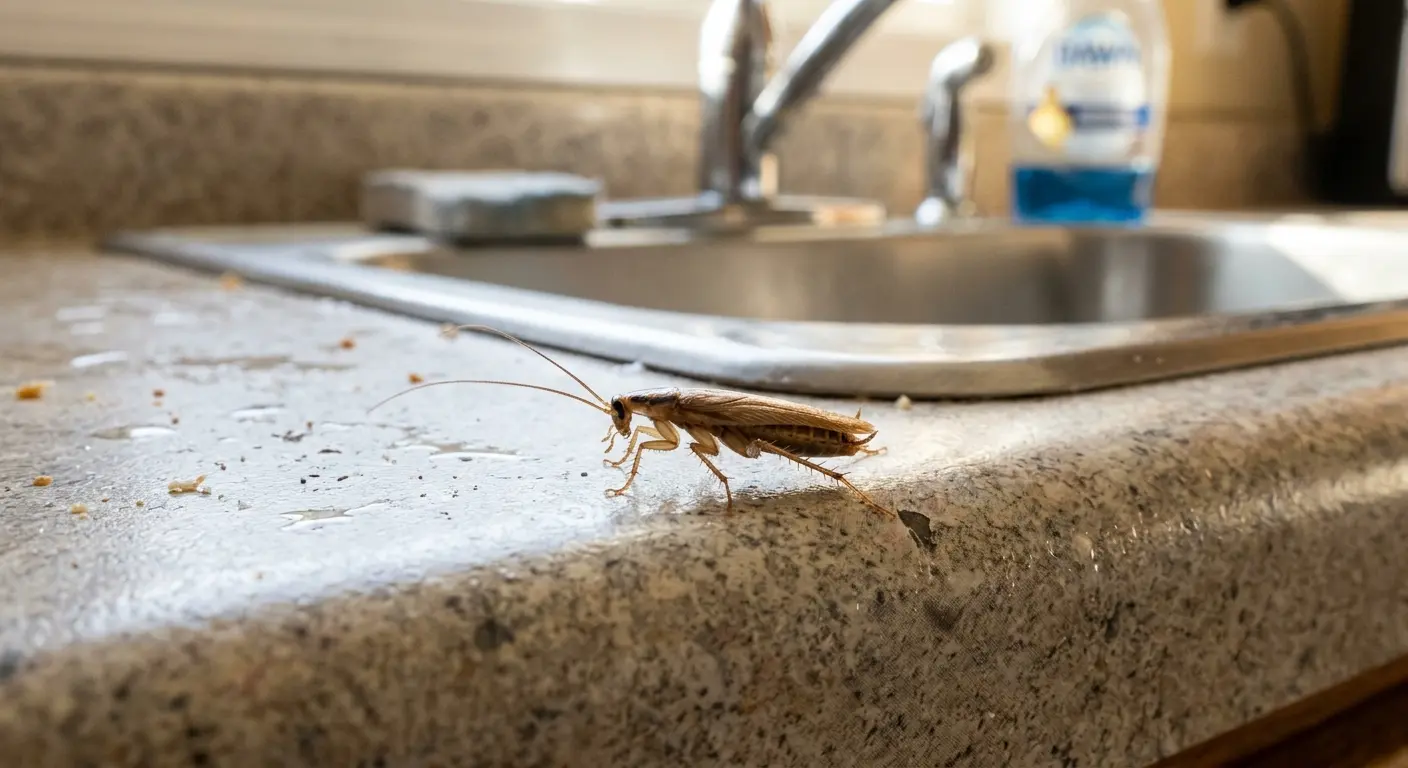
Cockroaches, by contrast, are scavengers that avoid human contact. German cockroach nymphs (the species most commonly mistaken for bed bugs) prefer warm, humid areas near food and water sources — kitchens, bathrooms, and behind appliances. They don’t bite humans. Most guides say bites are the primary symptom to watch for, but entomologists at the University of Kentucky note that cockroach infestations trigger allergic reactions and asthma symptoms, especially in children, which can be mistaken for bite reactions.
Not sure if those marks are bed bug bites or something else?
Upload a photo to our identifier tool — get a confirmed answer in under 60 seconds.
Which Pest Is Worse: Bed Bugs or Cockroaches?
Both infestations are serious, but they pose different risks. Bed bugs are notoriously difficult to eliminate because they hide in tiny cracks and can survive months without feeding. A single missed egg can restart an infestation. Cockroaches reproduce faster — a single German cockroach female can produce up to 30,000 offspring in a year — and they contaminate food with bacteria like Salmonella and E. coli.
The treatment approaches differ just as dramatically. Bed bugs require targeted insecticide applications, heat treatments, and thorough laundering of bedding and clothing. Cockroach control focuses on sanitation, sealing entry points, and baiting stations. Using cockroach bait on bed bugs won’t work — bed bugs feed only on blood, not bait. This is why accurate identification before treatment is non-negotiable.
How Can I Confirm Which Pest I Have?
If you’ve found an insect but can’t get a clear look, capture it in a jar or take a close-up photo. Look for these specific markers:
- Antennae length — long and curved means cockroach; short and stubby means bed bug
- Body segments — cockroaches have a visible head shield; bed bugs have a flat, uniform body
- Location — bedroom and mattress areas point to bed bugs; kitchen and bathroom point to cockroaches
- Movement — cockroaches scatter when light hits them; bed bugs move slowly and try to hide
For other lookalike pests, see our guide on bed bug vs other insects to rule out carpet beetles, fleas, or spider bites. If you suspect fleas specifically, our bed bugs vs fleas comparison covers the key differences in bite patterns and habitat.
Still not sure if it's bed bugs or a different insect?
Our AI tool compares your photo against thousands of confirmed cases instantly.
Frequently Asked Questions
What is the main difference between a baby cockroach and a bed bug?
Can cockroaches bite you like bed bugs do?
Do bed bugs and cockroaches live in the same areas?
How fast do cockroaches reproduce compared to bed bugs?
Can I use the same treatment for both bed bugs and cockroaches?
Confirmed bed bugs — what do you actually need to treat them?
Upload one photo and our tool builds your exact treatment kit in under two minutes.