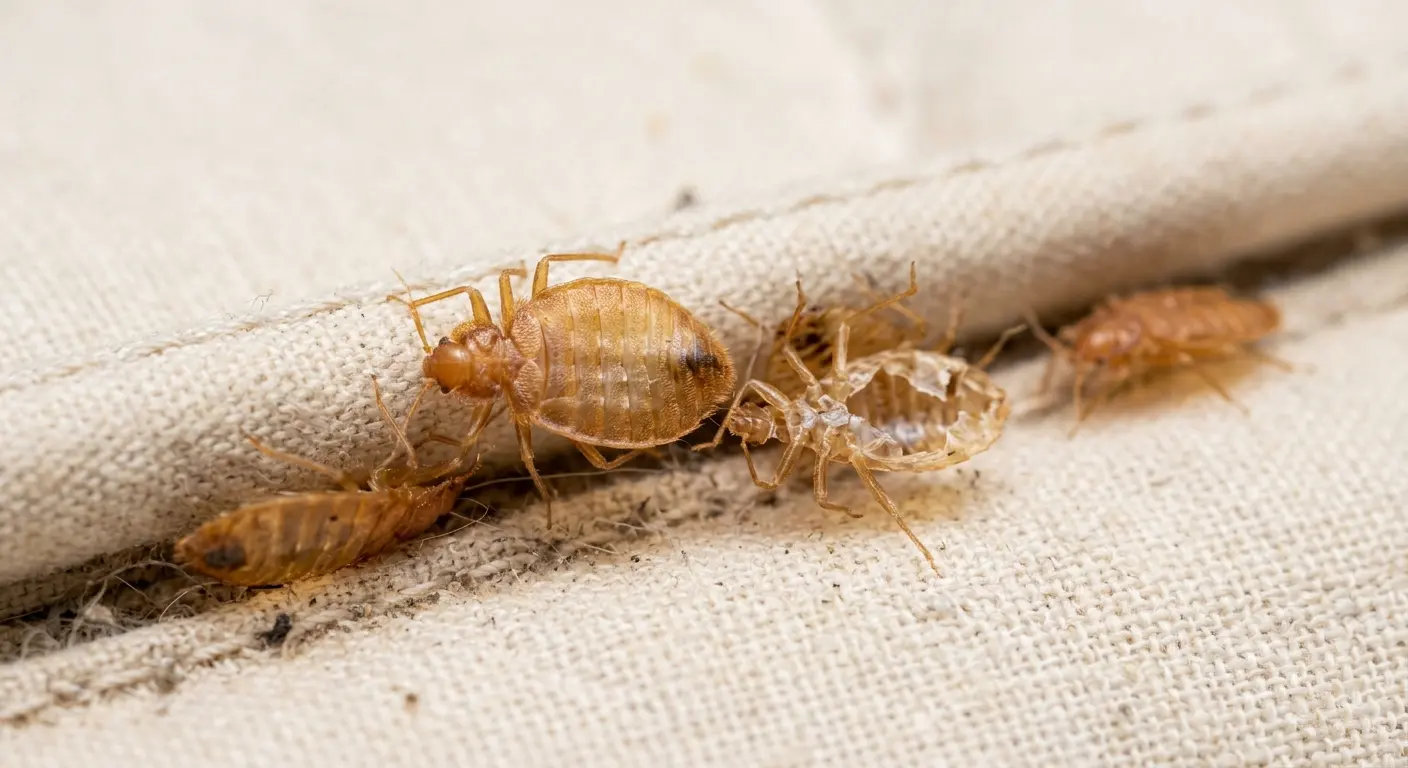
What Are Dead Bed Bug Shells?
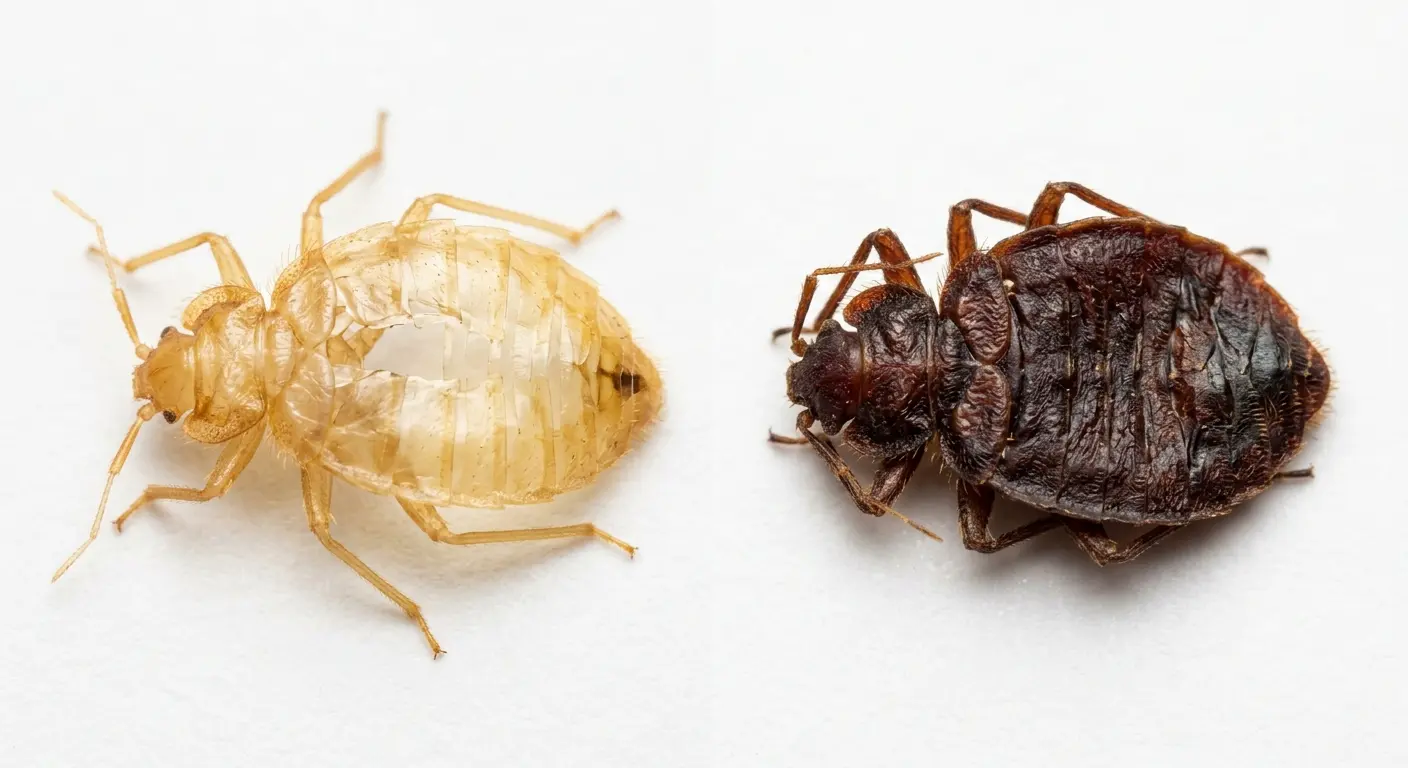
Dead bed bug shells are the hollow, translucent exoskeletons that bed bugs shed during molting — they’re not the bodies of dead bugs. As nymphs grow through five instar stages, they outgrow their outer skin and leave behind a perfect, empty copy of themselves. These casings are typically pale yellow, amber, or translucent and appear dry and papery, unlike actual dead bed bugs which darken and shrivel after death.
Most guides focus on live bugs or bite marks, but shells are actually a more reliable indicator of an infestation. University of Kentucky entomologists note that bed bug shells persist long after live bugs have hidden or been killed, making them excellent evidence for early detection.
Where to Find Bed Bug Shells on Mattress
Bed bug shells on mattress seams, piping, and tufts are among the most common hiding spots. You’ll also find them behind headboards, in box spring crevices, along baseboards, and inside nightstand drawers.
| Location | What to Look For |
|---|---|
| Mattress seams & piping | Translucent, pale yellow casings tucked into stitching |
| Box spring edges | Clusters of shells near fabric folds |
| Headboard cracks | Dry, hollow shells mixed with dark fecal spots |
| Baseboards & outlets | Scattered casings along edges and gaps |
Dead Bed Bug Shells vs. Shed Skin: Key Differences
The terms “dead bed bug shells” and “shed skin” are often used interchangeably, but they describe different things. A shed skin is the molted exoskeleton left behind during growth — it’s hollow, translucent, and has an opening where the bug crawled out. A dead bed bug shell, in the practical sense, is the same thing: an empty casing. However, a truly dead bed bug will be a full, intact body that darkens and flattens over time.
Most guides say you need to find live bugs to confirm an infestation — but shed casings are actually stronger proof. Because bed bugs only molt five times before adulthood, each shell represents a living bug that was present in that exact spot. Finding multiple empty bed bug shells means an established population, not a stray hitchhiker.
Early Signs Dead Bed Bug Shells Indicate
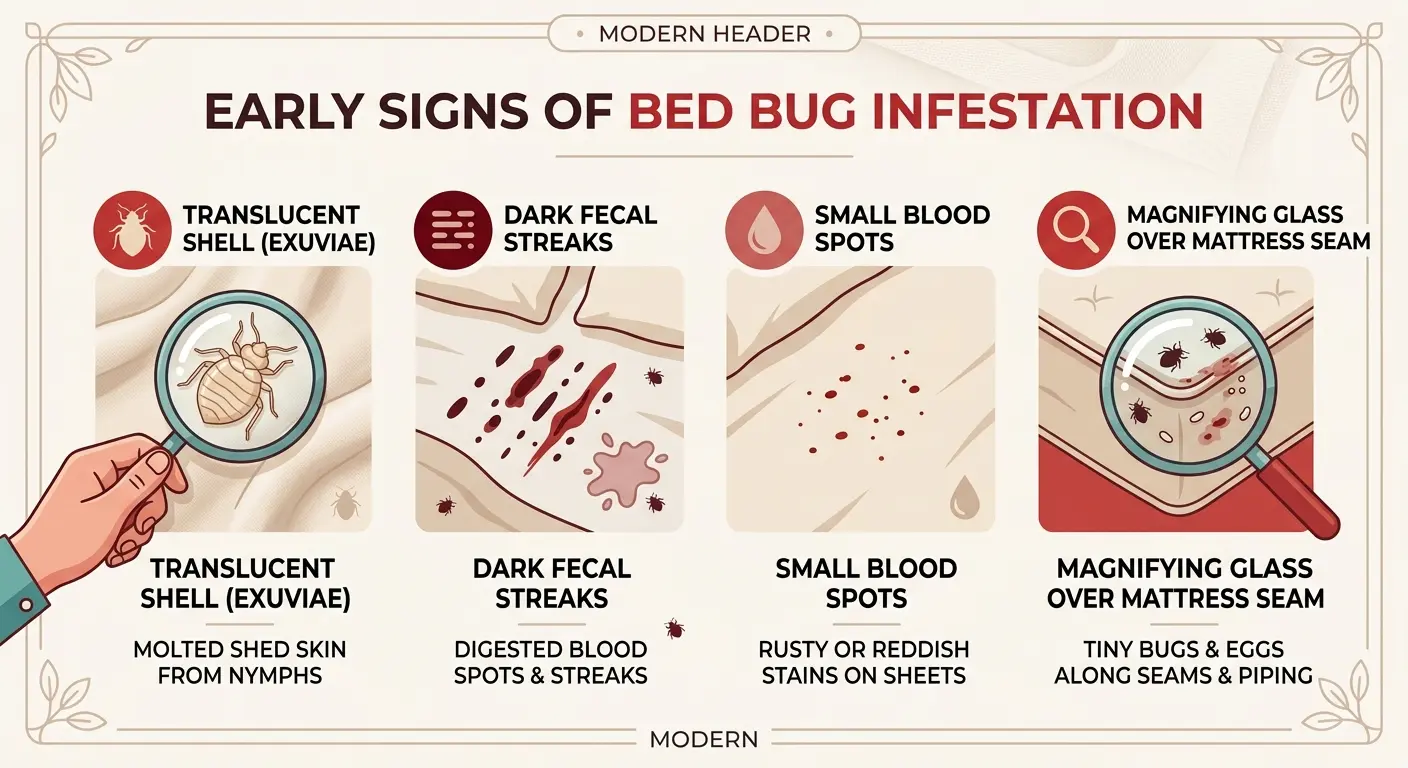
Finding early signs dead bed bug shells is often your first warning of an infestation. One or two casings suggest a small, newly introduced population; dozens indicate a mature infestation that’s been active for months. Shells paired with dark fecal streaks, tiny blood spots on sheets, or a sweet, musty odor confirm active bed bugs nearby.
The University of Kentucky’s entomology department emphasizes that shell size helps estimate infestation age — tiny casings mean young nymphs, while larger ones indicate adults. This matters because nymph-only infestations are easier to treat than established colonies with breeding adults.
Related: What Comes Next
If you’ve found dead bed bug shells, you need to determine whether live bugs remain. Check for fresh bites, fecal spots, or live insects at night. For help distinguishing bed bug evidence from other pests, see our guide on dead bed bugs. If you’ve crushed one during inspection, understanding the difference between shells and squished bed bug remains can help you avoid confusion during cleanup.
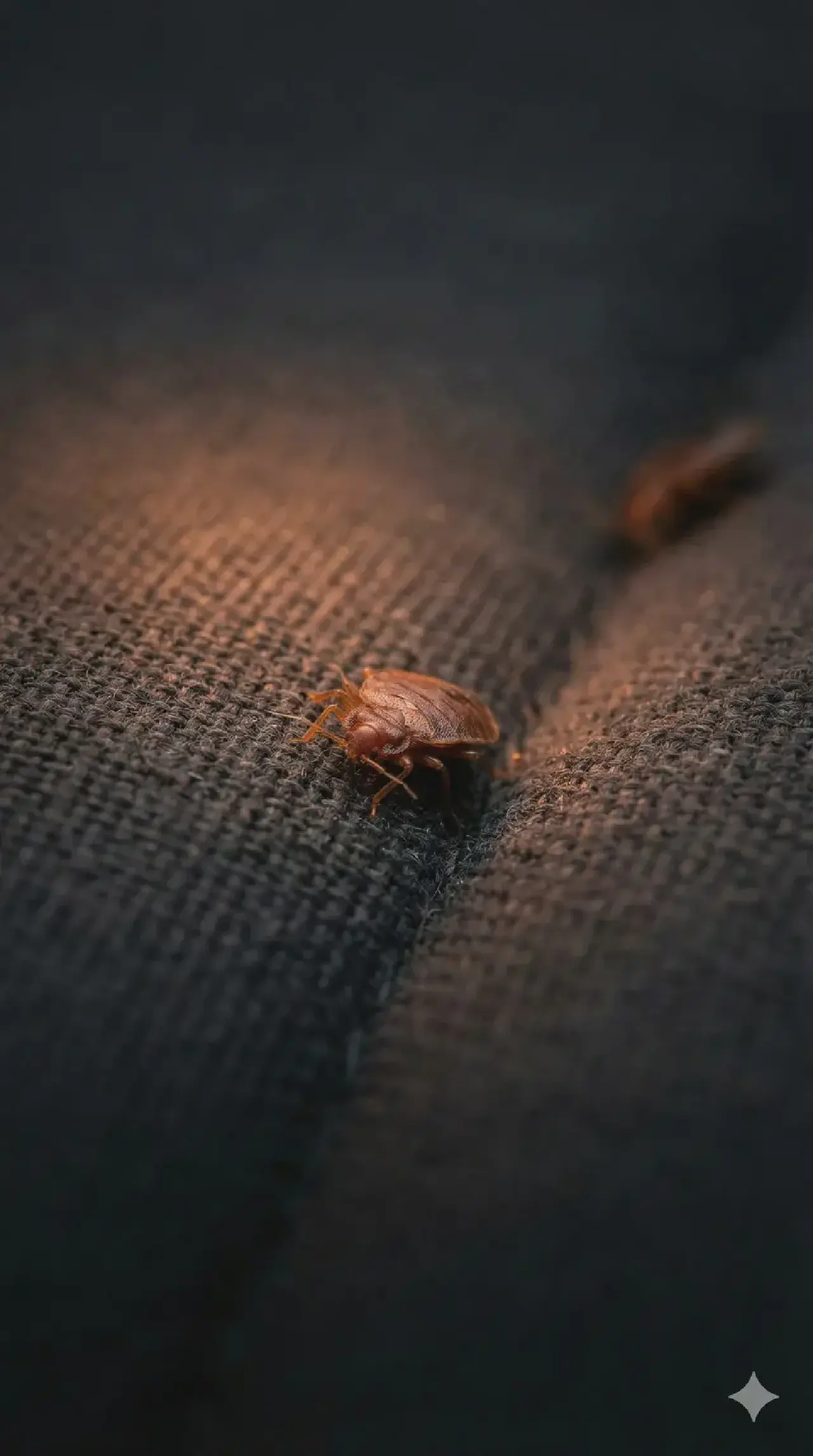
Not sure if those marks are bed bug bites or something else?
Upload a photo to our identifier tool — get a confirmed answer in under 60 seconds.
How to Clean Up Dead Bed Bug Shells
Vacuum thoroughly, then dispose of the bag in an outdoor trash bin. Use a stiff brush to dislodge casings from mattress seams and fabric folds. Wash all bedding in hot water and dry on high heat for at least 30 minutes — this kills any lingering eggs or nymphs. For non-washable items, use a handheld steamer or contact spray labeled for bed bugs.
Still not sure if it's bed bugs or a different insect?
Our AI tool compares your photo against thousands of confirmed cases instantly.