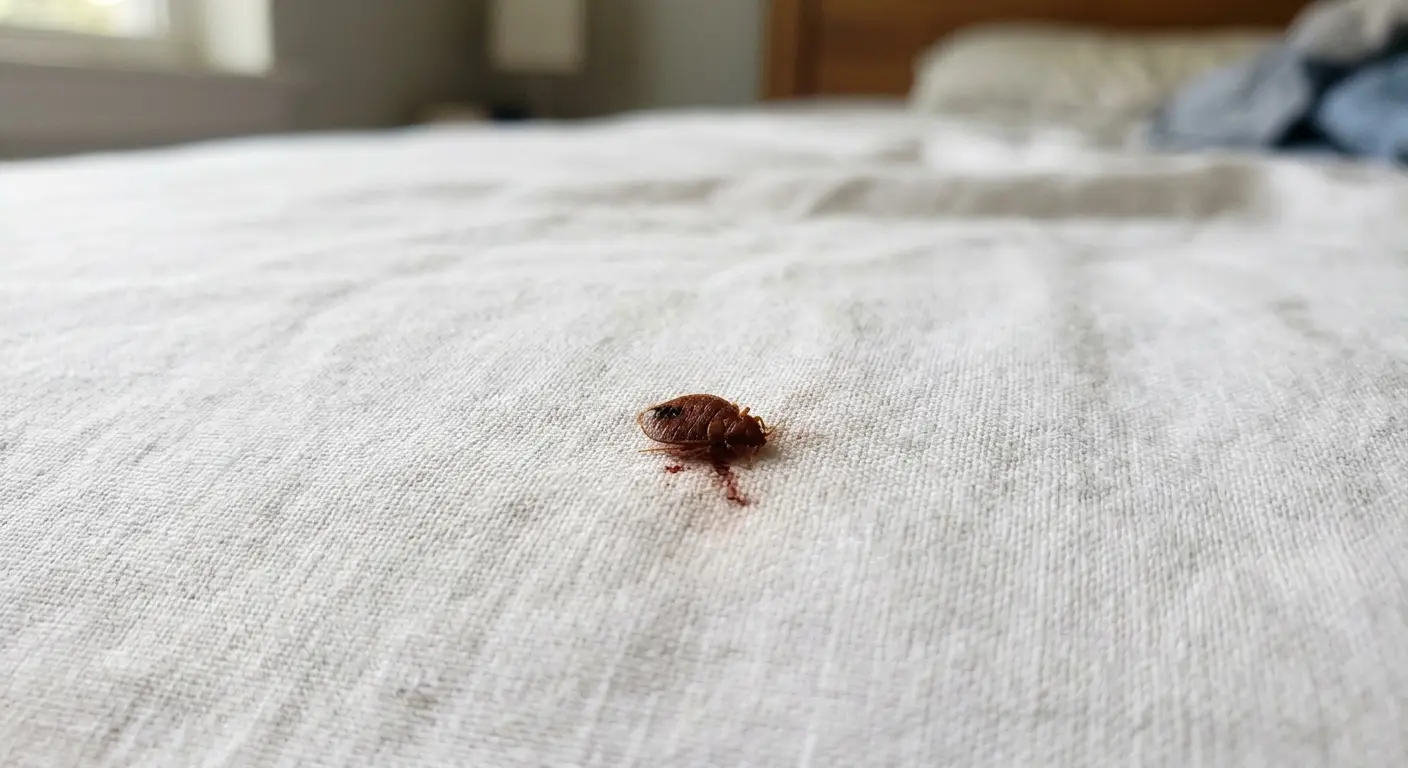
A squished bed bug signals an active infestation, but crushing it is the worst response. When you pop a bed bug, you risk releasing blood-borne pathogens and scattering eggs onto nearby surfaces, worsening the problem. The New Jersey Department of Health explicitly warns against squishing bed bugs because it releases blood and any pathogens they carry. If you’ve crushed one, you need to know what to do next and how to interpret the evidence left behind.
Are Bed Bugs Easy to Squish?
Bed bugs are surprisingly hard to squish compared to other insects. Their tough, flattened exoskeletons withstand moderate pressure, which is why they survive being stepped on or having objects fall on them. According to the University of Arizona Extension, bed bugs have a durable outer shell requiring significant force to break. If you managed to crush one, you applied substantial pressure, and the result is usually a messy, bloody spot on your sheets or mattress.
What Happens When You Crush a Bed Bug?
Crushing a bed bug doesn’t just kill it — it creates a biological hazard. The body ruptures, releasing recently ingested human blood and potential pathogens. More critically, crushing a pregnant female can scatter her sticky, nearly invisible eggs across the surface, as noted by pest control experts studying bed bug dispersal patterns. You could be spreading the next generation without realizing it. This is why professional exterminators always recommend capturing, not crushing, any suspected bed bug.
Squished Bed Bug No Blood: What Does It Mean?
If you find a squished bed bug with no blood, it likely hasn’t fed recently. Bed bugs can survive months without a blood meal, so a flat, dry crushed specimen is simply unfed. Here’s a quick reference for what you might see:
| What You See | What It Means |
|---|---|
| Red/brown stain with liquid | Recently fed, blood released on crushing |
| Dry, dark smear, no liquid | Unfed or dead for a while |
| Musty odor after crushing | Defensive chemicals released — a sign of alarm |
| Tiny white specks nearby | Eggs scattered from a crushed female |
The musty smell is a key identifier. A squished bed bug gives off a lingering, sweet, musty odor often compared to rotting raspberries. If you notice this smell, it’s strong confirmation you’ve crushed a bed bug, not a different insect.
How to Safely Dispose of a Squished Bed Bug
Never use bare hands to clean up a crushed bed bug. Use a paper towel or tissue to carefully wipe up the remains, then place everything in a sealed plastic bag. Dispose of the bag in an outdoor trash can immediately. Wash your hands thoroughly with soap and water afterward. If the squished bug was on your bedding, remove the sheets and wash them in hot water (at least 120°F) and dry on high heat for at least 30 minutes to kill any lingering eggs or pathogens.
Not sure if those marks are bed bug bites or something else?
Upload a photo to our identifier tool — get a confirmed answer in under 60 seconds.
Does Crushing a Bed Bug Attract More?
No, crushing a bed bug does not attract more bed bugs. Bed bugs don’t communicate through alarm pheromones that summon others — the musty smell is just a defensive reaction, not a mating call. However, the blood left behind can leave a difficult-to-remove stain, and the eggs you scatter can hatch within 6 to 10 days, creating new nymphs seeking blood meals. While you won’t attract more bugs, you may have inadvertently created a new breeding site in mattress seams or furniture crevices.
Squished Bed Bug vs. Other Insects
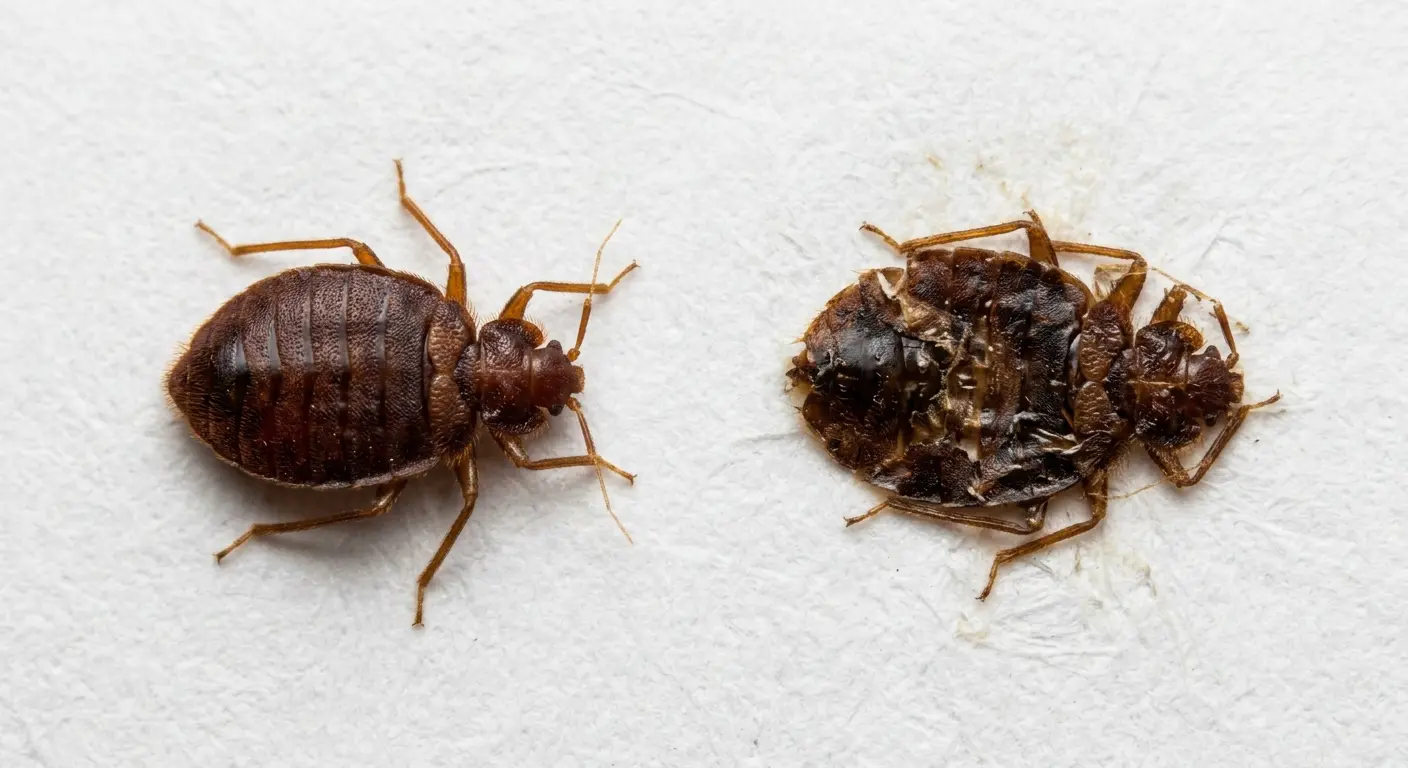
Many people mistake crushed carpet beetles or ticks for bed bugs. Bed bugs have a distinctive oval, flattened shape with three body segments. If you’ve crushed one and want to confirm the species, check our guide on dead bed bugs for detailed comparison photos. You can also look for telltale signs: bed bugs have a reddish-brown color, six legs, and antennae. A crushed carpet beetle appears more round and may have a striped pattern on its back. For further reference on identifying remnants, see our guide on dead bed bug shells.
Still not sure if it's bed bugs or a different insect?
Our AI tool compares your photo against thousands of confirmed cases instantly.
What to Do After Finding a Squished Bed Bug
Finding a crushed bed bug means there are likely more hiding nearby. Start by thoroughly inspecting your mattress seams, box spring, and headboard for live bugs, eggs, and dark fecal spots. Vacuum the entire area and immediately seal the vacuum bag in plastic before discarding. Wash all bedding in hot water and dry on high heat. If you see multiple bugs or signs of an established infestation, first confirm the specimens using our identifier tool or comparison guides, then follow our site’s detailed treatment plan and use the treatment kit builder and step‑by‑step cleaning and containment instructions.
What does a squished bed bug look like?
Can you pop a bed bug like a pimple?
Why is there no blood when I squished a bed bug?
Do squished bed bugs smell?
Should I worry if I accidentally squished a bed bug?
Confirmed bed bugs — what do you actually need to treat them?
Upload one photo and our tool builds your exact treatment kit in under two minutes.