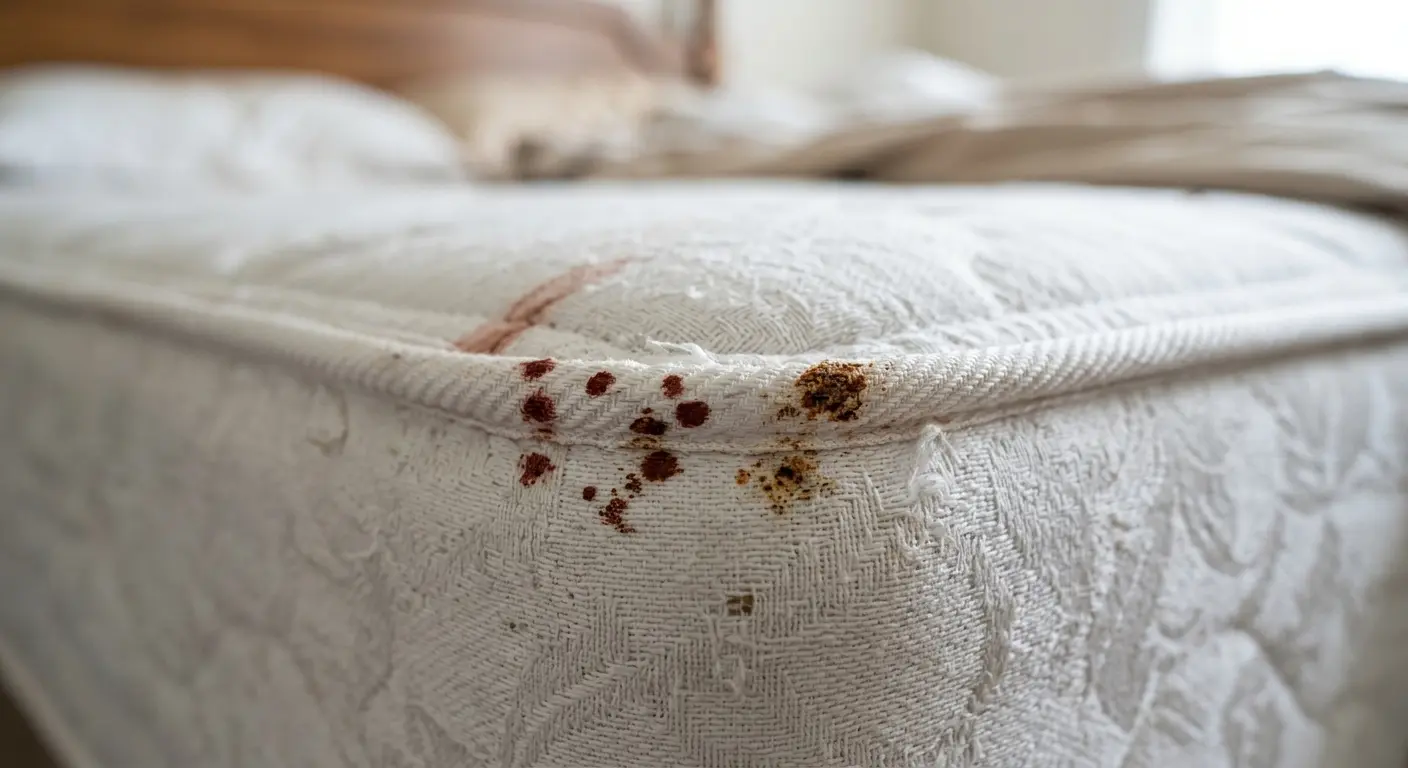
The clearest signs of bed bugs on a mattress are rusty blood stains, dark fecal spots, shed skins, and a sweet musty odor — usually clustered along seams, tufts, and the mattress edge. These telltale marks appear within 3–10 minutes of feeding when bugs get crushed during sleep or leave droppings behind. Check your mattress corners, piping, and box spring seams first, as bed bugs prefer tight, dark crevices close to their host. Early detection matters: a single female can lay 200–500 eggs in her lifetime; see our guide on bed bug behavior and identification for more on reproduction, so catching signs in the first weeks prevents a full infestation.
What Do Bed Bug Spots on Mattress Look Like?
Bed bug spots on a mattress fall into two distinct categories: fecal stains and blood smears. Fecal droppings appear as tiny, dark rust-colored dots (about the size of a marker point) that smear when touched — they’re digested blood. Blood stains look like small reddish-brown patches or streaks, often near seams where you’ve crushed a bug while turning in your sleep.
The US EPA’s bed bug identification guide confirms these rusty or reddish stains are the most common first sign people notice. You’ll typically find them concentrated in a 3–5 foot radius around your sleeping area, not scattered randomly across the mattress surface.
Early Signs of Bed Bugs on Mattress: What to Look For
Beyond spots, four additional signs confirm bed bugs are present on your mattress:
| Sign | What It Looks Like | Where to Check |
|---|---|---|
| Shed skins | Translucent, pale yellow exoskeletons (5 stages of molting) | Seams, piping, tuft buttons |
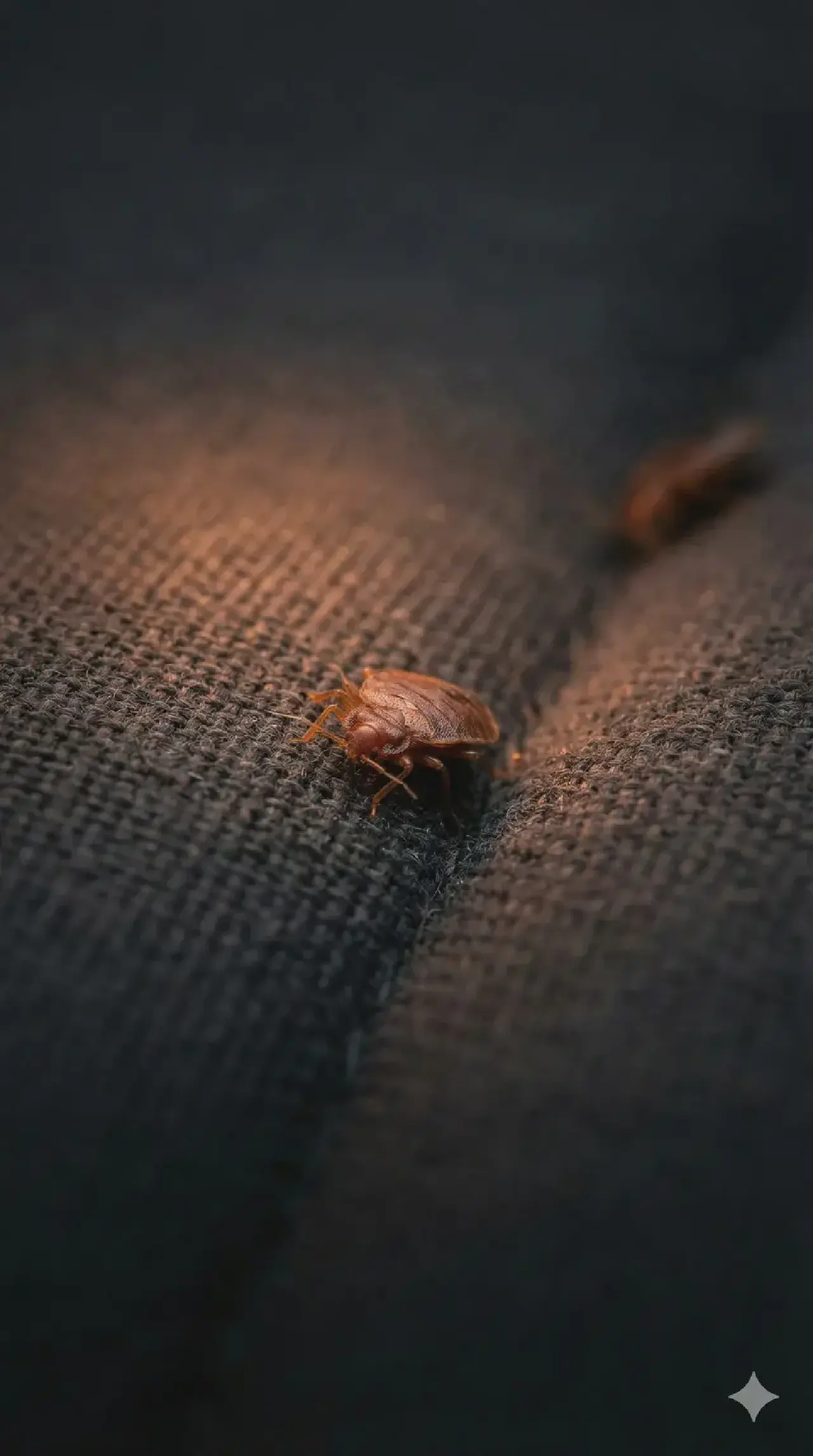
| Live bugs | Oval, flat, reddish-brown adults (4–5mm); pale nymphs (1–3mm) | Along mattress edges, box spring corners |
| Eggs | Tiny pearl-white ovals (1mm), sticky to touch | Deep in seams, under tufts |
| Musty odor | Sweet, sickly smell like rotting raspberries | Near infestation sites |
The Utah Department of Health lists blood stains on sheets and blankets alongside these other markers — but remember that blood alone isn’t conclusive. You might have a nosebleed or small cut. The combination of multiple signs confirms bed bugs.
Where Bed Bugs Hide on Mattresses and Furniture
Bed bugs follow a predictable hiding pattern. On mattresses, check these zones in order: piping seams (the raised edge), tuft buttons, corner guards, and under the mattress label. On box springs, inspect the fabric underside and wooden frame joints. On couches and chairs, focus on cushion zippers, pleats, and the crevice where back meets seat.
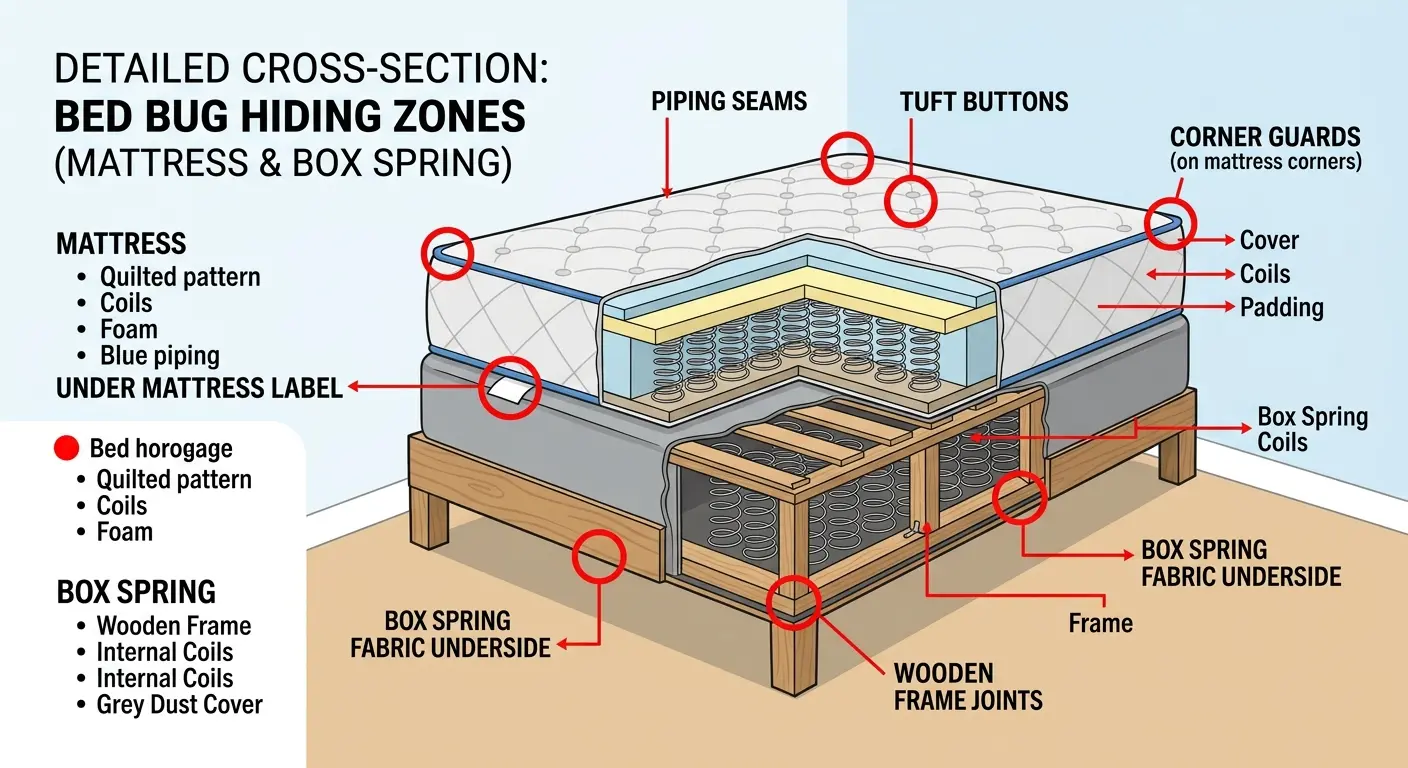
Most guides tell you to check the mattress — but here’s what they miss: bed bugs often hide inside the box spring frame before migrating to the mattress surface. Inspect the entire bed frame and headboard, not just the mattress. If you find signs on furniture, also inspect nearby baseboards, outlet covers, and picture frames within 5–8 feet — bed bugs spread outward from the bed as populations grow.
How to Confirm Bed Bugs vs. Other Insects
Not every dark spot on your mattress is a bed bug. Carpet beetles, fleas, and cockroach droppings can look similar. Here’s how to differentiate:
| Clue | Bed Bugs | Look-Alikes |
|---|---|---|
| Spot color | Dark rust, smears when wiped | Black, granular (cockroach) |
| Spot pattern | Clustered near seams | Scattered randomly |
| Live bugs | Flat, oval, no wings | Carpet beetles are round, striped |
| Bite pattern | Linear clusters of 3–4 | Flea bites are random, lower body |
The WebMD bed bug guide notes that bites vary wildly between people — some show no reaction at all, making physical signs on the mattress your most reliable indicator. If you’re seeing spots but no live bugs yet, you’re likely in the early stages. Act now before the population grows.
Not sure if those marks are bed bug bites or something else?
Upload a photo to our identifier tool — get a confirmed answer in under 60 seconds.
Preventing Bed Bugs from Returning to Your Mattress
Once you’ve identified and treated the infestation, prevention is critical. Encase your mattress and box spring in bed bug-proof covers — these trap any remaining bugs and make future inspections easier. Vacuum mattress seams weekly, and inspect after travel or guests. Remember: bed bugs aren’t a cleanliness issue. They hitchhike on luggage, secondhand furniture, and clothing.
If you’ve found signs on your mattress, check your couch and other upholstered furniture next — bed bugs spread to nearby resting areas within weeks. For guidance on other hiding spots, see our guide on where bed bugs hide for a full-home inspection.
Still not sure if it's bed bugs or a different insect?
Our AI tool compares your photo against thousands of confirmed cases instantly.
Frequently Asked Questions
What do bed bug spots on a mattress look like?
How quickly do bed bug signs appear on a mattress?
Can you see bed bugs with the naked eye?
Do bed bugs stay on the mattress during the day?
Are bed bug stains on mattress permanent?
Act Fast: Your Next Steps
Bed bug signs on your mattress demand immediate action. Every day you wait, the population grows — and treatment becomes more expensive. Start by confirming your findings, then move to treatment immediately.
Confirmed bed bugs — what do you actually need to treat them?
Upload one photo and our tool builds your exact treatment kit in under two minutes.