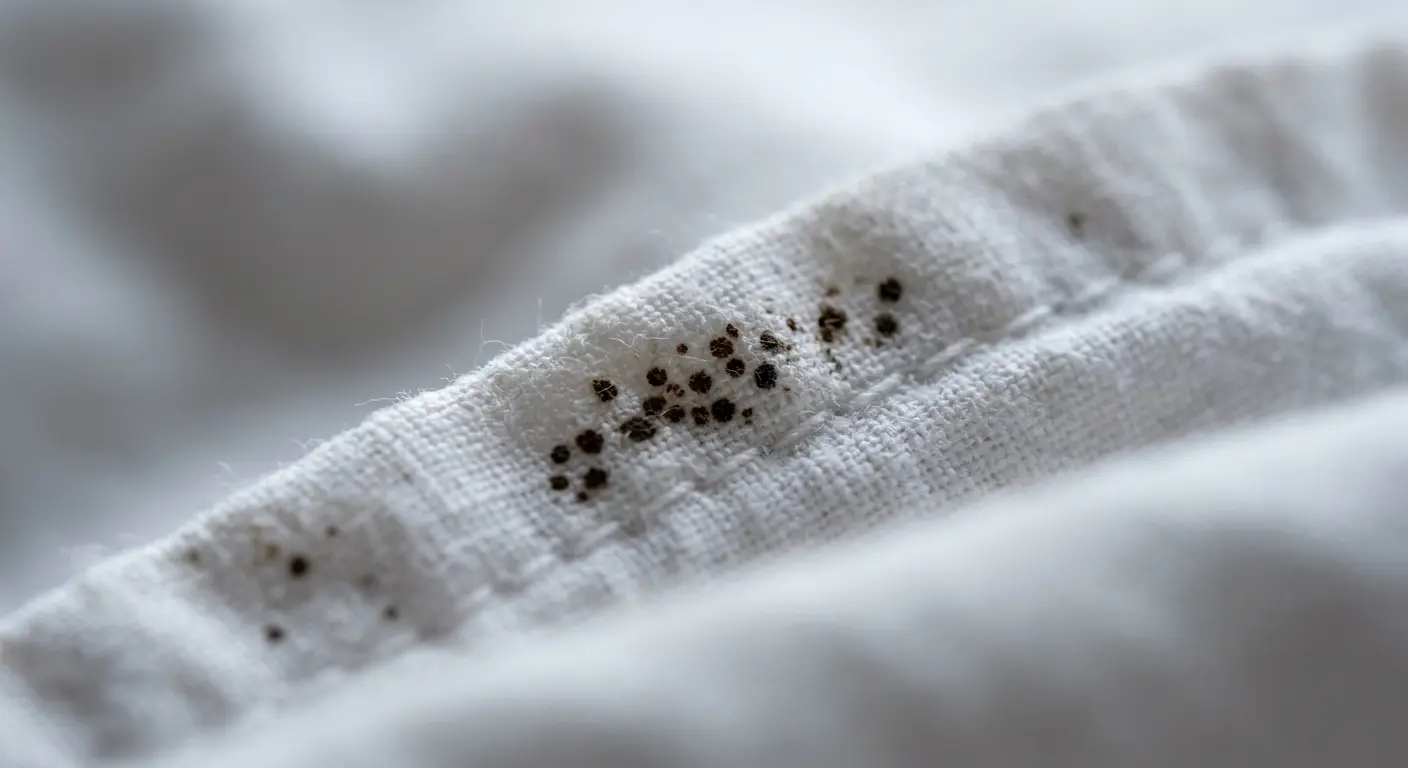
Bed bug droppings on sheets appear as clusters of tiny black or dark brown dots, roughly the size of a pinhead (1–2 mm wide), often looking like marks from a fine-tipped black marker. These fecal spots are one of the earliest and most reliable signs of an active bed bug infestation, and they typically concentrate near the seams, edges, and corners of your mattress where bugs hide during the day.
What Do Bed Bug Droppings on Sheets Look Like?
Fresh bed bug droppings are dark brown to black, slightly shiny, and may smear when touched. As they dry, they become powdery and flake-like, according to Orkin. On white sheets, these spots stand out clearly — think of them as tiny ink dots arranged in small groups or lines. The size is remarkably consistent: about 1 mm across, which distinguishes them from larger cockroach or rodent droppings.
Most guides describe the color and size — but here’s what they often miss: bed bug droppings contain digested blood, so when you dab a fresh spot with a damp cloth, it will smear reddish-brown. This is a quick field test that helps separate bed bug feces from dirt, mold, or random stains. For a deeper comparison of related stain types, see our guide on bed bug stains.
Where to Check for Bed Bug Feces on Sheets
Start with the areas where your body makes the most contact: the top third of the fitted sheet near your pillow, and the seams and folds of your flat sheet. Bed bugs tend to defecate near their harborage — the place they hide during daylight — so check the mattress seams, the gap between mattress and headboard, and the underside of your fitted sheet.
Don’t stop at the sheets. Inspect pillowcases, mattress tags, and the box spring cover. If you find droppings on sheets, the bugs are actively feeding and living close by — this is not a random contamination. Understanding the full picture of bed bug droppings and stains helps you assess the severity of your situation.
Not sure if those marks are bed bug bites or something else?
Upload a photo to our identifier tool — get a confirmed answer in under 60 seconds.
Bed Bug Droppings vs. Other Sheet Stains
| Stain Type | Color | Size | Smear Test |
|---|---|---|---|
| Bed bug droppings | Dark brown/black | 1–2 mm dots | Smears reddish-brown |
| Blood stains (from bites) | Bright red to rust | Irregular, larger | Spreads red, no brown tint |
| Mold/mildew spots | Dark green/black | Variable, fuzzy edges | No color change when damp |
| Dirt/soil | Brown/gray | Variable | Stays brown, no red tint |
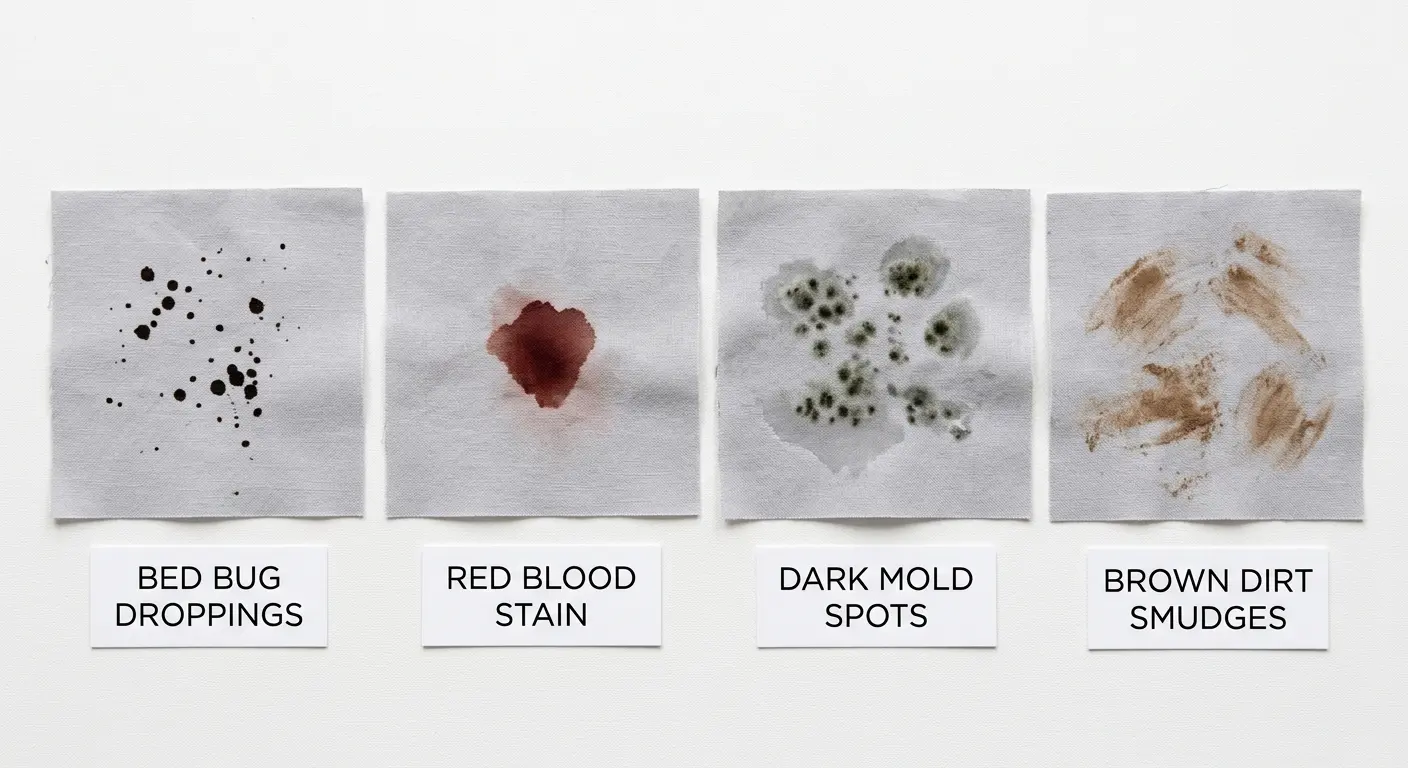
The smear test is your most reliable field check. Bed bug droppings contain digested blood, which gives them that distinctive rusty-red smear when wet — something dirt and mold won’t do. If you’re still uncertain, compare your photos against confirmed reference images of bed bug poop for additional clarity.
Why Bed Bug Spots on Sheets Appear in Clusters
Bed bugs are social insects that share harborage sites. When they feed, they typically retreat to the same hiding spot, and they defecate shortly after feeding. This is why you’ll see clusters of 5–20 dots concentrated in specific areas rather than scattered randomly across the sheet. The cluster pattern is a behavioral fingerprint — most other insects don’t produce grouped fecal deposits in sleeping areas.
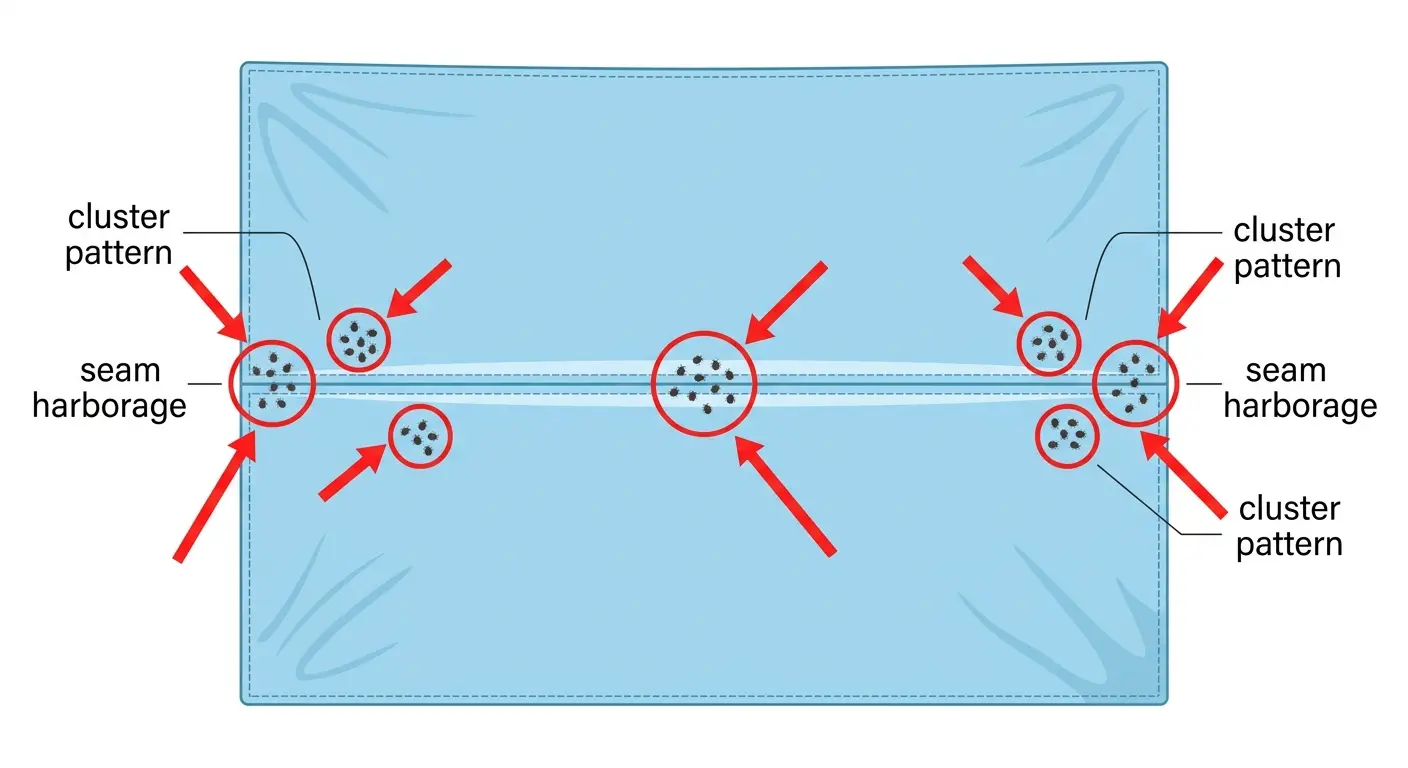
Another non-obvious insight: the number of droppings correlates with infestation size and duration. A few scattered dots might indicate a recent introduction, while dense clusters along entire seams suggest an established population that’s been feeding for weeks. This distinction matters because treatment approaches differ — a small infestation can often be managed with targeted methods, while a large one requires comprehensive intervention.
How to Confirm Bed Bug Droppings on Sheets
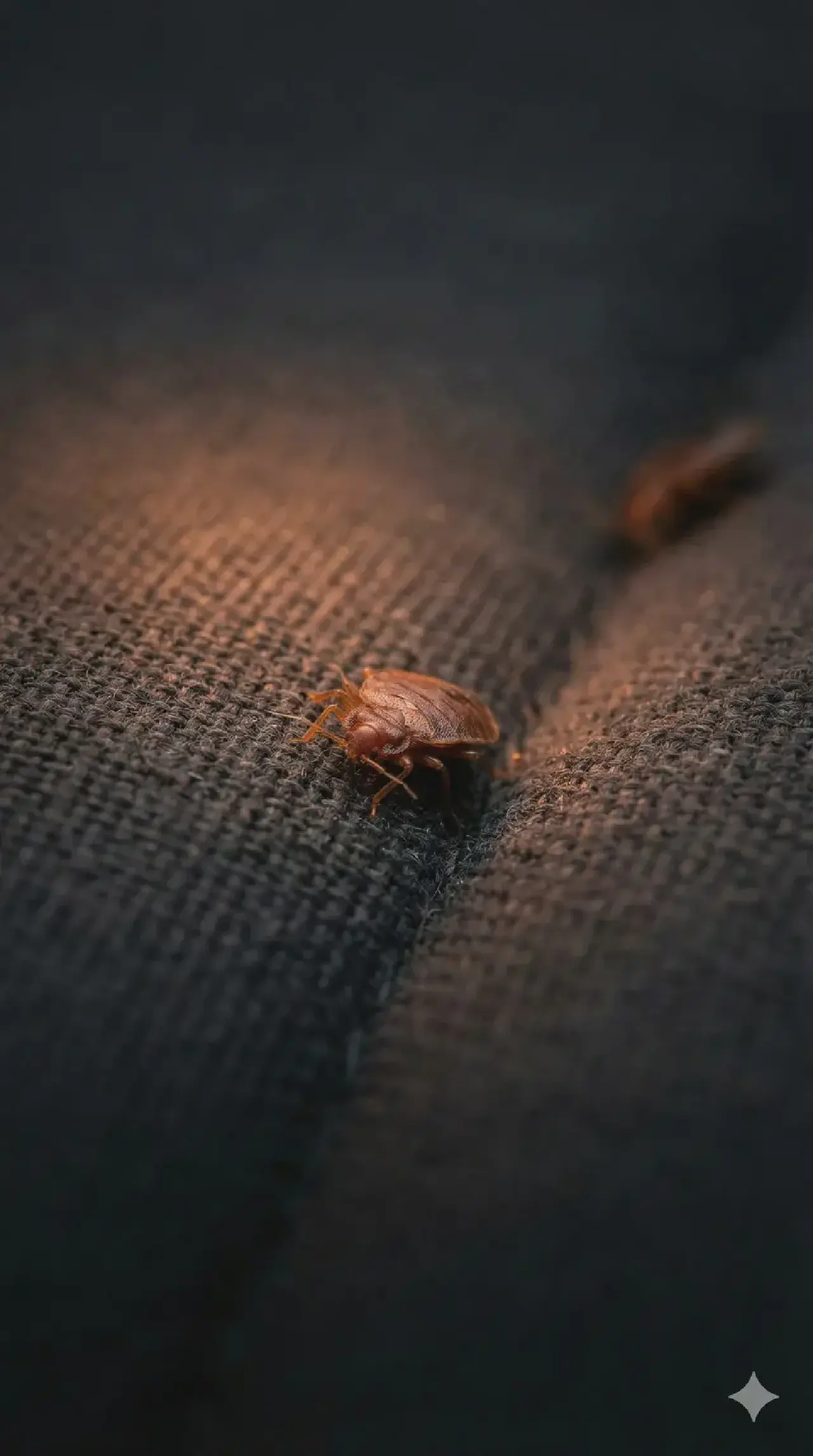
Beyond the smear test, use a flashlight at a low angle to check for additional signs: shed skins (which look like translucent exoskeletons), live bugs, and tiny pale eggs. Bed bugs themselves are about the size of an apple seed — flat, oval, and reddish-brown after feeding. Finding even one live bug alongside droppings confirms an active infestation.
If you’re looking at bed bugs droppings pictures online and still can’t match what you see, take a clear photo of your sheets with a coin or ruler for scale. This makes comparison far easier and gives you a reference for monitoring whether the spots multiply over the next few days.
Still not sure if it's bed bugs or a different insect?
Our AI tool compares your photo against thousands of confirmed cases instantly.
What to Do After Finding Bed Bug Droppings on Sheets
Strip your bed immediately and launder all bedding in hot water (at least 120°F) and dry on high heat for 30+ minutes. Vacuum the mattress thoroughly, paying special attention to seams and tufts. Do not use a mattress encasement yet — first document the extent of the infestation with photos so you can track whether treatments are working.
Most guides stop at cleaning — but here’s the critical next step: you need to determine the source. Bed bugs often hitchhike from hotels, used furniture, or guests’ belongings. If you don’t identify and address the introduction point, re-infestation is nearly guaranteed within weeks.
What do bed bug droppings on sheets look like?
Can you see bed bug droppings on white sheets?
How long do bed bug droppings stay on sheets?
Are bed bug droppings dangerous?
Signs the Infestation May Extend Beyond the Bed
If you find droppings in multiple locations — sheets, mattress seams, headboard, and baseboards — the infestation may extend beyond the bed and require comprehensive treatment. Use our step-by-step treatment plan and treatment-kit builder to select the appropriate products and protocols for infestations that affect multiple rooms. While arranging treatments, use interim controls such as mattress encasements, high-heat laundering, and focused vacuuming to reduce spread and monitor progress with dated photos.
For immediate relief while you arrange treatment, consider a bed bug-proof mattress encasement to trap any bugs already on the mattress and prevent new droppings from reaching your sheets.
Confirmed bed bugs — what do you actually need to treat them?
Upload one photo and our tool builds your exact treatment kit in under two minutes.