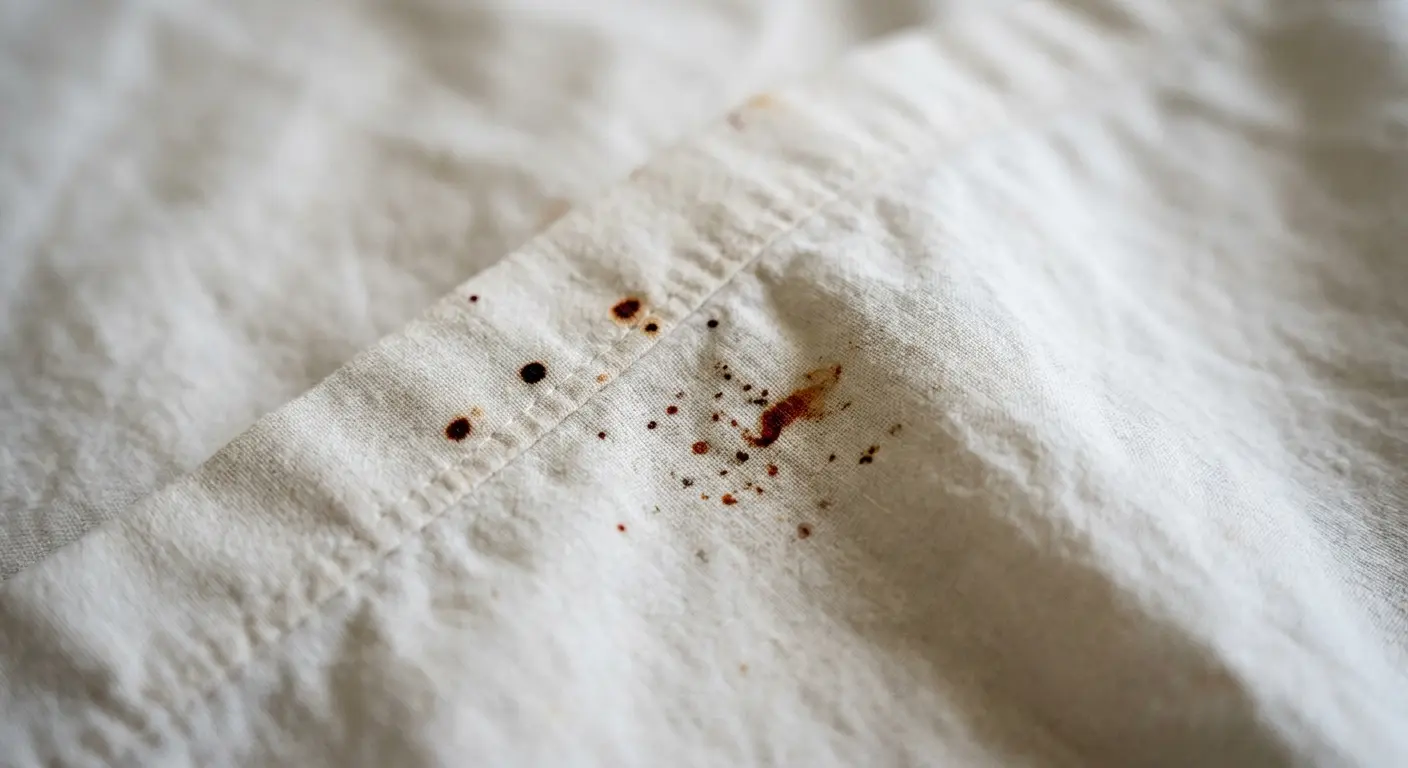
Bed bug stains appear as small, rust-colored or reddish-brown smears on sheets, mattresses, and pillowcases — typically about the size of a pencil tip to a dime. These marks come from digested blood that bed bugs excrete after feeding, and they’re one of the most reliable signs of an active infestation. Unlike dirt or grease, bed bug stains have a distinct dark center with slightly lighter edges that bleed into fabric fibers.
What Do Bed Bug Stains Look Like on Sheets?
On light-colored sheets, bed bug stains show up as dark, rust-colored spots that range from tiny pinpricks to larger smears about a quarter-inch across. Fresh stains appear reddish-brown and may look slightly wet, while older stains dry to a darker, almost black color. You’ll often find them clustered near the seams, folds, and corners of your bedding where bed bugs hide after feeding.
The EPA’s bed bug identification guide notes that these rusty or reddish stains are caused by bed bugs being crushed after feeding, or from their fecal matter being deposited on fabric surfaces. If you notice multiple small stains in a line or cluster, that’s a strong indicator of bed bug activity rather than a one-off mark.
How Big Are Bed Bug Stains on Mattresses?
Bed bug stains on mattresses range from tiny dots (about 1-2mm) to larger smears up to 10mm across, depending on whether the stain is from fecal matter or a crushed bug. Fecal spots are typically small and round, while blood smears from crushed bed bugs create elongated streaks. Check the mattress seams, tufts, and the area around the headboard — these are prime hiding spots where stains accumulate over time.
Most guides say stains are always small, but the Virginia Department of Agriculture’s identification guide shows that molted skins and eggshells often accompany stains, creating a more complex pattern. The combination of dark stains, translucent shed skins, and tiny white eggs is a definitive sign of bed bugs rather than other insects.
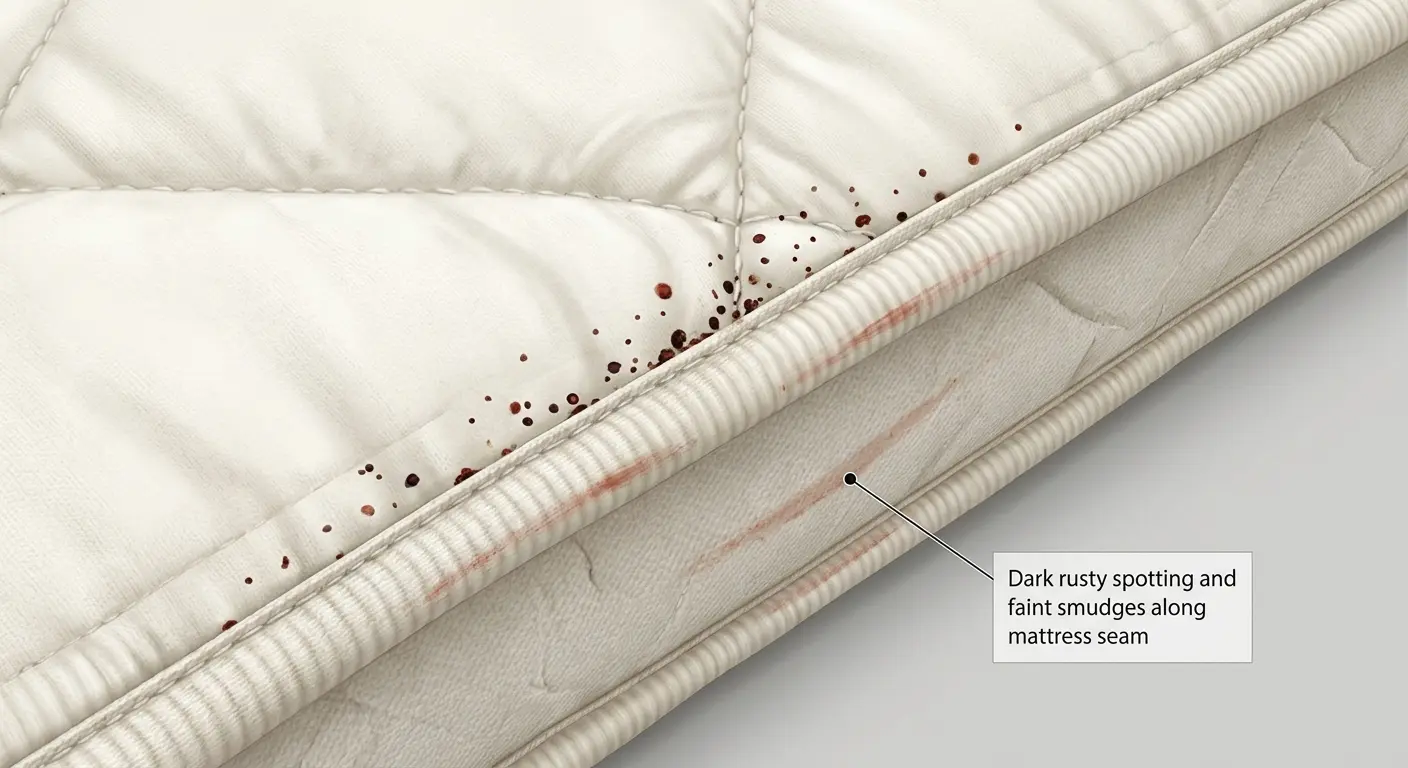
Early Bed Bug Stains on Sheets: What to Look For
Early bed bug stains are easy to miss — they start as a few tiny, dark specks that look like pepper flakes or marker dots. These early marks are often mistaken for lint, dirt, or even chocolate crumbs, especially on patterned or dark bedding. Check your pillowcases and the fitted sheet corners first, since bed bugs tend to feed on exposed skin near the head and neck.
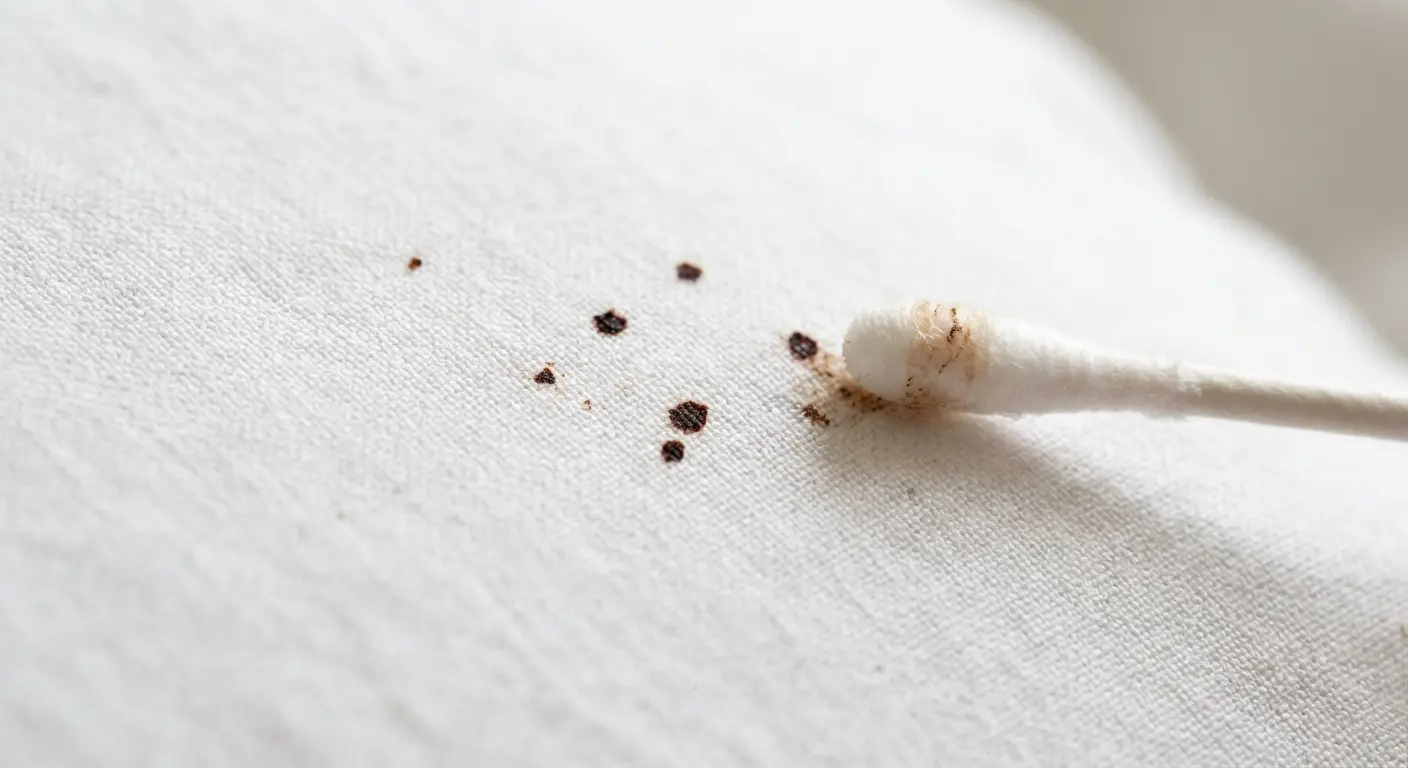
A simple water test can help distinguish bed bug stains from dirt or grease: dab the spot with a wet cotton swab. Bed bug fecal stains will spread and turn slightly reddish-brown when wet, while plain dirt just smears dark and grease repels water. This quick test can save you from unnecessary worry — or help you catch an infestation earlier.
How to Confirm Bed Bug Stains
To confirm whether stains are from bed bugs, inspect the surrounding area for other signs: live bugs, shed skins, or tiny white eggs in mattress seams and furniture cracks. Bed bug stains won’t wash out completely with regular laundry — they often leave a faint shadow even after cleaning. If you’re finding new stains appearing after washing your sheets, that’s a strong signal the infestation is active.
For a thorough inspection, strip your bed completely and examine every seam, fold, and crevice with a bright flashlight. Pay special attention to the box spring, headboard, and baseboards within five feet of your bed. Bed bugs are excellent hiders, so finding stains is often the first clue before you spot the bugs themselves.
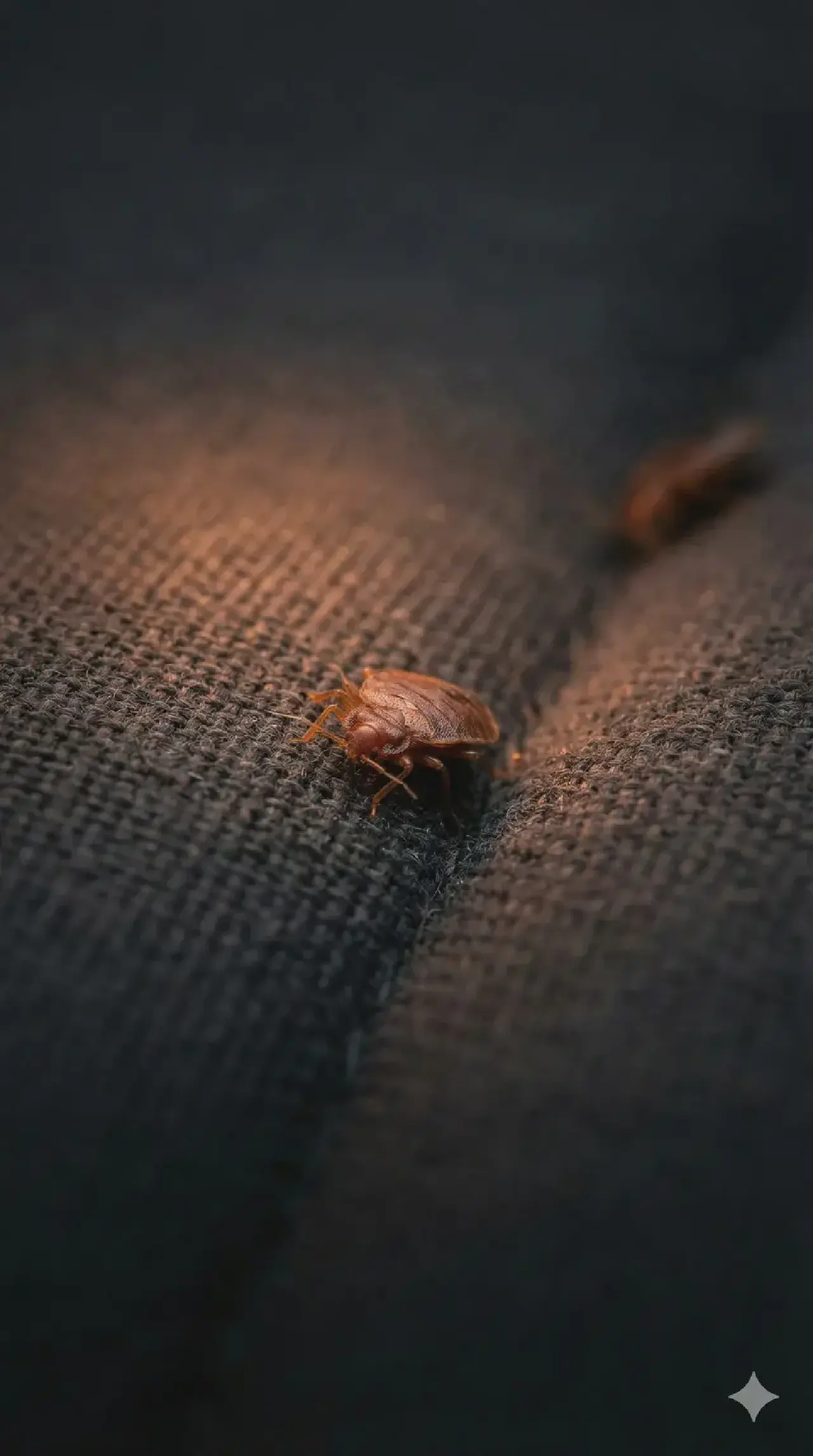
Not sure if those marks are bed bug stains or something else?
Upload a photo to our identifier tool — get a confirmed answer in under 60 seconds.
Frequently Asked Questions About Bed Bug Stains
What do bed bug stains look like on white sheets?
Can you see bed bug stains on dark bedding?
How quickly do bed bug stains appear after an infestation?
Do bed bug stains wash out of sheets?
What to Do If You Find Bed Bug Stains
If you’ve confirmed bed bug stains, act quickly — bed bugs reproduce rapidly, and a small infestation can become severe within weeks. Start by washing all bedding in hot water (at least 120°F) and drying on high heat for 30 minutes. Vacuum your mattress thoroughly, paying special attention to seams and crevices, and dispose of the vacuum bag immediately.
Confirm identification using our identifier tool and follow our published treatment plan and the recommended EPA‑approved products listed on this site. The key is treating both the mattress and the surrounding areas — bed bugs hide in baseboards, furniture, and even electrical outlets. Early intervention is significantly easier and less expensive than dealing with a widespread infestation.
Still not sure if those stains are from bed bugs or another insect?
Our AI tool compares your photo against thousands of confirmed cases instantly.
For a complete breakdown of all bed bug waste and stains, check our guide on bed bug droppings and stains.