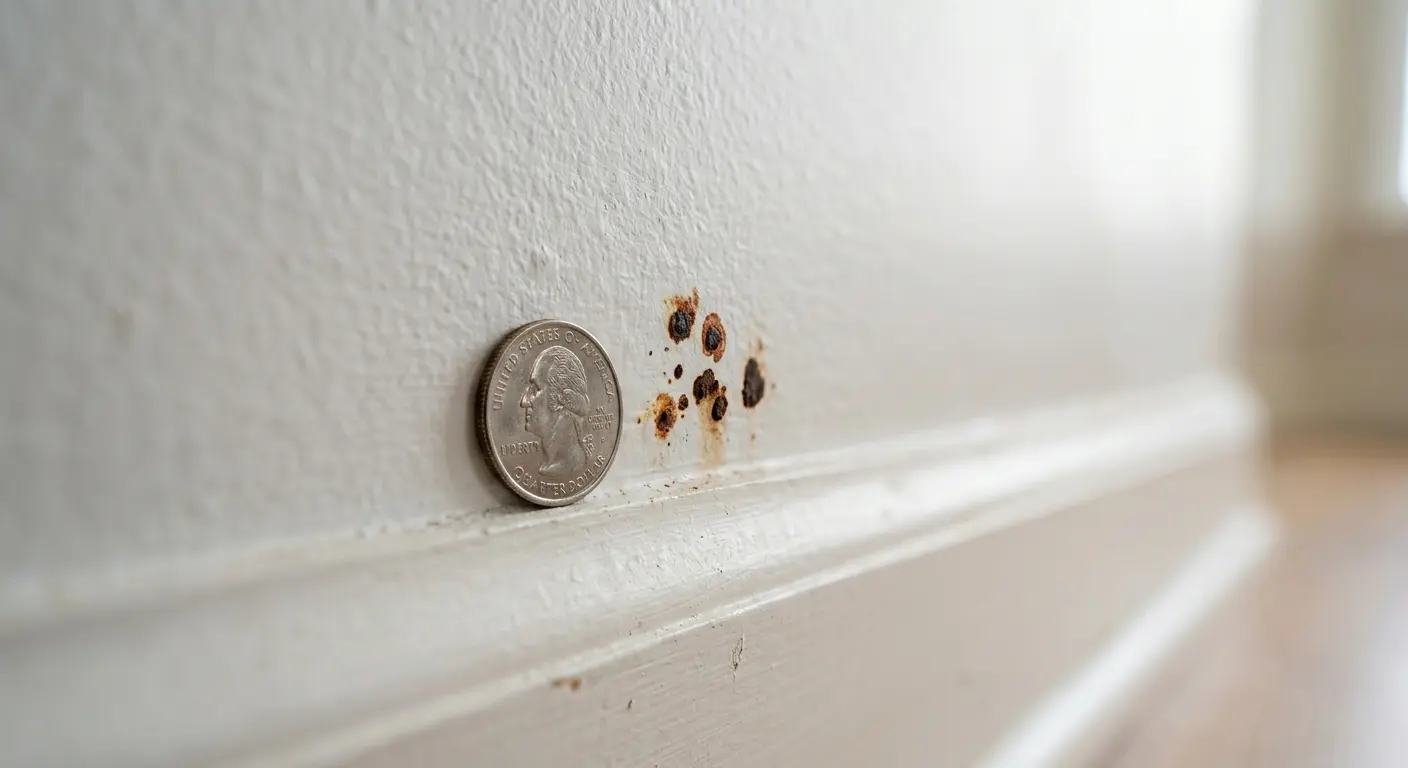
The most obvious signs of bed bugs on walls are dark fecal spots, translucent molted skins, tiny pale eggs, and live bugs crawling near baseboards or outlets. Bed bugs are only about the width of a credit card, so they can squeeze into remarkably small gaps at the junction where walls meet ceilings or floors, according to the US EPA. If you’re seeing these markers, you likely have an established infestation that’s spreading beyond your mattress.
What Do Bed Bug Fecal Spots on Walls Look Like?
Fecal spots are the most common sign of bed bugs on walls, appearing as small, dark rust-colored stains about the size of a marker dot. These spots are digested blood and will smear slightly if touched with a damp cloth. You’ll often find them clustered near baseboards, behind picture frames, and around electrical outlets where bed bugs travel between hiding spots and your bed.
Where Do Bed Bugs Hide on Walls During the Day?
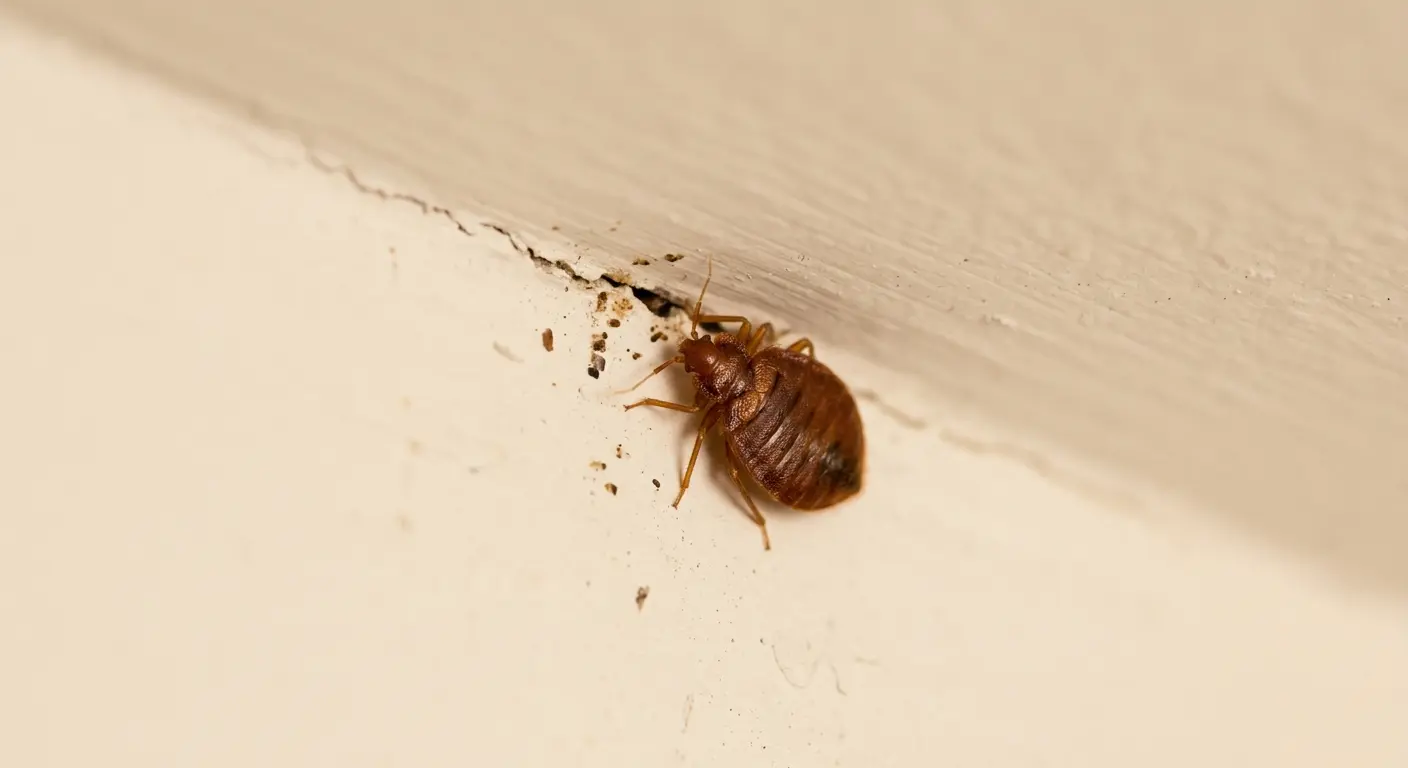
During daylight hours, bed bugs retreat into cracks and crevices along your walls. One inspection guide highlights that these pests hide at wall-ceiling junctions, inside screw heads, and behind loose wallpaper. Check outlet covers, curtain rod brackets, and any gap where pipes or wires enter your walls — these are prime harborage points that most people overlook.
Molted Skins and Eggs: Lesser-Known Wall Signs
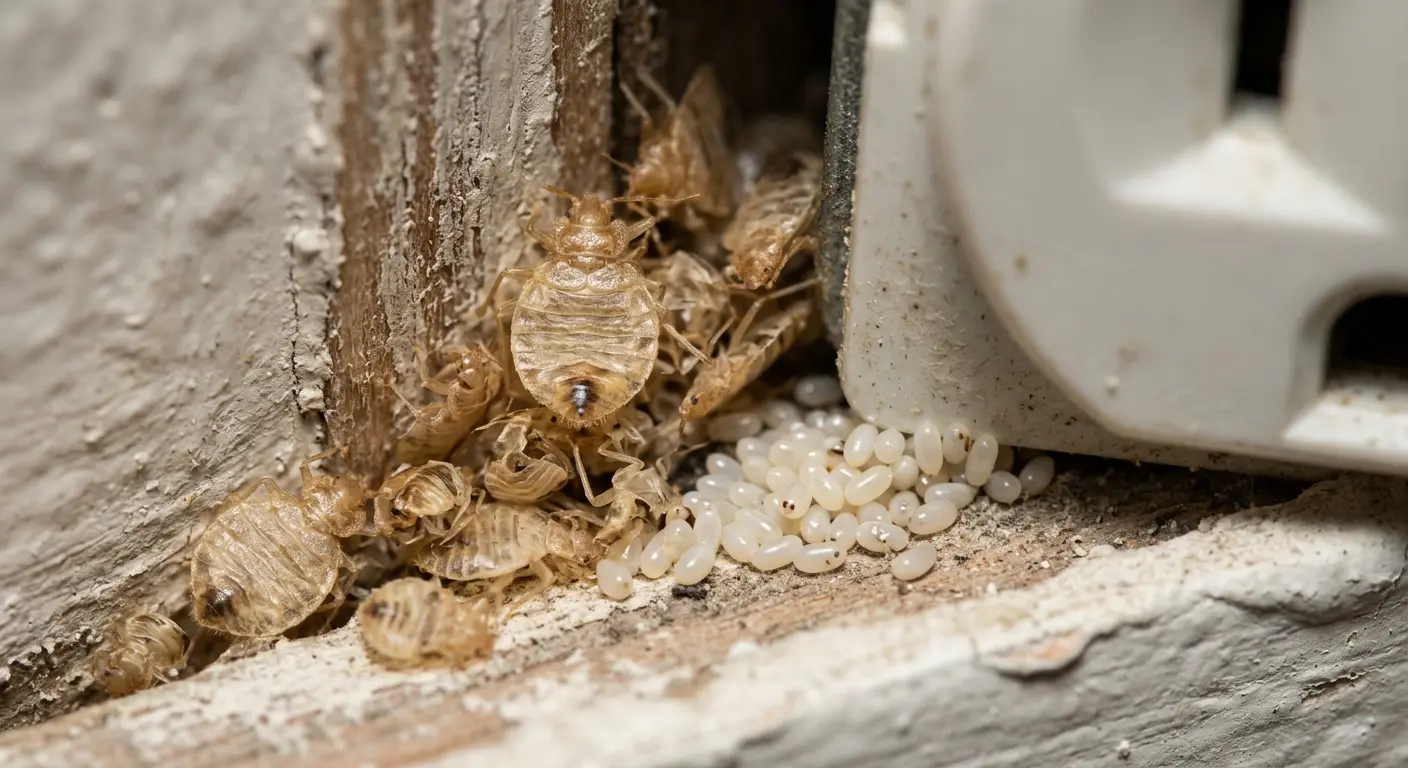
Beyond fecal spots, look for translucent bed bug shells and tiny pearl-white eggs in wall crevices. According to the Virginia Department of Agriculture and Consumer Services, molted skins look like empty bed bug shells in varying sizes depending on the life stage that shed them. Finding eggs or shells on walls means the infestation has moved beyond your mattress into structural hiding spots.
Why Bed Bugs Colonize Walls
Most guides focus on mattress inspections — but bed bugs move to walls when their primary harborage becomes overcrowded. Under the right temperature and humidity conditions, bed bugs can survive for months inside wall voids without feeding. This is why you might spot a bed bug on your wall during the day even if you’ve treated your mattress — the wall colony keeps replenishing the population.
What to Do Next If You Find Wall Signs
If you’ve confirmed signs of bed bugs on walls, you need a treatment approach that addresses structural hiding spots, not just your bedding. Start by checking where bed bugs hide throughout your room, then vacuum all cracks and crevices before applying treatment. Consider whether other furniture shows evidence of activity to understand the full scope of the infestation.
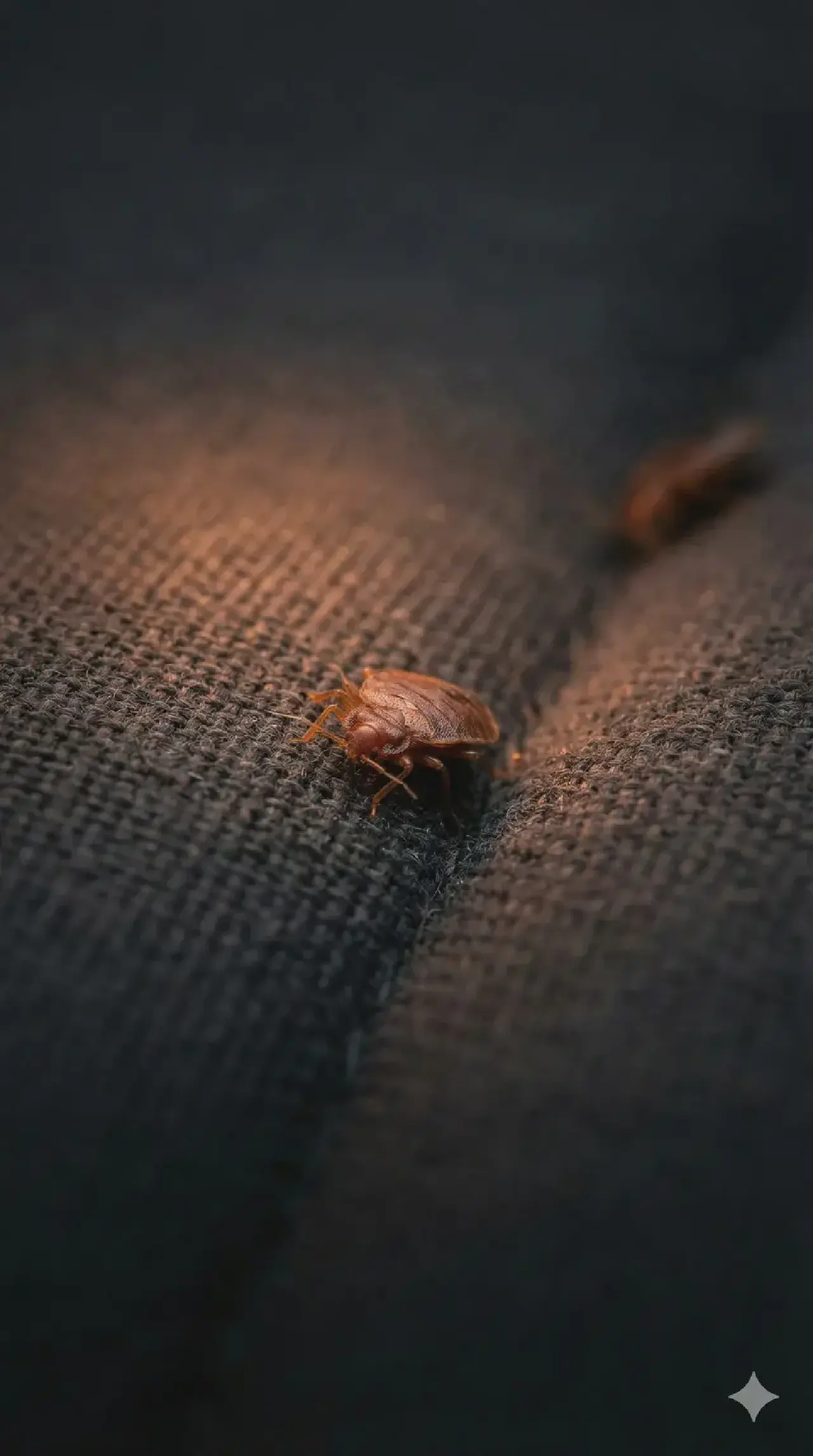
Not sure if those marks are bed bug bites or something else?
Upload a photo to our identifier tool — get a confirmed answer in under 60 seconds.
Still not sure if it's bed bugs or a different insect?
Our AI tool compares your photo against thousands of confirmed cases instantly.