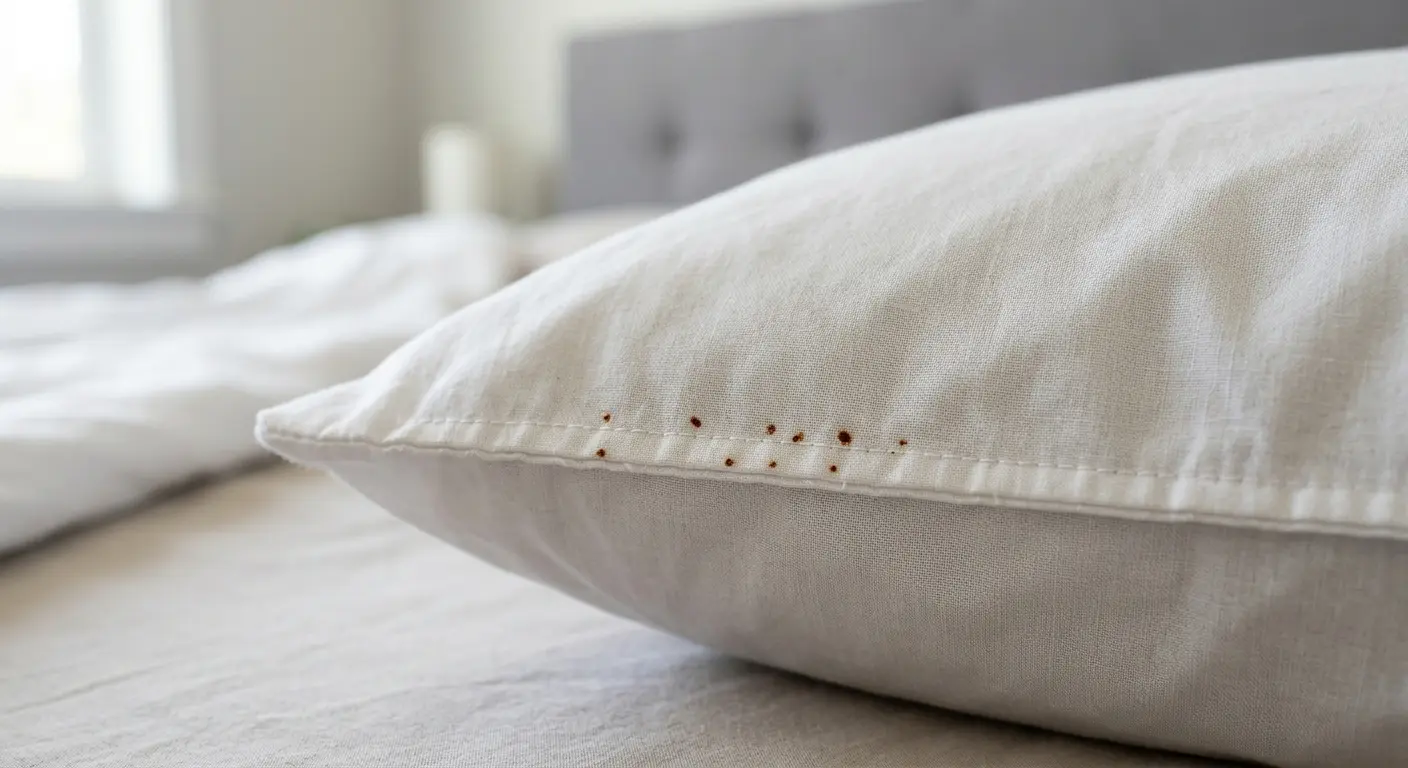
The clearest signs of bed bugs on pillows are small rust-colored blood stains, dark fecal spots, shed exoskeletons, and a sweet musty odor. If you spot any of these on your pillowcase or pillow seams, you likely have an active infestation that requires immediate action. Bed bugs are nocturnal feeders, so they leave these traces behind after biting you while you sleep.
What Do Bed Bug Stains on Pillows Look Like?
Bed bug blood stains on pillows appear as tiny reddish-brown smears or dots, often clustered near seams or folds. These stains come from two sources: bugs you crush while shifting in your sleep, and their droppings, which contain digested blood. Fecal spots are darker — nearly black — and resemble ink dots or marker specks.
Most guides focus on mattress inspection, but pillows are actually a prime harborage because they’re close to your head and rarely flipped during cleaning. A 2024 study from the Journal of Economic Entomology found that bed bugs prefer rough textile surfaces like pillow seams over smooth mattress fabric, making your pillow an early warning system.
How to Inspect Your Pillow for Bed Bugs
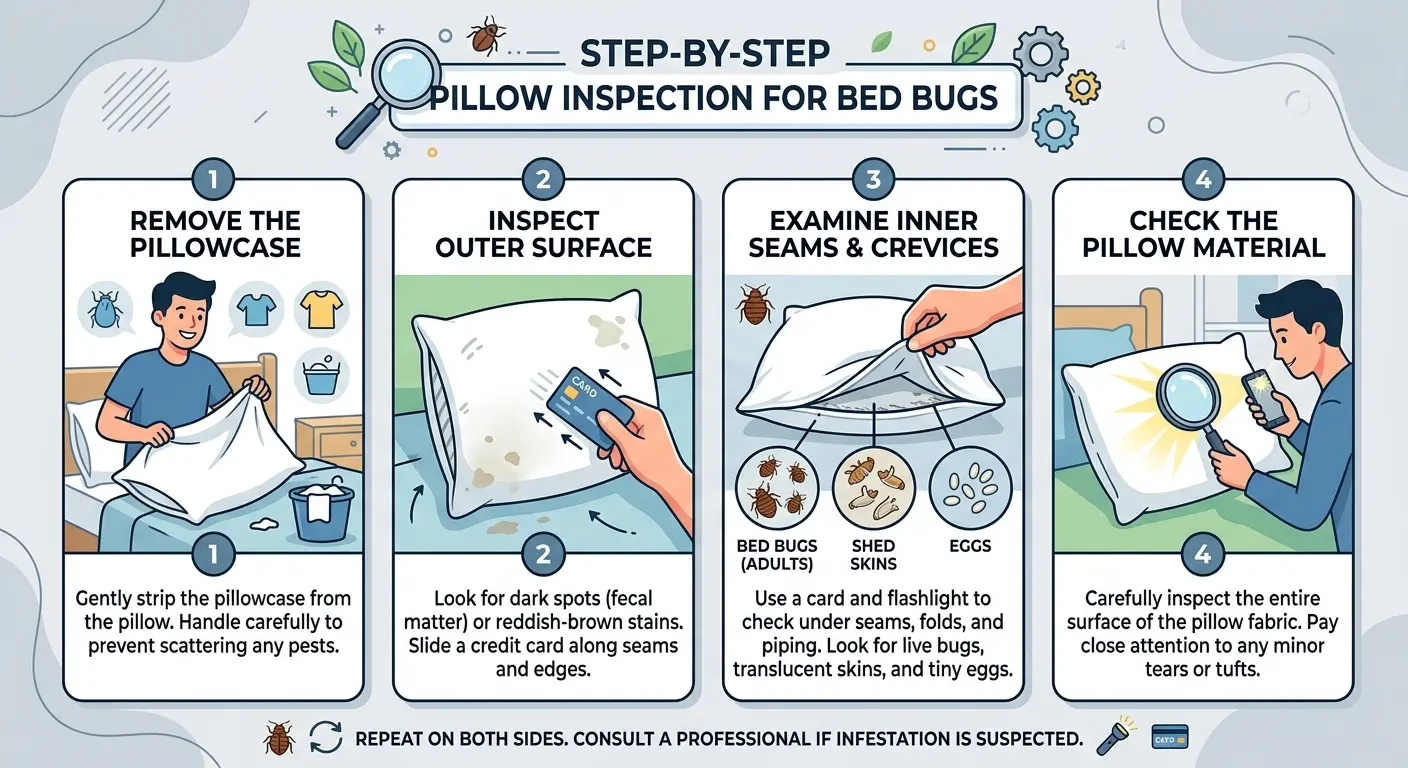
Start by stripping the pillowcase and examining it under bright light, paying special attention to the piping and seams. Then check the pillow itself — unzip any removable covers and run a credit card along the seams to catch hidden bugs or eggs. Look for:
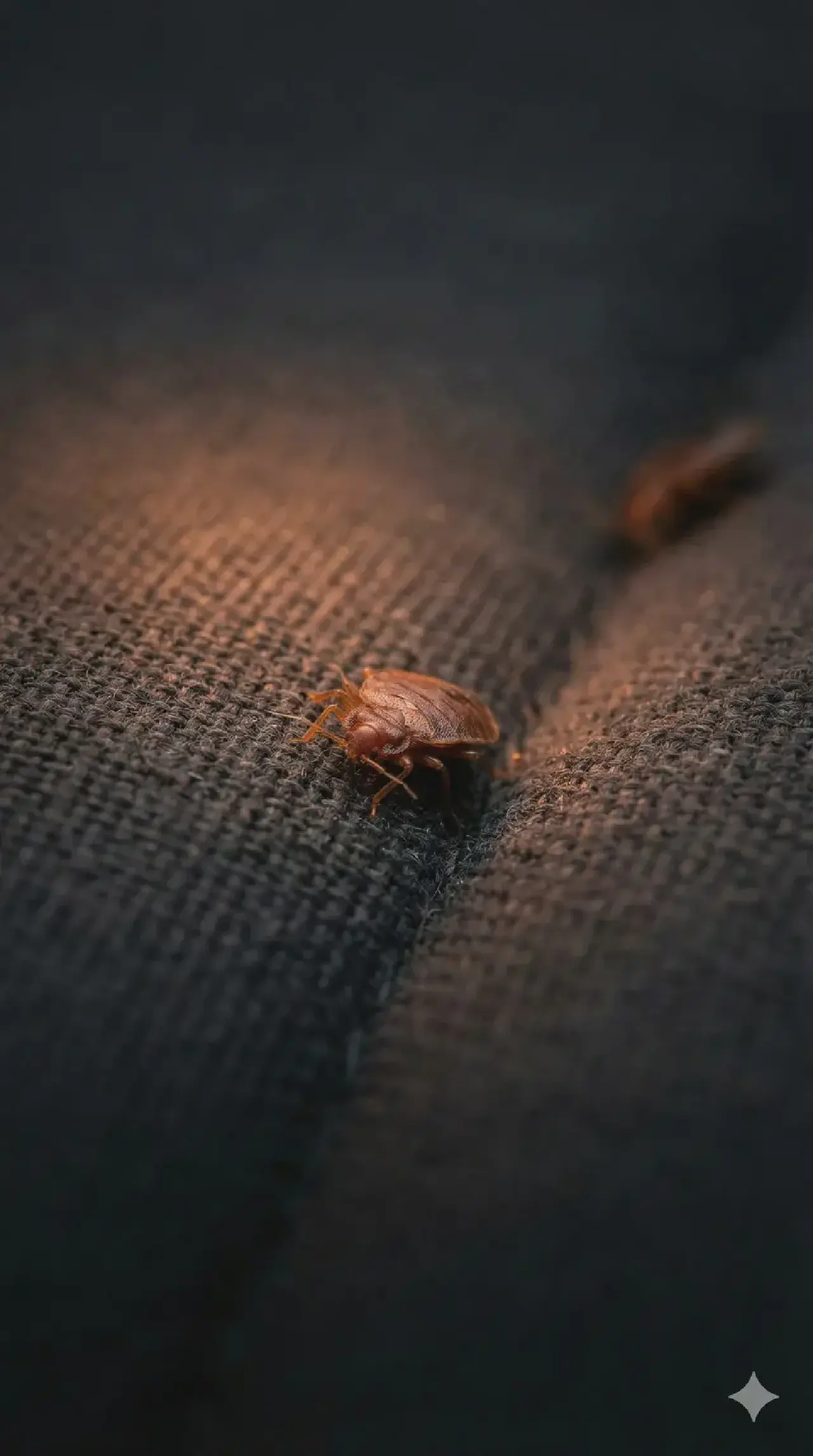
- Live bugs — apple-seed-sized, flat, reddish-brown insects
- Shed skins — translucent, empty exoskeletons
- Tiny white eggs — about 1mm, clustered in crevices
- Musty odor — often described as sweet or like rotting raspberries
The musty smell is a critical clue that many homeowners miss. Bed bugs release alarm pheromones when disturbed, and a heavy infestation produces a distinct, lingering scent. If you notice this odor near your pillow area, act immediately.
What to Do If You Find Bed Bugs in Your Pillows
Once you’ve confirmed signs of bed bugs on pillows, you need to act quickly to prevent spread. Wash all bedding in hot water (at least 120°F) and dry on high heat for 30+ minutes — this kills all life stages. For pillows that can’t be machine-washed, seal them in plastic bags and place them in a freezer at 0°F for four days.
Most guides stop at cleaning, but the Environmental Protection Agency (EPA) emphasizes that washing alone won’t solve an infestation. Bed bugs hide in nearby furniture, baseboards, and even electrical outlets. You need to treat the entire sleeping area — which means identifying the extent of the problem first.
Not sure if those marks are bed bug bites or something else?
Upload a photo to our identifier tool — get a confirmed answer in under 60 seconds.
Can You Save a Pillow With Bed Bugs?
You can save most pillows if you treat them properly. The key is heat — sustained temperatures above 118°F kill bed bugs and their eggs. Run pillows through a hot dryer cycle twice, then vacuum thoroughly and seal in a protective cover for at least a year. However, if the pillow has heavy fecal staining or a strong odor, replacement is safer.
The challenge is that bed bugs are expert hiders. Even after treatment, they can survive in pillow seams or nearby cracks. This is why understanding where bed bugs hide is essential — treating only your pillow while bugs remain in your headboard or curtains guarantees reinfestation.
How to Prevent Bed Bugs From Returning to Pillows
Prevention starts with protective encasements — zippered, bed-bug-proof covers that trap existing bugs and block new ones. Wash pillowcases weekly in hot water, and inspect pillow seams monthly, especially after travel or guest visits. Declutter your bedroom to eliminate hiding spots, and vacuum regularly with a HEPA filter.
Most prevention guides recommend these steps, but they often miss a critical factor: how you detect the problem early. Bed bug bites are unreliable indicators — up to 30% of people show no reaction, according to the CDC. Visual inspection of your pillow is actually your most dependable early warning system.
Still not sure if it's bed bugs or a different insect?
Our AI tool compares your photo against thousands of confirmed cases instantly.
Frequently Asked Questions
What does a bed bug stain on a pillow look like?
Can bed bugs live inside pillow foam?
How fast do bed bug stains appear on pillows?
Are bed bug stains on pillows the same as sweat stains?
Should I throw away a pillow with bed bug stains?
Act Fast to Stop the Spread
Finding bed bugs on your pillows is stressful, but early detection gives you a real advantage. The sooner you confirm the problem, the easier and cheaper the treatment. Don’t wait for bites to multiply or the infestation to spread to your mattress and furniture.
Confirmed bed bugs — what do you actually need to treat them?
Upload one photo and our tool builds your exact treatment kit in under two minutes.