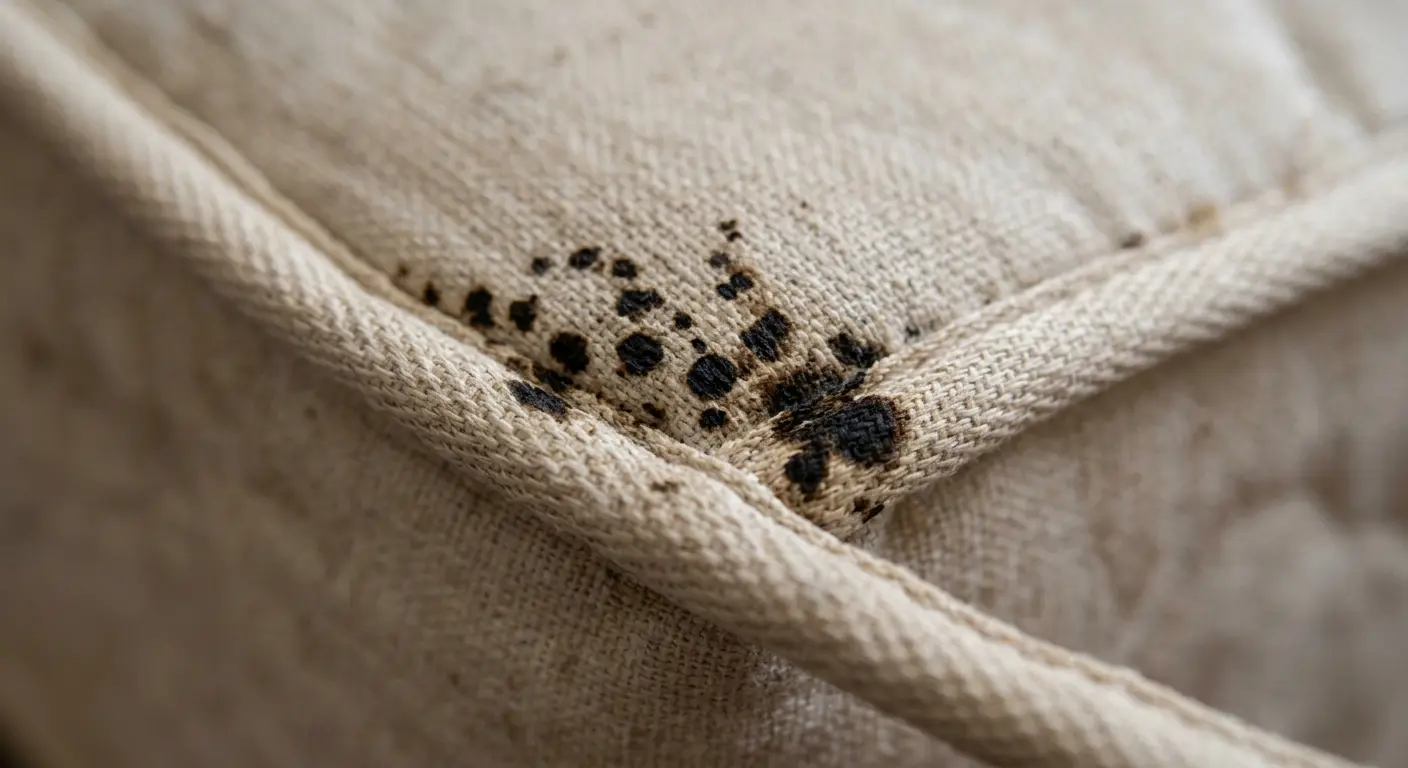
Bed bug feces look like tiny dark spots — roughly the size of a marker dot — ranging from rust-brown to black, often appearing in clusters along mattress seams, headboards, and baseboards. These droppings are essentially digested blood, which is why they leave a reddish smear when wiped with a damp cloth. Learning to identify bed bug excrement accurately is one of the fastest ways to confirm an infestation before it spreads.
Where Do Bed Bug Feces Typically Appear?
Bed bugs are nocturnal feeders that stay close to their host while digesting. Their feces accumulate wherever they hide after feeding. The most common hotspots include:
- Mattress seams and tufts — the piping and stitching provide dark, protected crevices
- Headboard joints and screw holes — wood grain and cracks trap droppings effectively
- Baseboards and wall crevices — especially within 3–6 feet of the bed
- Upholstered furniture — sofas, chairs, and recliners near sleeping areas
Most guides focus on mattress inspection — but research from entomologists at the University of Kentucky shows that headboards harbor significantly more droppings than mattresses in early infestations, because bed bugs prefer vertical surfaces close to the head during feeding.
How to Distinguish Bed Bug Feces from Other Stains
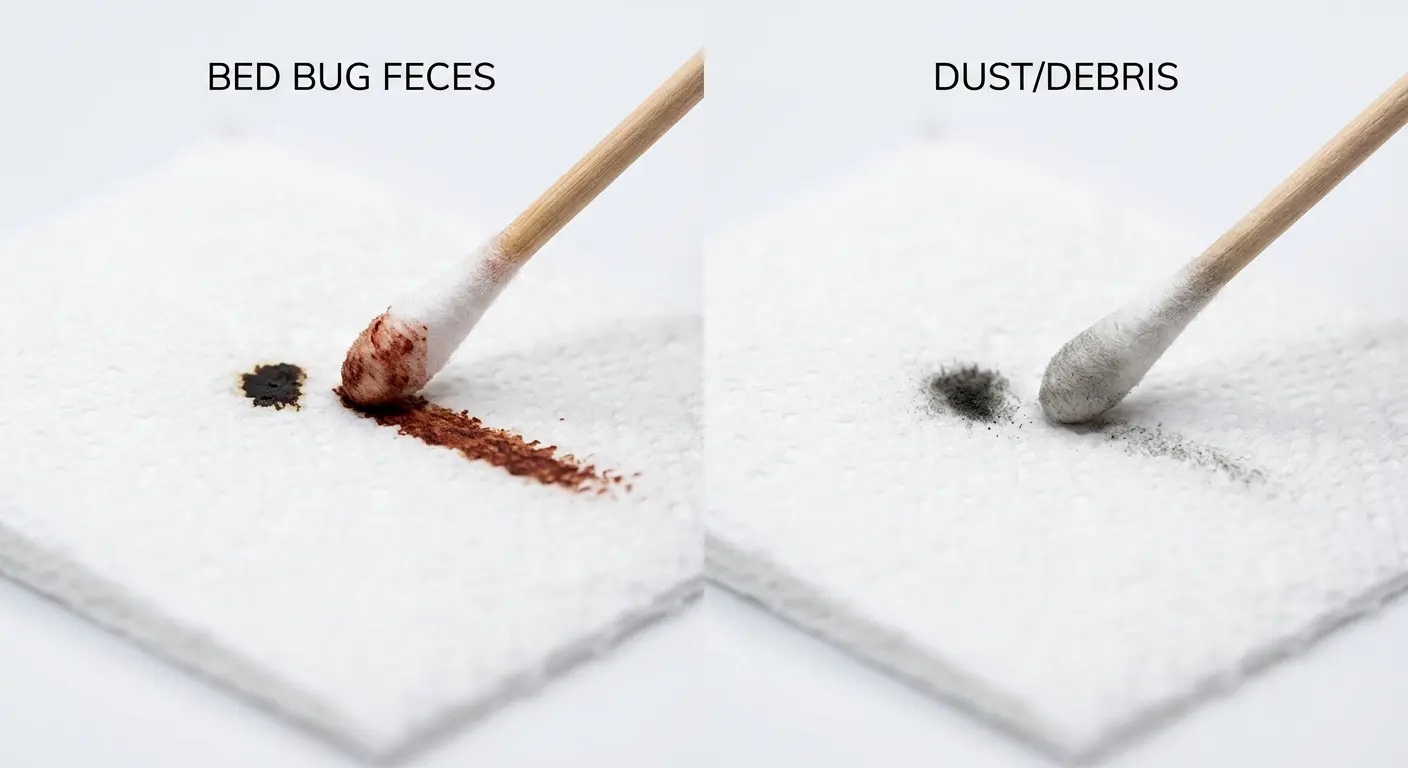
The key identifier is the smear test. Dampen a cotton swab and touch the spot. If it produces a reddish or rust-colored streak, it’s almost certainly bed bug feces — the blood pigment remains visible even after digestion.
Compare this to common look-alikes:
| Stain Type | Appearance | Smear Test Result |
|---|---|---|
| Bed bug feces | Dark brown/black dots, pinhead-sized | Reddish-brown streak |
| Dust or dirt | Gray/brown, irregular | No color transfer |
| Mold | Green/black patches, fuzzy edges | No color transfer |
| Felt-tip pen marks | Uniform dark color | Slight smudge, no red tint |
Another non-obvious insight: bed bug feces are liquid when first excreted, which means they soak into fabric and wood rather than sitting on top. This absorption creates a dark halo around each spot — a feature most pest control guides overlook when teaching identification.
What Does Bed Bug Excrement Look Like on Different Surfaces?
The appearance shifts depending on where the droppings land:
- On fabric (mattresses, sheets): Droppings soak in, creating small ink-like dots with feathered edges. Multiple feedings create overlapping clusters that resemble a felt-tip pen mark.
- On wood (headboards, baseboards): Feces dry as raised, crusty spots that can be scraped off. They often collect in wood grain grooves and screw holes.
- On hard surfaces (walls, plastic): Droppings appear as glossy black dots that smear easily when touched.
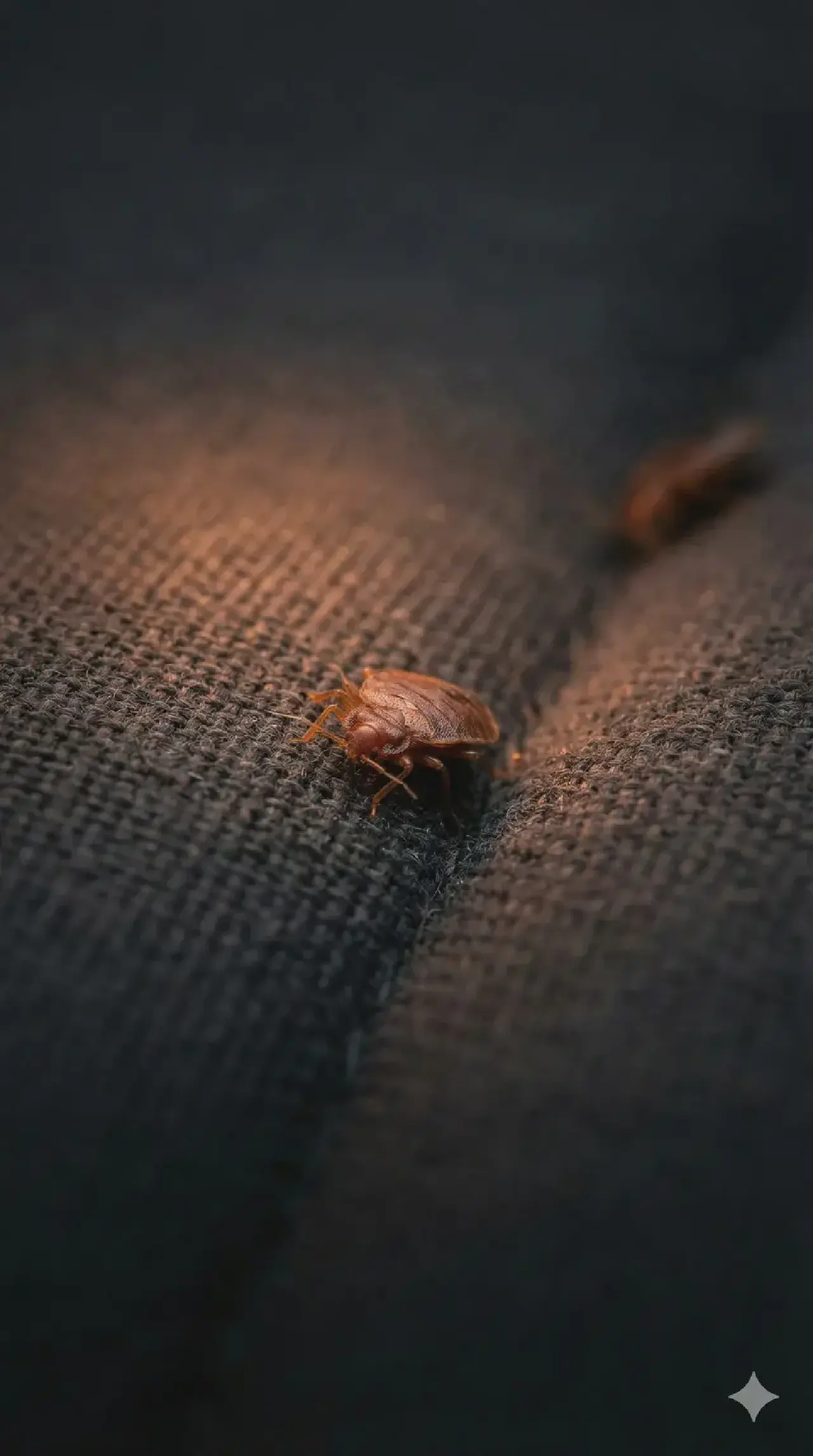
Not sure if those marks are bed bug feces or something else?
Upload a photo to our identifier tool — get a confirmed answer in under 60 seconds.
Why Accurate Feces Identification Matters
Misidentifying bed bug feces leads to two costly errors: treating a non-infestation with expensive pesticides, or ignoring a real infestation while it multiplies. Bed bugs can produce 200–500 eggs in a lifetime, and each female lays 1–5 eggs daily — so early detection through feces identification directly impacts how quickly you can contain the problem.
The Centers for Disease Control and Prevention lists fecal spots as a primary sign of bed bug activity, alongside shed skins and live insects. If you find feces but no live bugs, continue monitoring — nymphs are tiny and easily missed.
How to Confirm Your Findings
Beyond the smear test, look for these corroborating signs:
- Live bugs — check seams and crevices at night with a flashlight
- Shed skins — pale, translucent exoskeletons near droppings
- Blood spots — small rust-colored stains from crushed, engorged bugs
- Musty odor — a sweet, sickly smell from pheromones
If you’ve found feces in multiple locations, you’re likely dealing with an established infestation rather than a single stray bug. For a full breakdown of related signs, check our guide on bed bug droppings and stains or compare with what does bed bug poop look like for additional visual references.
Still not sure if it's bed bug feces or a different insect?
Our AI tool compares your photo against thousands of confirmed cases instantly.