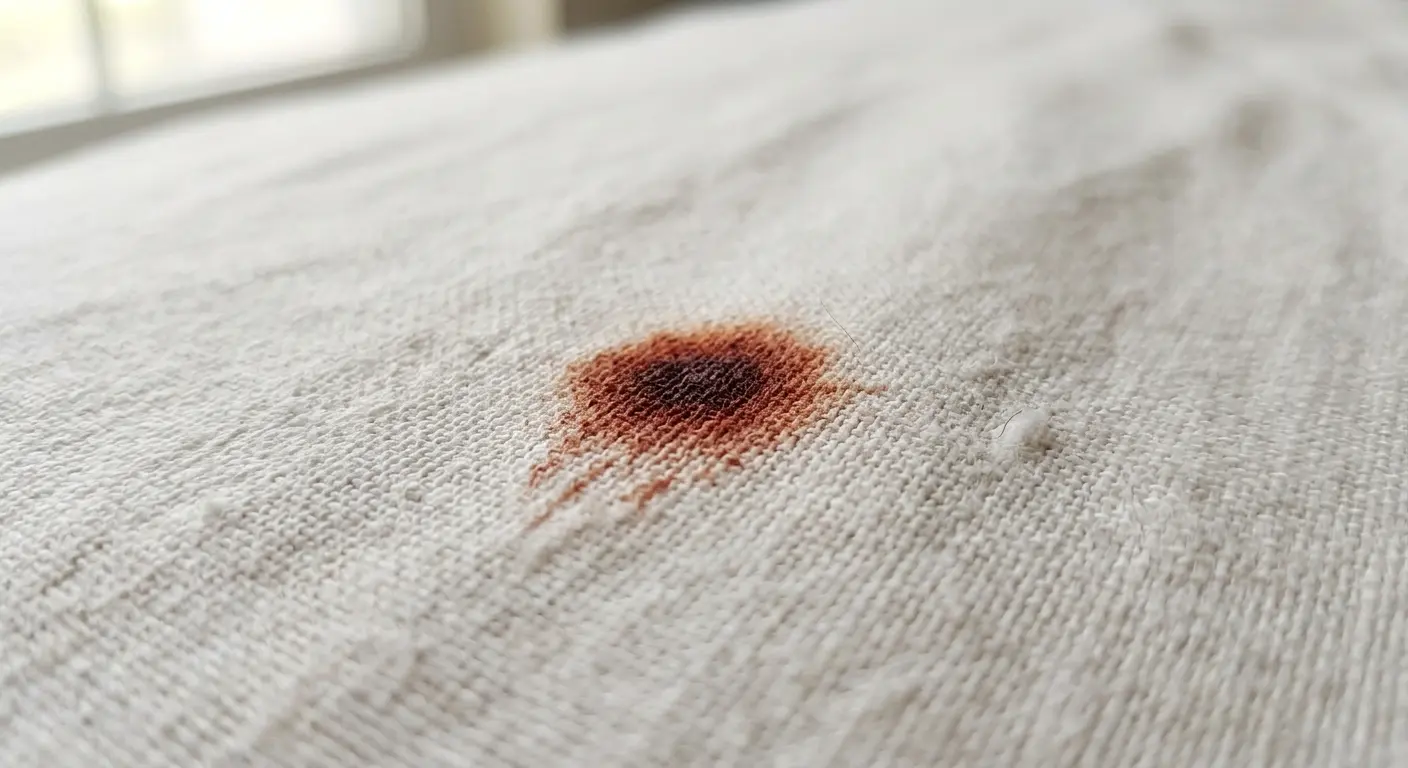
Bed bug blood stains are small, rust-colored or reddish spots on your sheets, pillowcases, or pajamas — typically 1–2 mm wide and appearing near where you sleep. These stains come from two sources: a bed bug accidentally crushed while you move in your sleep, or blood seeping from a bite after the bug finishes feeding. Unlike the dark, smeared fecal spots from digested blood, fresh blood stains are brighter and often show a darker center that fades outward — a pattern that distinguishes them from other marks.
What Do Bed Bug Blood Stains Look Like?
Bed bug blood stains have a distinct appearance that sets them apart from other household marks. Look for these characteristics:
- Color: Rust-red, reddish-brown, or bright red when fresh
- Size: Tiny spots between 1–2 mm wide, sometimes forming small streaks
- Location: Concentrated along mattress seams, near the headboard, or where your body rests
- Pattern: A darker center that fades outward — a hallmark of blood soaking into fabric
Most guides describe these as simple red dots, but the reality is more specific. When a bed bug is crushed, it leaves one blot of uniform color. Stains from feeding sites, however, show that darker-center pattern because blood pools at the puncture point before spreading. If you notice multiple stains with this concentric pattern, that’s a strong indicator of bed bugs rather than random accidents.
Blood Stains vs. Fecal Spots: Key Differences
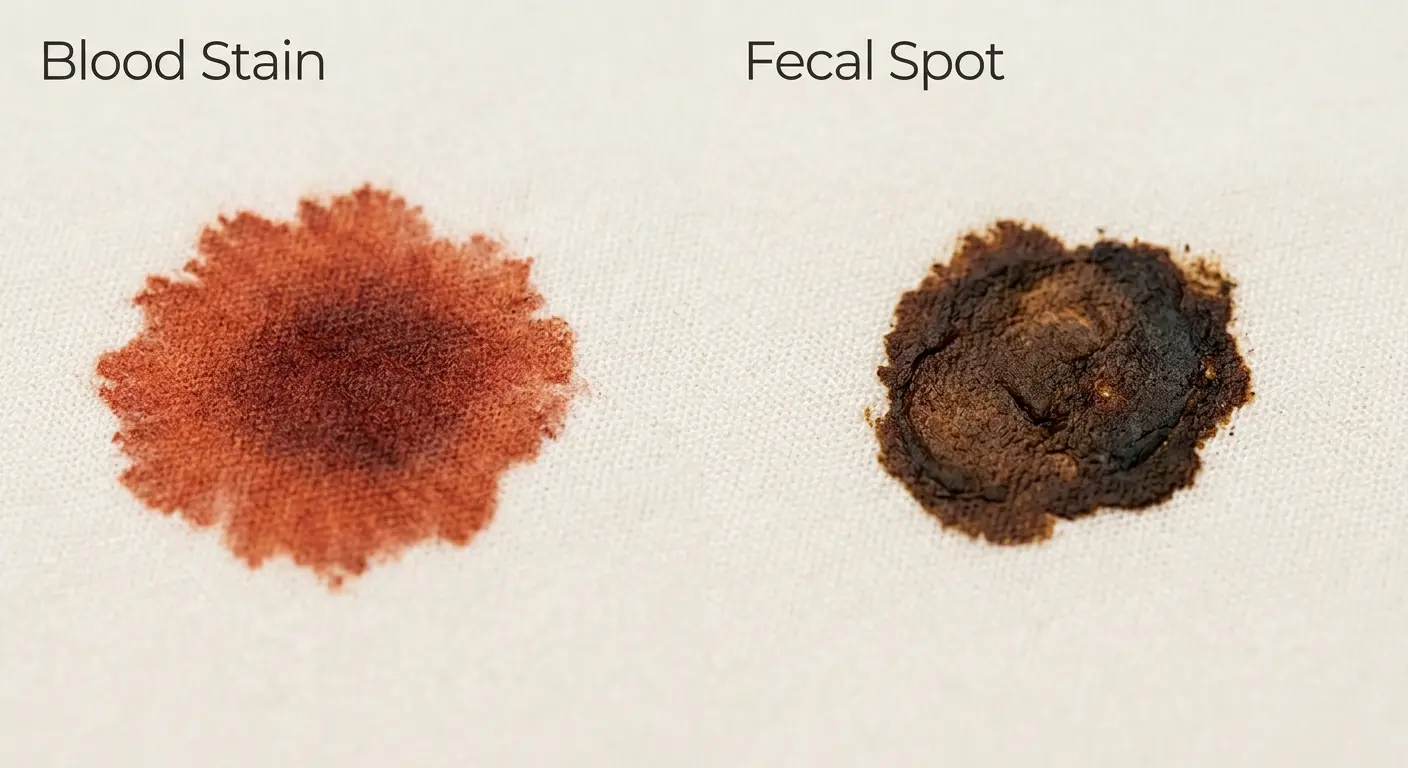
Understanding the difference between blood stains and fecal matter is critical for accurate identification. Bed bug droppings are digested blood, so they appear dark brown or black and smear when wiped with a damp cloth. Fresh blood stains stay reddish and don’t smear in the same way.
| Stain Type | Color | Texture | Location |
|---|---|---|---|
| Blood stain | Rust-red to bright red | Absorbs into fabric, darker center | Near seams, headboard, body contact points |
| Fecal spot | Dark brown to black | Smears when damp, slightly raised | Clustered in seams, crevices, mattress edges |
If you see both types together — reddish blood spots plus dark fecal smears — that combination is a confirmed sign of an active infestation, according to pest control professionals at Orkin and Terminix.
Where to Check for Bed Bug Blood Stains on Pillows
Your pillow is a prime location for blood stains because bed bugs feed on exposed skin — your face, neck, and shoulders. Check these specific areas:
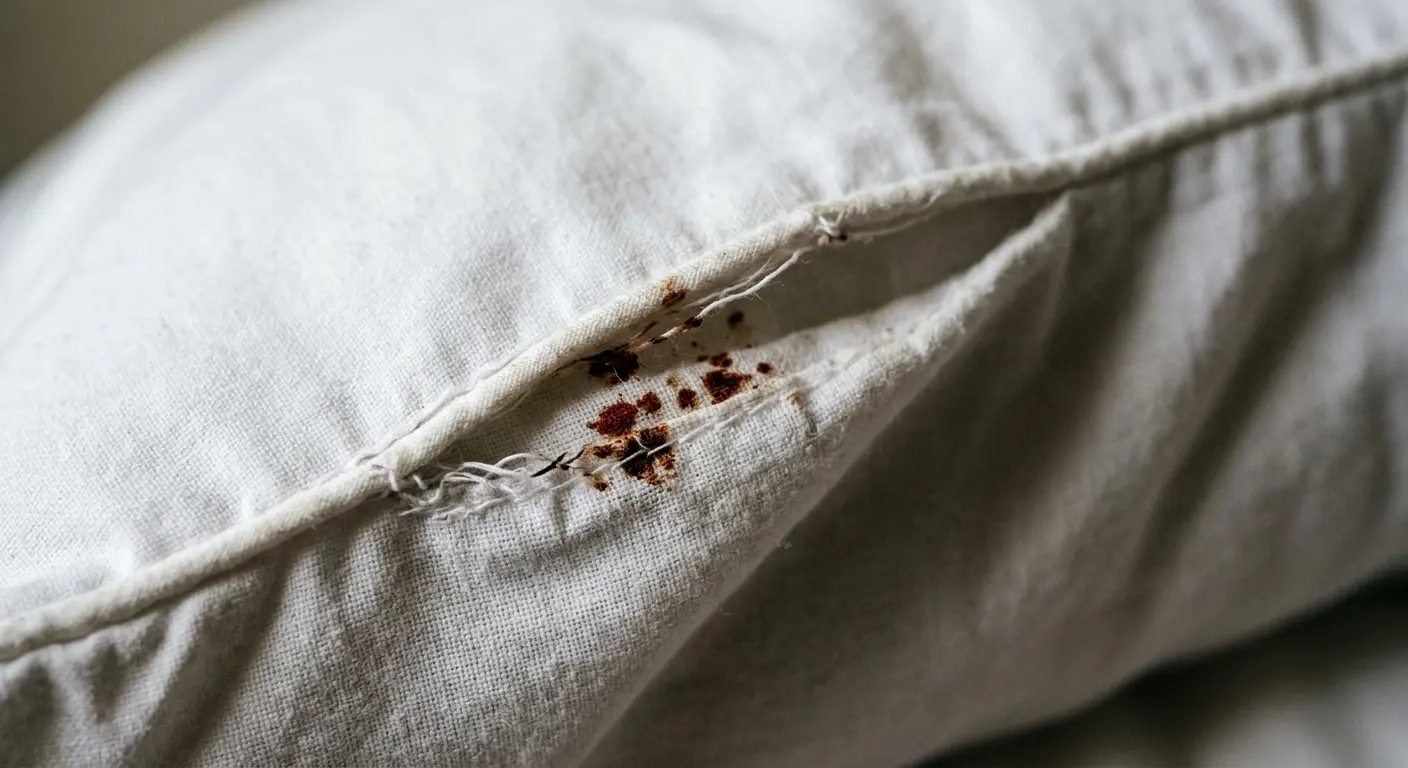
- Pillow seams and piping: Bed bugs hide in the folds and get crushed when you shift your head
- Pillowcase corners: Stains often collect where your head rests most
- Under the pillow: Blood spots may transfer to the pillowcase’s underside or the sheet beneath
Most people check only the visible pillow surface, but the underside and seams are where bed bugs actually get trapped. Flip your pillow and inspect the stitching carefully — that’s where you’ll find the telltale rust-colored marks.
Other Signs That Confirm Bed Bugs
Blood stains alone aren’t enough to confirm an infestation. Look for these accompanying signs:
- Fecal spots: Dark, smeared marks near the blood stains
- Shed skins: Translucent, pale exoskeletons tucked into mattress folds
- Pearl-white eggs: Tiny, oval-shaped eggs in clusters along seams
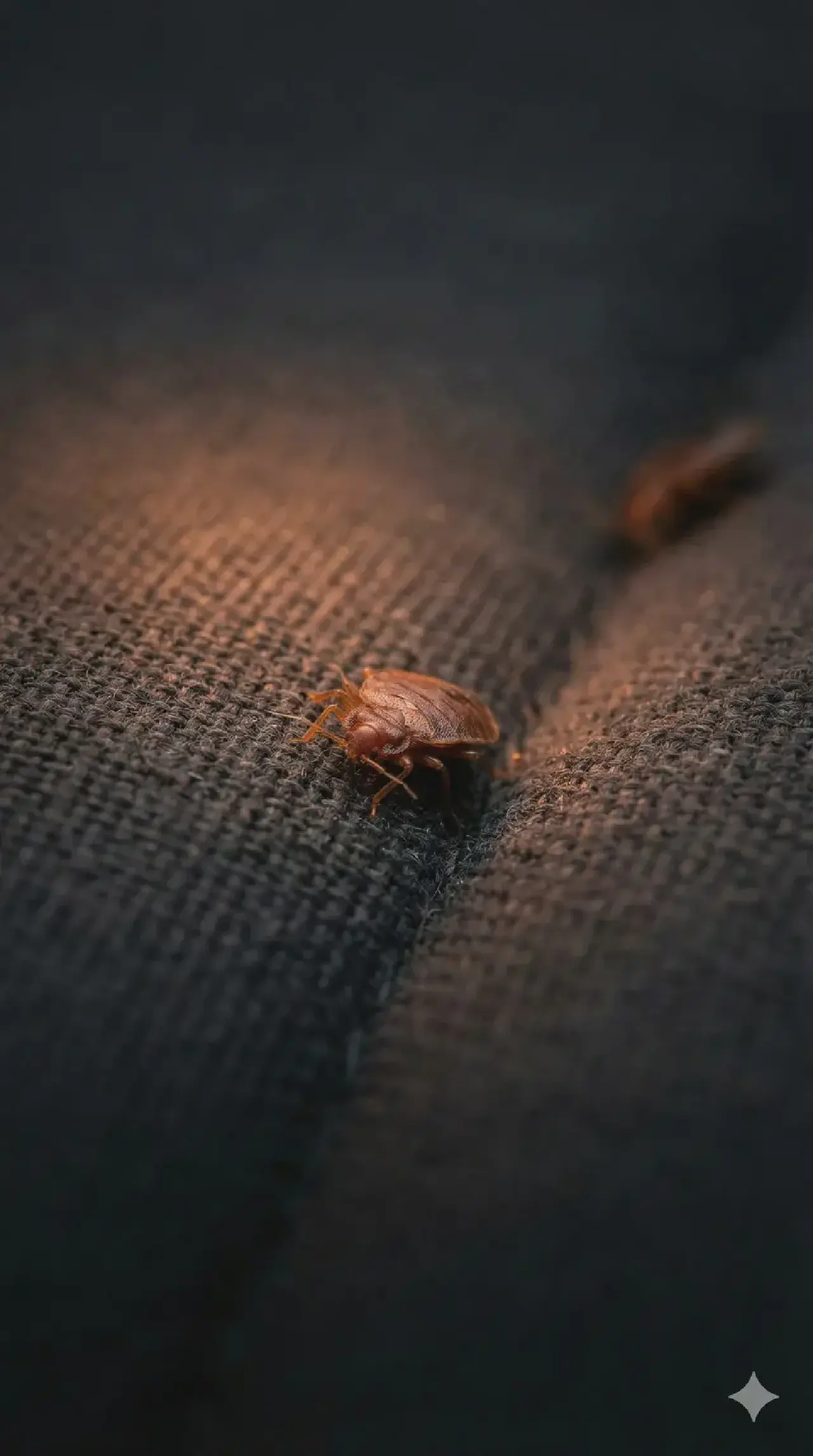
- Live bugs: Check the mattress edges and box spring at night with a flashlight
The Environmental Protection Agency (EPA) notes that a combination of signs — not just one — confirms an active bed bug problem. If you find blood stains plus any two other indicators, you’re dealing with an infestation that needs treatment.
Not sure if those marks are bed bug bites or something else?
Upload a photo to our identifier tool — get a confirmed answer in under 60 seconds.
How to Test a Suspicious Stain
If you’re unsure whether a stain is from bed bugs, run a simple test. Dampen a white cloth and gently press it on the spot. Bed bug fecal matter will smear and transfer to the cloth, while dried blood stains remain mostly intact. This quick check helps you distinguish between the two without needing a microscope.
Another approach: examine the stain’s edges. Blood that soaked into fabric from a bite site shows feathered edges as it spreads. Fecal spots, by contrast, have more defined borders because the digested blood is thicker.
What to Do After Finding Blood Stains
Finding blood stains on your sheets is unsettling, but acting quickly limits the infestation’s spread:
- Strip your bed immediately — remove all linens and place them in sealed plastic bags
- Wash in hot water — use the hottest setting (at least 120°F) and dry on high heat for 30+ minutes
- Vacuum thoroughly — focus on mattress seams, box spring, and baseboards
- Inspect the bed frame — check cracks and crevices for live bugs and eggs
- Consider a mattress encasement — this traps any remaining bugs and prevents new bites
Do not move your mattress to another room — this spreads the infestation. Keep everything contained until you’ve confirmed the extent of the problem.
Still not sure if it's bed bugs or a different insect?
Our AI tool compares your photo against thousands of confirmed cases instantly.
When to Escalate Treatment
If you’ve confirmed blood stains plus other signs, follow our step-by-step treatment plan and use targeted tools from our treatment kit to reach hidden bugs and eggs in walls, furniture, and other hard-to-access areas. DIY cleaning and over-the-counter options can work for very early, limited infestations, but more extensive problems usually require escalating to multi-step, professional‑grade approaches that treat both visible bugs and hidden sites.
Early detection — catching stains within the first week — improves the chance that thorough cleaning and over‑the‑counter treatments will succeed. The key is acting before the infestation spreads beyond your bedroom.
Frequently Asked Questions
Do bed bug blood stains wash out of sheets?
Can you see bed bug blood stains on dark sheets?
How long do bed bug blood stains last?
Do bed bugs leave blood stains every night?
Are blood stains from bed bugs dangerous?
Bottom Line
Bed bug blood stains are small, rust-colored spots on your bedding — usually 1–2 mm wide with a darker center that fades outward. Check your pillow seams, mattress edges, and the area near your headboard. If you find blood stains alongside fecal spots or shed skins, you have an active infestation that requires immediate action. Wash everything in hot water, vacuum thoroughly, and use our treatment guidance and kits to escalate treatment if the problem persists.
Confirmed bed bugs — what do you actually need to treat them?
Upload one photo and our tool builds your exact treatment kit in under two minutes.