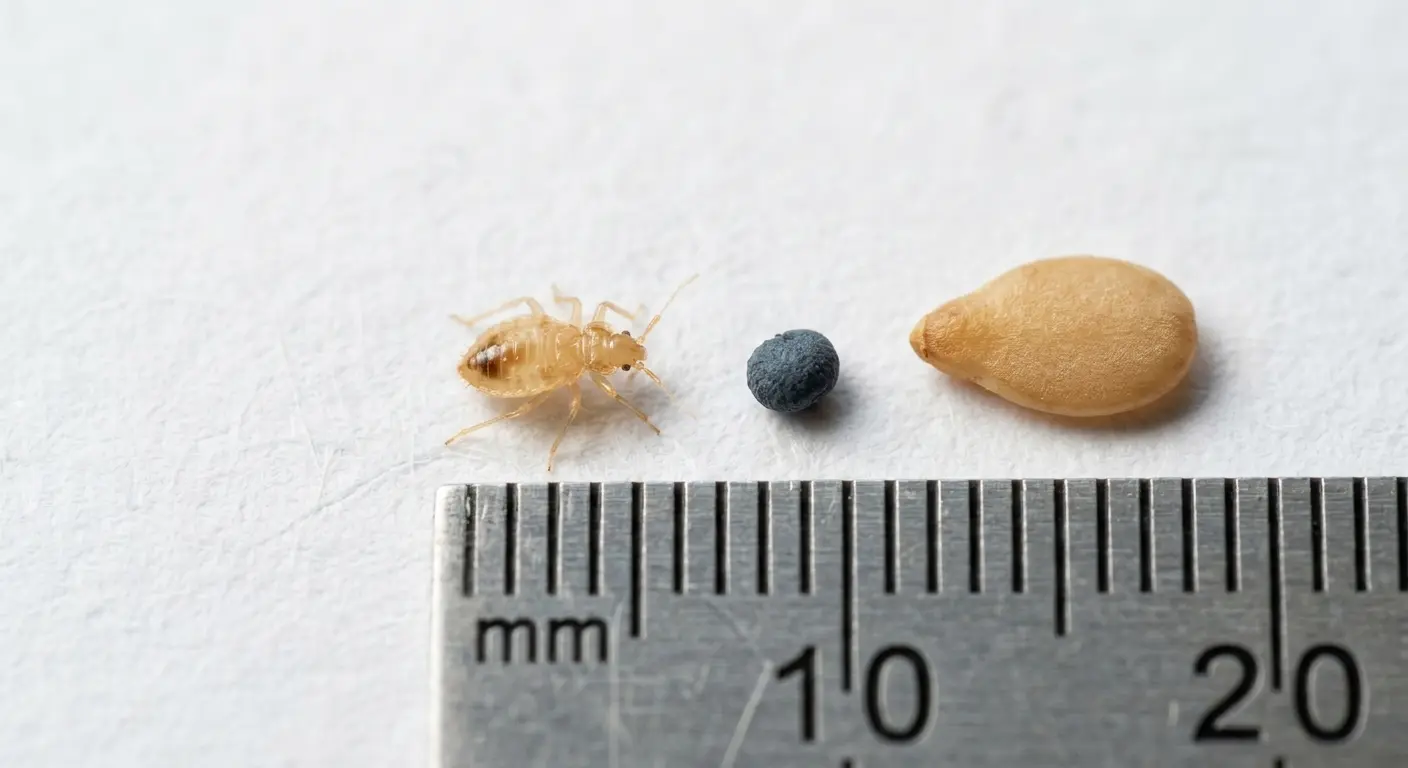
Baby bed bugs measure just 1.5 to 4 millimeters long — roughly the size of a poppy seed to a sesame seed. That’s small enough to hide in seams, creases, and fabric folds without you ever noticing them.
Here’s the exact size breakdown at each nymph stage, how to tell them apart from other tiny pests, and what to do if you suspect they’re in your home.
What Size Are Baby Bed Bugs at Each Stage?
Bed bug nymphs go through five molting stages before reaching adulthood. Each stage gets slightly larger:

| Stage | Size | Visual Comparison |
|---|---|---|
| 1st instar | 1.5mm | Poppy seed |
| 2nd instar | 2mm | Sesame seed |
| 3rd instar | 2.5mm | Fleck of pepper |
| 4th instar | 3mm | Uncooked rice grain |
| 5th instar | 4mm | Small apple seed |
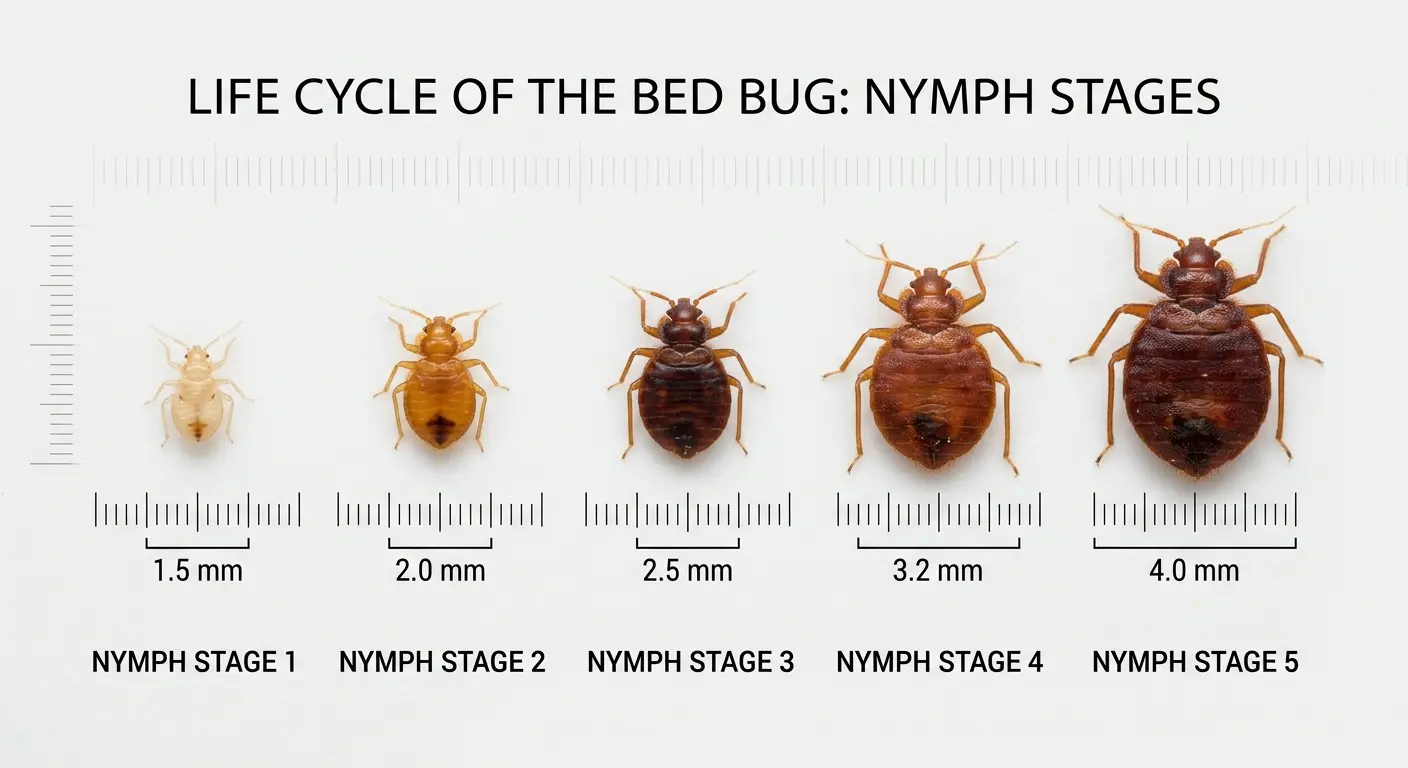
According to the US EPA’s bed bug life cycle guide, nymphs are “a bit smaller” than adults and appear translucent or whitish yellow. After feeding, they turn reddish-brown as their bodies fill with blood.


Can You See Baby Bed Bugs With the Naked Eye?
Yes — but barely. First-instar nymphs at 1.5mm are at the very edge of human visual acuity. You can see them, but only if you’re looking directly at them with good lighting and knowing exactly what to search for.
Most guides say you’ll spot them on your mattress — but that’s rarely how it happens. The reality is that nymphs hide deep inside seams, behind headboards, and in box spring crevices. You’re far more likely to notice their fecal spots (tiny dark dots) or shed skins before you ever see a live nymph.
If you feel something crawling on you at night, it’s probably not a bed bug nymph. They’re too small and light to trigger the nerve receptors in your skin that detect movement.
How to Tell Baby Bed Bugs Apart From Other Tiny Insects
Baby bed bugs are often confused with several other household pests. Here’s what distinguishes them:
- Booklice — slightly smaller (1–2mm), pale gray, and prefer humid areas like bathrooms
- Carpet beetle larvae — similar size but covered in bristly hairs
- Flea larvae — worm-like with no visible legs, not oval-shaped
- Spider mites — rounder and typically red or green
The key identifier: bed bug nymphs have a flat, oval body with six legs and a distinct head. They move slowly and deliberately, unlike fleas which jump or booklice which scurry quickly.
Why Size Makes Early Detection Difficult
The tiny size of baby bed bugs creates a serious detection problem. A single pregnant female can lay 200–500 eggs in her lifetime, and each nymph reaches adulthood in about 5 weeks under warm conditions. By the time you see adult bugs, you’re likely dealing with a well-established infestation.
Most people only discover bed bugs after they’ve been bitten repeatedly — and even then, the bites are often mistaken for mosquito or spider bites. If you’re waking up with unexplained itchy marks, the sooner you identify the source, the better. For a closer look at what these immature pests look like at different stages, check our guide on what does a baby bed bug look like.
Not sure if those marks are bed bug bites or something else?
Upload a photo to our identifier tool — get a confirmed answer in under 60 seconds.
What to Do If You Find a Baby Bed Bug
If you’ve spotted a nymph, you already have an active infestation. Here’s your immediate action plan:
- Confirm the species — compare against photos of nymphs at different stages
- Inspect thoroughly — check mattress seams, box springs, headboards, and baseboards
- Don’t panic-buy pesticides — many over-the-counter sprays are ineffective against nymphs
- Confirm identification using our photo tool, then follow our step‑by‑step treatment plan and recommended products for targeted removal. Our treatment guide explains when heat, targeted products, and follow‑up inspections are appropriate.
The earlier you catch bed bugs, the easier and cheaper they are to eliminate. A single nymph can be dealt with far more easily than a full infestation.
Still not sure if it's bed bugs or a different insect?
Our AI tool compares your photo against thousands of confirmed cases instantly.
Frequently Asked Questions About Baby Bed Bug Size
How big is a baby bed bug in millimeters?
Can baby bed bugs be seen without a magnifying glass?
How long does it take a baby bed bug to grow to adult size?
Do baby bed bugs bite?
Are baby bed bugs harder to kill than adults?
Bottom Line
Baby bed bugs are 1.5–4mm — visible but easily missed. Their tiny size, translucent coloring, and hiding behavior make early detection challenging. If you suspect bed bugs, act quickly and confirm your suspicion with a photo identification before starting treatment.
For more details on nymphs at different stages, check our guide to baby bed bugs and nymphs.