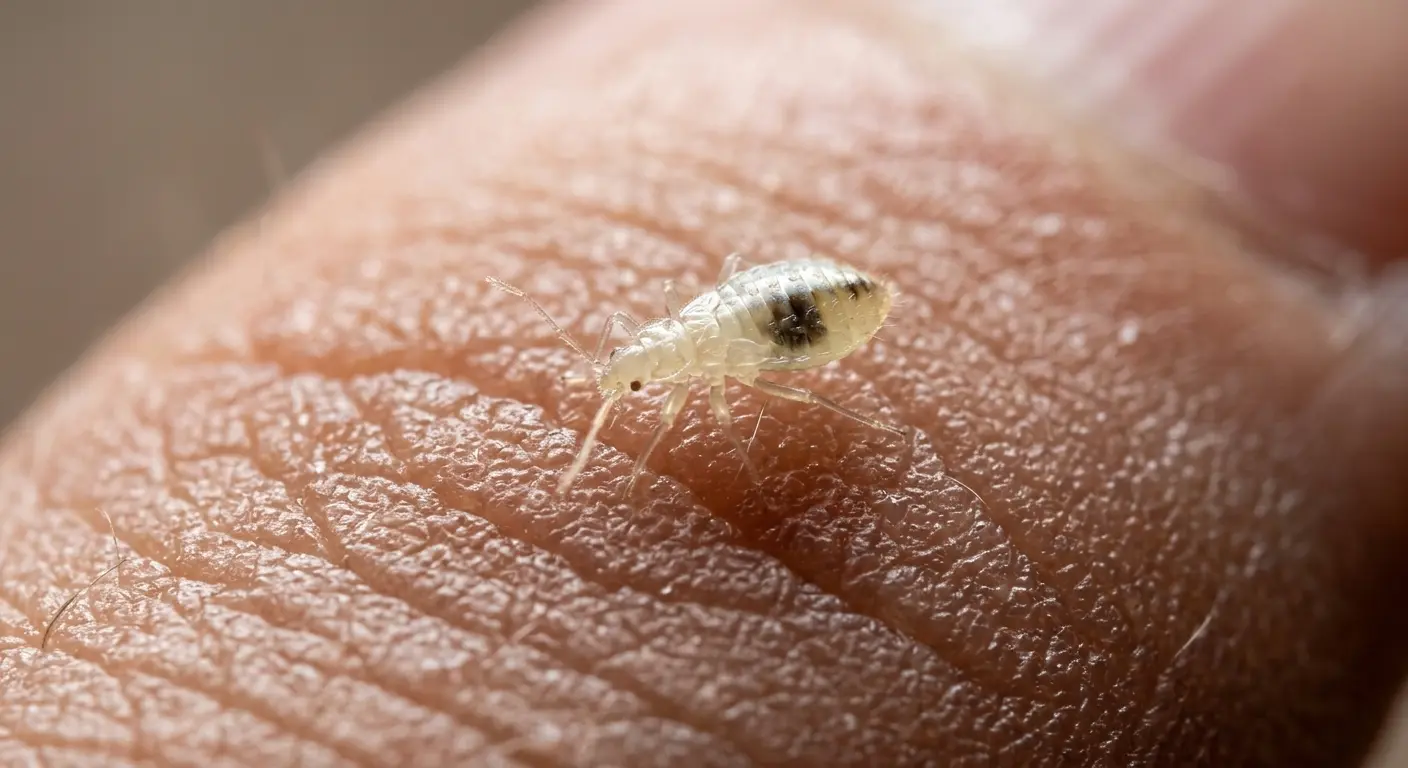
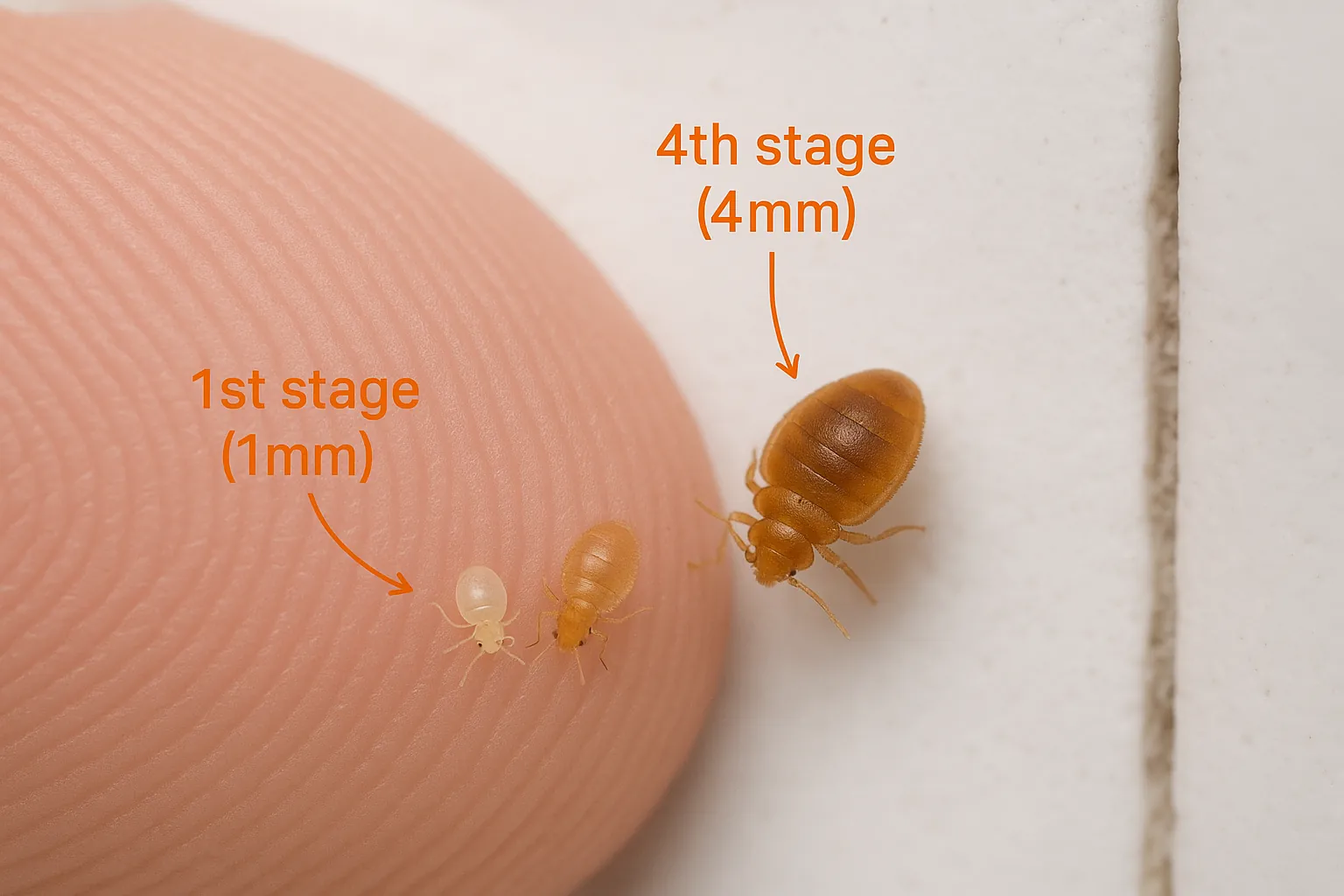
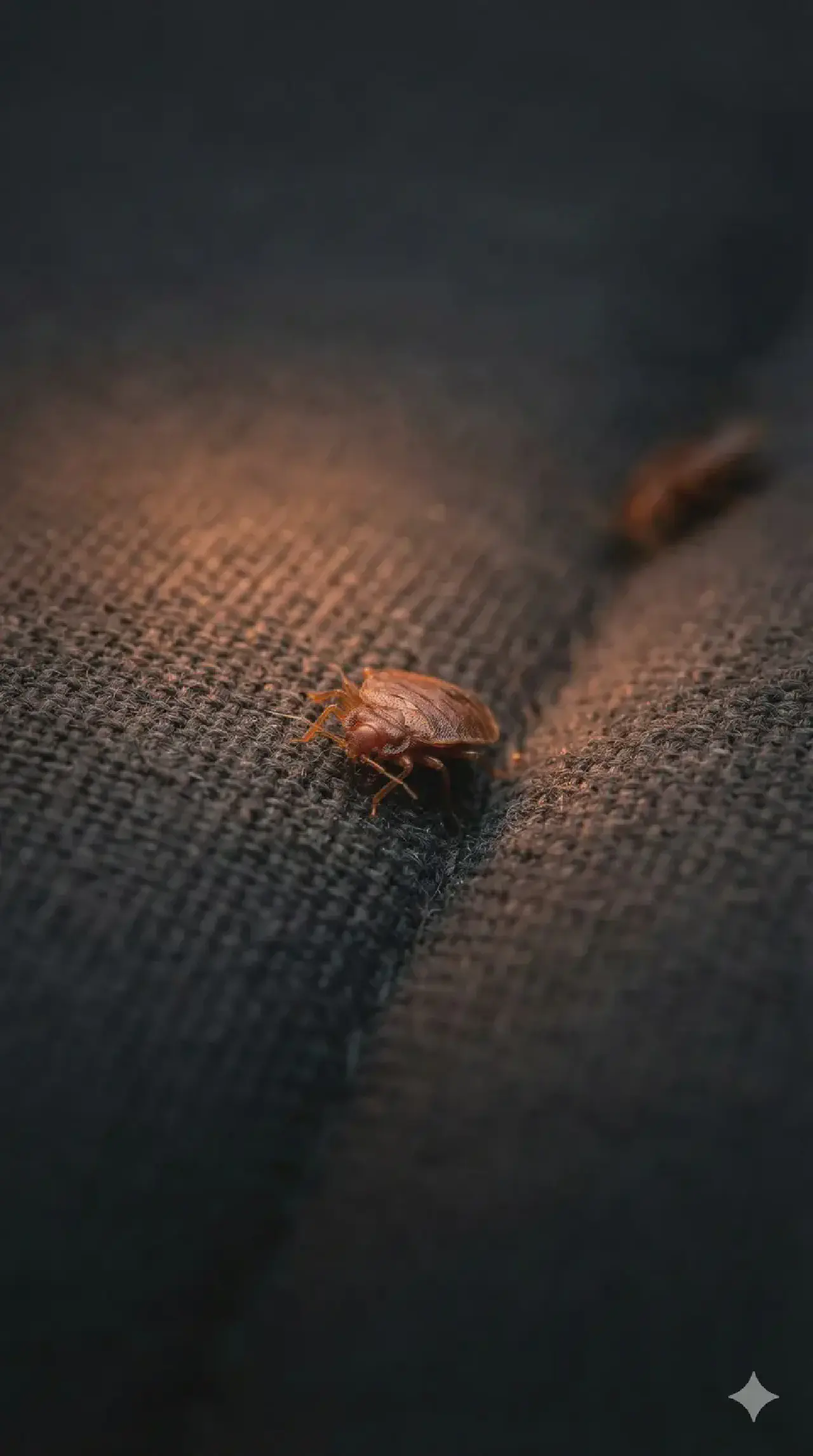
A baby bed bug looks like a miniature adult bed bug — same flat oval body, six legs, and two antennae — but it’s translucent whitish-yellow and roughly the size of a poppy seed (1–4 mm). Because nymphs don’t undergo metamorphosis, they resemble adults at every stage, just smaller and lighter in color. The most reliable way to identify a young bed bug is by its pale, almost see-through appearance before feeding, which shifts to a bright red or dark brown after a blood meal.
What Are the Physical Features of Baby Bed Bugs?
Baby bed bugs, or nymphs, share the same anatomy as adults: a flat oval abdomen, six legs, two thin antennae, and three distinct body parts (head, thorax, abdomen). According to the US EPA’s bed bug appearance guide, nymphs are “a bit smaller and translucent or whitish yellow” compared to their adult counterparts.

The key visual difference comes down to size and color:
| Feature | Baby Bed Bug (Nymph) | Adult Bed Bug |
|---|---|---|
| Size | 1–4 mm (poppy seed to sesame seed) | 4.5–7 mm (apple seed) |
| Color | Translucent, whitish-yellow, or pale straw | Brown to reddish-brown |
| Body Shape | Flat and oval | Flat or balloon-like after feeding |
| Antennae | 2 thin antennae | 2 thin antennae |
| Legs | 6 legs | 6 legs |
Most guides say baby bed bugs are simply “smaller versions” of adults — but the Virginia Department of Agriculture’s identification guide points out a critical detail: the molted skins nymphs shed look nearly identical to the bugs themselves. These empty shells are translucent and same-shaped, which often confuses people into thinking they’re seeing live baby bed bugs when they’re actually looking at exoskeletons.

How Does Color Change After Feeding?
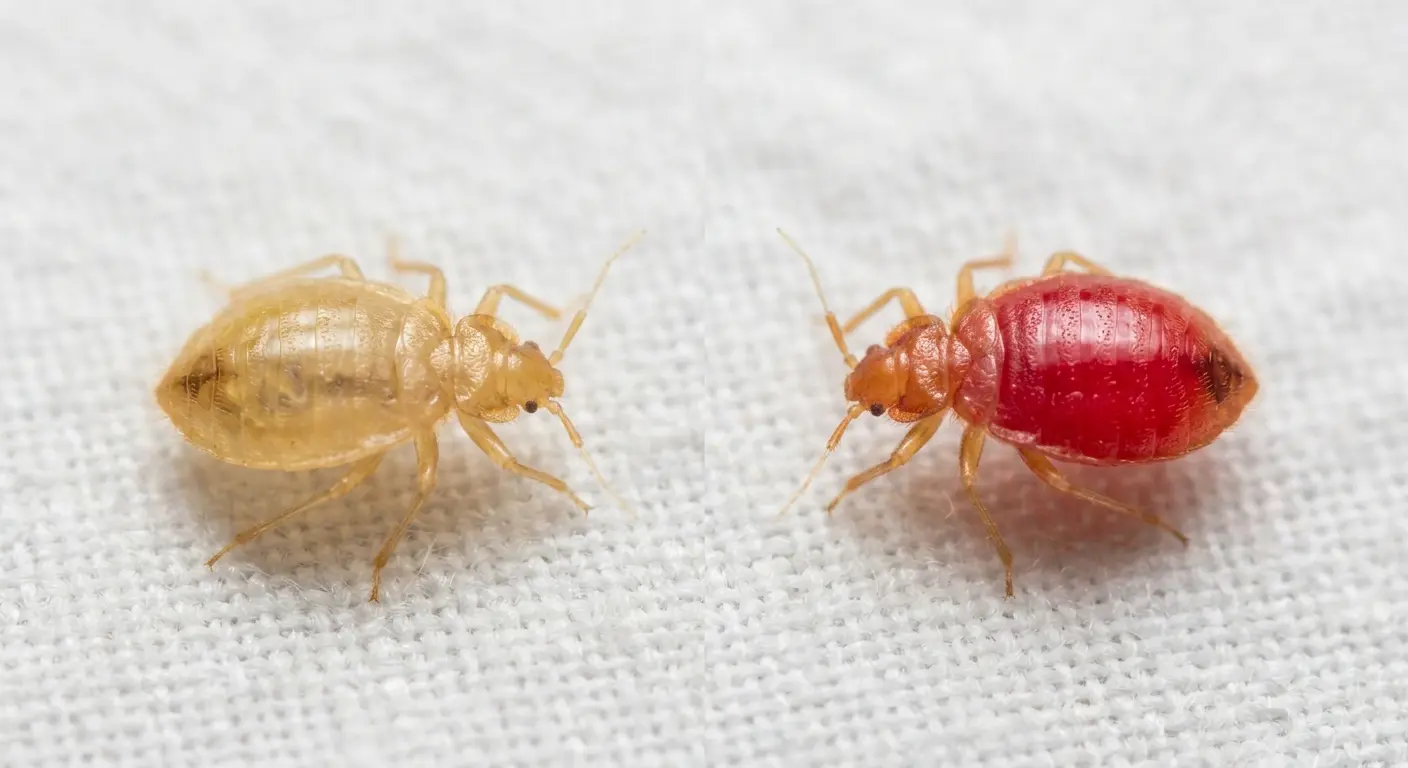
A baby bed bug’s color changes dramatically depending on whether it has recently fed. Unfed nymphs appear translucent or pale yellow, making them nearly invisible against light-colored mattress seams. After a blood meal, the abdomen becomes bright red or dark burgundy as blood fills the digestive tract — this color is visible through their semi-transparent exoskeleton.
This feeding cycle repeats five times as nymphs grow, requiring a blood meal before each molt. After each molt, the baby bed bug is larger, slightly darker, and closer to adult coloration. This is why you might see a mix of pale and reddish nymphs in the same infestation — they’re simply at different stages of their feeding cycle.
How Can You Tell Baby Bed Bugs Apart from Other Pests?
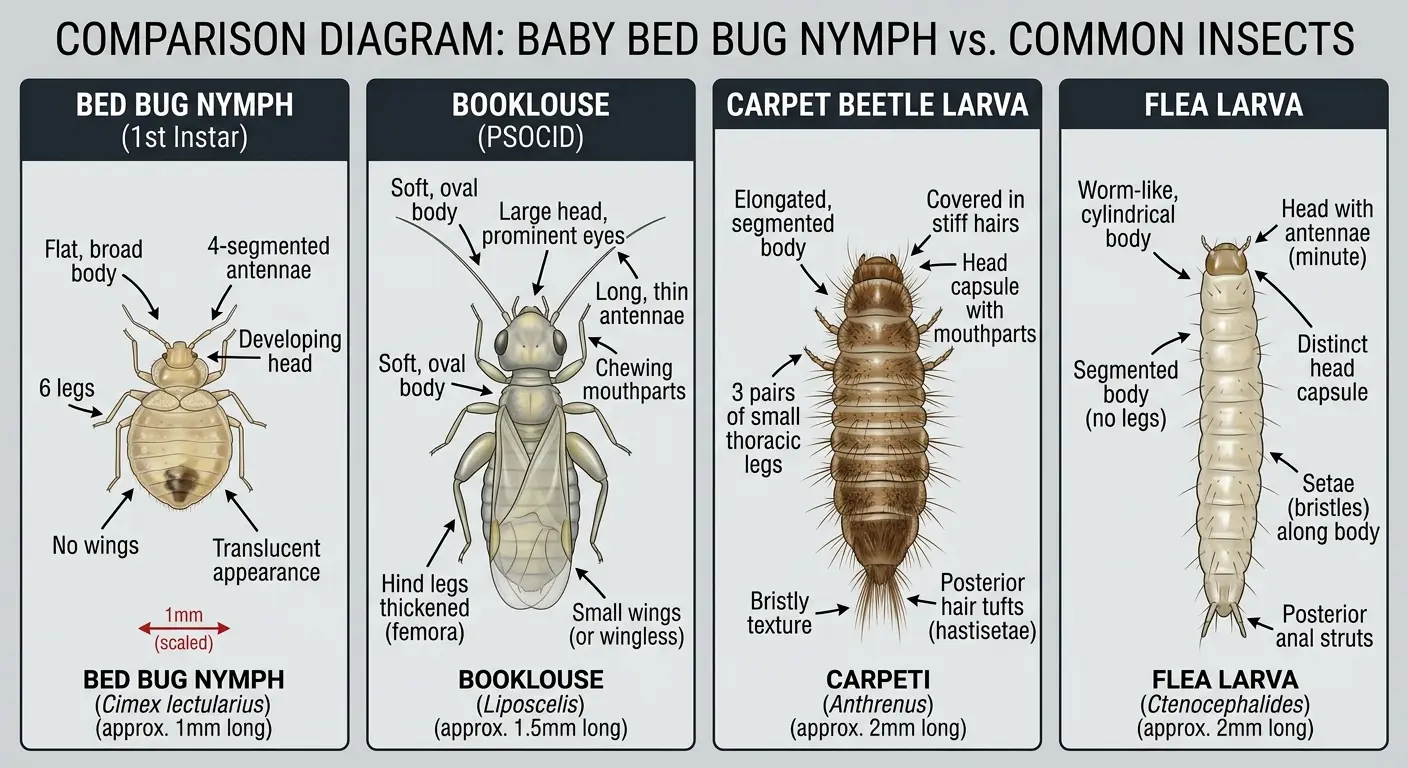
Baby bed bugs are often mistaken for other tiny household pests. Here’s how to differentiate them:
- Booklice: Similar size and pale color, but booklice have longer, more elongated bodies and no visible antennae segments.
- Carpet beetle larvae: These are fuzzy or hairy, while bed bug nymphs are smooth and oval.
- Spider mites: Microscopic and typically red; bed bug nymphs are visible to the naked eye and move slowly.
- Flea larvae: Worm-like with no distinct legs; bed bug nymphs have six visible legs and move like tiny adults.
One non-obvious insight: baby bed bugs are often found in clusters near the seams of mattresses, box springs, and baseboards — not on the surface. Their translucent color makes them easy to miss, so you’re more likely to spot their dark fecal spots or shed skins before you see the nymphs themselves.
What Should You Do If You Find Baby Bed Bugs?
Finding baby bed bugs means you have an active infestation — nymphs only exist where adults are breeding. Start by confirming your identification with a magnifying glass or by taking a clear photo. Look for the telltale signs: translucent oval bodies, tiny dark spots (fecal matter), and shed skins in mattress seams, furniture joints, and along baseboards.
Once confirmed, immediate action is critical. Baby bed bugs can reach adulthood in as little as 5 weeks under warm conditions, and a single female can lay hundreds of eggs in her lifetime. Early intervention is far more effective than waiting until the population explodes.
Not sure if those marks are bed bug bites or something else?
Upload a photo to our identifier tool — get a confirmed answer in under 60 seconds.
FAQ: Baby Bed Bug Identification
Can you see baby bed bugs with the naked eye?
Do baby bed bugs jump or fly?
How long does it take for a baby bed bug to become an adult?
What color are baby bed bugs before they feed?
Are baby bed bugs harder to kill than adults?
Still not sure if it's bed bugs or a different insect?
Our AI tool compares your photo against thousands of confirmed cases instantly.
Final Thoughts on Identifying Baby Bed Bugs
Baby bed bugs look like tiny, translucent versions of adult bed bugs — flat, oval, six-legged, and about the size of a poppy seed. Their color shifts from pale yellow to reddish-brown after feeding, and they leave behind shed skins that look identical to live nymphs. If you spot these signs, you’re dealing with an active infestation that requires prompt treatment. For a complete breakdown of the nymph life cycle and treatment options, see our guide to baby bed bugs.