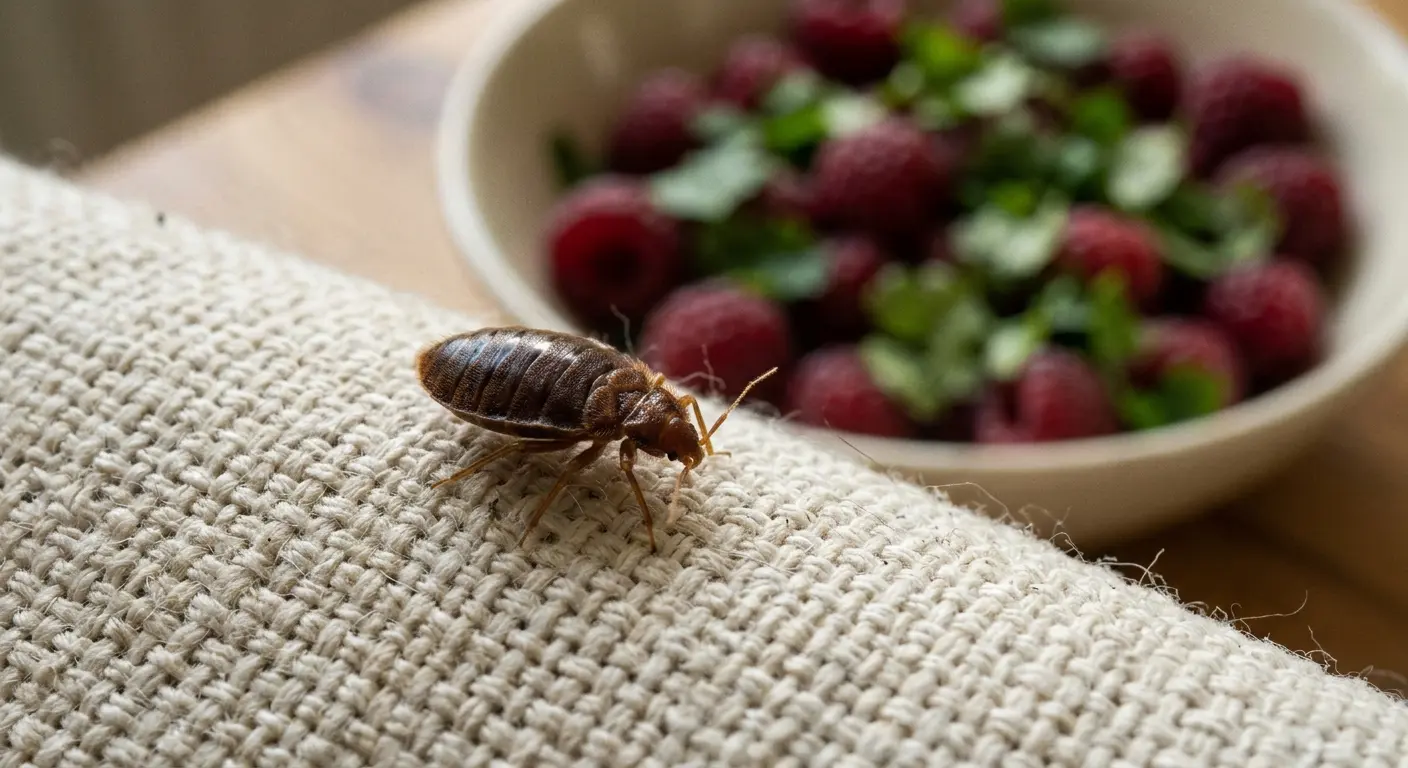
Bed bugs emit a sweet, musty odor often compared to berries, coriander, or almonds — and the stronger the smell, the larger the infestation. This distinctive scent comes from pheromones released by the bugs’ scent glands, and it can become noticeable enough to alert you to their presence before you ever spot a live bug. While not everyone can detect it, learning to recognize this smell is one of the most reliable early warning signs of a bed bug problem.
What Does a Bed Bug Smell Like?
Most people describe the bed bug smell as sweet, musty, and slightly pungent — similar to rotting raspberries or fresh coriander. The exact scent can vary based on infestation size and individual sensitivity. Early infestations produce a faint, pleasant odor that’s easy to miss, while established colonies emit a stronger, more noticeable stench that can permeate a room.
The smell comes from aldehydes — chemical compounds released through the bugs’ scent glands. These pheromones serve two purposes: helping bed bugs communicate with each other and signaling danger when crushed. Interestingly, the Greek word koris (meaning “bug”) is the root of “coriander,” reflecting how long humans have associated this scent with these pests.
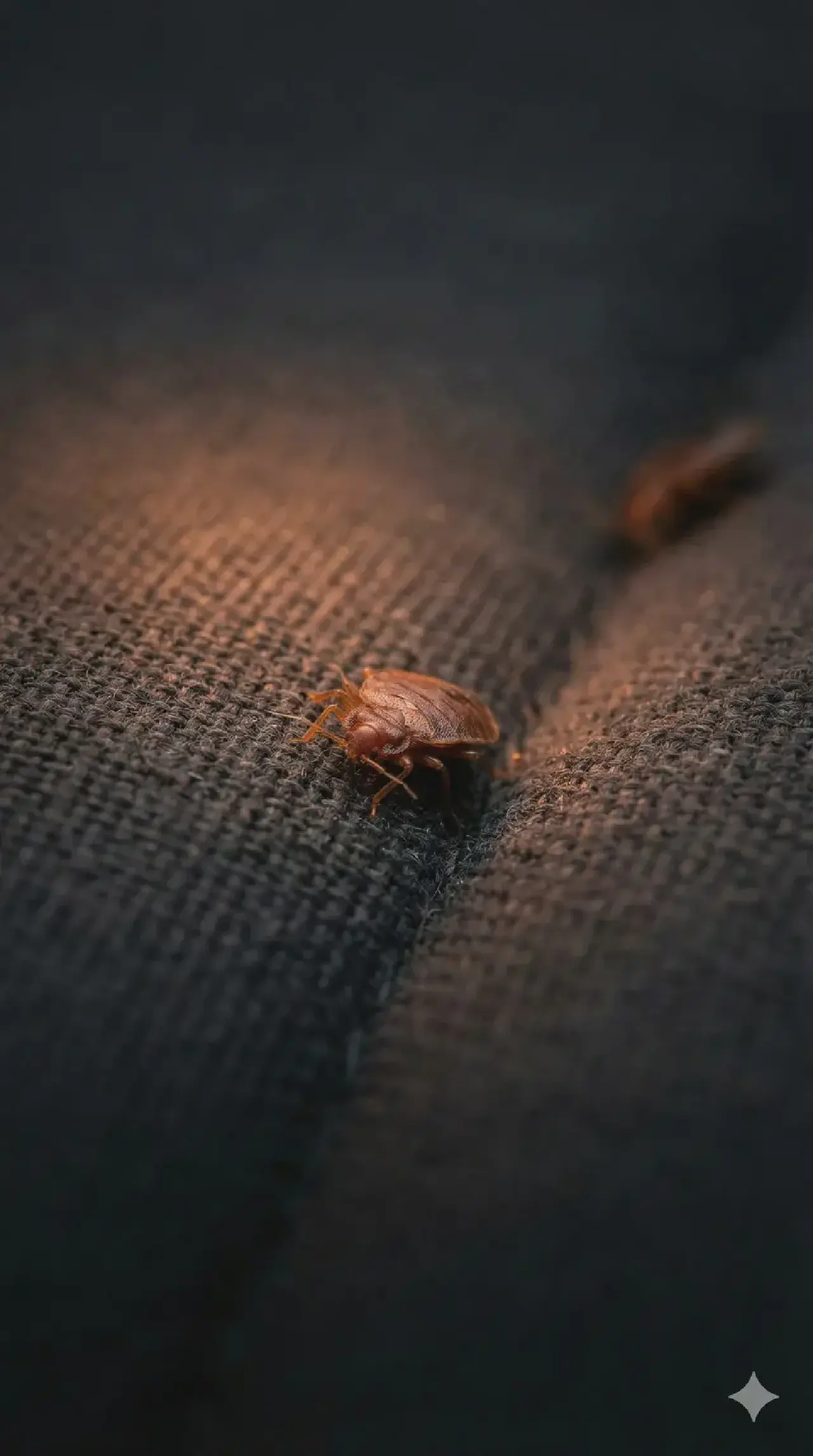
Not sure if those marks are bed bug bites or something else?
Upload a photo to our identifier tool — get a confirmed answer in under 60 seconds.
Why Do Bed Bugs Smell When Crushed?
When you crush a bed bug, you release a stronger, more concentrated version of its defensive pheromones — a sharp, oily odor that many compare to stink bugs or spoiled fruit. This is an alarm response designed to warn other bed bugs of danger. The smell is often more pungent than the ambient scent of an infestation, making it a clear indicator that you’ve found and killed a bug.
Most guides say the crushed-bug smell is purely defensive — but research shows it also serves as an aggregation pheromone, actually attracting other bed bugs to the area. This means crushing a bed bug could potentially draw more bugs to that spot, which is why pest professionals recommend using a tissue or paper towel and disposing of it immediately rather than squashing bugs directly on surfaces.
Can Everyone Smell Bed Bugs?
No — sensitivity to bed bug odor varies significantly from person to person. Some people detect the scent immediately, while others can’t smell it at all, even with a severe infestation. This variation is due to genetic differences in olfactory receptors, similar to how some people can smell asparagus in urine and others cannot.
If you suspect bed bugs but can’t smell anything unusual, don’t rely on scent alone. Look for other signs like rusty-colored stains on sheets, tiny black droppings, shed skins, or live bugs in mattress seams. The smell is a helpful indicator but not a definitive diagnostic tool on its own.
Still not sure if it's bed bugs or a different insect?
Our AI tool compares your photo against thousands of confirmed cases instantly.
How to Use Smell for Bed Bug Detection
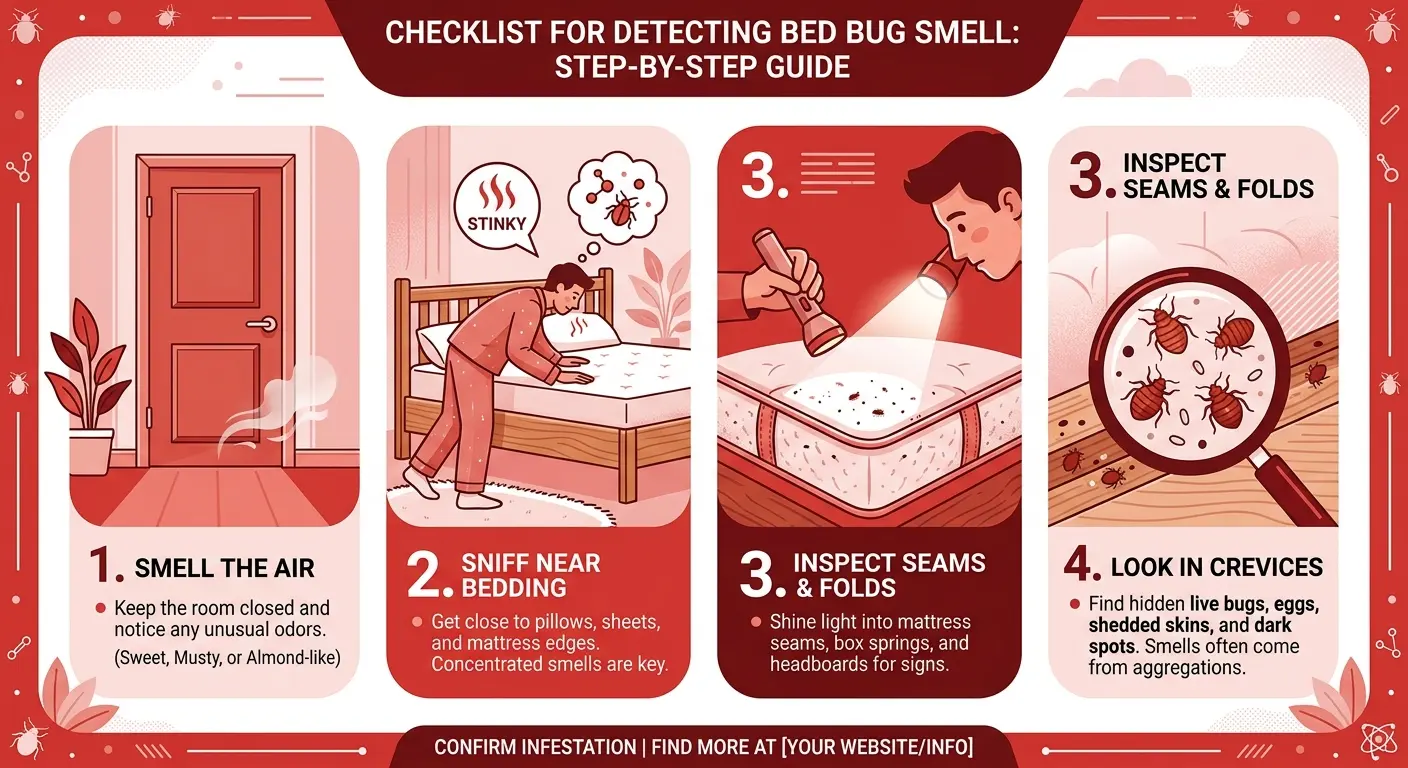
To check for bed bug odor effectively, follow these steps:
- Enter the room after it’s been closed up for several hours — this allows the scent to concentrate
- Get close to the mattress, box spring, and headboard — the smell is strongest near harborages
- Check seams, tufts, and crevices where bed bugs congregate
- Notice if the smell intensifies when you disturb these areas
The scent is most noticeable in heavily infested rooms or when you’re within a few feet of a large harbor. If you detect a sweet, musty odor near your bed that you can’t attribute to anything else, it’s worth investigating further.
Frequently Asked Questions About Bed Bug Smell
Do bed bugs stink like stink bugs?
Can bed bugs smell humans?
Does the bed bug smell go away after treatment?
How many bed bugs produce a noticeable smell?
When to Act on a Bed Bug Smell
Detecting a bed bug smell is a strong indicator that you need to take action — but it’s not the only sign you should watch for. If you notice this odor combined with bites, blood spots on sheets, or visible bugs, you likely have an established infestation that requires treatment. For more information on identifying bed bugs by their behavior and other signs, check our bed bug behavior and identification guide. You may also want to review bed bug tracks to distinguish between different signs of activity.
Early intervention is critical — bed bugs reproduce quickly, and a small problem can become a large one within weeks. If you’ve detected the smell but haven’t yet confirmed the source, our identification tool can help you determine whether you’re dealing with bed bugs or another pest.
Confirmed bed bugs — what do you actually need to treat them?
Upload one photo and our tool builds your exact treatment kit in under two minutes.