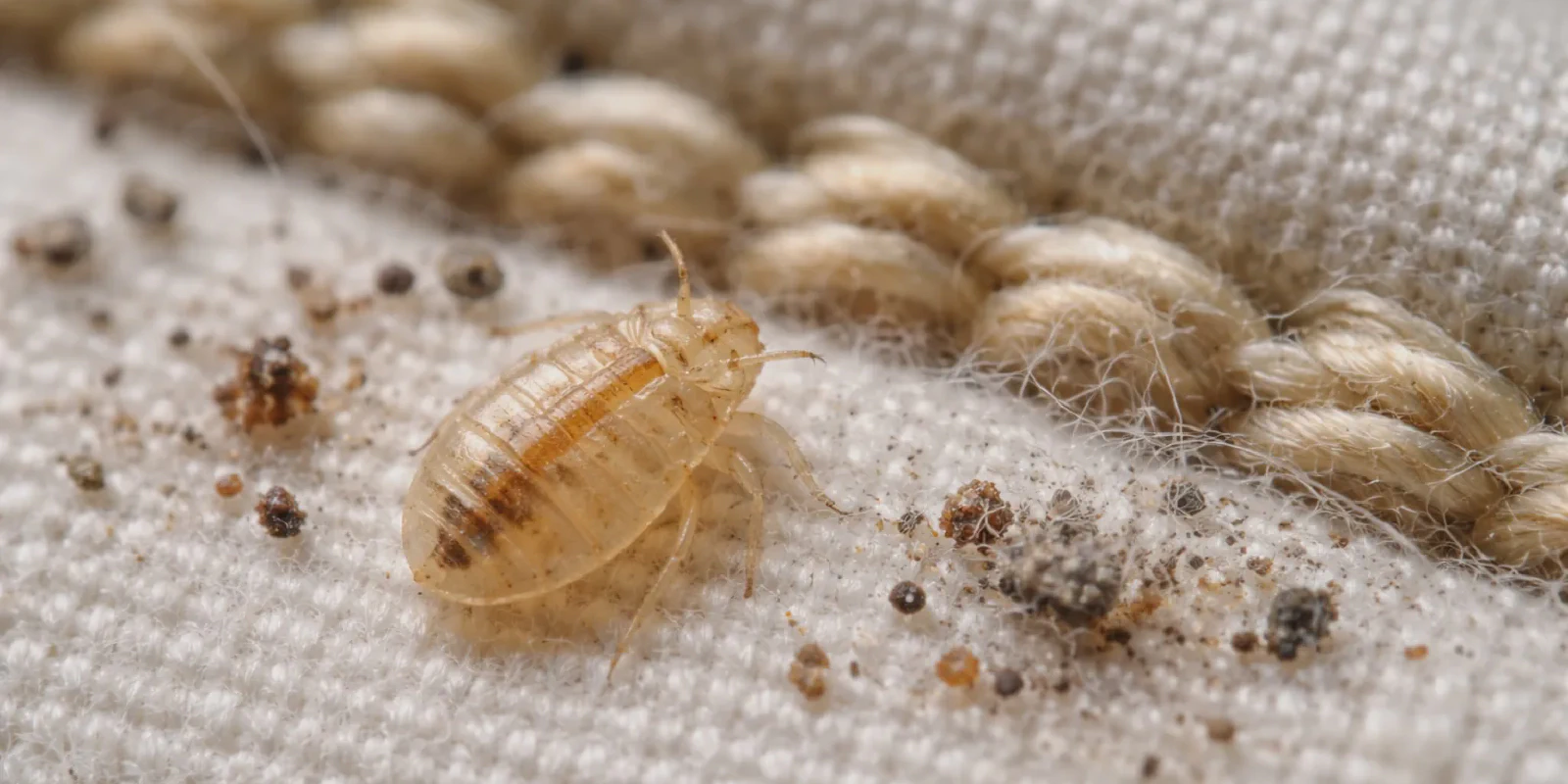
Bed Bug Shells vs Dirt: What’s the Difference?
If you are comparing bed bug shells vs dirt, the key difference is structure. Bed bug shells are hollow, insect-shaped casings with defined edges, while dirt, lint, dust, and skin flakes are irregular, soft, and structureless. This confusion is extremely common because shells are small, light, and often found mixed in with everyday debris.
Understanding the difference matters. Actual bed bug shells indicate ongoing activity, not a past issue, while dirt and lint mean nothing at all.
What Real Bed Bug Shells Look Like
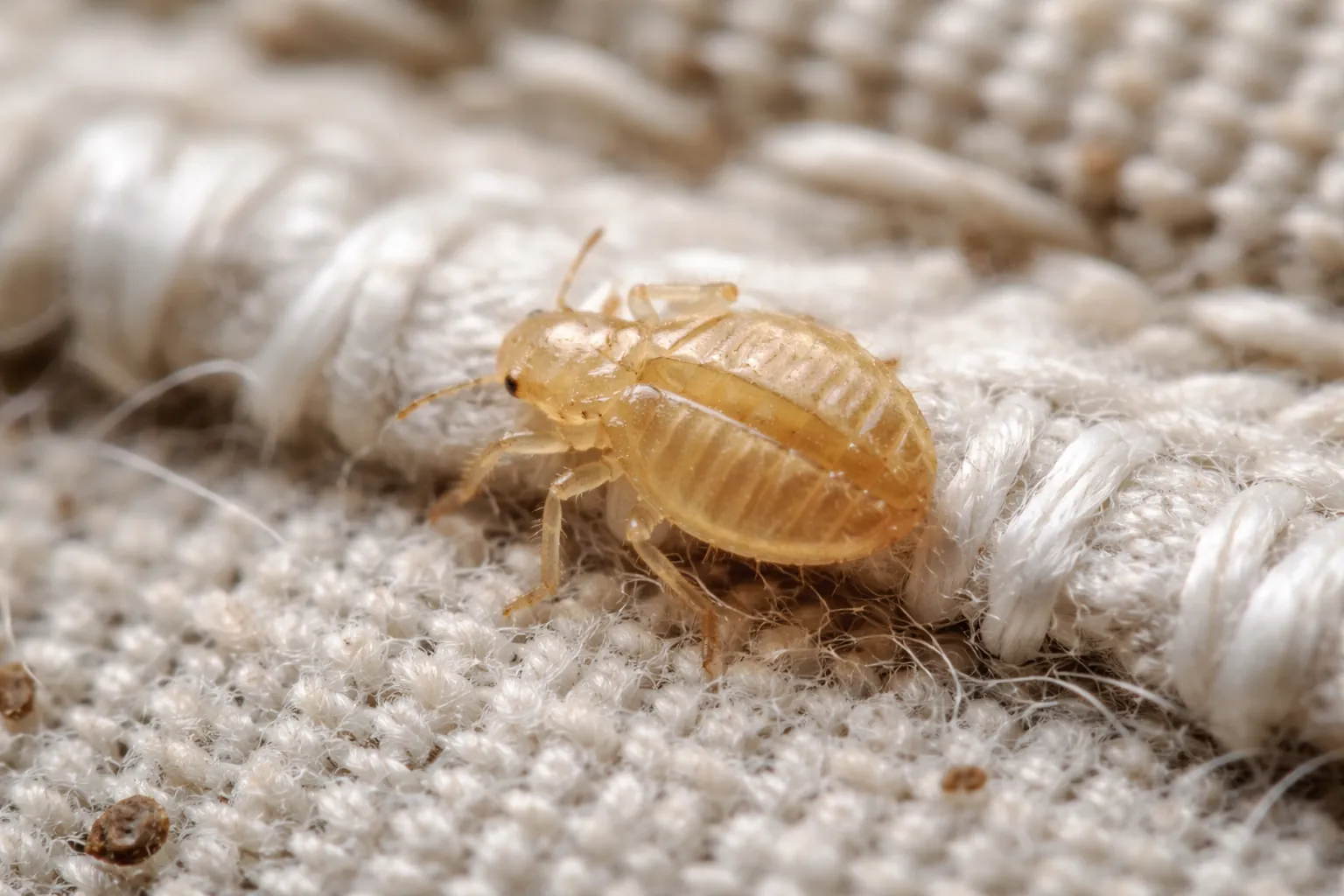
Bed bug shells are shed exoskeletons left behind as nymphs grow. They have several consistent characteristics:
- Light brown to amber in color
- Translucent or papery
- Oval with visible segmentation
- Often split open along the back
- Do not crumble when lightly pressed
They are usually found in protected areas like mattress seams, box spring edges, or along bed frame joints. If you are finding similar material directly on your sleep surface, compare it carefully with what’s described in our guide to bed bug shells on a mattress.
What Dirt, Lint, and Dust Look Like Instead
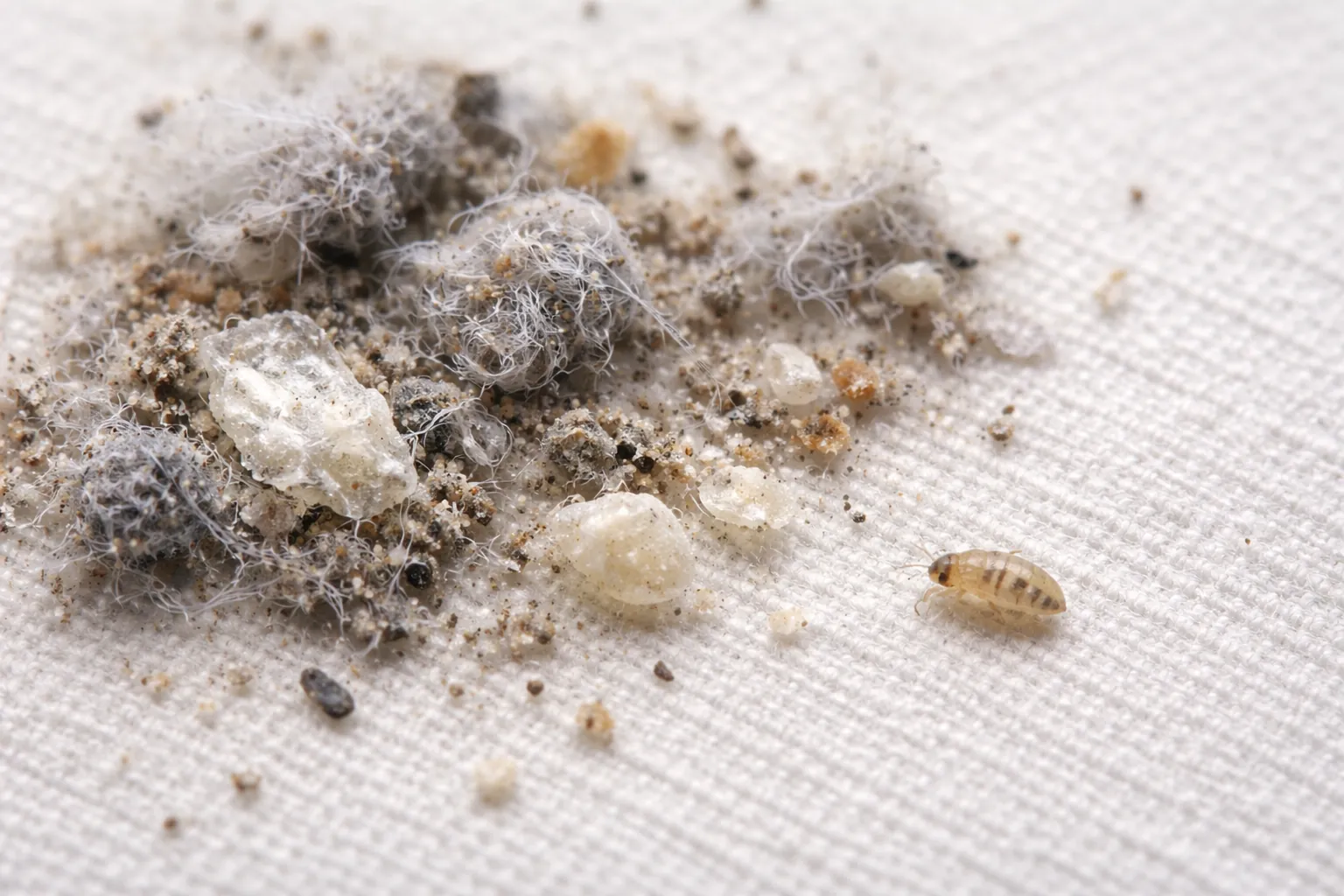
Household debris has none of the structure shells have. Dirt and lint:
- Break apart when touched
- Have no consistent shape
- Vary widely in color and texture
- Often collect evenly across surfaces
Skin flakes, in particular, are commonly mistaken for shells. They are flat, irregular, and soft, whereas shells maintain a rigid outline.
Why This Gets Misidentified So Often
People expect bed bug evidence to look dramatic. In reality, shells are subtle, and anxiety fills in the gaps. Tiny brown flakes in bed are far more likely to be lint or dust unless they show insect-like form.
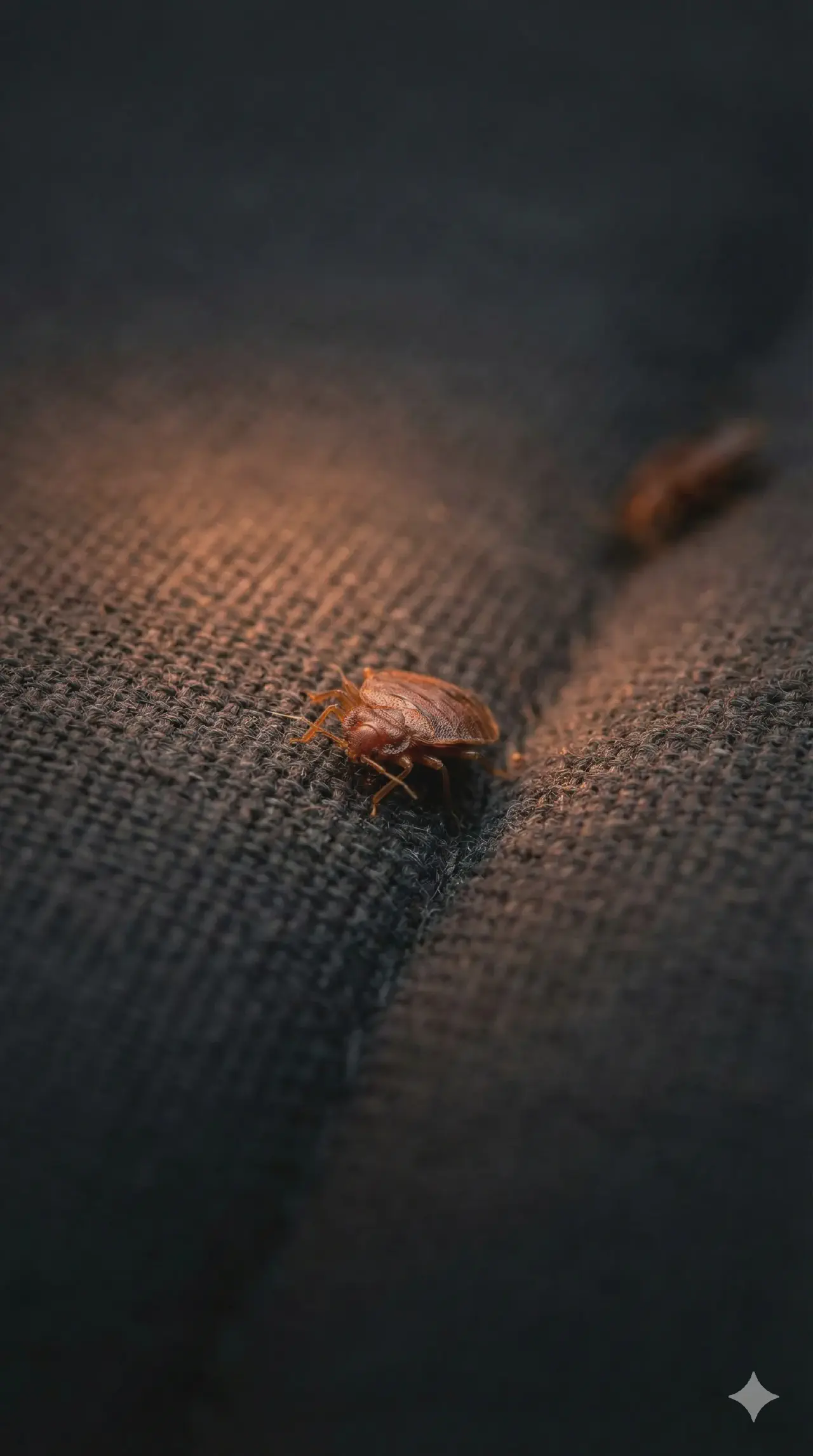
Have Photos of the Debris?
If the flakes you found appear hollow, segmented, or shell-like rather than crumbly, upload clear photos so our system can confirm whether they match real bed bug casings.
What Professionals Look At Next
Experts do not rely on one clue alone. They evaluate shells alongside other indicators like spotting patterns, clustering in hiding zones, and progression over time. A single fragment means little without context.
If you are unsure whether what you found fits into a bigger picture, reviewing the full bed bug shells identification guide will help you understand how shells fit into infestation stages.
Ready to Be Certain?
Now that you know how real bed bug shells differ from dirt, lint, and dust, upload photos of anything suspicious to get a definitive answer before taking action.
- Are Bed Bugs Ever Black? The Real Color Range + What ‘Black Bed Bugs’ Usually Are
- Bed Bug Color by Stage: Eggs → Nymphs → Adults (Exact Sizes + Colors)
- Before vs After Feeding: Why Bed Bugs Change Color (Tan → Red → Dark)
- Can Bed Bugs Be Green or Orange? Not a Bed Bug — Here’s What It Likely Is
- Tiny Red Bug in Bed? When Bed Bugs Turn Red (Fed Nymphs vs Look-Alikes)
- White or Translucent Bugs on Mattress? Eggs, Nymphs, or Shed Skins Explained