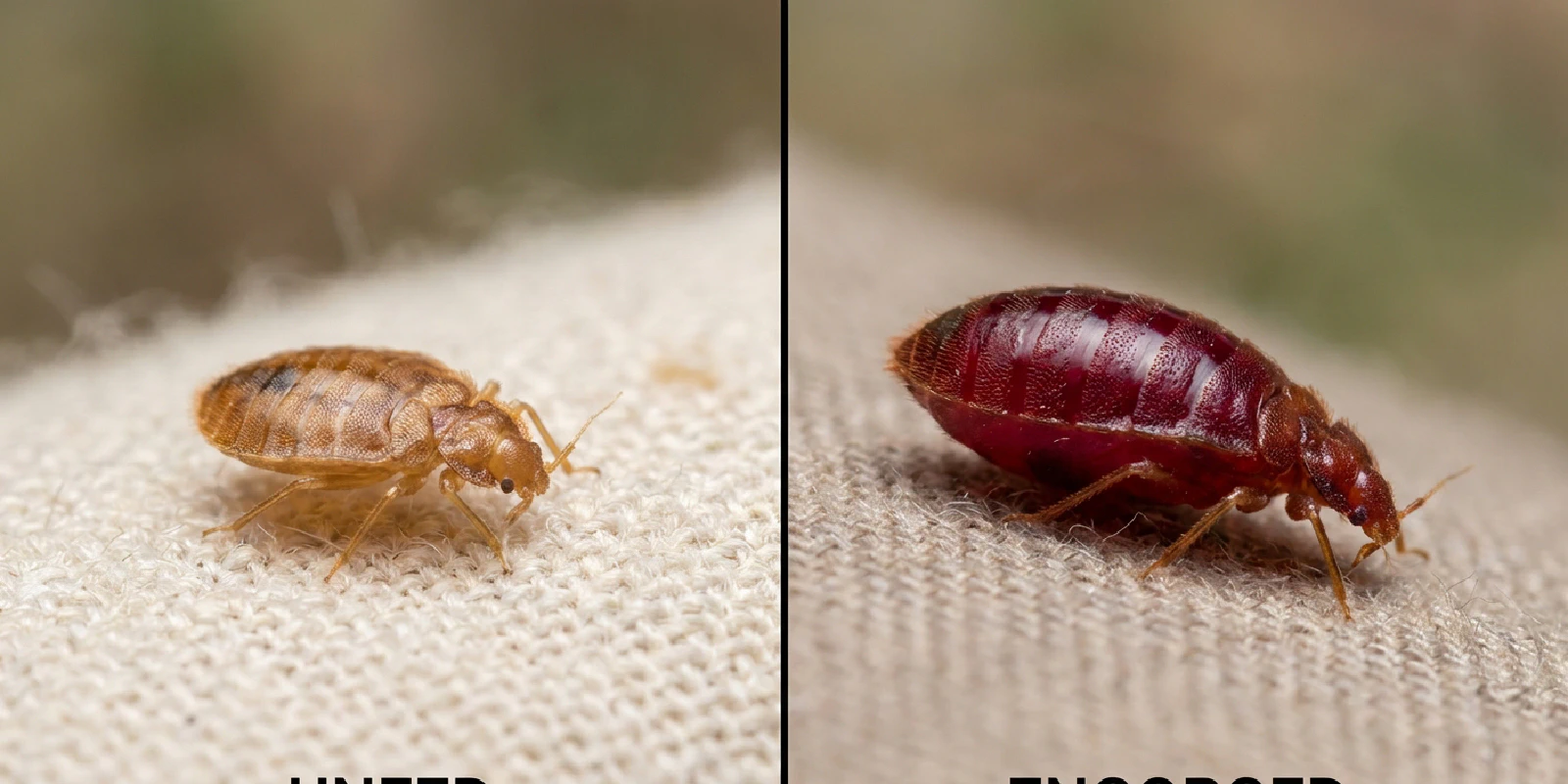
Before vs After Feeding: Why Bed Bugs Change Color (Tan → Red → Dark)
Before feeding, bed bugs are a flat, reddish-brown to mahogany color. After feeding, the same bug can turn vivid red or deep crimson—and its body swells so dramatically that it looks like a completely different insect. This color and shape transformation is one of the reasons bed bugs are so frequently misidentified: people who have never seen an unfed bed bug may not recognize a fed one, and vice versa.
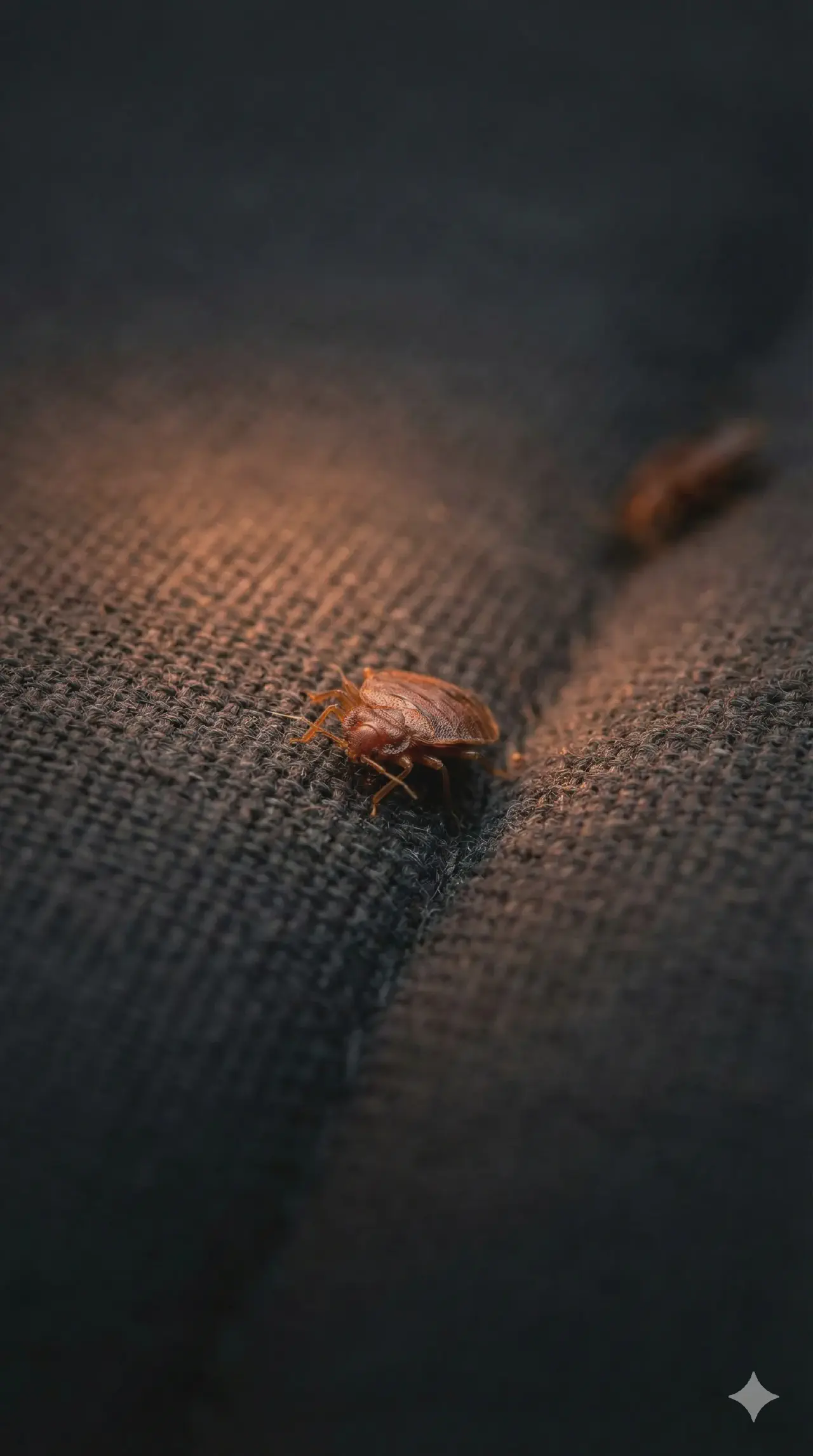
Before Feeding: Flat and Brown
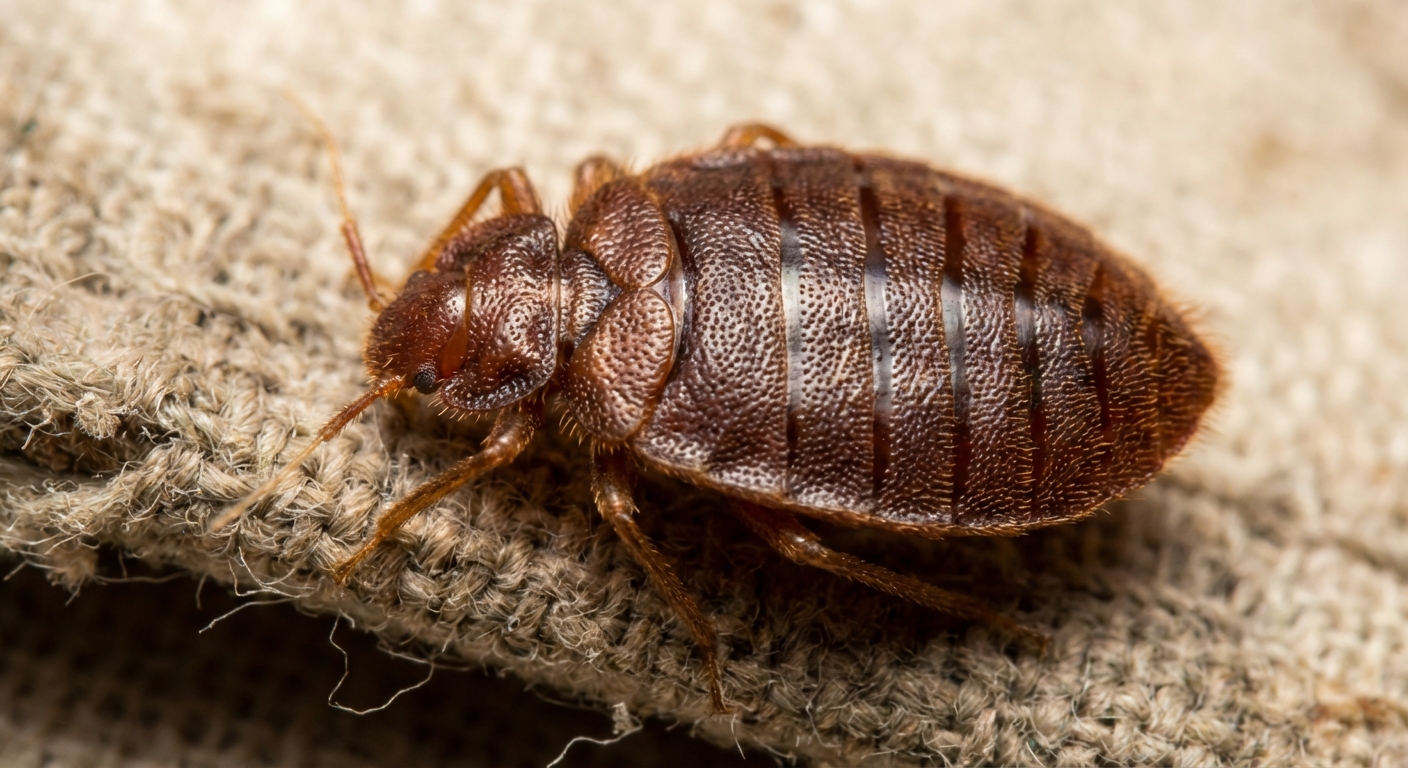
An unfed bed bug is:
- Color: Reddish-brown, mahogany, or tan (depending on stage)
- Shape: Flat and wide, like an apple seed—almost paper-thin
- Size: Adults are 4.5–7mm, nymphs are 1.5–4.5mm
The flatness is the most notable physical characteristic. An unfed bed bug can slip under a mattress seam, behind a baseboard, or into the spine of a book with ease. This flatness is how they hide so effectively.
After Feeding: Round and Red
Within 3–10 minutes of beginning a blood meal, a bed bug’s appearance transforms:
- Color: Deep crimson, rust-red, or dark red-brown (the blood shows through)
- Shape: Barrel-shaped, sides expanded, abdomen rounded
- Size: Can appear 20–30% larger due to engorgement
An engorged bed bug moves more slowly and is far more visible than an unfed one. Many people who find their first bed bug find it in this fed state—making them incorrectly believe they are looking at a red beetle or an unusual mite.
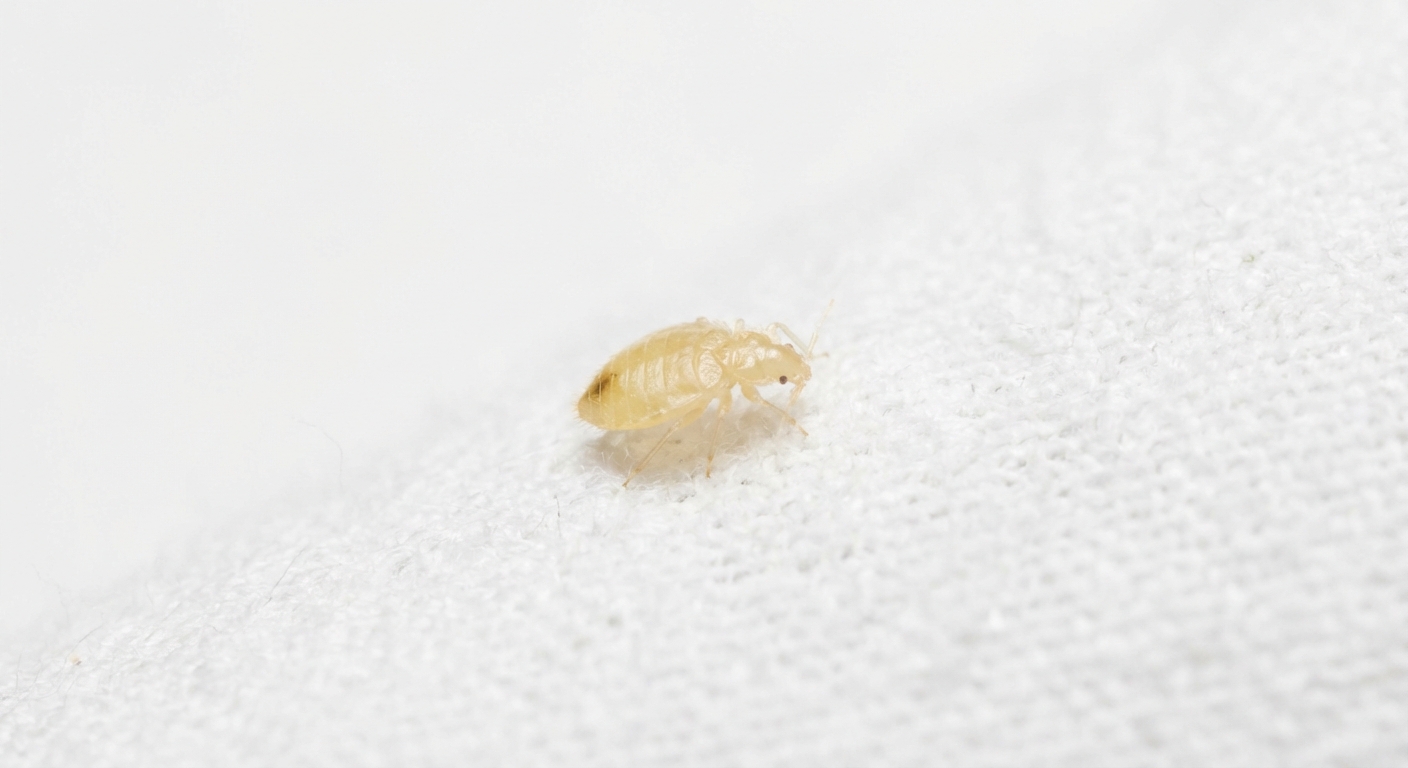
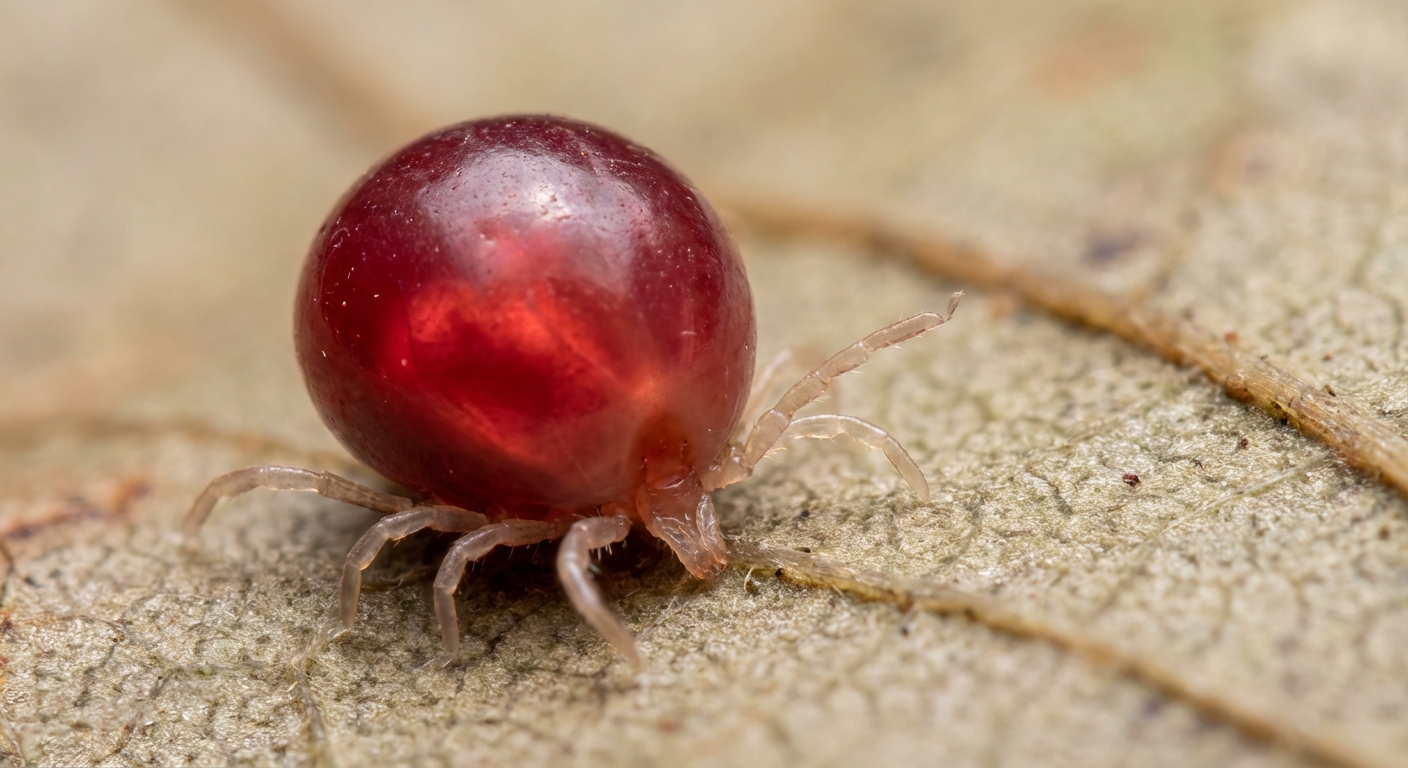
The color shift is most dramatic in early-stage nymphs. First-instar nymphs (1.5mm) are transparent before feeding. After feeding, blood fills their body cavity and they become a vivid red dot—effectively invisible before feeding, startlingly obvious after.
Have Evidence Photos?
Found a round, vivid red bug that doesn't match the flat brown bed bug you expected? This before-to-after confusion is extremely common. Upload a photo and our AI will check whether the rounded profile, color saturation, and size match the engorged bed bug profile—even if it looks nothing like standard images.
Why This Matters for Identification
The before/after transformation explains several common identification scenarios:
- “I saw a red bug but now it’s gone” → A fed nymph retreats to its harborage after feeding. The flat, brown unfed version is nearly invisible in hiding.
- “I found a flat brown bug—could it also be the red bug I saw?” → Yes. Same insect, different timing.
- “I crushed a red bug and it left a blood smear” → That is the blood meal, not the bug’s own blood. A characteristic sign of a recently-fed bed bug.
For the complete color guide across all life stages including this transformation, visit: what color are bed bugs. Also see our guide on are bed bugs red in color for more detail on the fed state specifically.
Related Transformation Guides
- Are Bed Bugs Red in Color? — Deep dive into why fed bugs appear red
- Bed Bug Color Stages — Color changes at every nymph stage
Have Evidence Photos?
A blood smear on your sheet combined with flat brown oval bugs in seams are the classic dual signature of before-and-after feeding. Upload photos of both evidence types together—our AI cross-references multiple evidence types simultaneously for the most accurate infestation assessment.
- Are Bed Bugs Ever Black? The Real Color Range + What ‘Black Bed Bugs’ Usually Are
- Bed Bug Color by Stage: Eggs → Nymphs → Adults (Exact Sizes + Colors)
- Can Bed Bugs Be Green or Orange? Not a Bed Bug — Here’s What It Likely Is
- Tiny Red Bug in Bed? When Bed Bugs Turn Red (Fed Nymphs vs Look-Alikes)
- White or Translucent Bugs on Mattress? Eggs, Nymphs, or Shed Skins Explained
- Bed Bug Shells but No Bugs: What It Really Means + Free AI Analysis