Are Bed Bugs Ever Black? The Real Color Range + What ‘Black Bed Bugs’ Usually Are
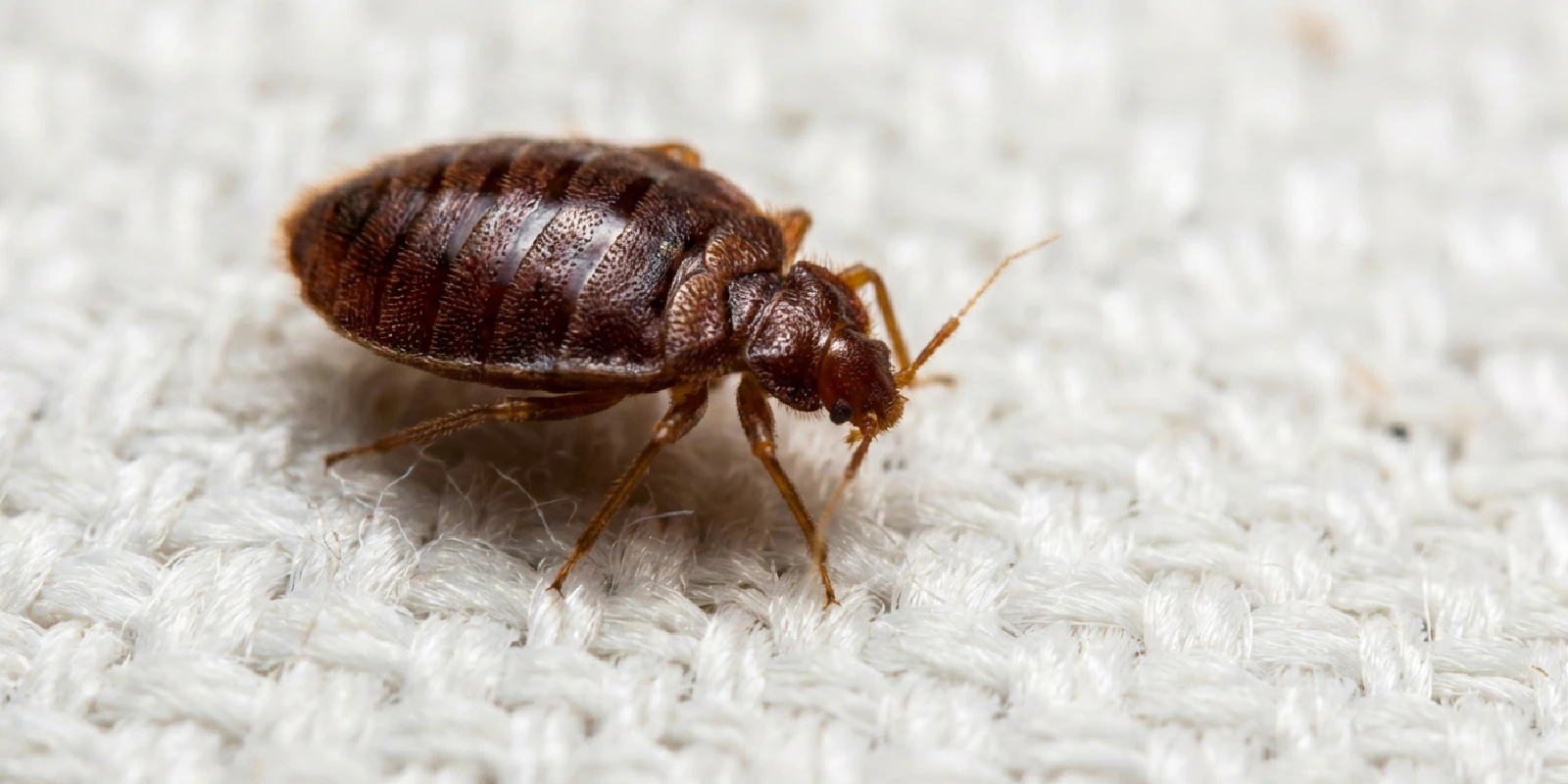
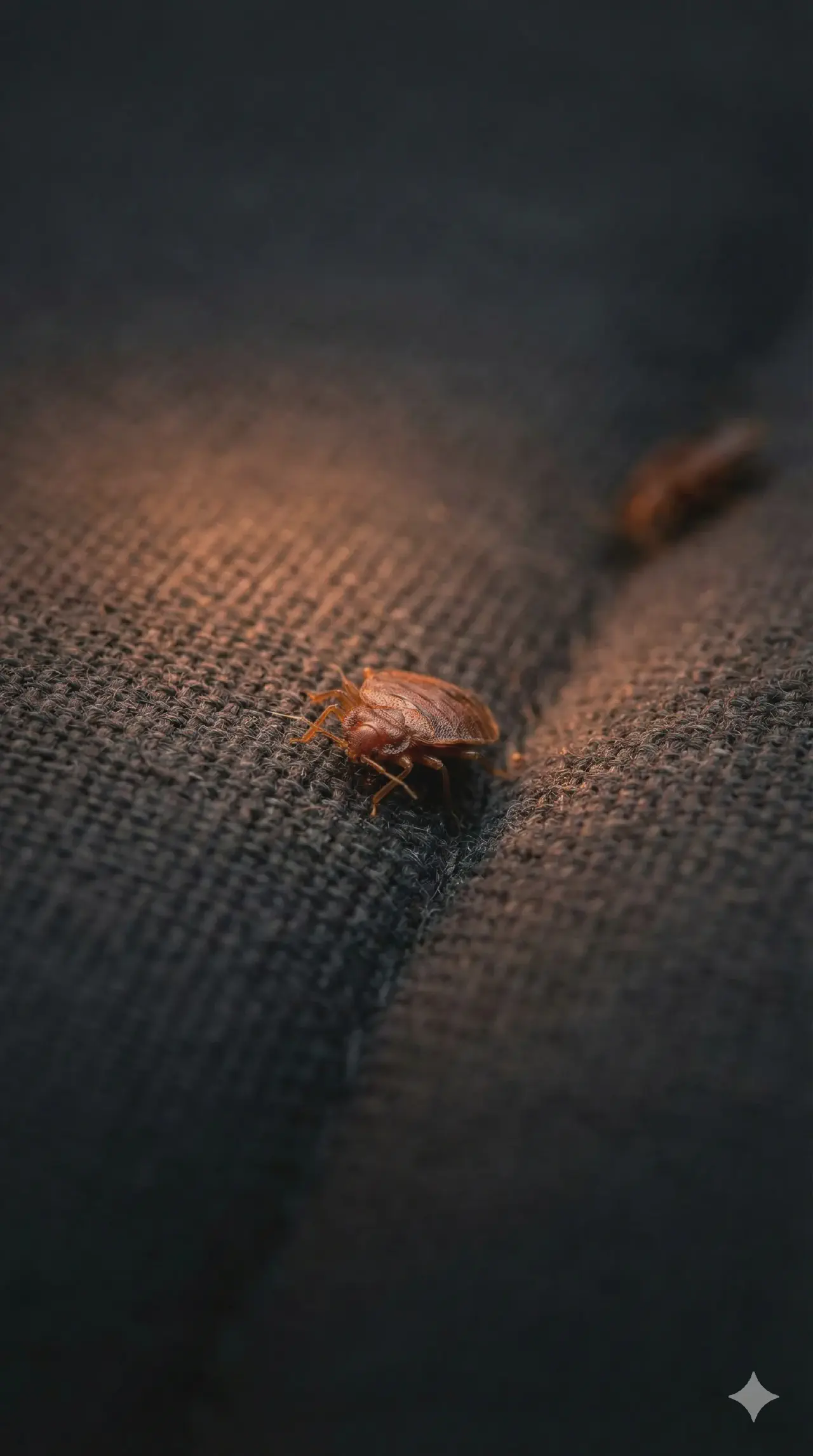
Bed bugs are brown—specifically reddish-brown to mahogany. They are never truly black. This is one of the most reliable rules in bed bug identification: if the bug you are looking at is genuinely black (not dark brown), it is almost certainly not a bed bug. Living bed bugs range from pale straw in their early nymph stages through to deep reddish-brown as adults. The darkest color a bed bug can reach is a deep mahogany brown after several weeks without feeding.
The Exact Color Range of Bed Bugs
- Unfed adults: Deep reddish-brown to mahogany—similar to an apple seed or dried blood.
- Partially fed adults: Darker crimson-brown, more visibly rounded.
- Fully engorged adults: Deep rust-red, noticeably swollen abdomen.
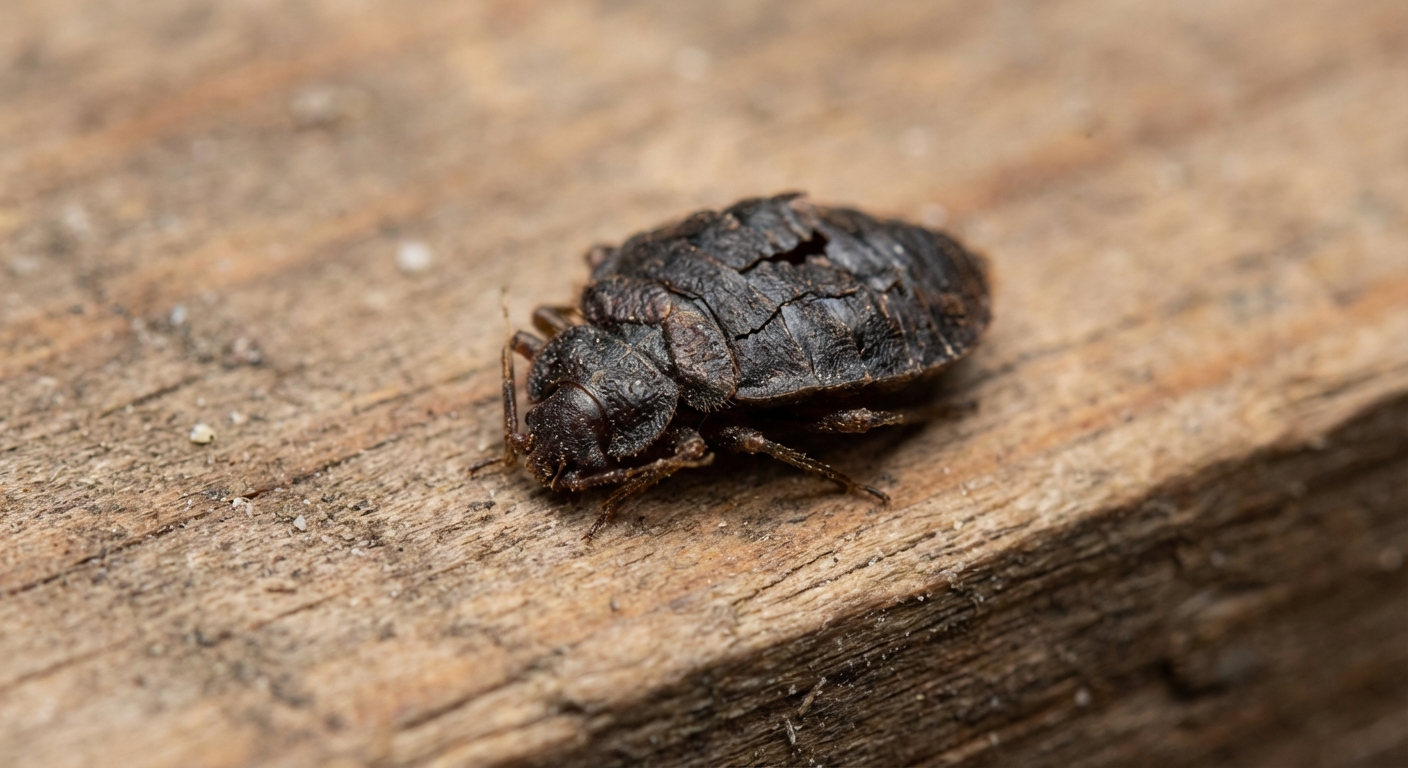
- Dead/desiccated bed bugs: Can darken to near-black—this is the source of most “black bed bug” reports.
The critical distinction: a dead bed bug may appear black as it dries out. A living bed bug is always brown, never black.
What Are the Black Bugs in Your Bedroom?
If you have found a truly black bug in or near your bed, the most likely identities are:
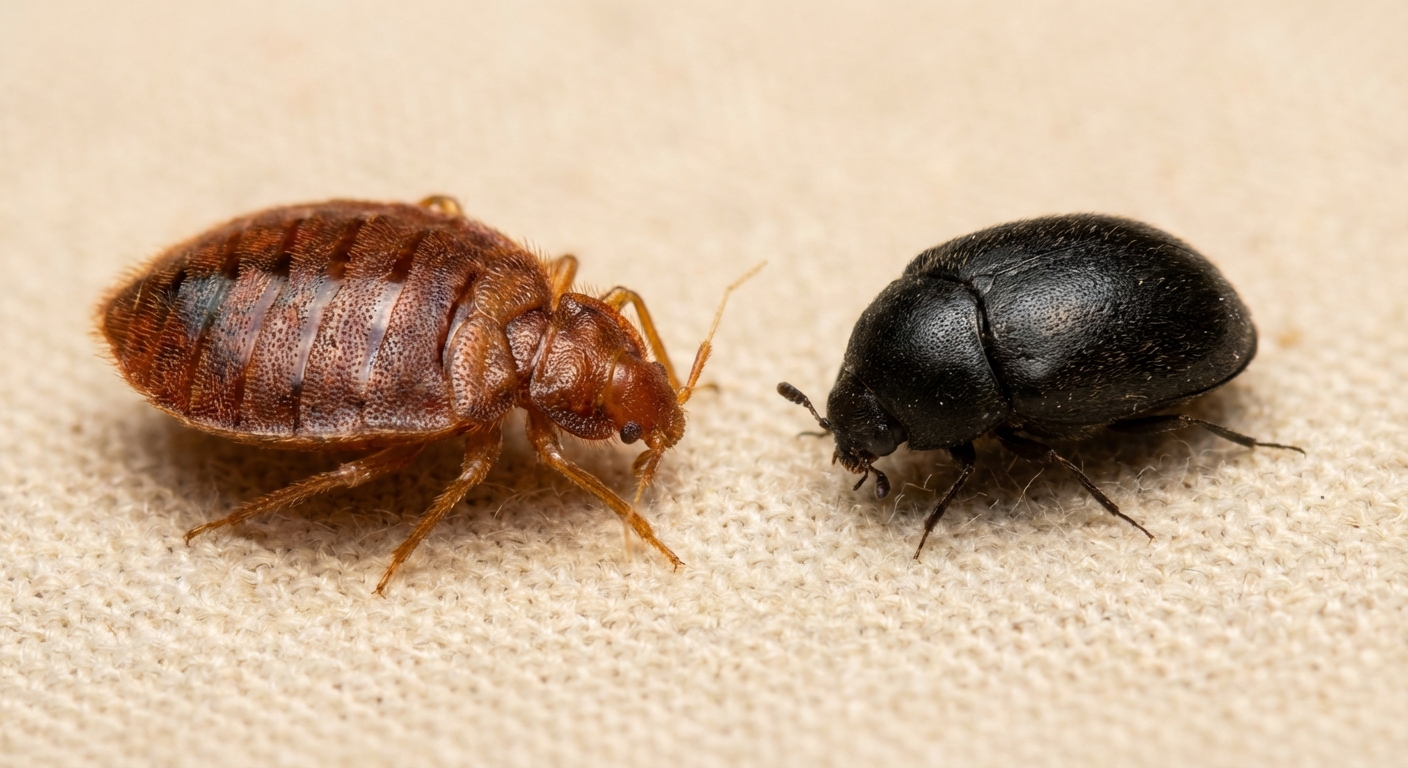
- Bat bugs (Cimex adjunctus): Practically identical to bed bugs, slightly darker brown—but found near attic or wall voids with bat roosts, not in mattresses.
- Black carpet beetle adults: Completely black, oval, approximately 3–5mm. They eat natural fibers and leave shed skins but do not bite humans.
- Furniture carpet beetle: Black with white or orange-yellow scale pattern—easily identified by its distinctive pattern.
- Fecal spots: Bed bug droppings appear as black or very dark brown dots on fabric. These are often mistaken for small black bugs.
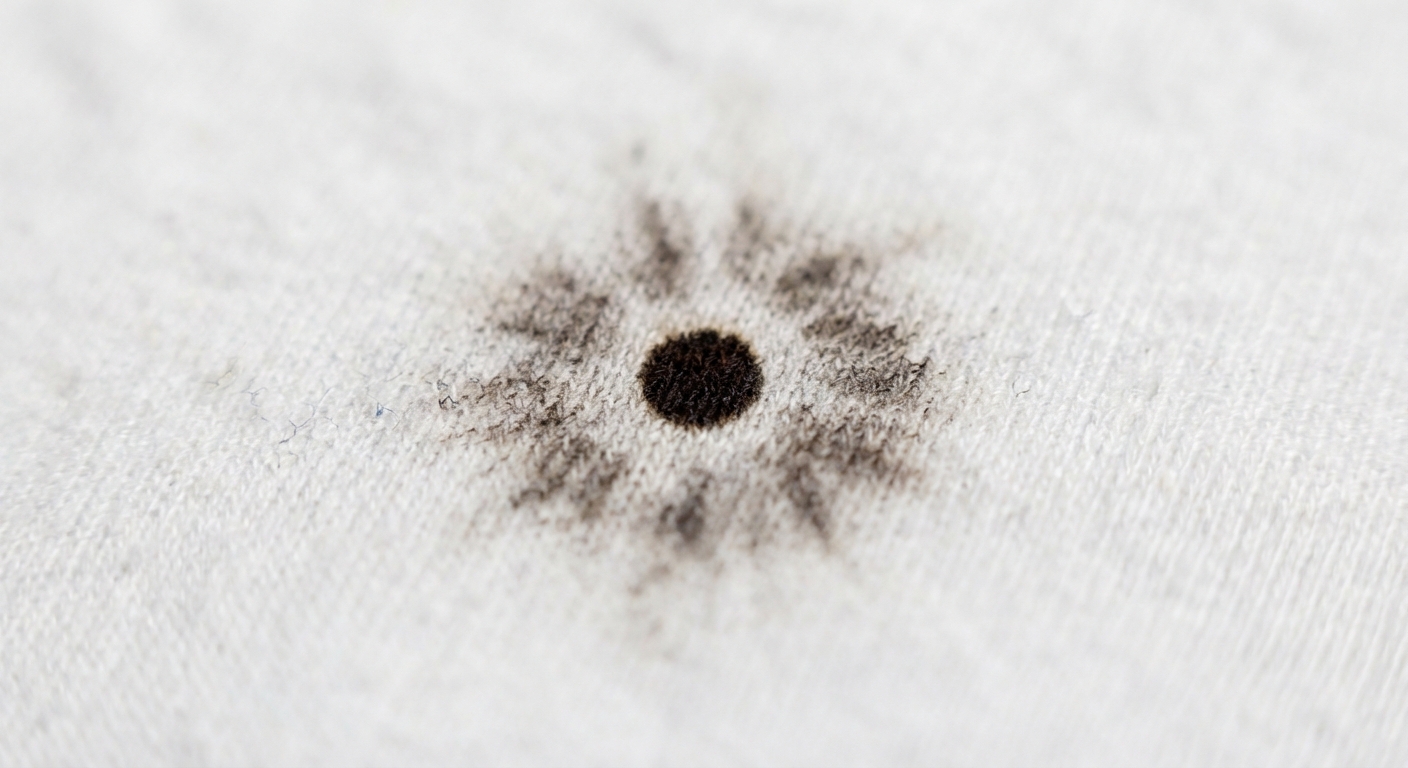
If you found flat black dots on your mattress seams that smear slightly when dampened, you are looking at fecal spots—not insects.
Have Evidence Photos?
Found a dark brown-black bug and unsure whether it's a bat bug vs bed bug, or a carpet beetle? These species look extremely similar at a glance. Upload a photo and our AI will analyze body shape, leg positioning, and color depth to distinguish between these closely-related species.
Using Color to Rule Out Bed Bugs
The “if it’s black, it’s not a bed bug” rule is one of the most useful fast-filters in pest identification. Combined with shape (bed bugs are always flat and oval, not round or elongated) and location (bed bugs stay within 8 feet of their host), color narrows the identification significantly.
For the full color spectrum and what each shade means for infestation assessment, see our comprehensive hub: what color are bed bugs.
Related Color Guides
- Are Bed Bugs Red in Color? — What a fed bed bug actually looks like
- Are Bed Bugs White in Color? — Eggs, nymphs, and shed skins explained
- Bed Bug Color Stages — Full stage-by-stage color breakdown
Have Evidence Photos?
Dark bug, uncertain color in the lighting you found it—don't let ambiguous color stop you from getting an answer. Upload any photo, even a dark, unclear one, and our AI will enhance and analyze it to determine if there is enough shape and color data to make a species call.
- Bed Bug Color by Stage: Eggs → Nymphs → Adults (Exact Sizes + Colors)
- Before vs After Feeding: Why Bed Bugs Change Color (Tan → Red → Dark)
- Can Bed Bugs Be Green or Orange? Not a Bed Bug — Here’s What It Likely Is
- Tiny Red Bug in Bed? When Bed Bugs Turn Red (Fed Nymphs vs Look-Alikes)
- White or Translucent Bugs on Mattress? Eggs, Nymphs, or Shed Skins Explained
- Bed Bug Shells but No Bugs: What It Really Means + Free AI Analysis